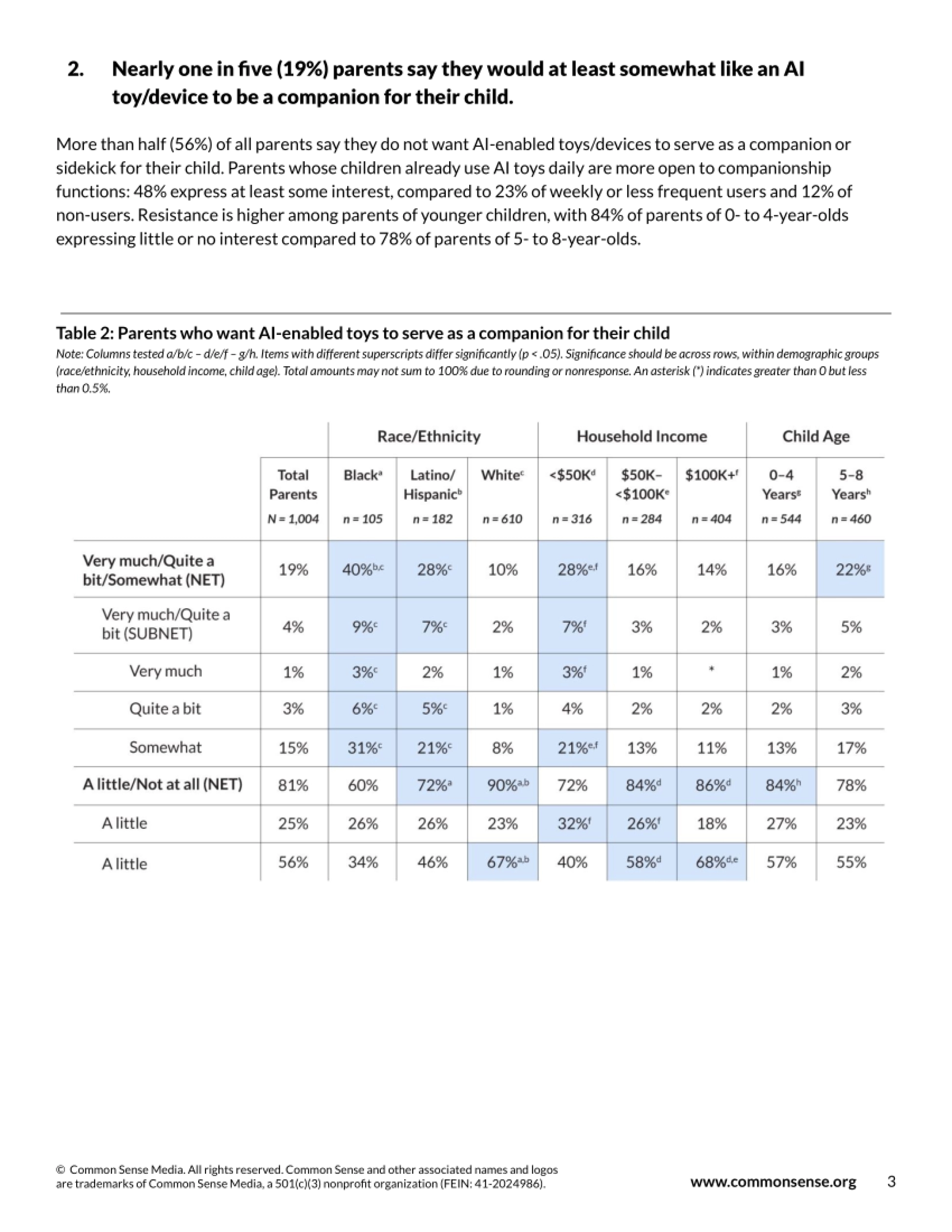
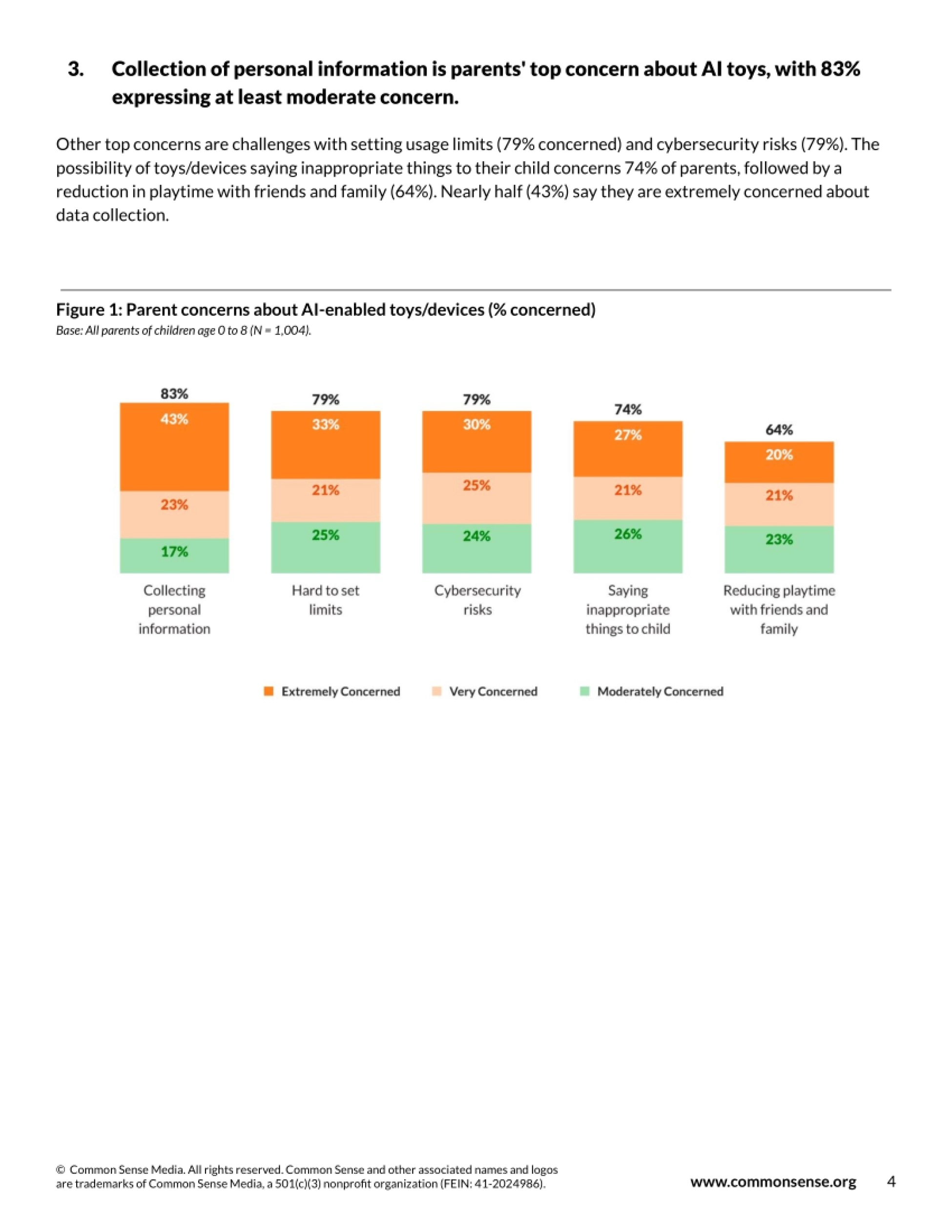
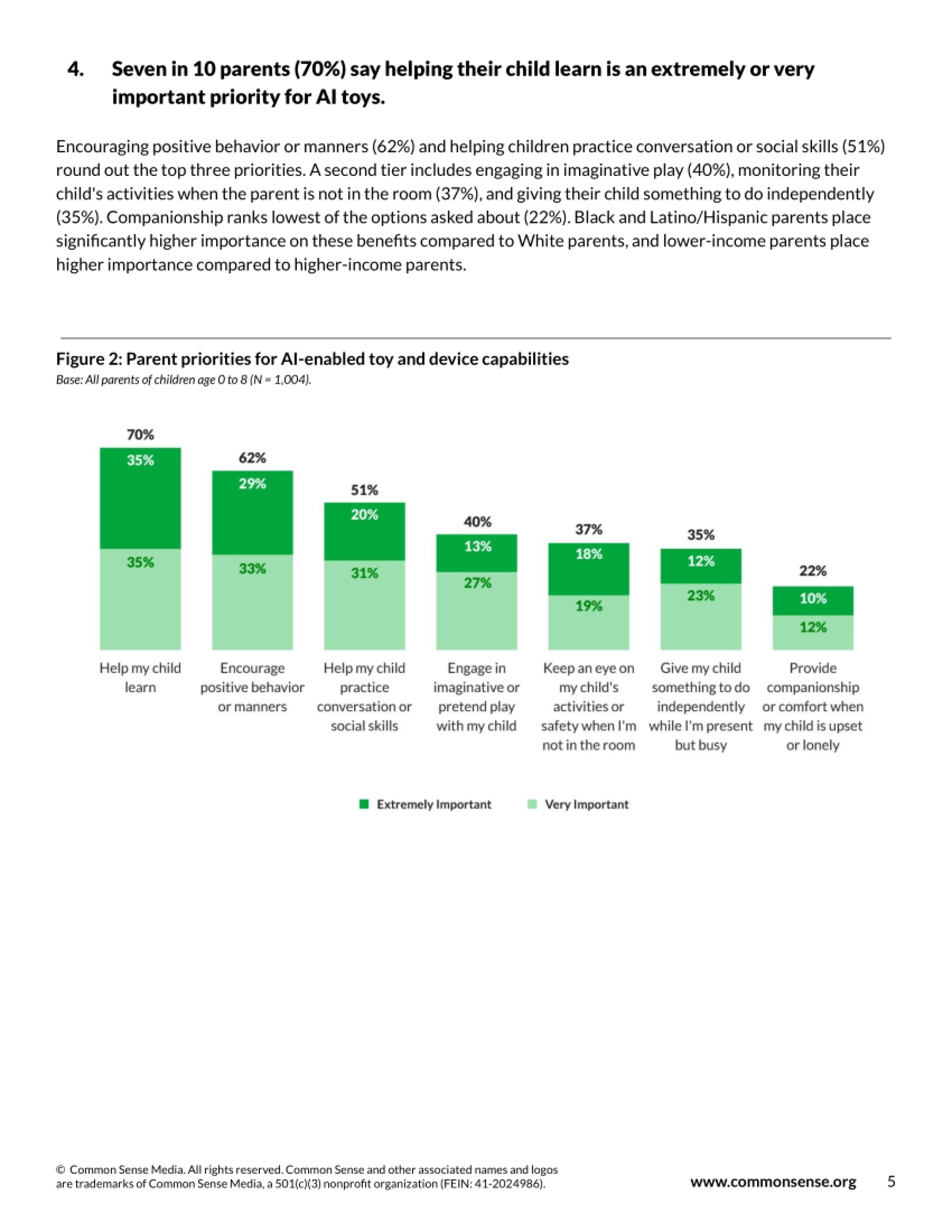
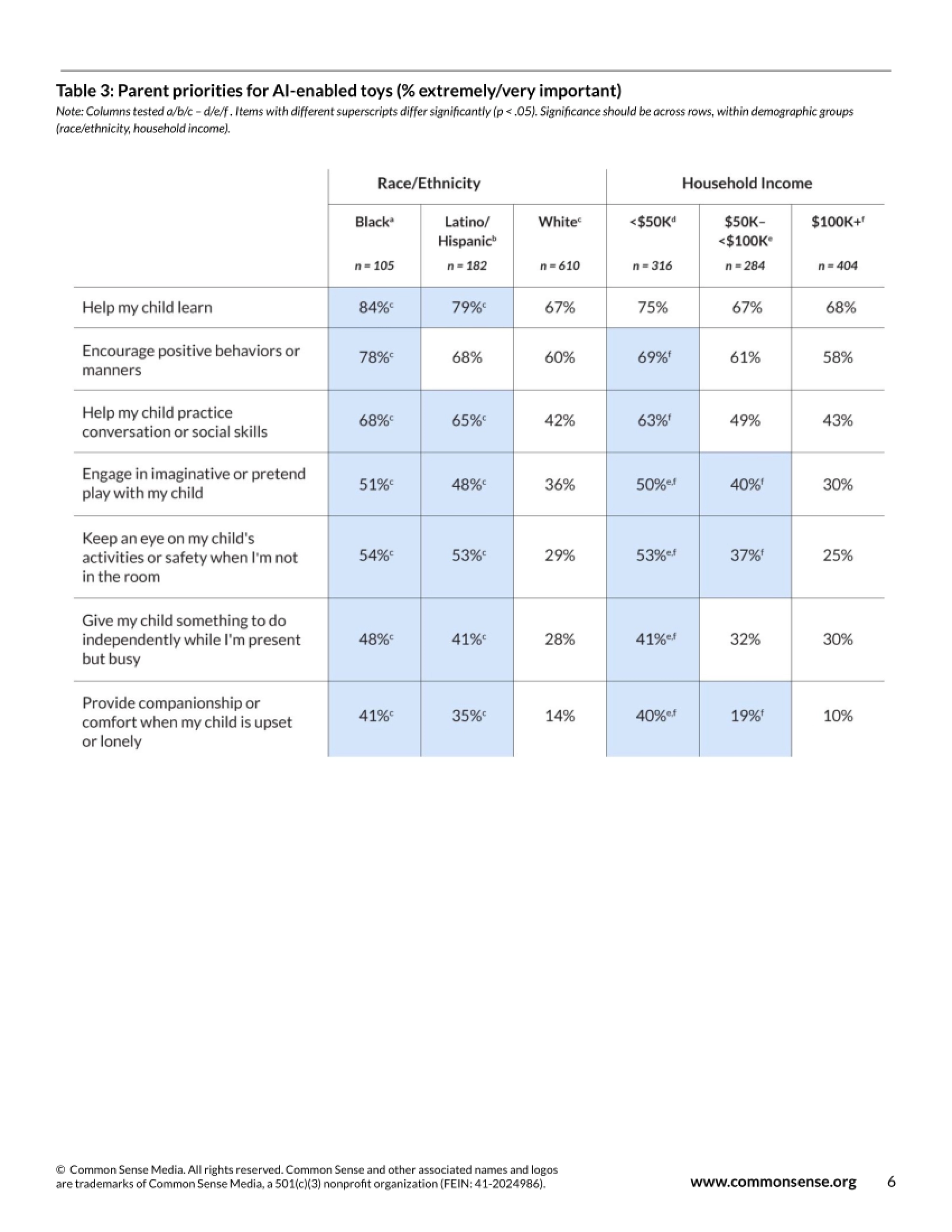
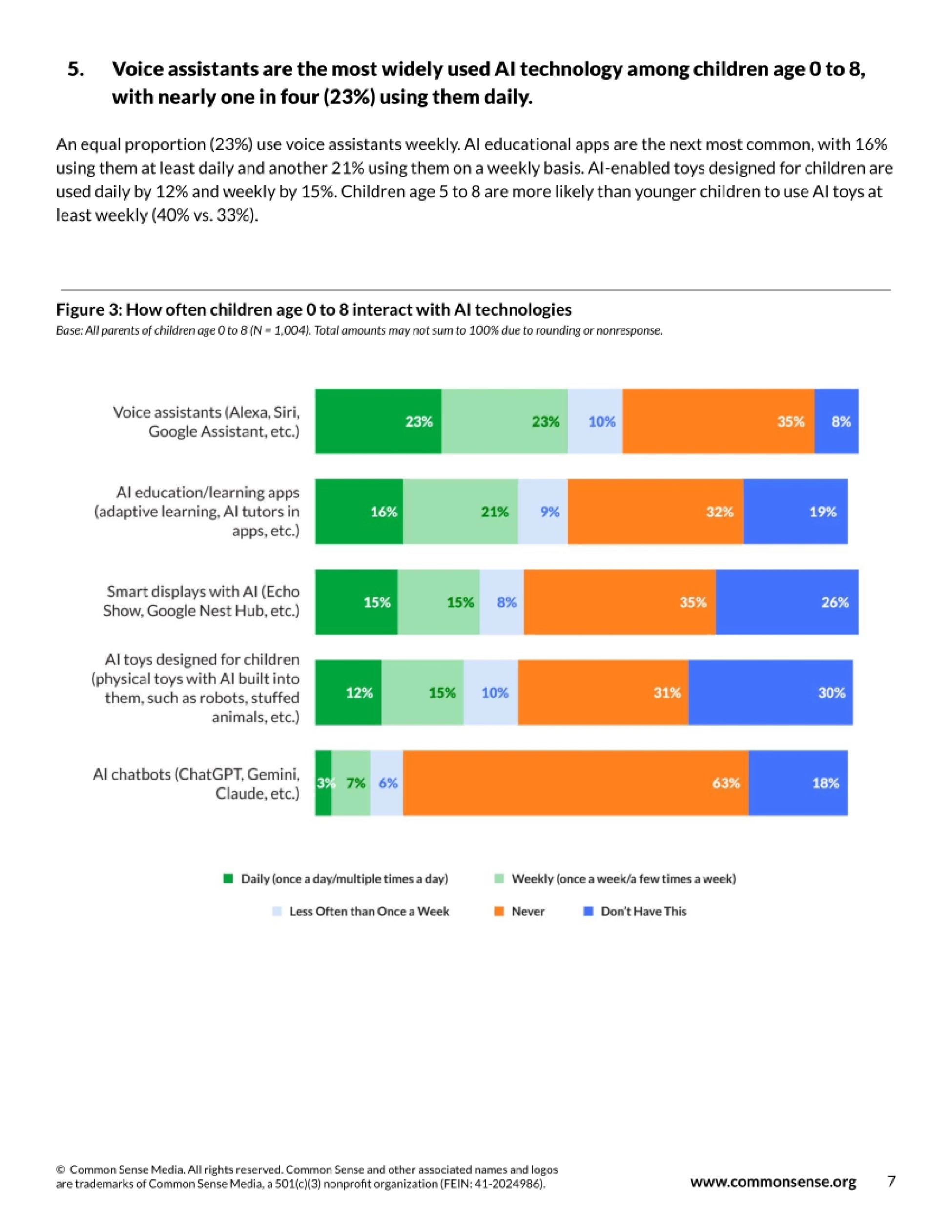
© Common Sense Media. All rights reserved. Common Sense and other associated names and logos are trademarks of Common Sense Media, a 501(c)(3) nonprofit organization (FEIN: 41-2024986). www.commonsense.org ii AI in the Toy Box: How Parents View AI-Enabled Toys for Young Children © Common Sense Media. All rights reserved. Common Sense and other associated names and logos are trademarks of Common Sense Media, a 501(c)(3) nonprofit organization (FEIN: 41-2024986). www.commonsense.org i Acknowledgements Common Sense Media is grateful for the generous support and underwriting that funded this research spotlight: Bezos Family Foundation Craig Newmark Philanthropies Jennifer Caldwell and John H.N. Fisher Patrick J. McGovern Foundation Siegel Family Endowment Credits Data collection: SSRS Report writing: Michael B. Robb and Supreet Mann Designers: Mina Cheong & Chris Arth Copy editor: Christopher Dare Communications and Marketing: Christian Medina Beltz, Kirsten Olsen Cahill, Lisa Cohen, Edda Collins Coleman, Erika Radhansson, Brian Ray, and Owen Stidman Suggested citation: Robb, M. B., & Mann, S. (2026). AI in the toy box: How parents view AI-enabled toys for young children. San Francisco, CA: Common Sense Media. © Common Sense Media. All rights reserved. Common Sense and other associated names and logos are trademarks of Common Sense Media, a 501(c)(3) nonprofit organization (FEIN: 41-2024986). www.commonsense.org ii Introduction AI-enabled toys and child-focused devices are quickly moving from novelty to mainstream holiday offerings, marketed as playful, educational, and increasingly conversational companions for young children. Recent media coverage has highlighted both excitement and discomfort with this trend, as parents encounter toys that talk back, remember past interactions, and simulate social or emotional responsiveness (Hess & Messinger, 2025; Radesky, 2025; Suskind, 2025). At the same time, early safety testing has begun to surface potential risks specific to this area. Independent toy safety research has found that some AI-enabled toys collect sensitive data, such as children's voices and conversations, and, in testing, have generated inappropriate or developmentally unsuitable content (Murray et al., 2025). These products raise familiar questions about screen time and learning, but also introduce newer concerns about data collection, emotional attachment, and the role of AI in children's social development. National research on teens finds that a large majority have already interacted with AI companions, often using them for curiosity-driven exploration, advice, or emotional support (Robb & Mann, 2025). These patterns of use raise important questions about emotional dependency and social development. Younger children may face even greater risks: Developmental research suggests that younger children may be even more susceptible to anthropomorphizing conversa...