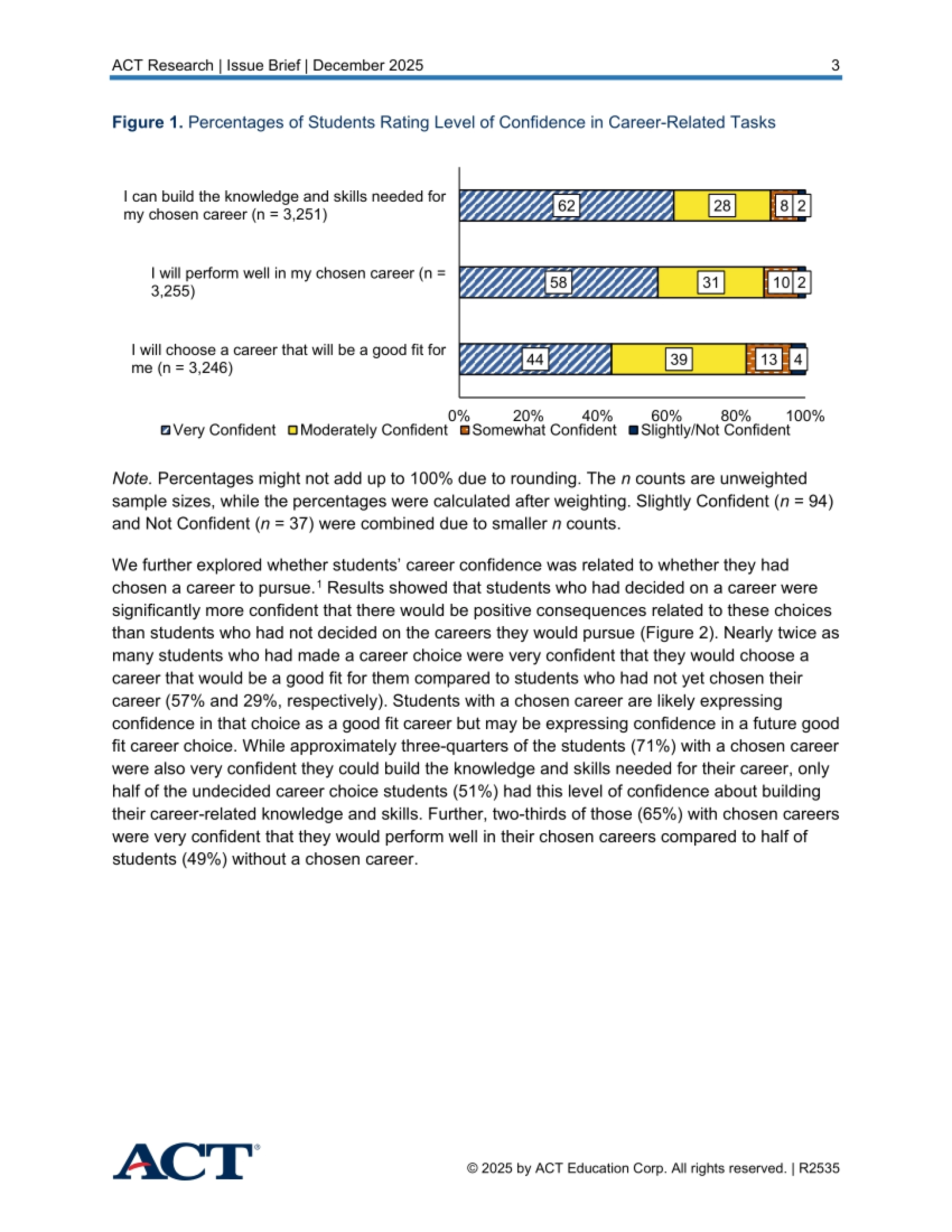
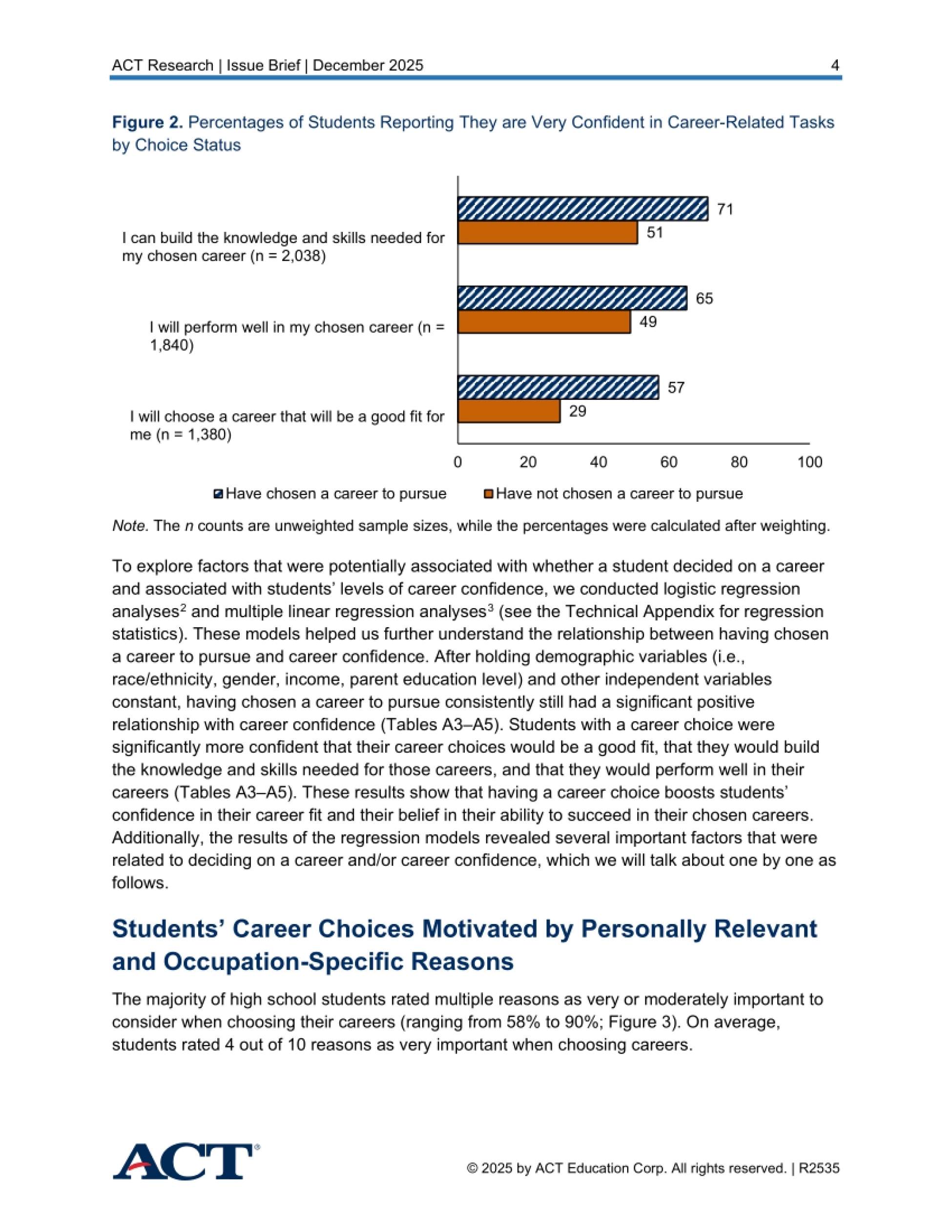
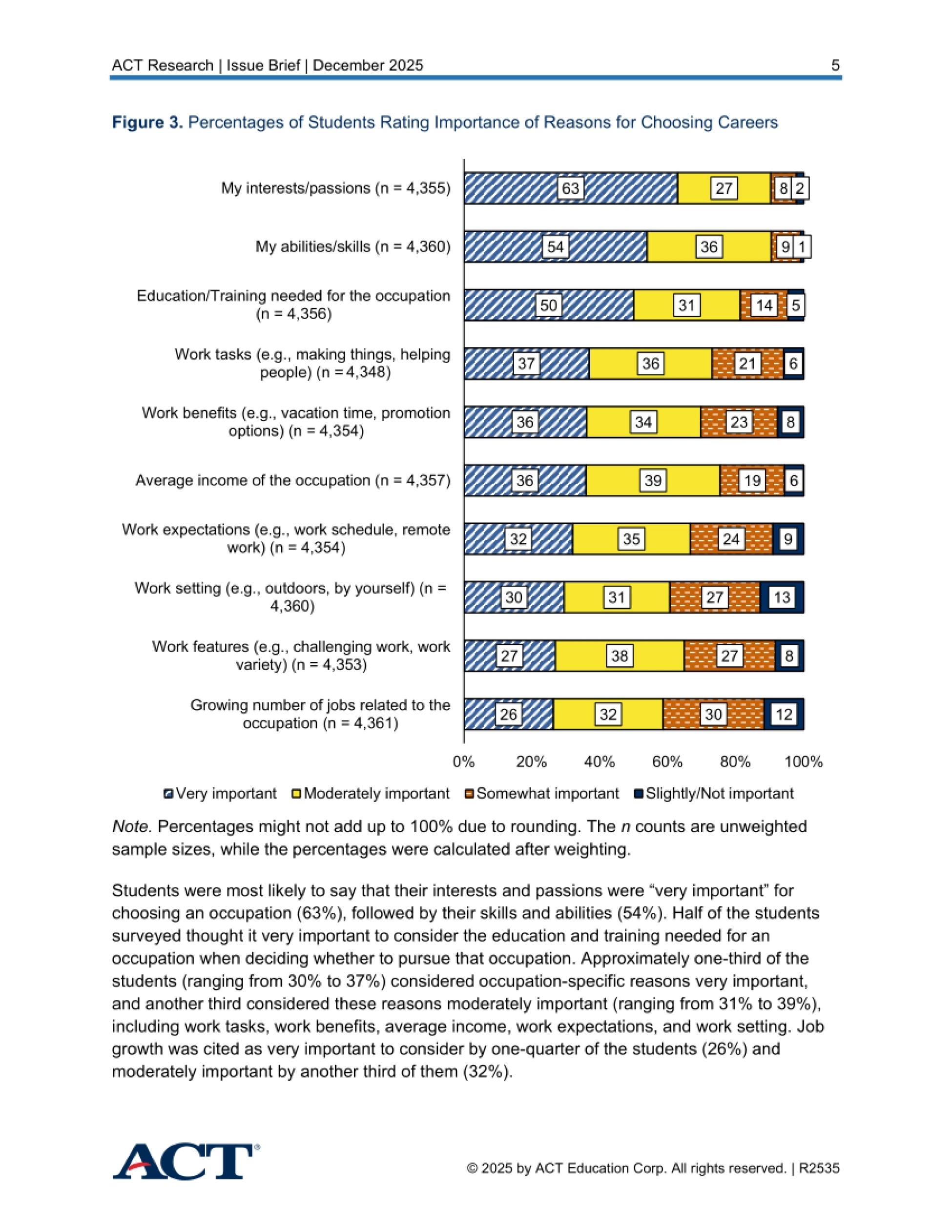
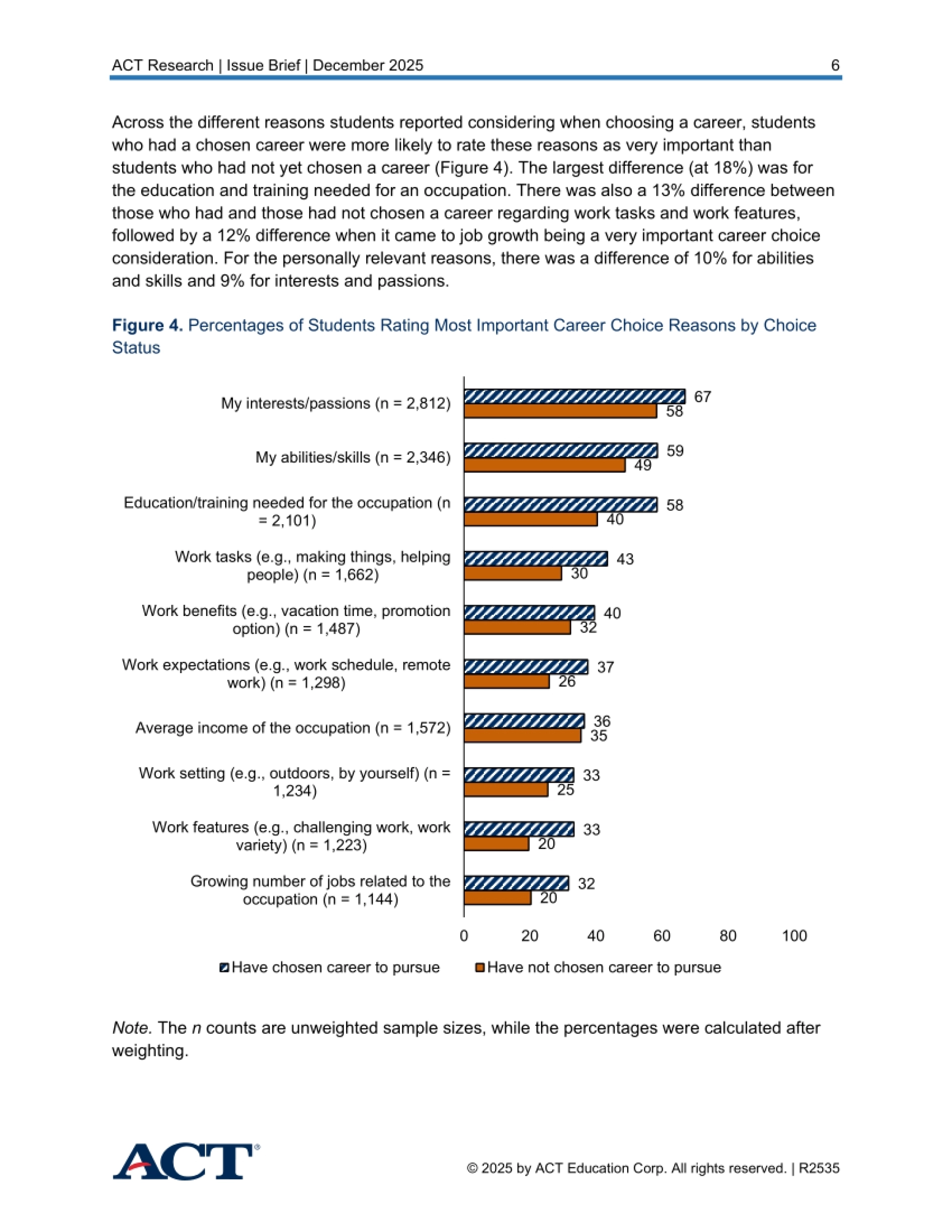
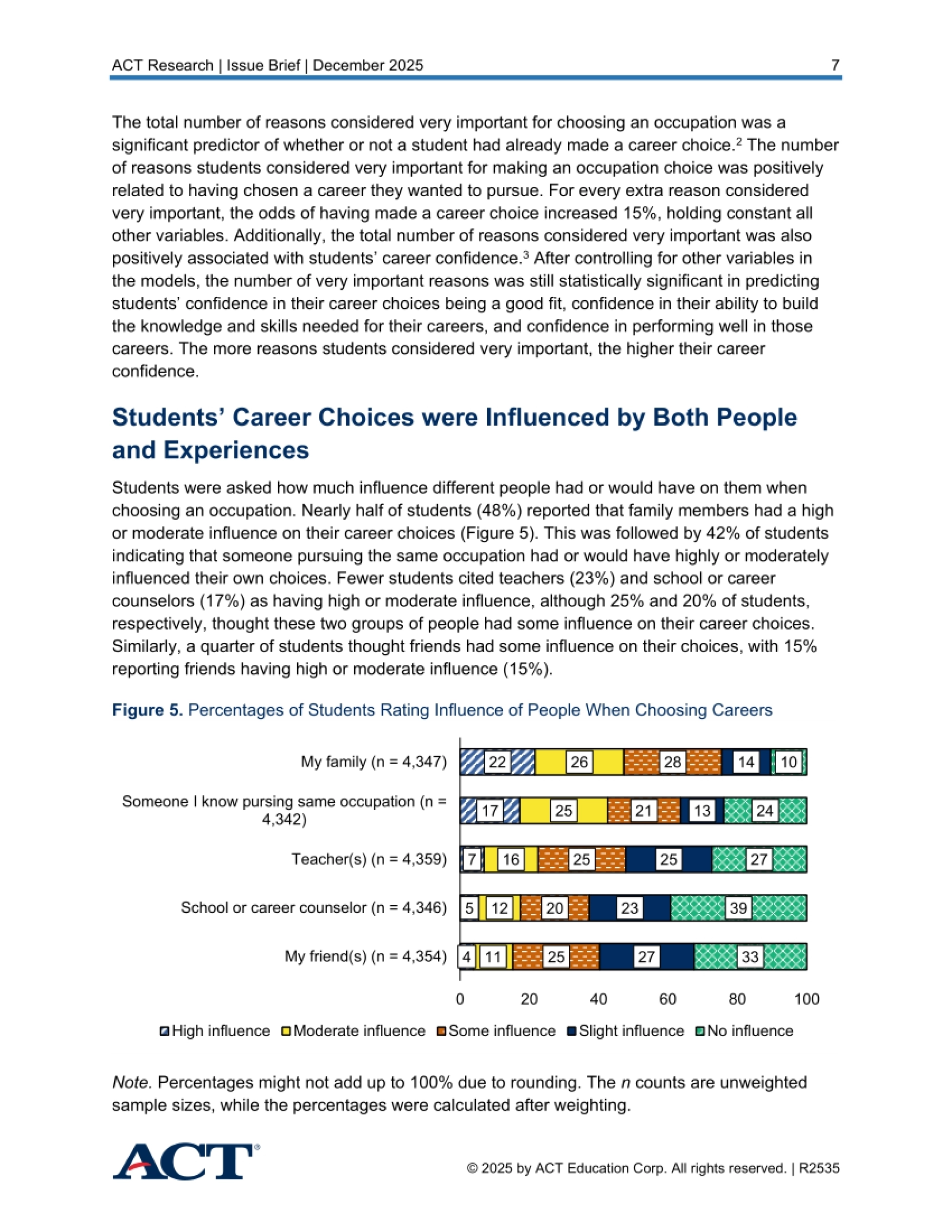
ACT Research | Issue Brief | December 2025 1 High School Students’ Career Choices and Career Confidence: Motivations, Influences, and Challenges Becky L. Bobek and Joyce Z. Schnieders Introduction Choosing a career is among the most significant decisions that happen in a person’s life. These choices can impact educational attainment, future opportunities, work success, and personal well-being. Well-considered career choices that align with an individual’s interests, skills, and/or values are associated with higher job performance, higher earnings, and greater job satisfaction (Hoff et al., 2020; Ismail et al., 2019; Neumann et al., 2009). Career choices that are a good fit also contribute to greater mental health and well-being (Redekopp & Huston, 2018). In contrast, poorly considered career decisions can lead to consequences such as greater work stress, job dissatisfaction, and lower job commitment, which may negatively affect an individual’s work and personal life (Kristof-Brown et al., 2005; Patel et al., 2024). Thus, it is critical for individuals to make informed and thoughtful career choices that are more likely to lead to rewarding and successful careers. As high school students consider their future career choices, they may face the challenge of navigating hundreds of career options and the potential influences of numerous factors when making these choices. Students may rely on tangible occupational factors such as work tasks, job outlook, and salary to help narrow down their options. They may also consider the education or training needed to enter an occupation, which can either expand or limit their opportunities in different career fields. Students may focus on factors such as interests and passions, which can motivate them to persist through their education and contribute to early career success and longer-term employment (Allen & Robbins, 2008; Stoll et al., 2017; Volodina et al., 2015). Skills and abilities are also critical as they affect whether individuals will perform well on the job (Bandura et al., 2001). In addition, students may prioritize their values and preferences, which can guide them toward careers that align with their belief system and desired lifestyle. Further, family members and others in the lives of students such as teachers and friends can also shape career choices through their expectations, support, and positive or negative perspectives on careers (Kazi & Akhlaq, 2017). Direct work-relevant experiences have also been shown to affect career choices (Lent et al., 2002). Clearly, a wide range of factors can influence career choices and understanding these can help students make more informed decisions about which careers will fit them best. Career decision-making self-efficacy (confidence in the ability to complete tasks involved in making career decisions) is also a particularly salient factor as it re...










































