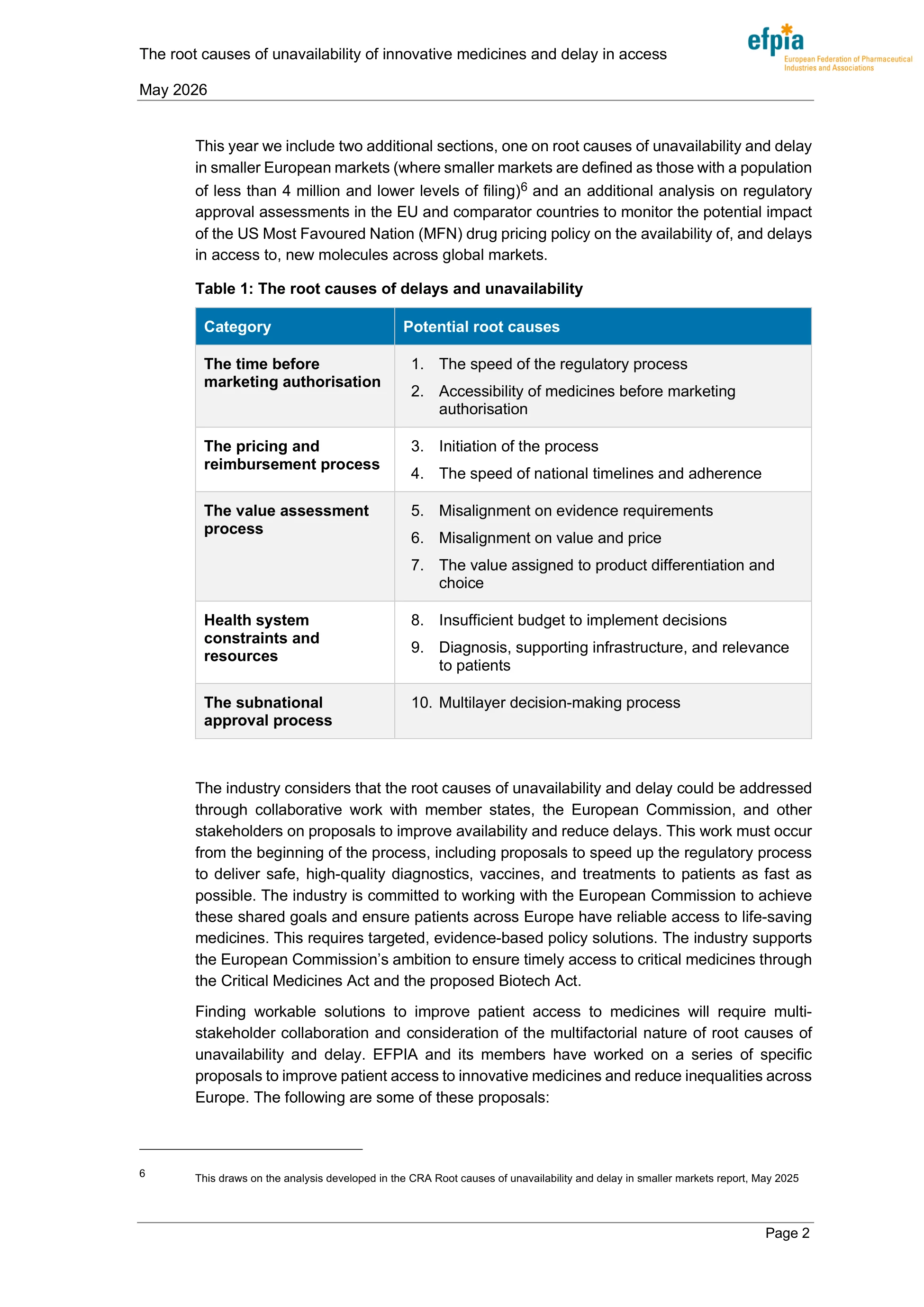
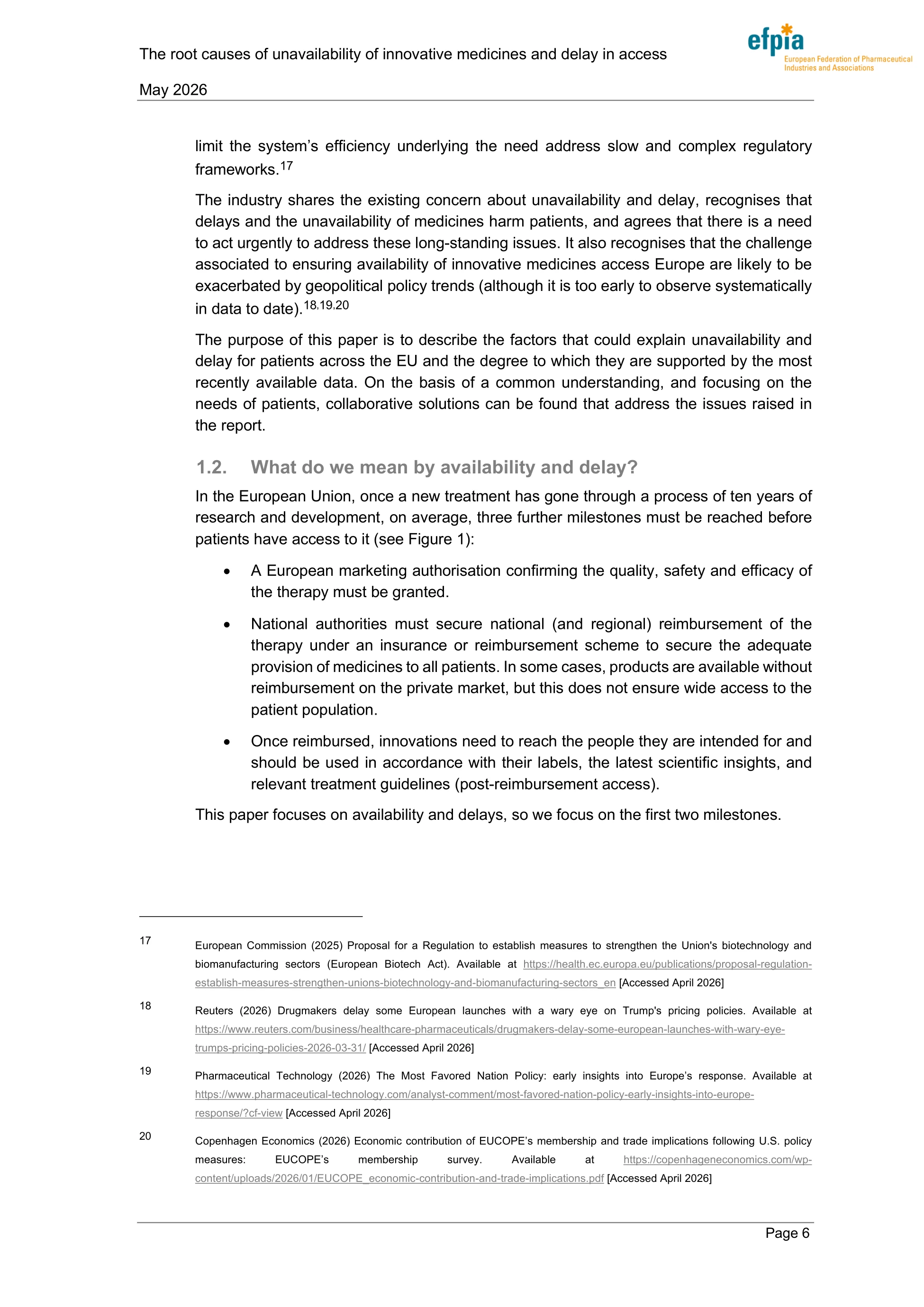
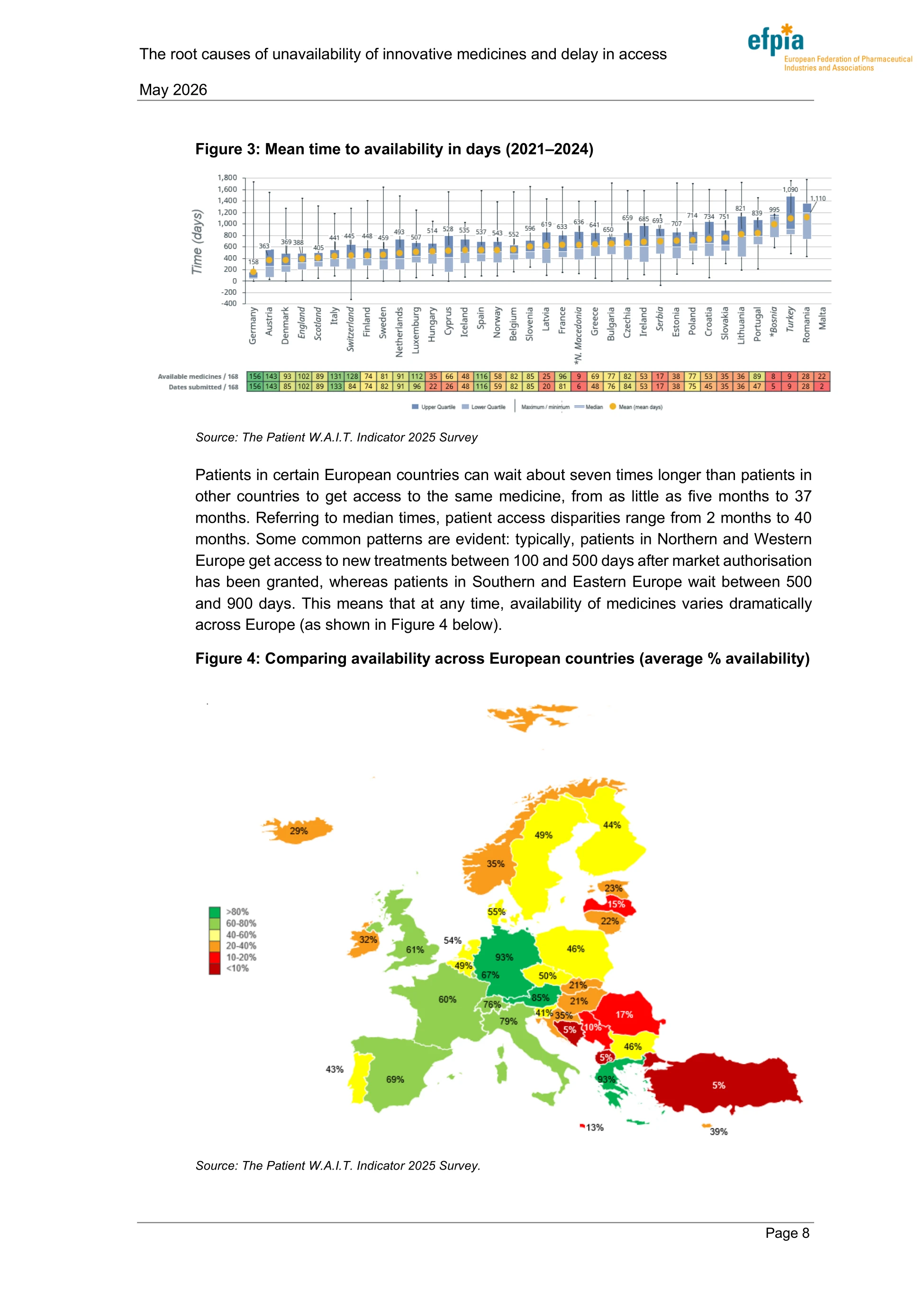
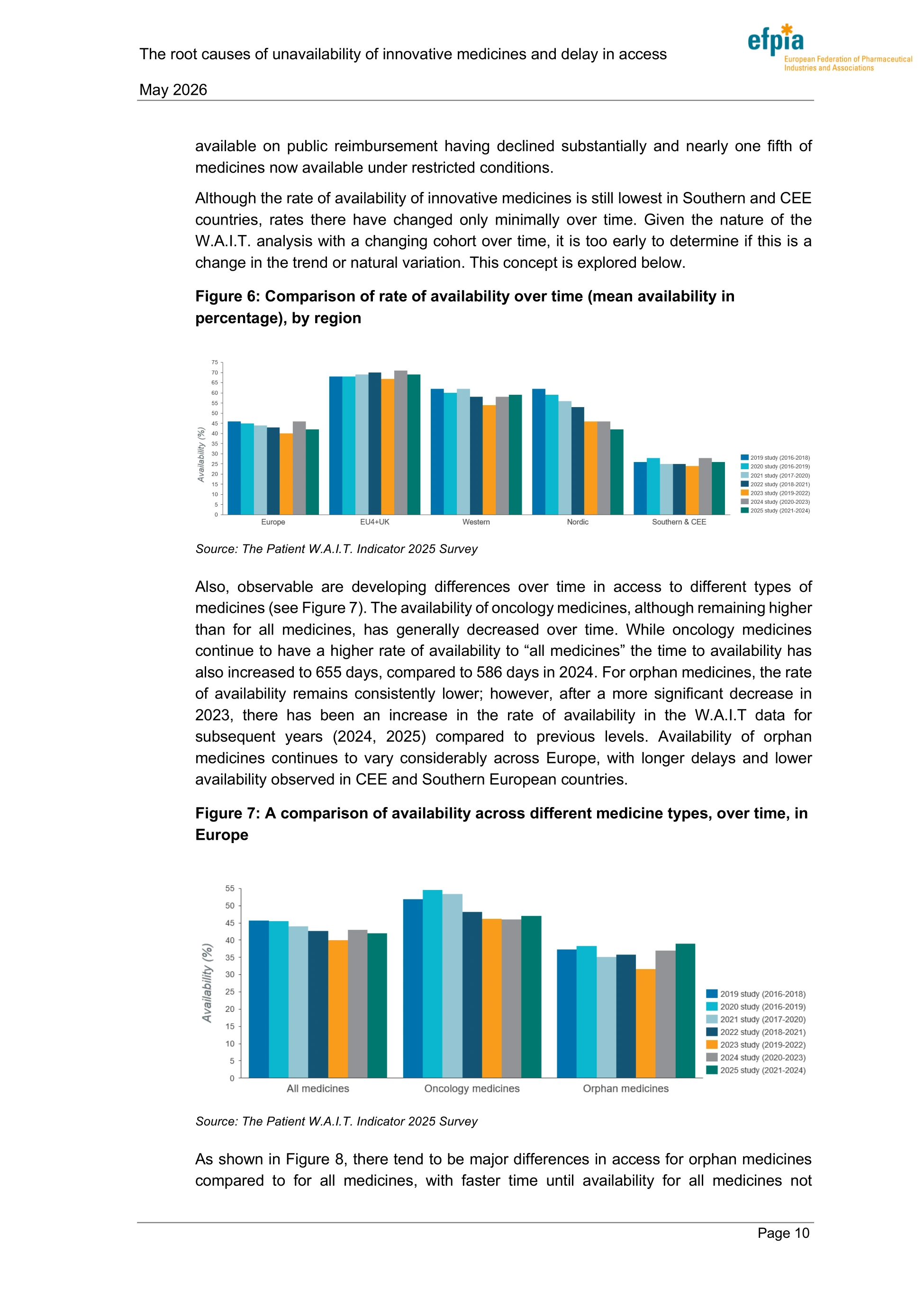
The root causes of unavailability of innovative medicines and delay in access May 2026 Page 1 The root causes of unavailability of innovative medicines and delay in access: Shortening the wait Executive summary1 The unprecedented speed of innovation exhibited over the last five years and the promise of the industry pipeline2 provide an important opportunity to improve outcomes for patients. There is common agreement that the value of innovation is realised only when patients benefit from advances in treatment. However, a significant number of medicines are not available across all European Union (EU) markets.3 EFPIA has for many years looked at the length of time it takes for medicines to be made available. As illustrated by the most recent data in the Patient W.A.I.T. Indicator 2025 Survey, the average time to reimbursement for innovative treatments across EU27 countries has reached 597 days, ranging from 158 days in Germany to 1,110 days in Romania. The median time to availability is 532 days, with even more pronounced disparities between countries - ranging from 56 days in Germany to 1,201 days in Romania.4 There are patient access inequities within Europe, with significant differences across countries in the number of products available at any given time and that the time taken prior to national reimbursement also varies significantly from one country to another. The industry shares concern about these delays and recognise that delays and the unavailability of medicines harm patients. These concerns are important context for the debate regarding the impact of the EU’s General Pharmaceutical Legislation and the proposed Biotech Act and whether it will improve access to medicines for patients in the EU. Over the past six years, EFPIA has documented the root causes of access inequality and found 10 interrelated factors that explain unavailability and delay (defined as length of time from European marketing authorisation to availability at the member state level) with regard to innovative medicines, building on the W.A.I.T. analysis.5 These factors are rooted in medicines access systems and processes in the EU member states and the corresponding impact on commercial decision-making. They include a slow regulatory process, late initiation of market access assessment, duplicative evidence requirements, reimbursement delays, and local formulary decisions. Because the root causes are multifactorial, they can be solved only by stakeholders working together. 1 Terminology: This paper has adopted the terminology used in the updated W.A.I.T. analysis. Definitions are in the glossary. 2 IQVIA (2024) 2024 Pipeline Review – Innovation for Unmet Need. Available at: https://efpia.eu/media/mezjxddv/2024-pipeline-review.pdf [Accessed April 2026] 3 This paper focuses primarily on root causes of delay with respect to products approved centrally by the EMA. T...










































