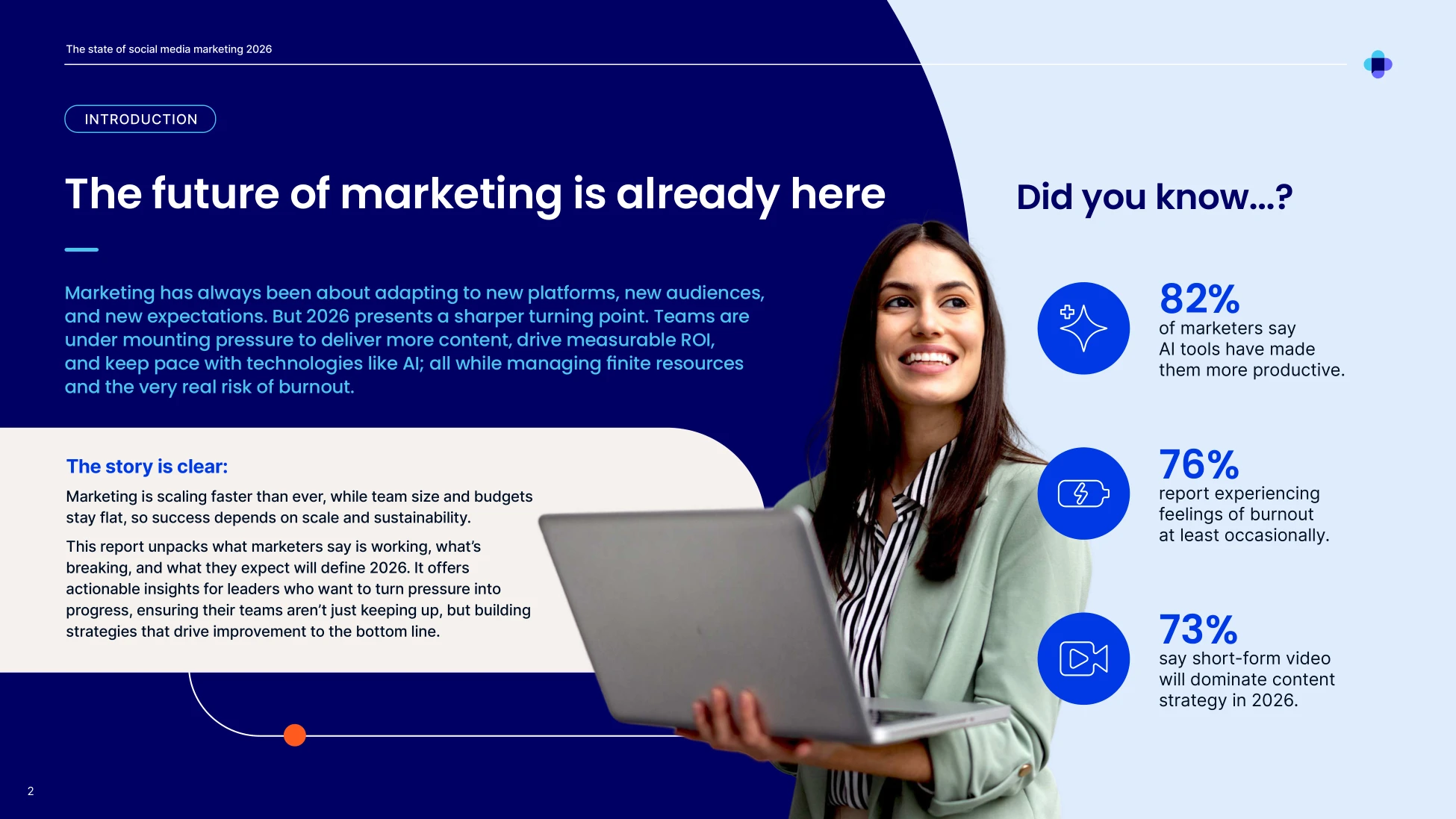
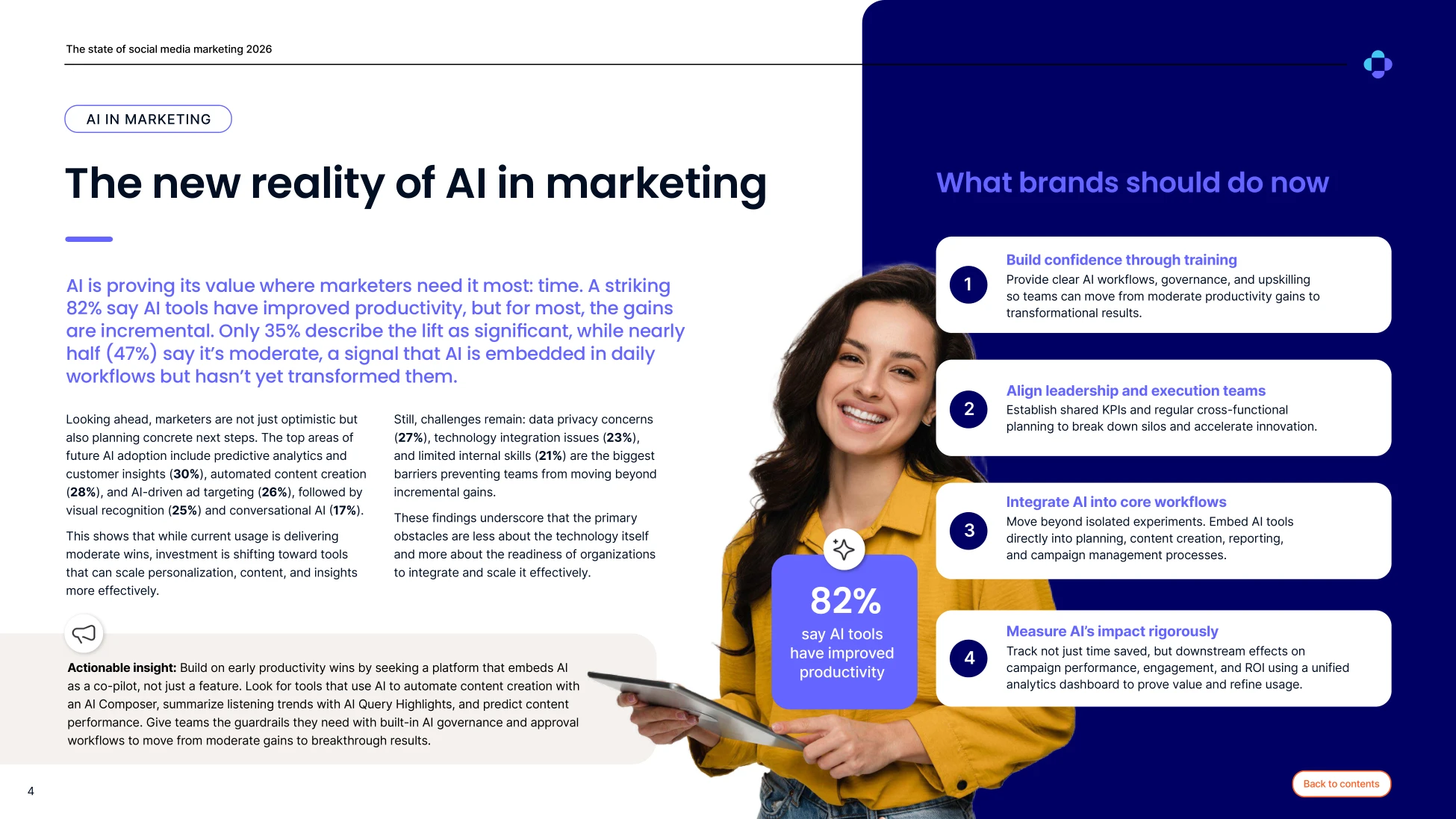
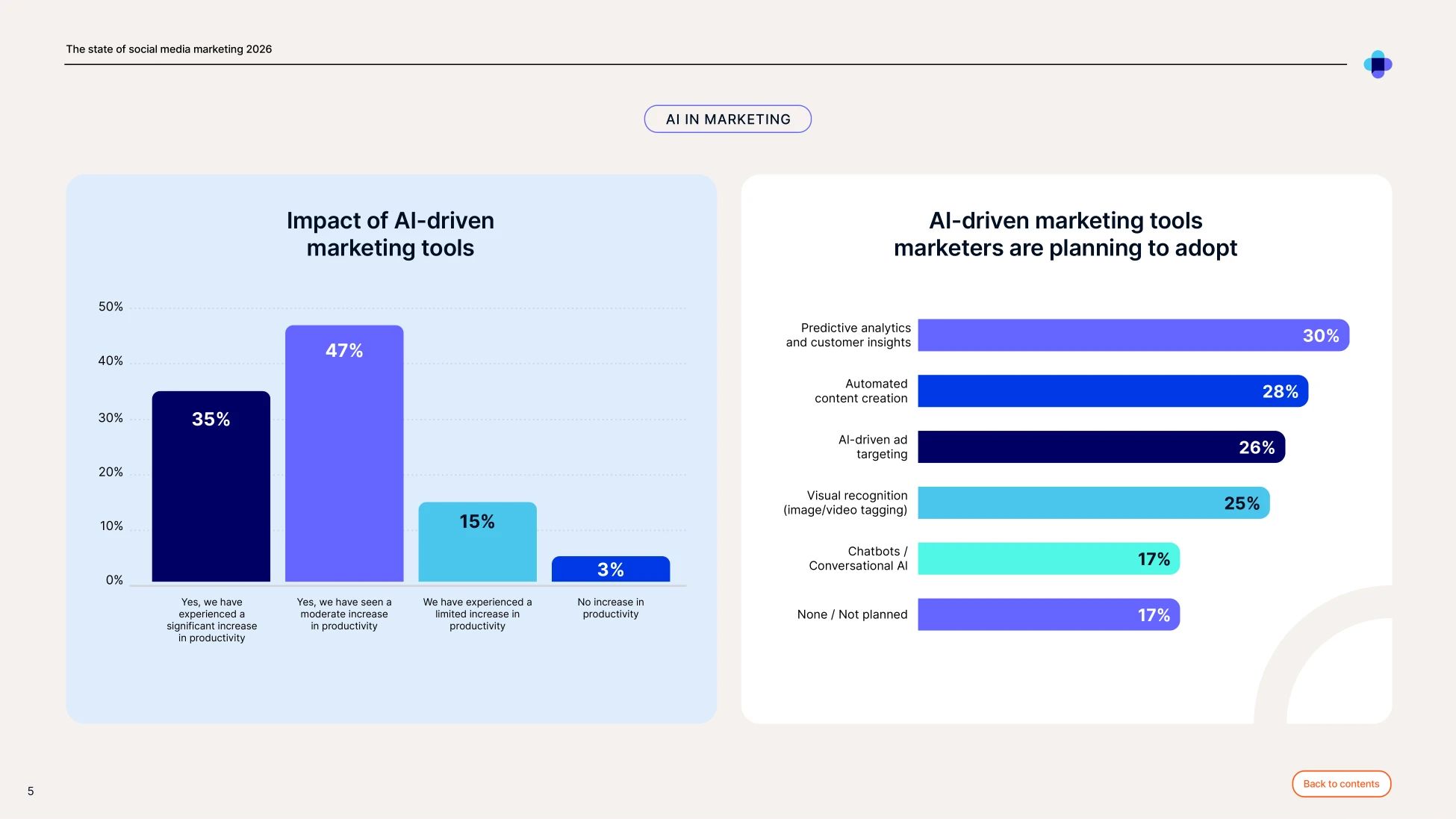
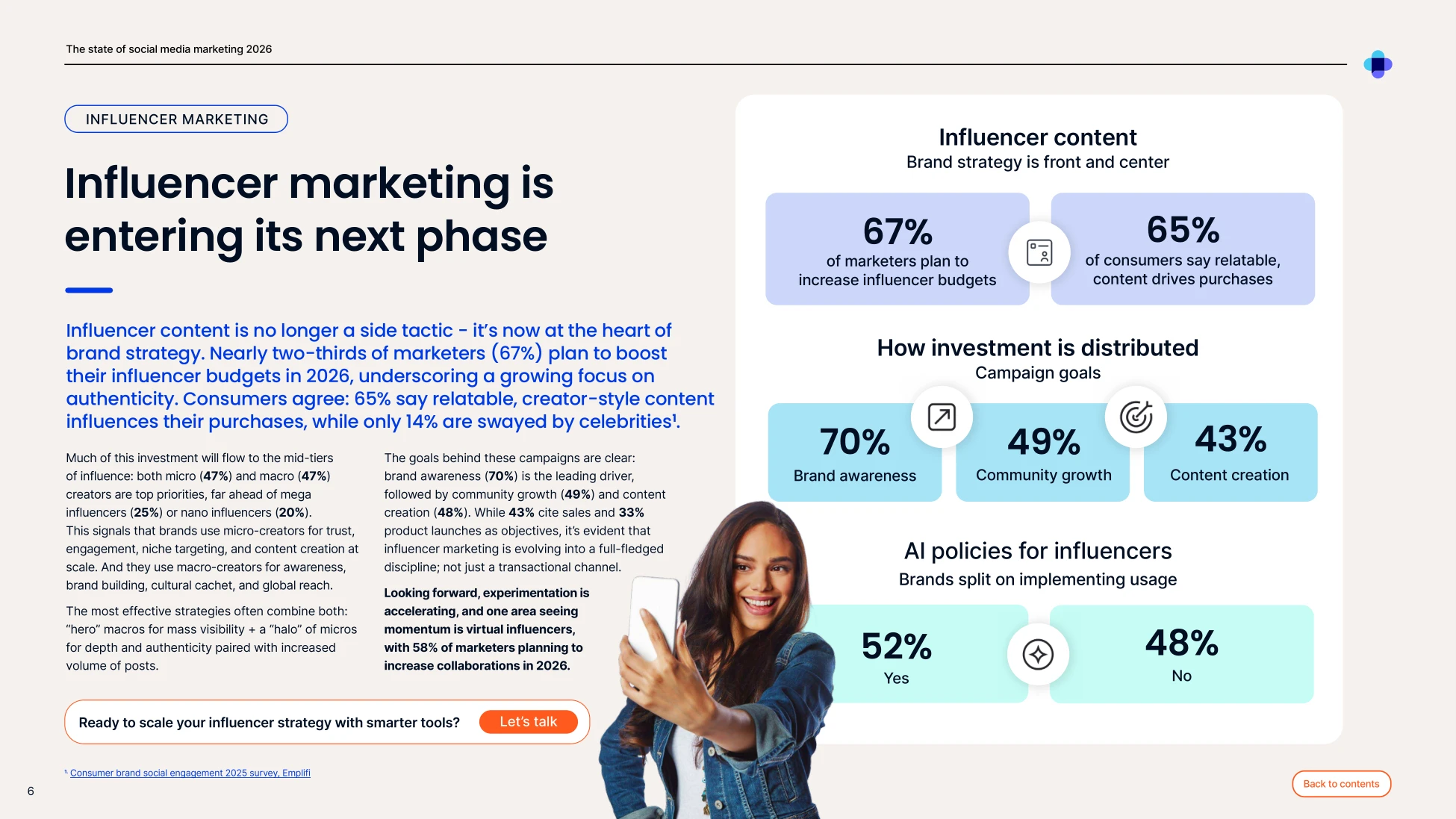
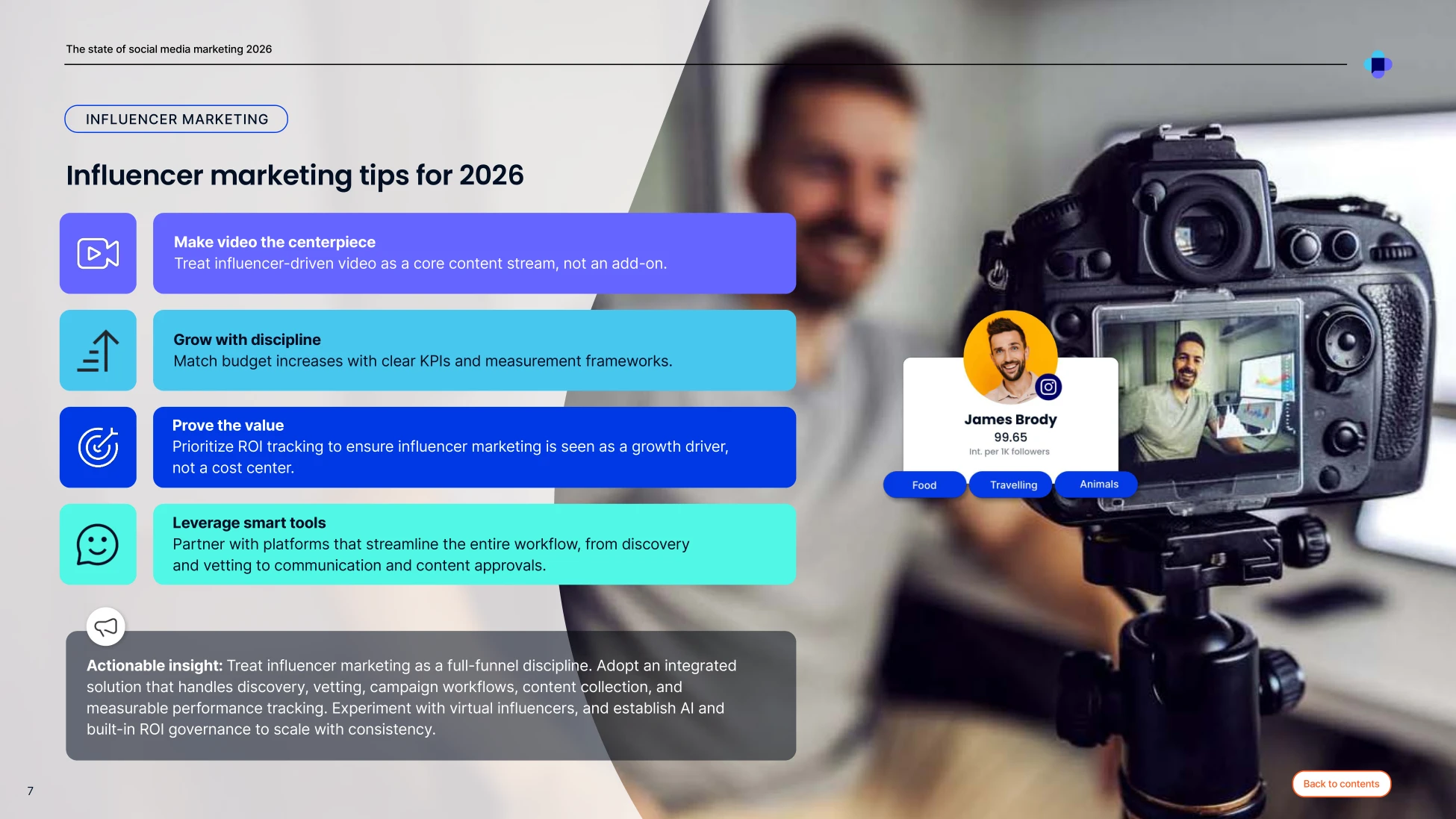
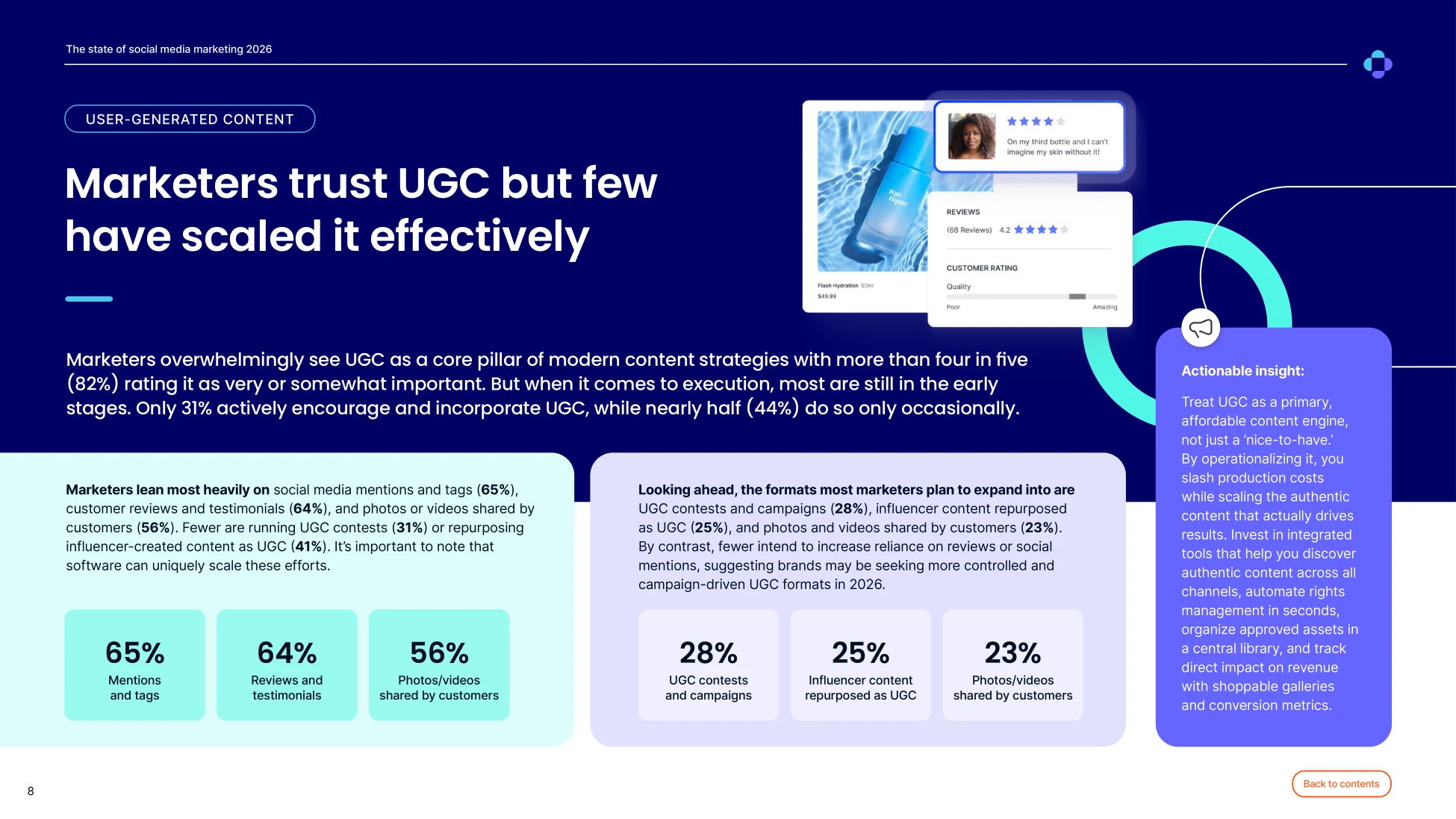
The state of social media marketing 2026Data-driven insights from marketers on trends, tools, and team dynamicsSURVEY REPORTMarketing has always been about adapting to new platforms, new audiences, and new expectations. But 2026 presents a sharper turning point. Teams are under mounting pressure to deliver more content, drive measurable ROI, and keep pace with technologies like AI; all while managing finite resources and the very real risk of burnout.The future of marketing is already hereINTRODUCTIONThe story is clear: Marketing is scaling faster than ever, while team size and budgets stay flat, so success depends on scale and sustainability. This report unpacks what marketers say is working, what’s breaking, and what they expect will define 2026. It offers actionable insights for leaders who want to turn pressure into progress, ensuring their teams aren’t just keeping up, but building strategies that drive improvement to the bottom line.Did you know...?73% say short-form video will dominate content strategy in 2026.76% report experiencing feelings of burnout at least occasionally.82% of marketers say AI tools have made them more productive.2The state of social media marketing 2026What you will find in this survey reportThis study explores the forces shaping modern marketing while revealing how marketing teams are adapting, surviving the AI onslaught and learning to thrive.CONTENTS(CLICK SECTIONS TO JUMP TO PAGE) AI in marketing 04Influencer marketing 06User-generated content (UGC) 08Social media marketing strategy 11Leadership support & collaboration 13Team capacity & burnout 16Future 183MethodologyNature of survey: This was an online survey offered in English onlySample size: The sample was 564 marketers across B2C and B2B rolesWhen: Data collected September, 2025Qualifications: Must work in a marketing-related role3The state of social media marketing 20263Back to contentsLooking ahead, marketers are not just optimistic but also planning concrete next steps. The top areas of future AI adoption include predictive analytics and customer insights (30%), automated content creation (28%), and AI-driven ad targeting (26%), followed by visual recognition (25%) and conversational AI (17%).This shows that while current usage is delivering moderate wins, investment is shifting toward tools that can scale personalization, content, and insights more effectively.Still, challenges remain: data privacy concerns (27%), technology integration issues (23%), and limited internal skills (21%) are the biggest barriers preventing teams from moving beyond incremental gains.These findings underscore that the primary obstacles are less about the technology itself and more about the readiness of organizations to integrate and scale it effectively.The new reality of AI in marketingAI IN MARKETINGAI is proving its value where marketers need it most: time. A striking 82% say AI tools ...