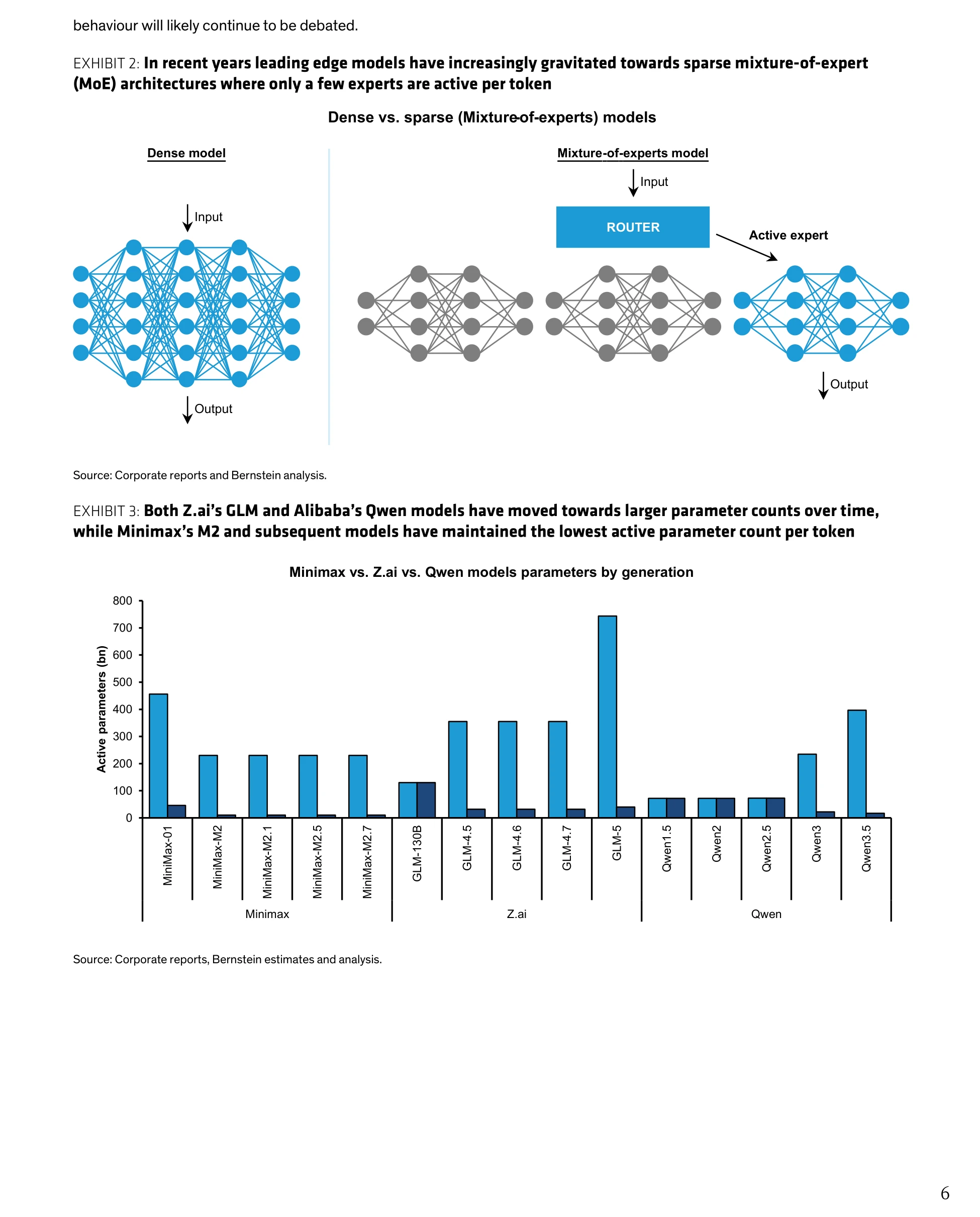
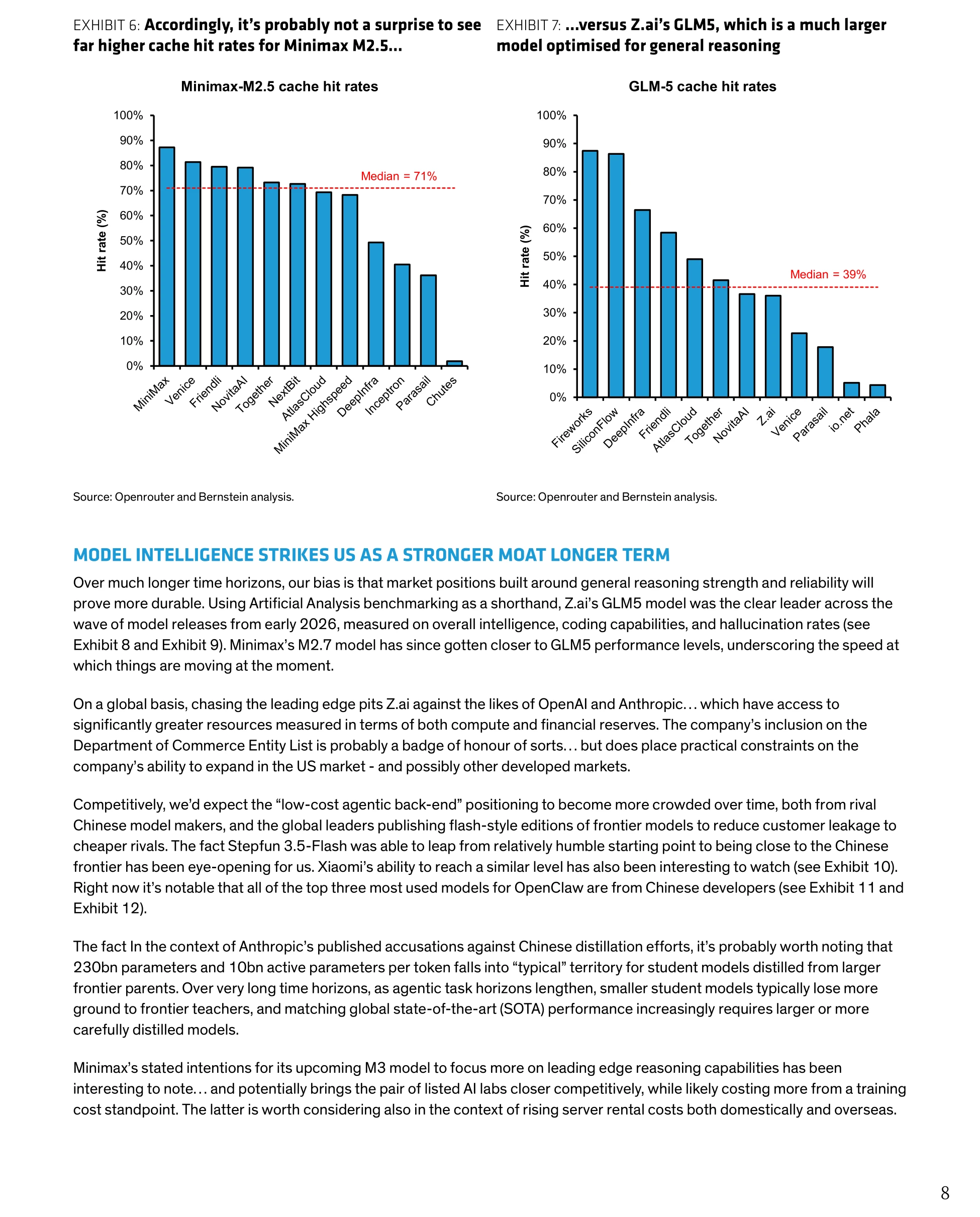
China InternetChina Internet: The strategic implications of AI modelarchitectureRobin Zhu+852 2123 2659Charles Gou+852 2123 2618Min-Joo Kang+852 2123 2644Strategic choices drive AI model architecture. AI development and costs continue todominate investor discussions across our China Internet coverage. This note is intended asa low-jargon discussion on the model design choices of China’s top AI labs, and what theyreveal about strategic positioning and go-to-market.A brief primer on AI model architectures, KV cache use, RL. Global AI modeldevelopers have increasingly adopted MoE architectures in recent years, where onlysmall sections of parameters in a large model are activated per token - depending onspecialisation on different vertical domains, languages, or skill sets. The key values (KV)cache meanwhile represents a key feature of AI models which supports reduced memoryusage and faster inference. Reinforcement learning serves as a key input into inferenceperformance, and the types of responses considered preferable.Choices along the cost vs. performance spectrum. Across the top Chinese AI labs,Minimax stands out for offering a smaller model optimised for low active parameter scaleper token, reinforcement learning frameworks that prioritise agentic tool use, while thecompany’s pricing strategy incentivises high KV cache usage. Zhipu’s GLM5 model islarger and benchmarks better on general reasoning, coding capabilities, and hallucinationcontrol… but comes with higher token costs. Qwen’s strategy has been to offer a broadrange of models aimed at maximising capture of AI compute demand.Thoughts on the adoption curve. Year to date, the M2.5 model's optimisation for lowcost agentic use has made it one of the most popular models used to support OpenClaw.Z.ai’s focus on leading edge reasoning capabilities and reliability aligns well with thecompany’s more academic background, and focus on enterprise use cases where reliabilityis key. Thinking from the perspective of early adopter cohorts and growth S-curves, heavyuse among power users and enterprises strikes us as less vulnerable to a “trough ofdisillusionment” moment than viral consumer OpenClaw adoption.Competition, and model commoditisation. Over long time horizons, our bias is thatmarket positions built around general reasoning strength and reliability, and specialisttask completion will prove more durable, while the “low-cost agentic back-end” corner ofthe market becomes more crowded with competition from both Chinese devs (includingthe independent AI labs but also the Internet platforms seeking to develop consumer usecases), and flash-style models from the global leaders. Minimax’s pivot to leading edgereasoning capabilities for M3 struck us as notable… and necessary.Is 20-30% training cost growth going to be enough? Alibaba, Tencent, and Baidu allannounced price hikes in their respective AI cloud units, while ...










































