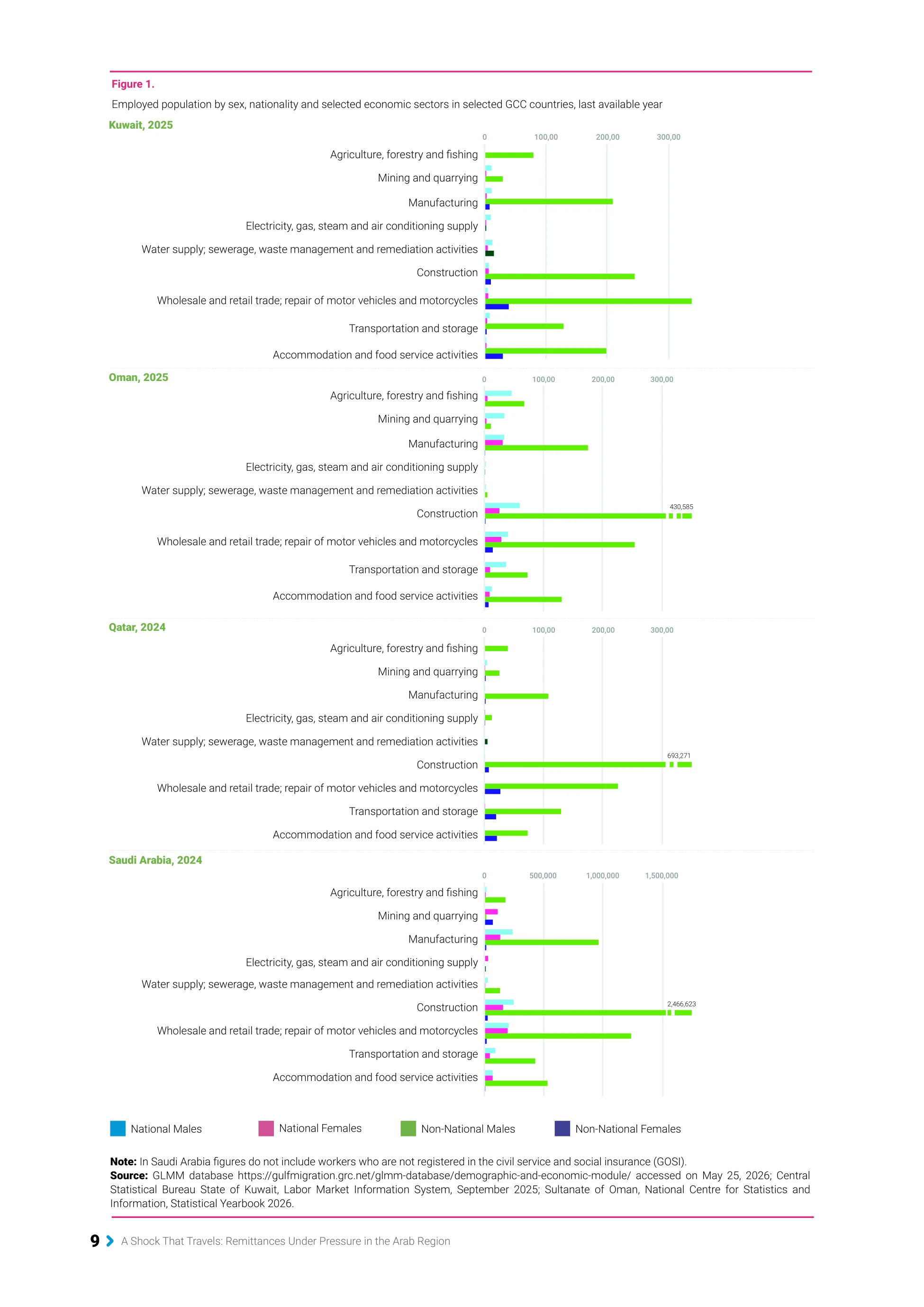
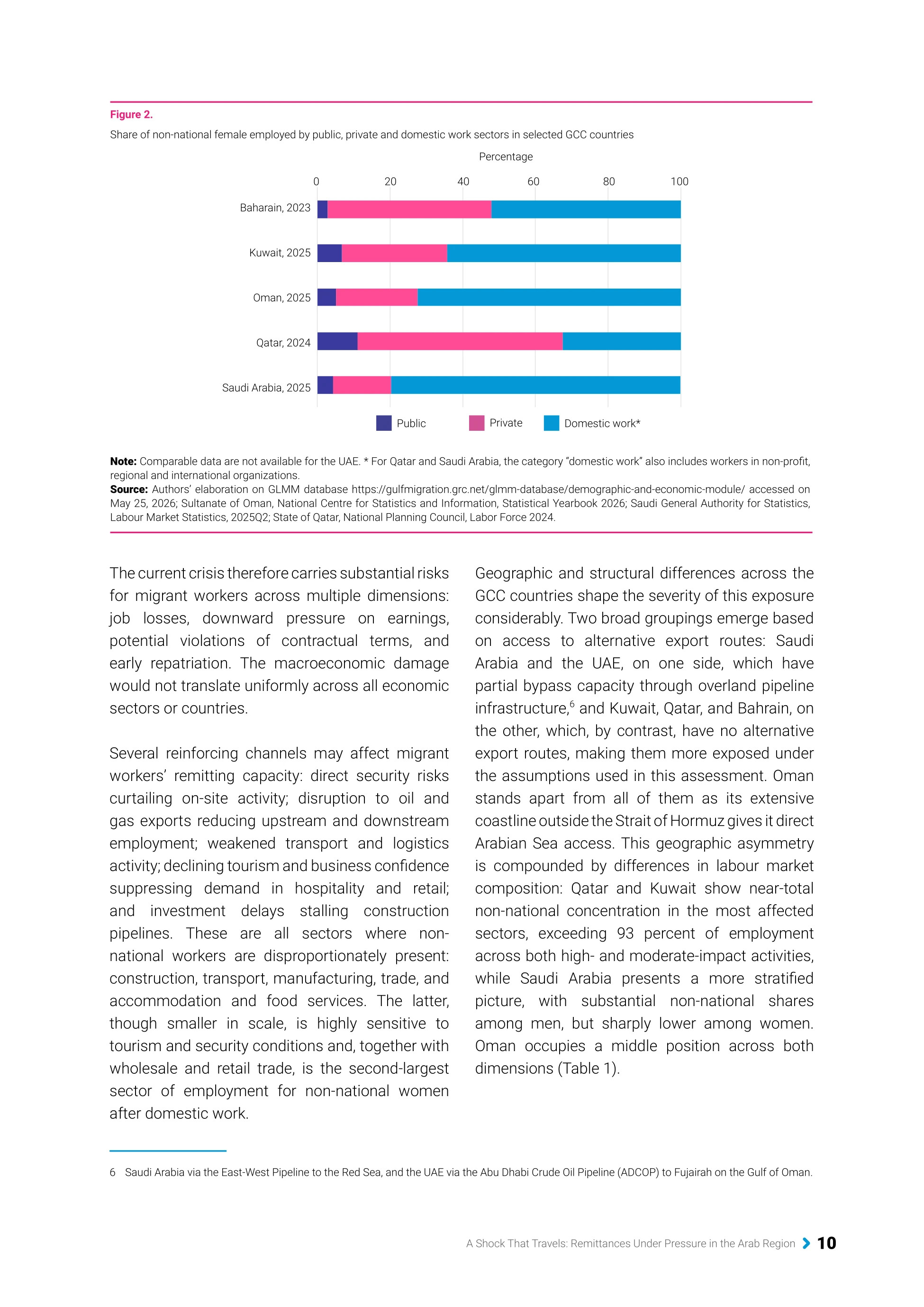
POLICY BRIEF’A SHOCK THAT TRAVELS: REMITTANCES UNDER PRESSURE IN THE ARAB REGIONRIPPLE EFFECTS OF THE 2026 MIDDLE EAST CRISIS ON GCC ECONOMIES, MIGRANT WORKERS, HOUSEHOLD WELFARE AND GENDER EQUALITYPOLICY BRIEFCopyright © 2026 UN Women. All rights reserved.Publication by UN Women Regional Office for the Arab StatesUN WOMEN ADVANCES WOMEN’S RIGHTS, THE EMPOWERMENT OF ALL WOMEN AND GIRLS AND EQUALITY BETWEEN WOMEN AND MEN. As the lead United Nations entity on women’s empowerment, and secretariat of the UN Commission on the Status of Women, we support advancement of laws, institutions, social norms and services to close the gap between women and men and build an equal world for all women and girls. Our partnerships with governments, women’s movements and the private sector, coupled with our coordination of the broader United Nations, deliver lasting changes. We make strides in four areas: leadership, economic empowerment, freedom from violence, and peace, security and humanitarian action.UN Women keeps the rights of women and girls at the centre of global progress – always, everywhere. Because equality between men and women is not just what we do. It is who we are.VISION: ESCWA, an innovative catalyst for a stable, just and flourishing Arab regionMISSION: Committed to the 2030 Agenda, ESCWA’s passionate team produces innovative knowledge, fosters regional consensus and delivers transformational policy advice.Together, we work for a sustainable future for all.https://www.unescwa.org/August 2026A SHOCK THAT TRAVELS: REMITTANCES UNDER PRESSURE IN THE ARAB REGIONRIPPLE EFFECTS OF THE 2026 MIDDLE EAST CRISIS ON GCC ECONOMIES, MIGRANT WORKERS, HOUSEHOLD WELFARE AND GENDER EQUALITYPOLICY BRIEFEXECUTIVE SUMMARY 51. A GULF SHOCK WITH REGIONAL CONSEQUENCES 62. WHY GCC LABOUR MARKET STRUCTURE MATTERS 8 FOR REMITTANCE FLOWS3. THE REMITTANCE TRANSMISSION CHANNEL 124. WHO RECEIVES REMITTANCES, AND WHAT HAPPENS AT 16 HOME?5. LOOKING AHEAD: UNCERTAINTIES, RISKS AND POLICY 19 RESPONSES6. WORKS CITED 21TABLE OF CONTENTS5A Shock That Travels: Remittances Under Pressure in the Arab RegionThe resumption of hostilities in July 2026 has further undermined an already fragile ceasefire, deepening economic pressures across the Arab region. While member states of the GCC are not directly involved in the conflict, economic disruptions affecting trade, logistics, investment, and energy markets are placing downward pressure on growth prospects and increasing risks for the region’s approximately 28 million foreign workers, many of whom are employed in sectors highly exposed to economic downturns, including construction, trade, transport, manufacturing, hospitality, and domestic work. A prolonged downturn could lead to job losses, lower earnings, legal insecurity and repatriation, reducing migrants’ ability to support families through remittances. Countries with higher exposure to poten...