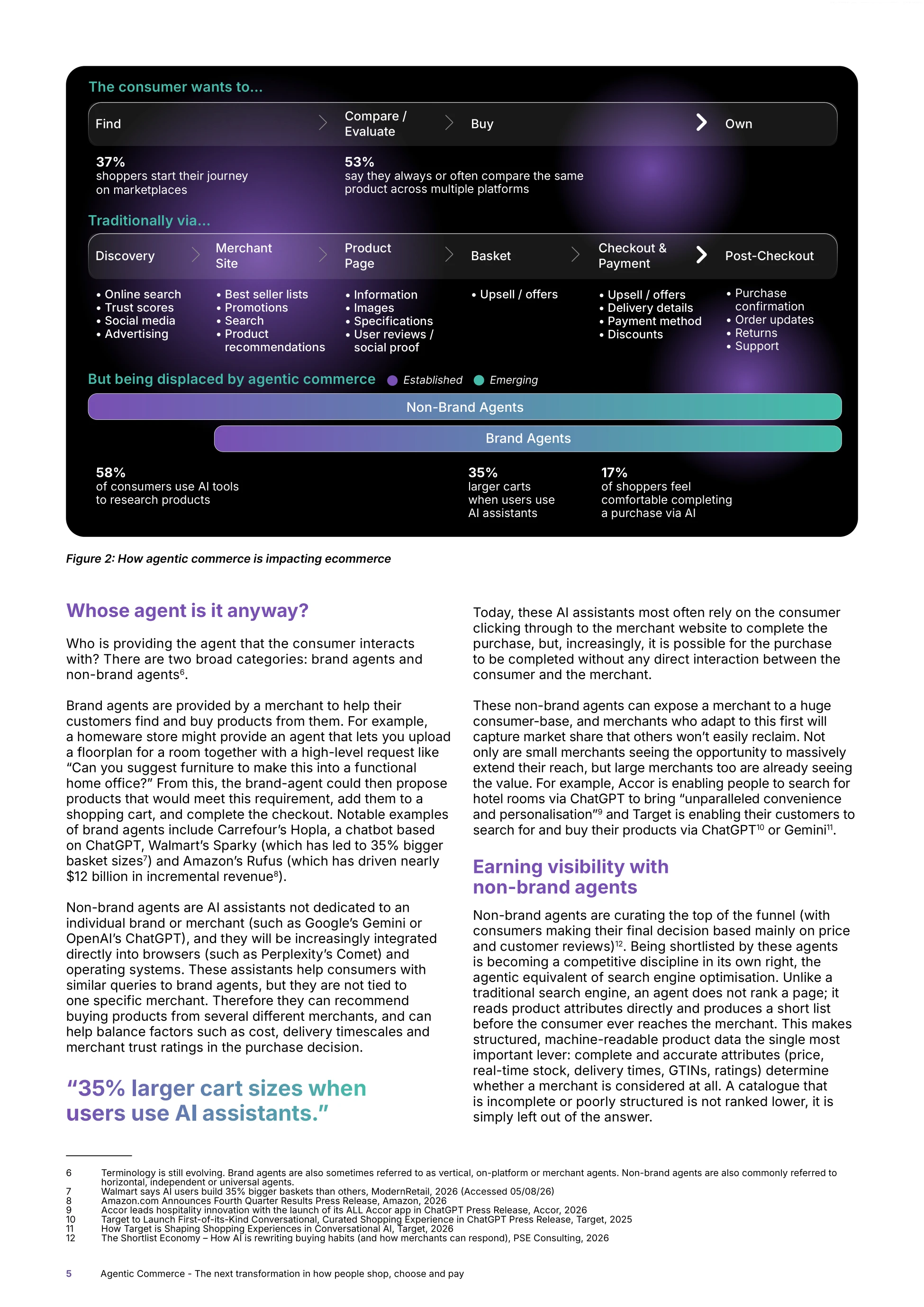
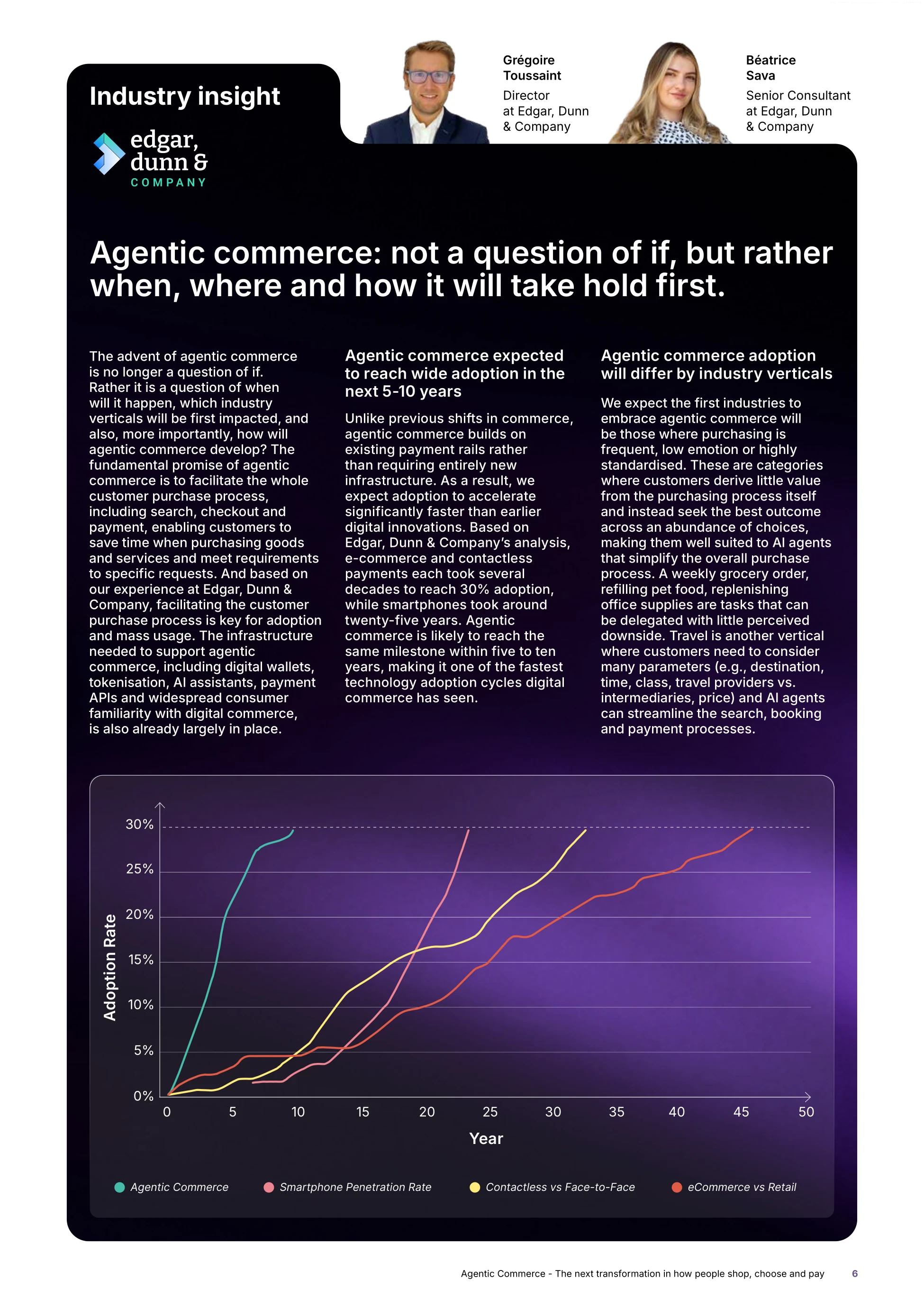
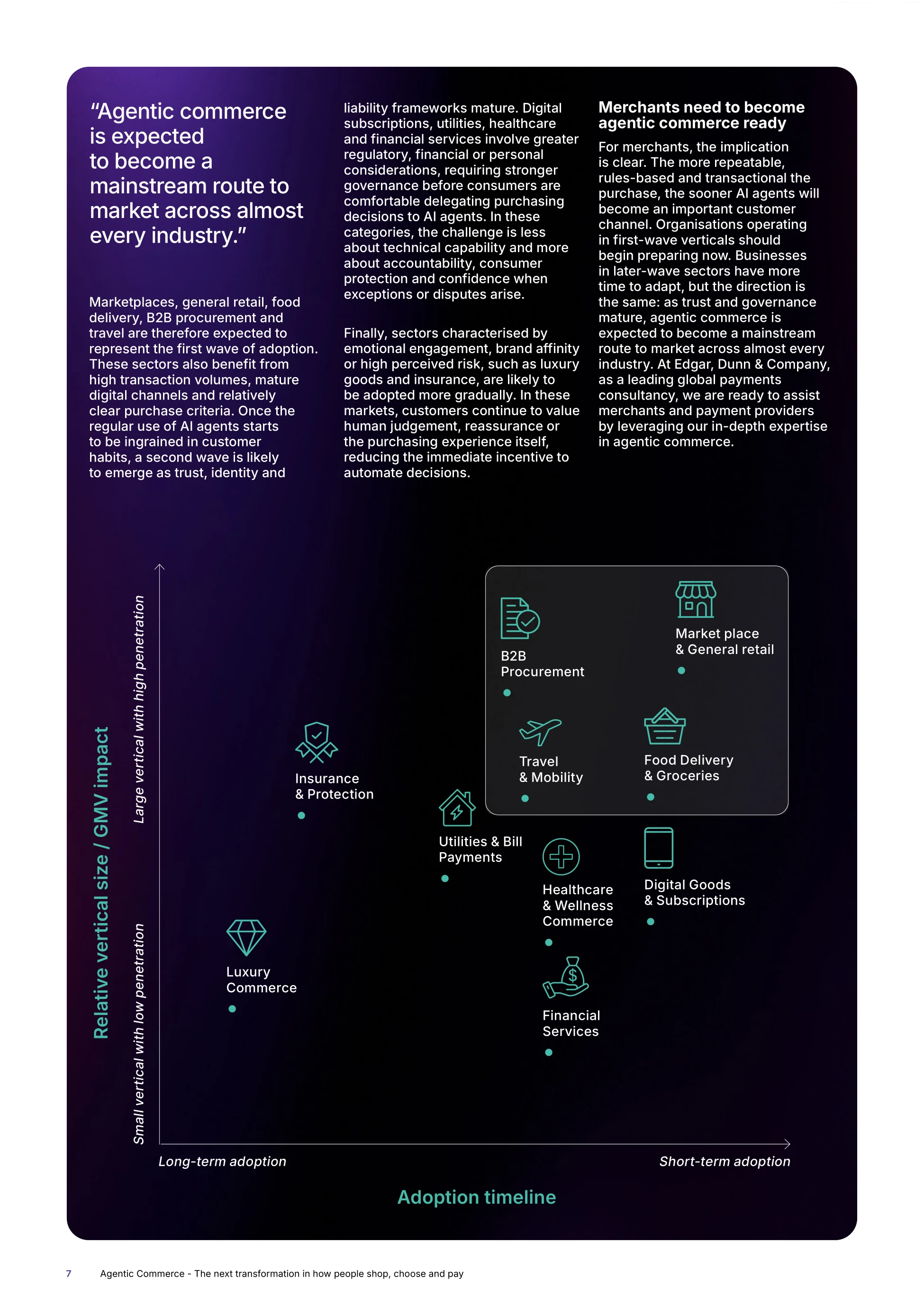
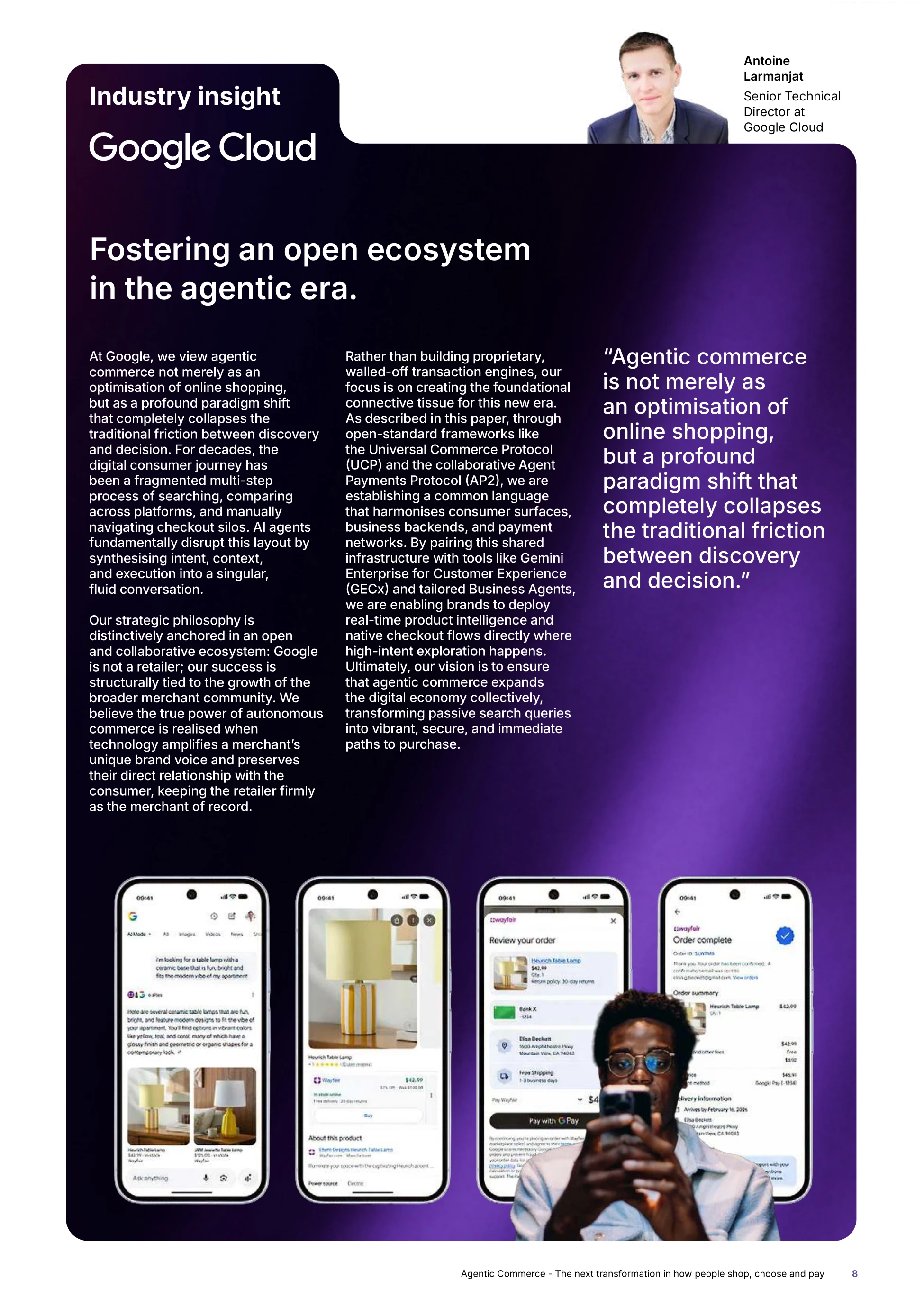
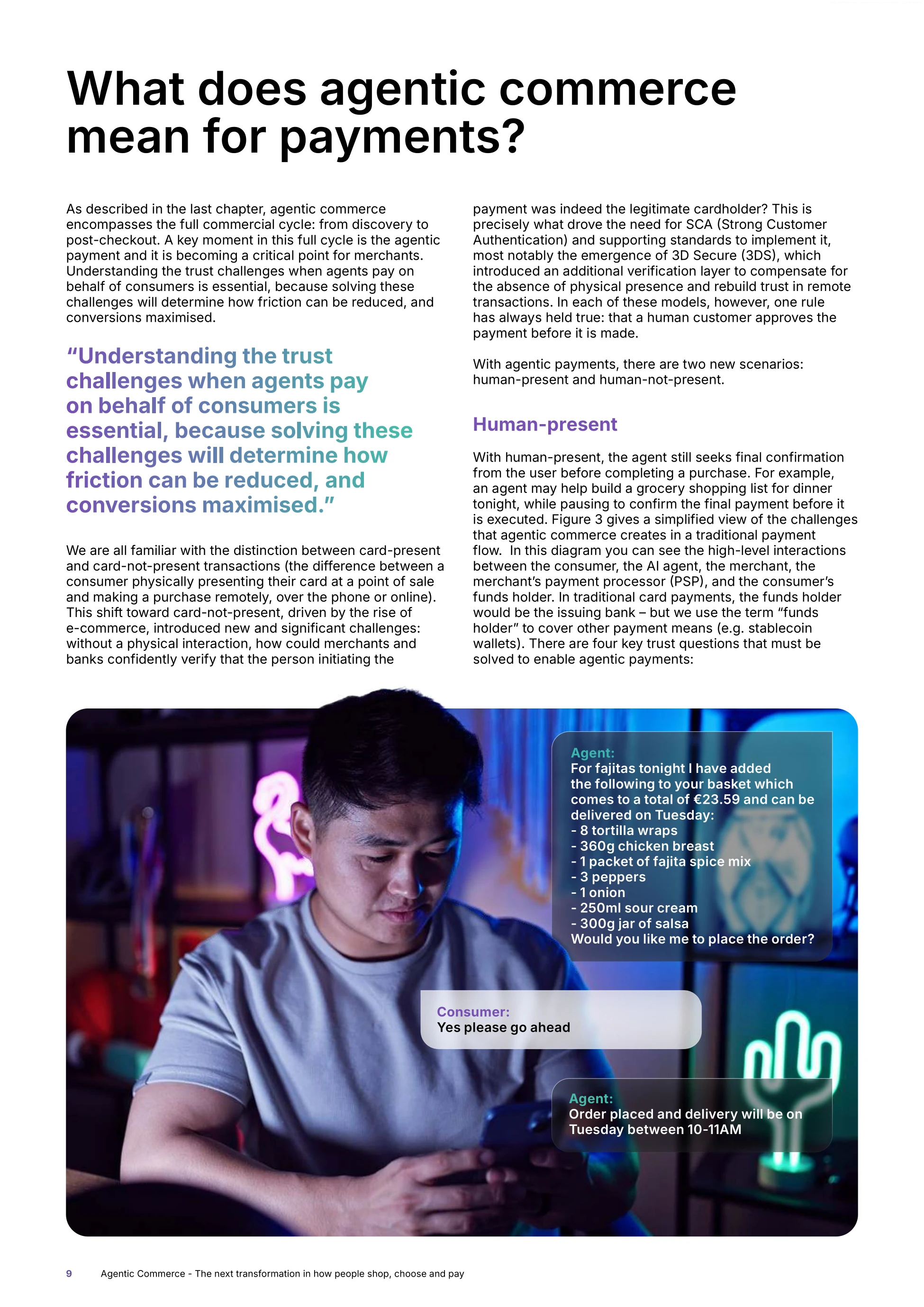
来源:发现报告(www.fxbaogao.com/view?id=5748883)| 引用请注明出处Agentic CommerceThe next transformation in how people shop, choose and pay.Featuring industry insights from来源:发现报告(www.fxbaogao.com/view?id=5748883)| 引用请注明出处1 Agentic Commerce - The next transformation in how people shop, choose and payForeword We are convinced that agentic commerce represents a promising new channel for commerce: one that will reshape how consumers discover and purchase products, and how merchants and financial institutions engage with them. This transformation is no longer speculative. In June 2026, Europe’s first end-to-end agentic payments were completed in production across multiple countries, involving Worldline, Mastercard, Visa, Credit Agricole and ING. Agents can today discover products, build baskets, and guide customers through to payment. The foundation is real. The momentum is building. And the nature of the shift is worth stating plainly: every previous transformation in commerce, from in-store to online to mobile, changed where people shop. Agentic commerce changes how they shop, and ultimately who is doing the shopping.But widespread adoption and success of agentic commerce will depend on something far more fundamental than technology alone. It will hinge on the ability of all stakeholders (issuers, acquirers, merchants and customers) to provide one another with reassurance on three critical dimensions: intent, fraud prevention, and security, while providing a frictionless experience across the board. When a customer delegates purchasing authority to an agent, that customer must be confident the agent understands their genuine intent. Issuers and acquirers must be assured that fraud detection and prevention operate with precision at machine speed. Merchants must be confident that agents represent genuine customers and genuine demand. All parties require watertight security guarantees as transactions flow through increasingly complex value chains. Without these assurances embedded in the ecosystem, adoption will stall, and the commercial opportunity will remain unrealised.Today, standardisation lags dangerously behind technological capability. There is no unified framework for agentic intent verification across borders. Fraud detection mechanisms vary widely across acquirers and issuers. Security protocols lack harmonisation. In this fragmented landscape, Worldline has a specific role to play. As operators who span both merchants and financial institutions across Europe, we see both sides of every transaction. We understand the complexity of the value chain. We carry a responsibility to drive interoperability of trust: to ensure that the assurances provided by one party are intelligible and actionable to all others.This responsibility is heightened in Europe. Our regulatory framework, rooted in PSD2, Open Banking, and emerging AI regulation, is deliberately more protect...










































