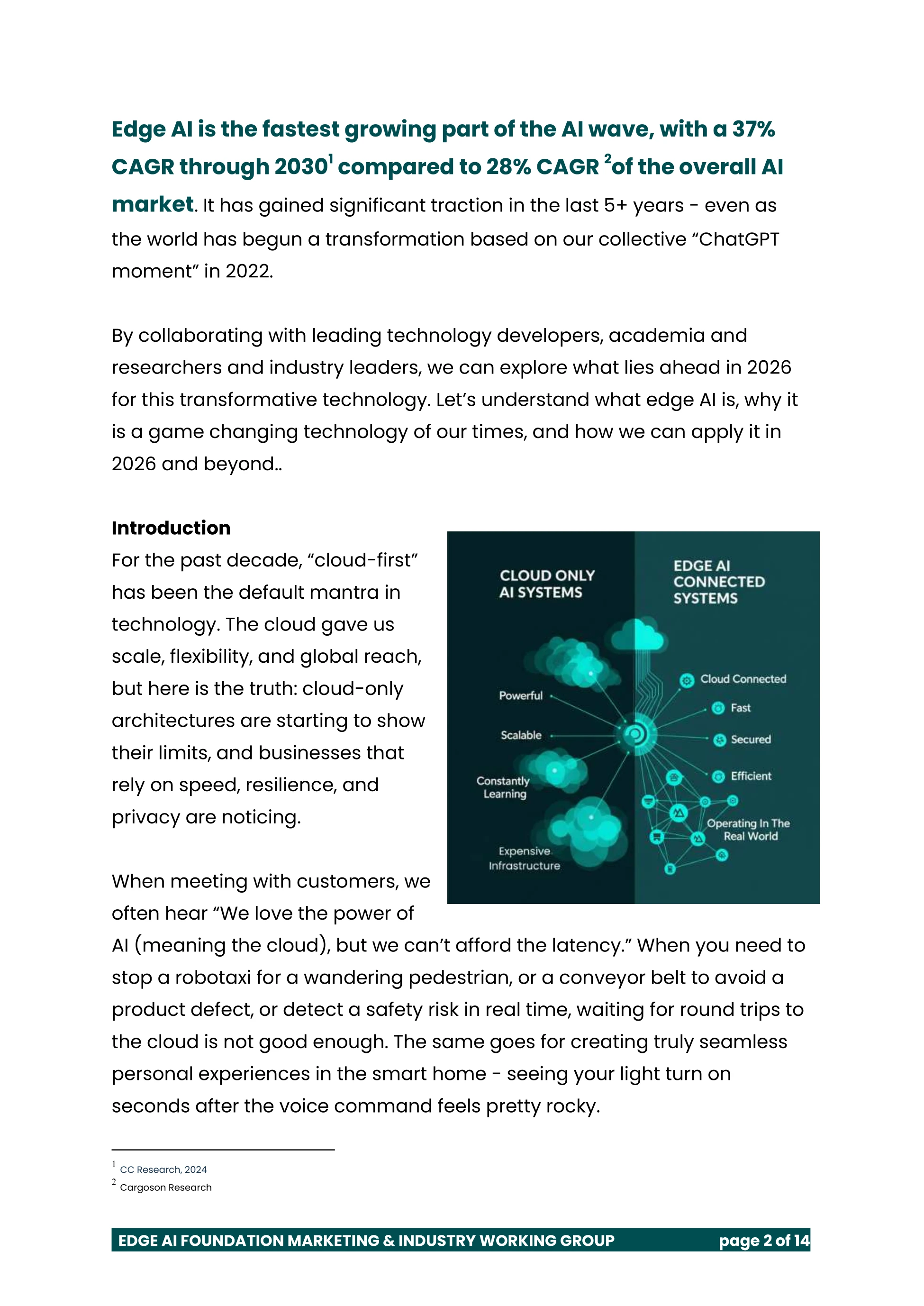
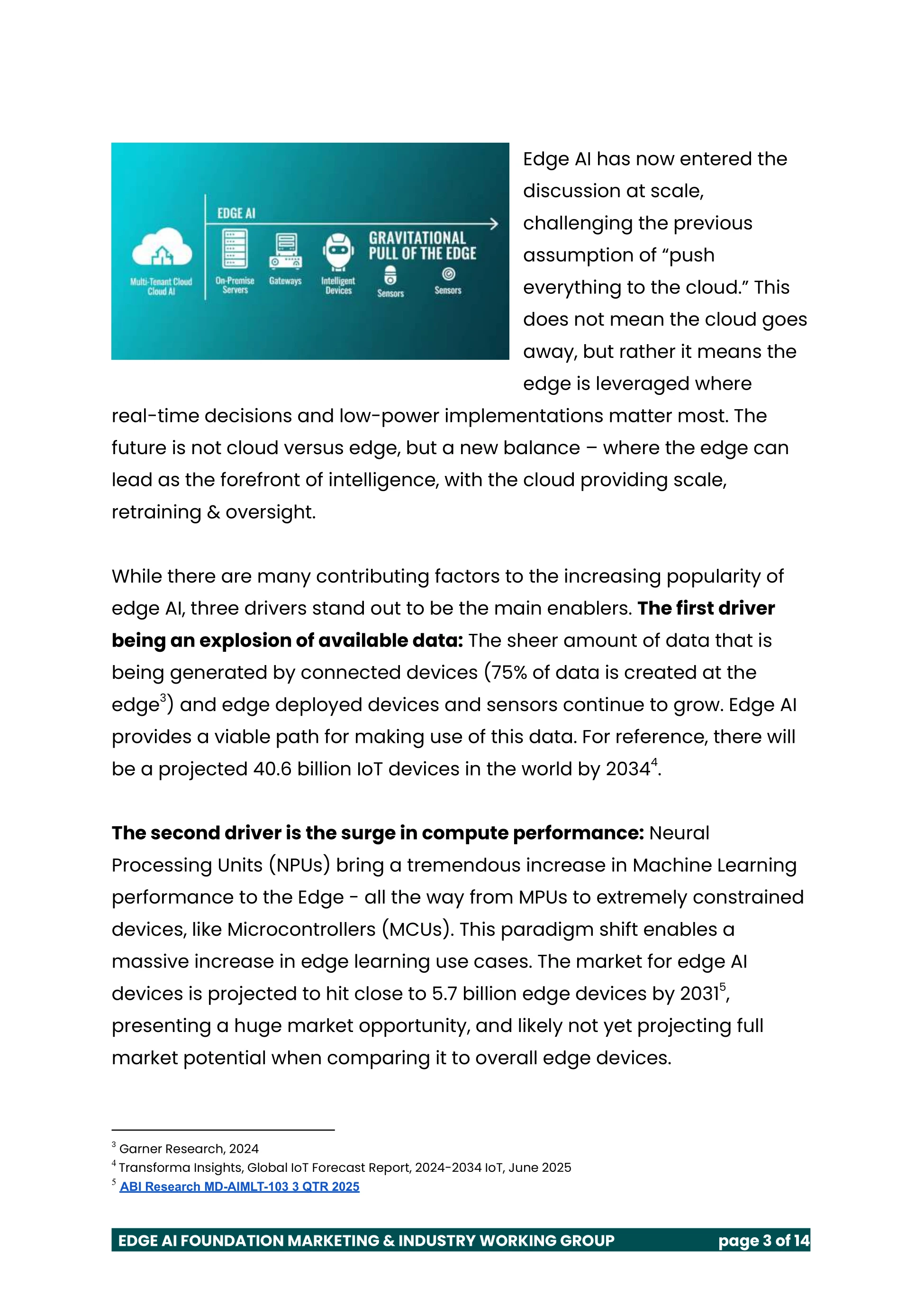
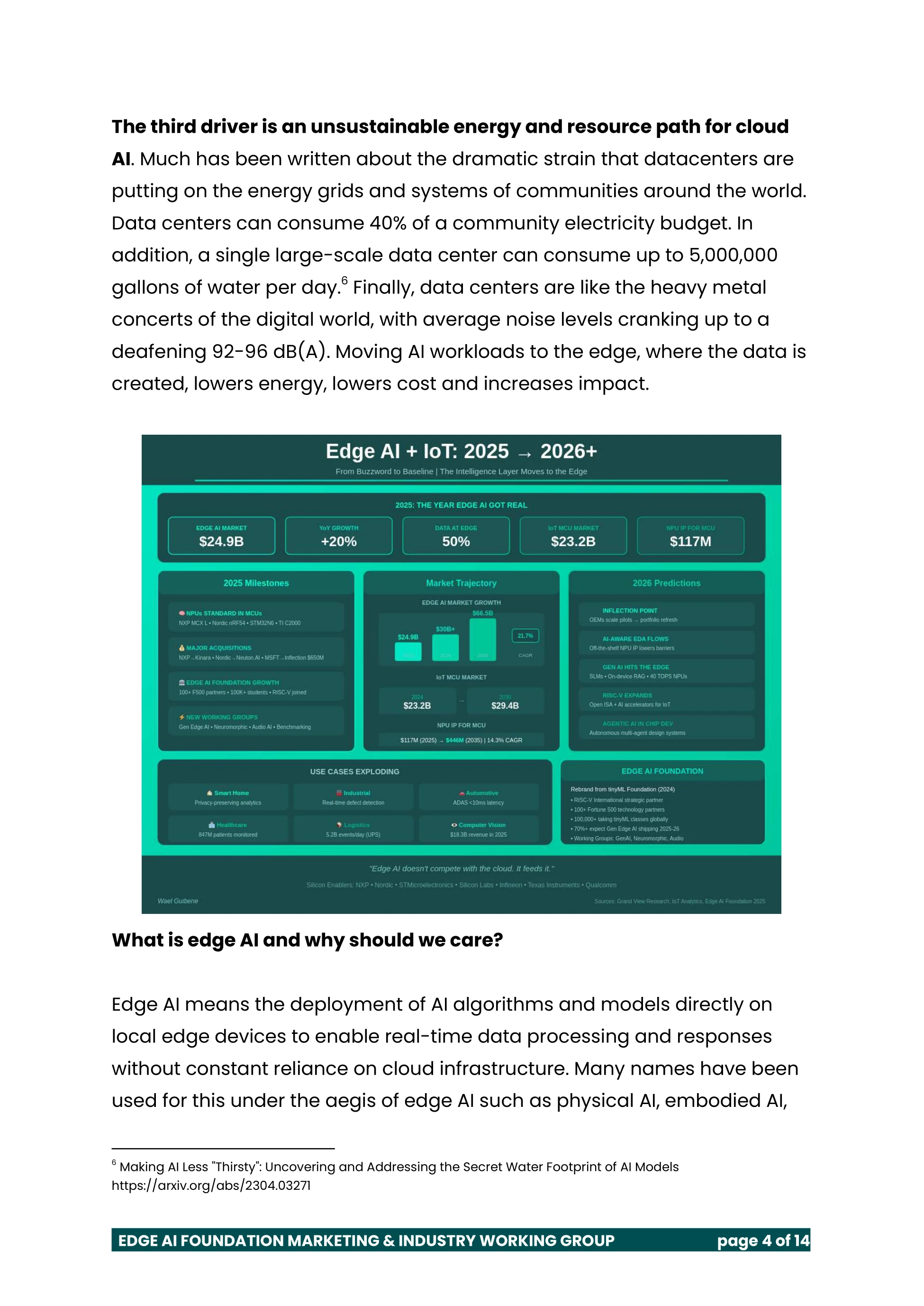
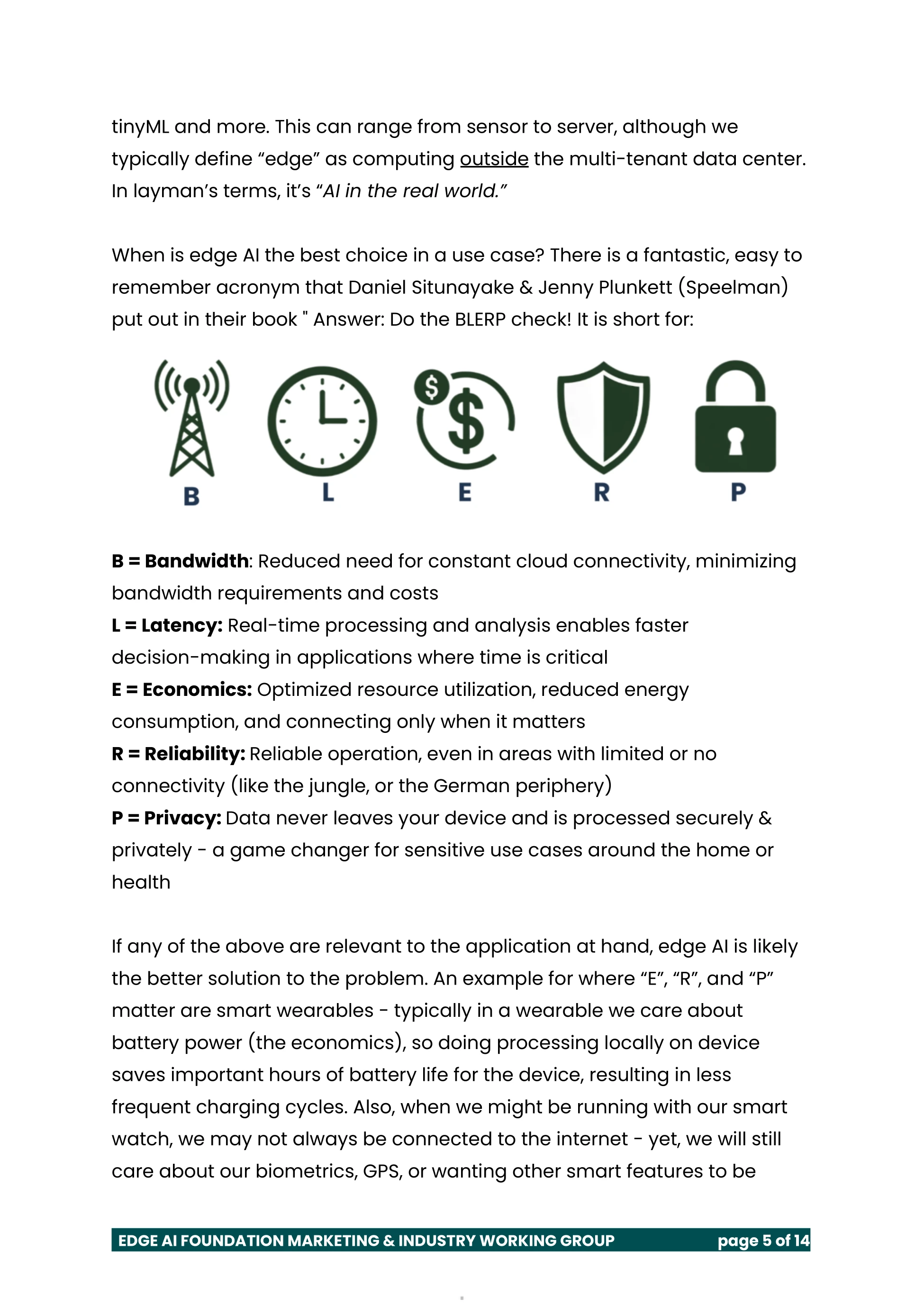
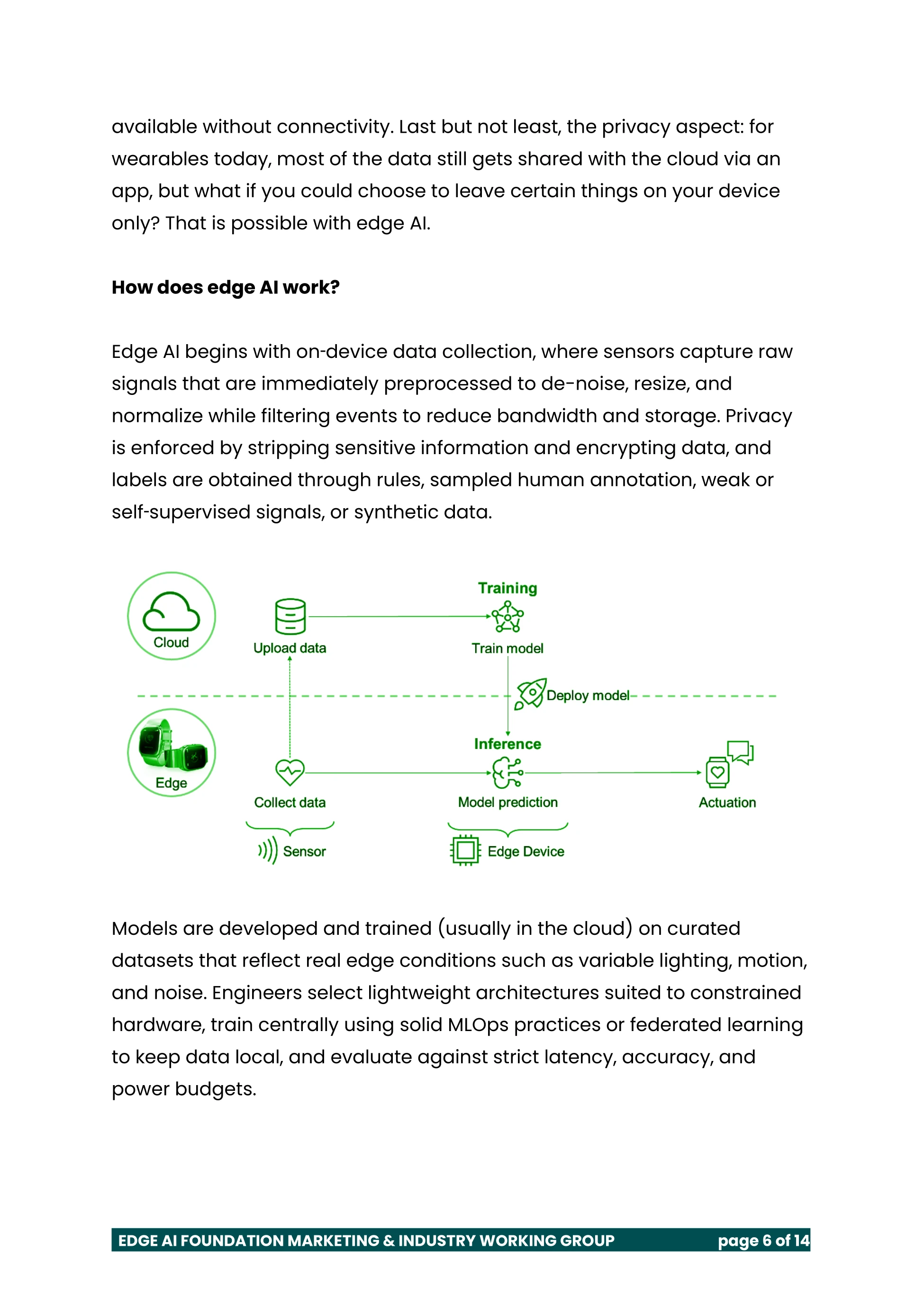
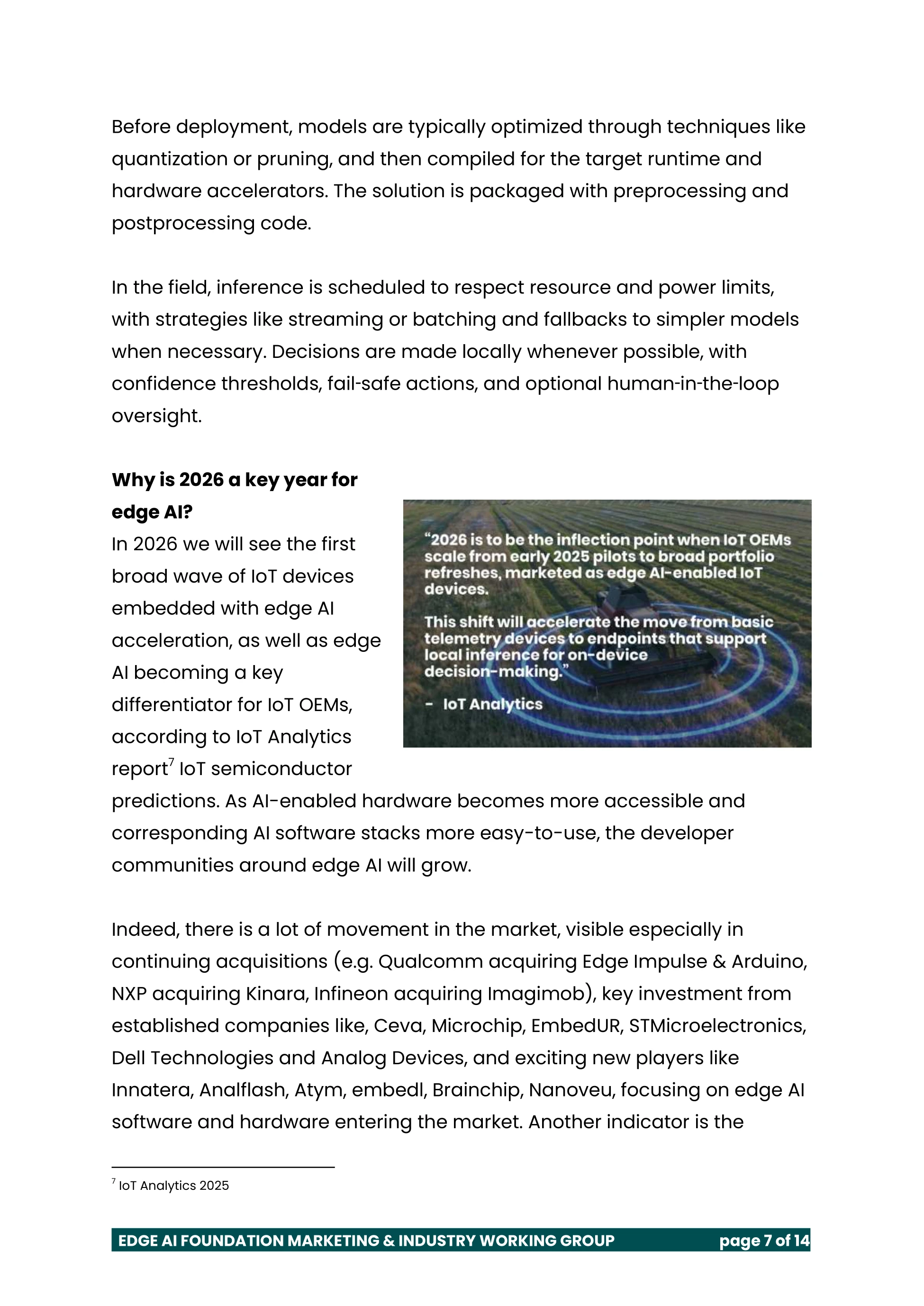
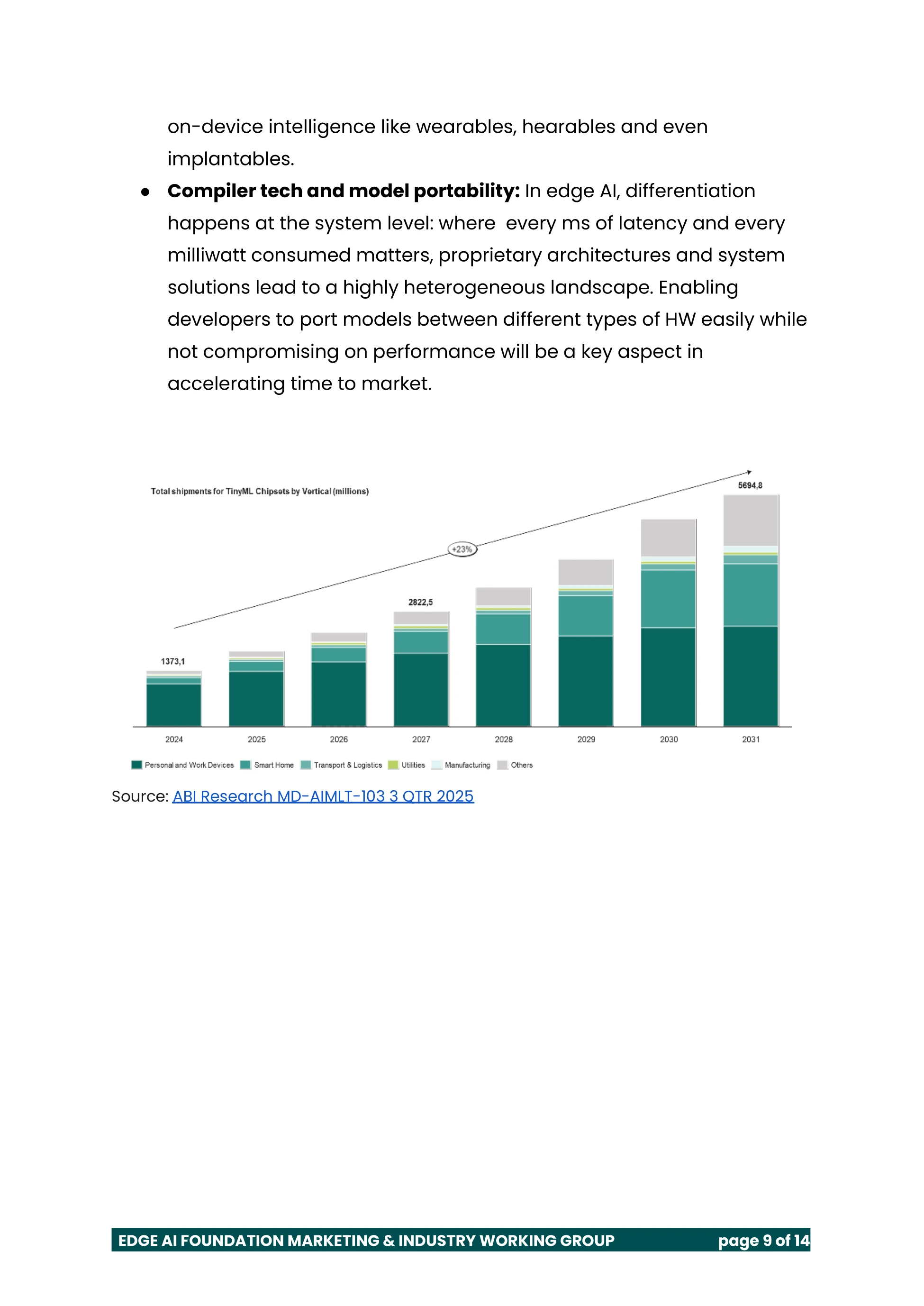
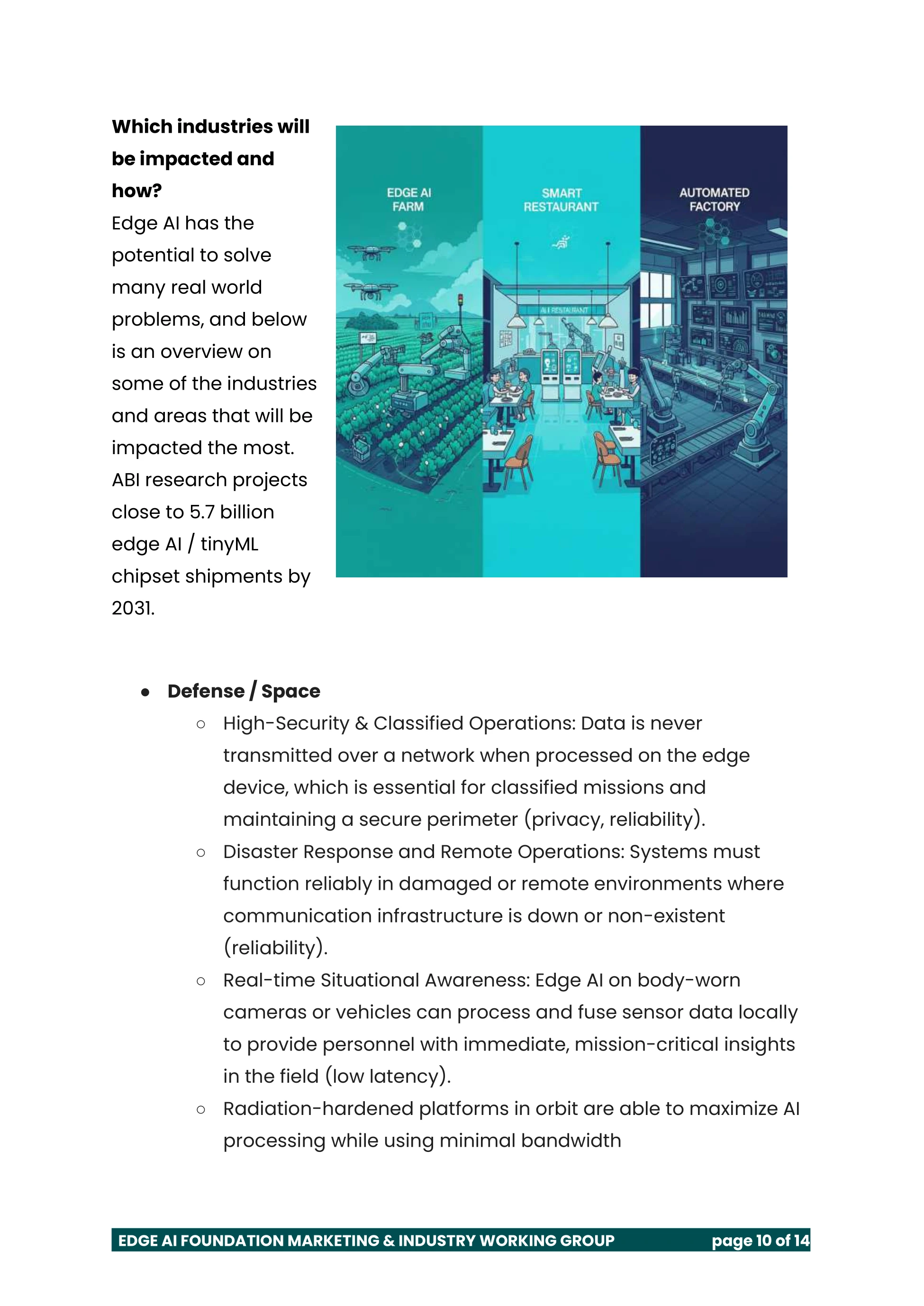
Edge AI is the fastest growing part of the AI wave, with a 37% CAGR through 20301 compared to 28% CAGR 2of the overall AI market. It has gained significant traction in the last 5+ years - even as the world has begun a transformation based on our collective “ChatGPT moment” in 2022. By collaborating with leading technology developers, academia and researchers and industry leaders, we can explore what lies ahead in 2026 for this transformative technology. Let’s understand what edge AI is, why it is a game changing technology of our times, and how we can apply it in 2026 and beyond.. Introduction For the past decade, “cloud-first” has been the default mantra in technology. The cloud gave us scale, flexibility, and global reach, but here is the truth: cloud-only architectures are starting to show their limits, and businesses that rely on speed, resilience, and privacy are noticing. When meeting with customers, we often hear “We love the power of AI (meaning the cloud), but we can’t afford the latency.” When you need to stop a robotaxi for a wandering pedestrian, or a conveyor belt to avoid a product defect, or detect a safety risk in real time, waiting for round trips to the cloud is not good enough. The same goes for creating truly seamless personal experiences in the smart home - seeing your light turn on seconds after the voice command feels pretty rocky. 2 Cargoson Research 1 CC Research, 2024 EDGE AI FOUNDATION MARKETING & INDUSTRY WORKING GROUP page 2 of 14 Edge AI has now entered the discussion at scale, challenging the previous assumption of “push everything to the cloud.” This does not mean the cloud goes away, but rather it means the edge is leveraged where real-time decisions and low-power implementations matter most. The future is not cloud versus edge, but a new balance – where the edge can lead as the forefront of intelligence, with the cloud providing scale, retraining & oversight. While there are many contributing factors to the increasing popularity of edge AI, three drivers stand out to be the main enablers. The first driver being an explosion of available data: The sheer amount of data that is being generated by connected devices (75% of data is created at the edge3) and edge deployed devices and sensors continue to grow. Edge AI provides a viable path for making use of this data. For reference, there will be a projected 40.6 billion IoT devices in the world by 20344. The second driver is the surge in compute performance: Neural Processing Units (NPUs) bring a tremendous increase in Machine Learning performance to the Edge - all the way from MPUs to extremely constrained devices, like Microcontrollers (MCUs). This paradigm shift enables a massive increase in edge learning use cases. The market for edge AI devices is projected to hit close to 5.7 billion edge devices by 2...