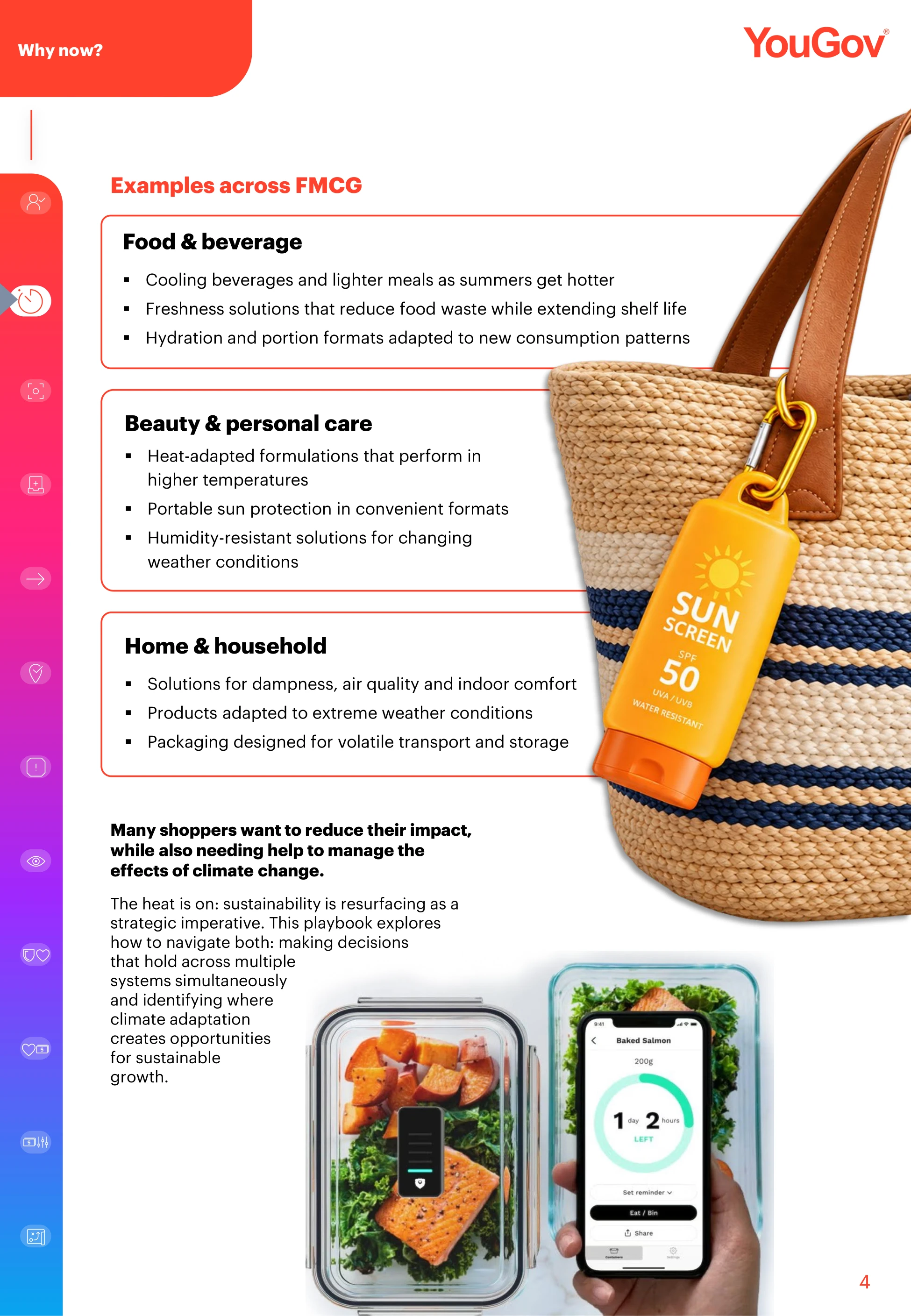
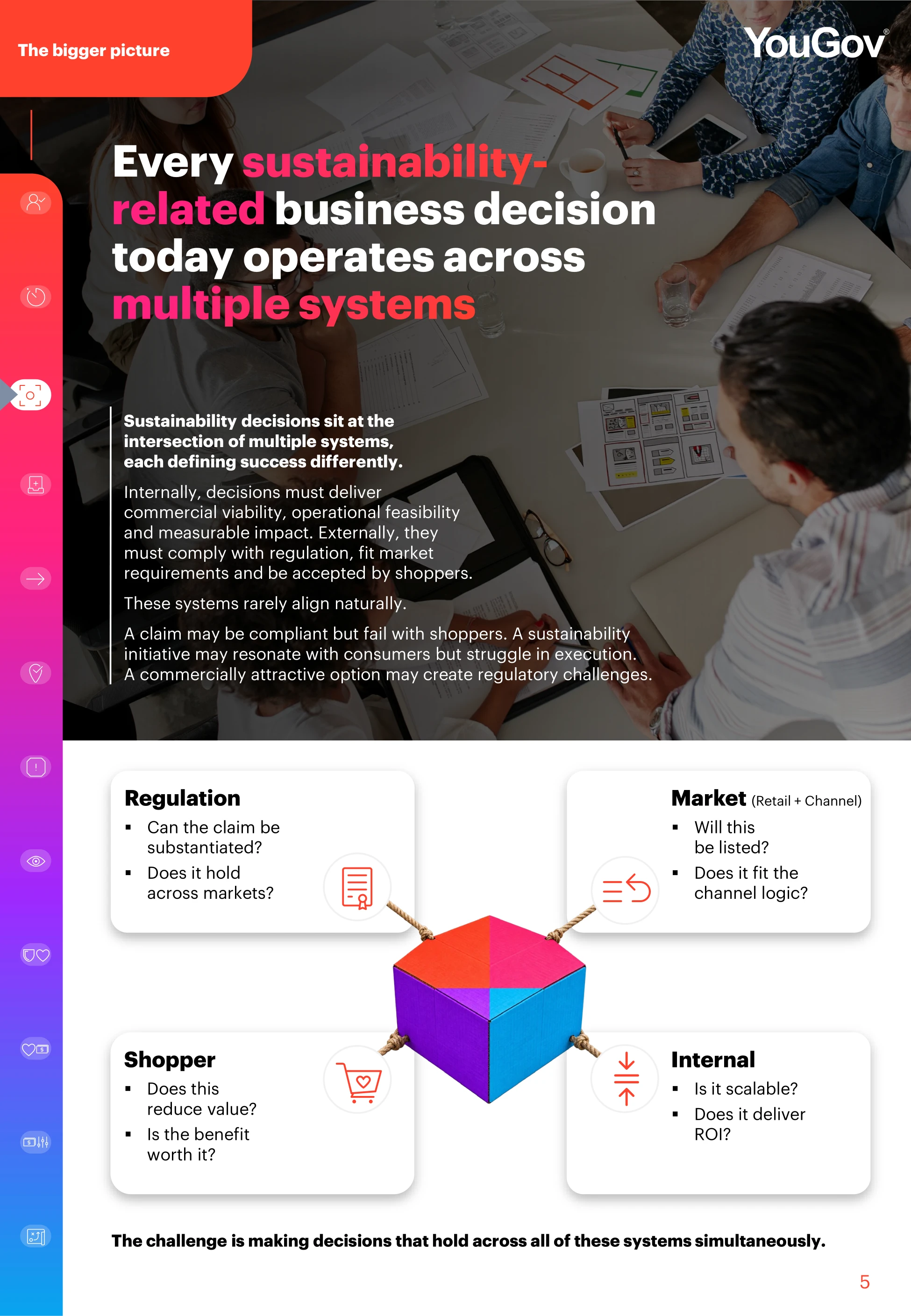
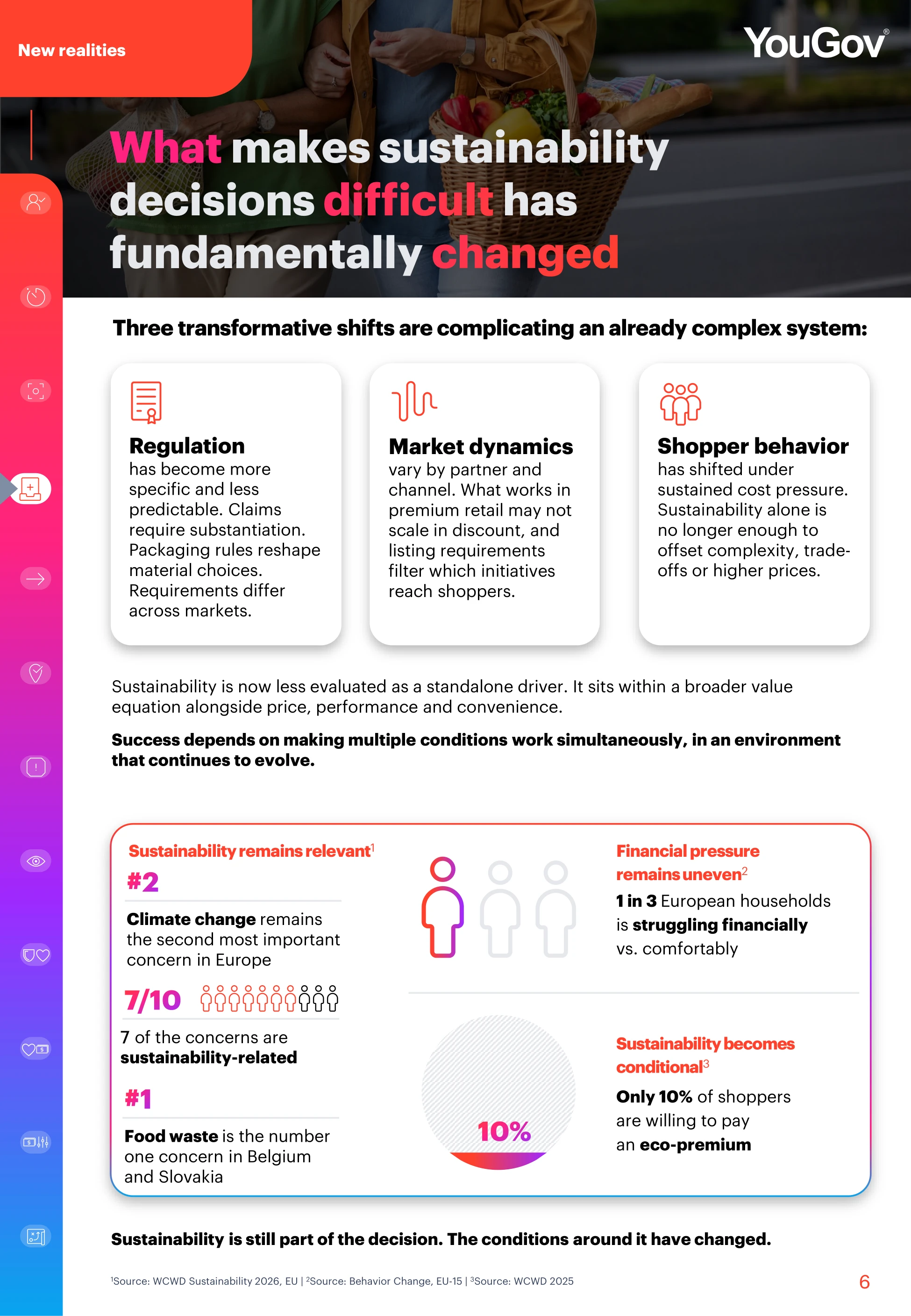
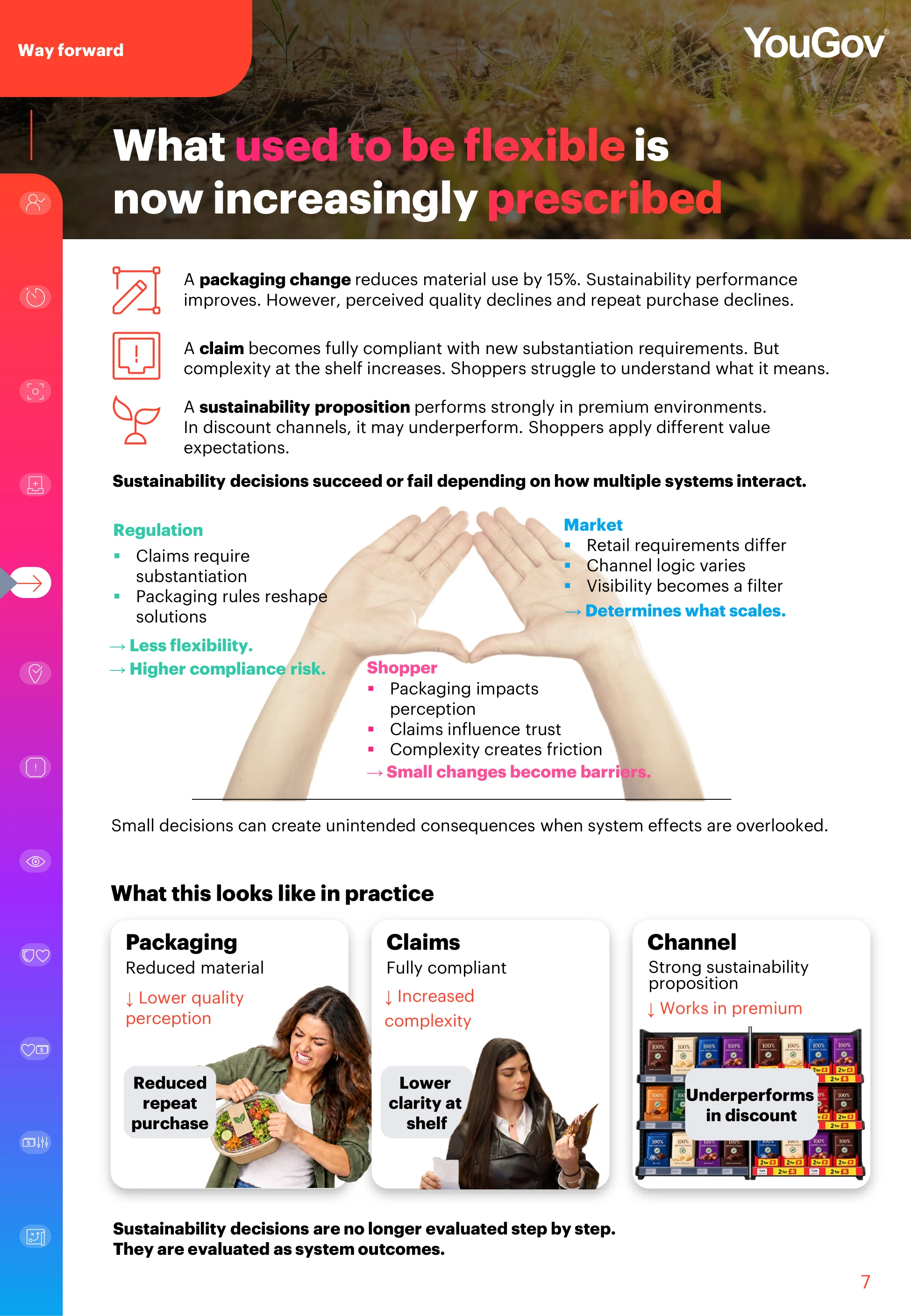
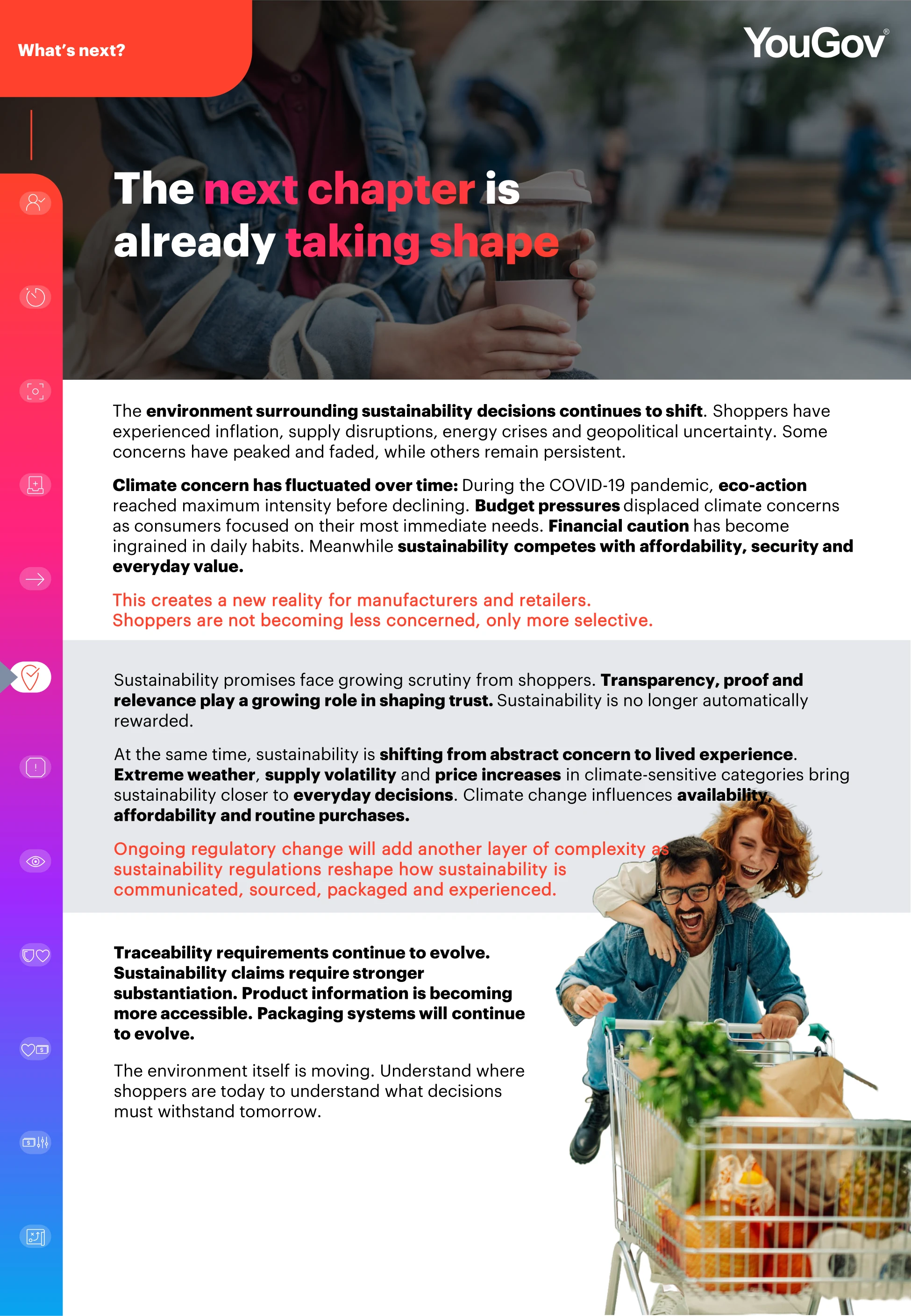
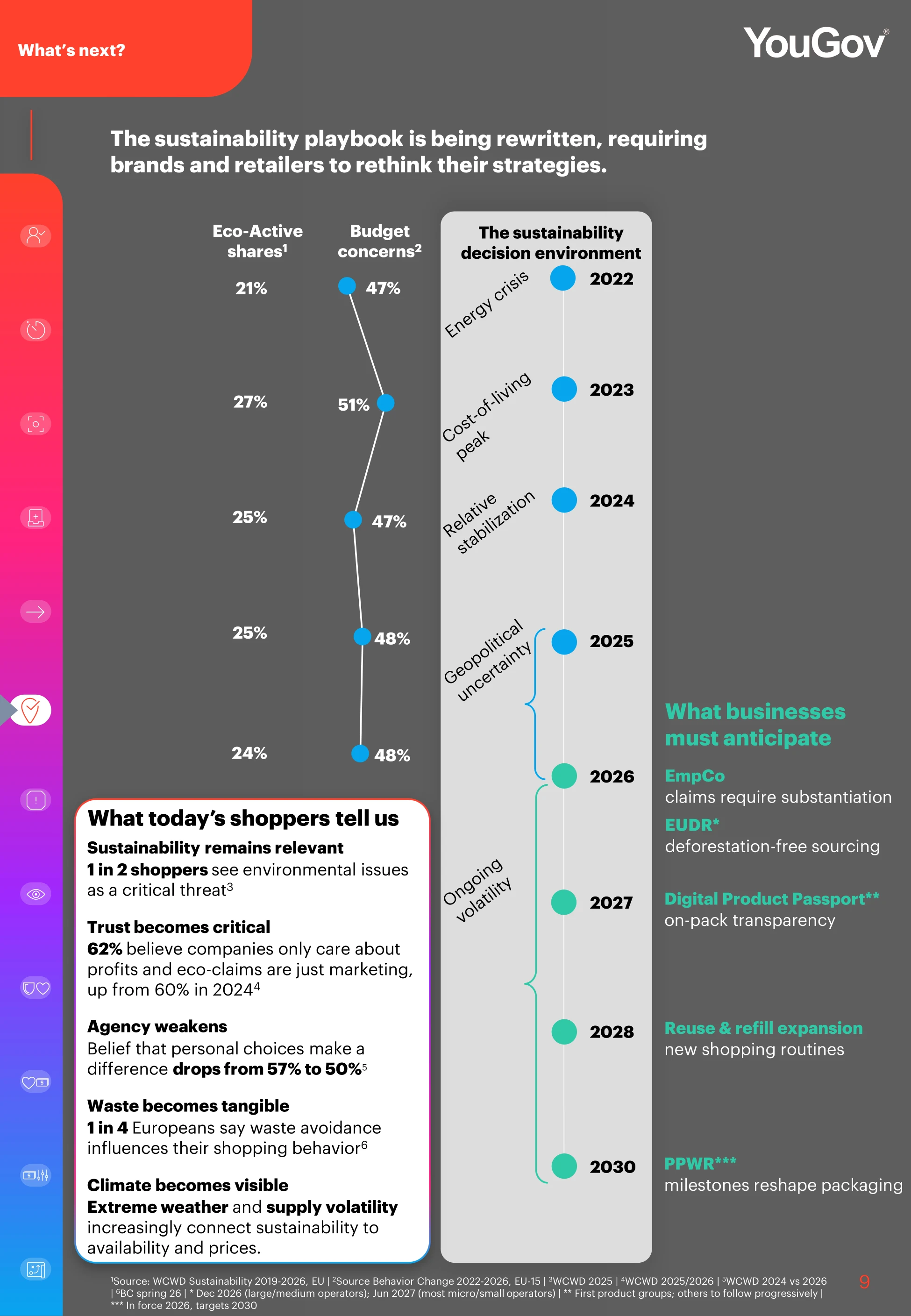
来源:发现报告(www.fxbaogao.com/view?id=5771858)| 引用请注明出处1PLAYBOOKSustainabilitydecisionsBuilding decision confidence in a changing shopper environment.How shopper realities, regulation and commercial priorities shape FMCG decisions. 来源:发现报告(www.fxbaogao.com/view?id=5771858)| 引用请注明出处2Decisionconfidence2Table of contents01Decision confidencePage 202Why now?303The bigger picture404New realities505Way forward606What’s next?707Making it matter808Finding focus909Compliance ➔ caring1010Caring ➔ value1111Value ➔ choice 1212Your next move13Sustainability remains a strategic priority for manufacturers and retailers. Yet the context has shifted, making the decisions surrounding it fundamentally more difficult.Commercial targets, regulatory requirements, operational constraints and shopper expectations now need to work simultaneously, and they rarely align naturally.A packaging change may improve sustainability performance while reducingperceived quality. A claim may meet regulatory requirements while creating confusion at the shelf. A sustainability initiative mayresonate in premium channels but fail in discount environments.Designed to build decision confidence around sustainability in achanging shopper environment, this playbook explores how sustainability, shopper realities and commercial priorities interact. It highlights where decisions need to work acrossmultiple systems simultaneously and where emergingshopper needs may create new opportunities for sustainable growth.来源:发现报告(www.fxbaogao.com/view?id=5771858)| 引用请注明出处3Why decisions are becoming more Supply chains experience greater weather-related volatility.Agricultural production encounters growing disruption. What felt abstract is becoming part of everyday reality, for shoppers and businesses alike. At the same time, regulation is moving from discussion to implementation.EmpCo requires claim substantiation, effective from September 2026. PPWR reshapes packaging from August 2026. EUDR affects sourcing practices. Traceability requirements are increasing, this may reduce flexibility.For years, sustainability decisions competed with more immediate challenges: inflation, energy costs, geopolitical uncertainty. Today, sustainability is returning but transformed.Weather-related disruptions are shaping shopper and business realities in new ways. Extreme weather can influence daily routines, supply chains and product availability.Why now?This creates new pressure on sustainability decisions.They must satisfy more conditions simultaneously: regulatory compliance, shopper acceptance, retail requirements and commercial viability. They do not always align naturally. Yet within this complexity, a different opportunity is emerging: As climate impacts become more visible, sustainability is no longer only about reducing environmental impact. It is increasingly about helping people adapt to climate consequences while creating value.来源:发现报告(www.fxbaogao.com/...










































