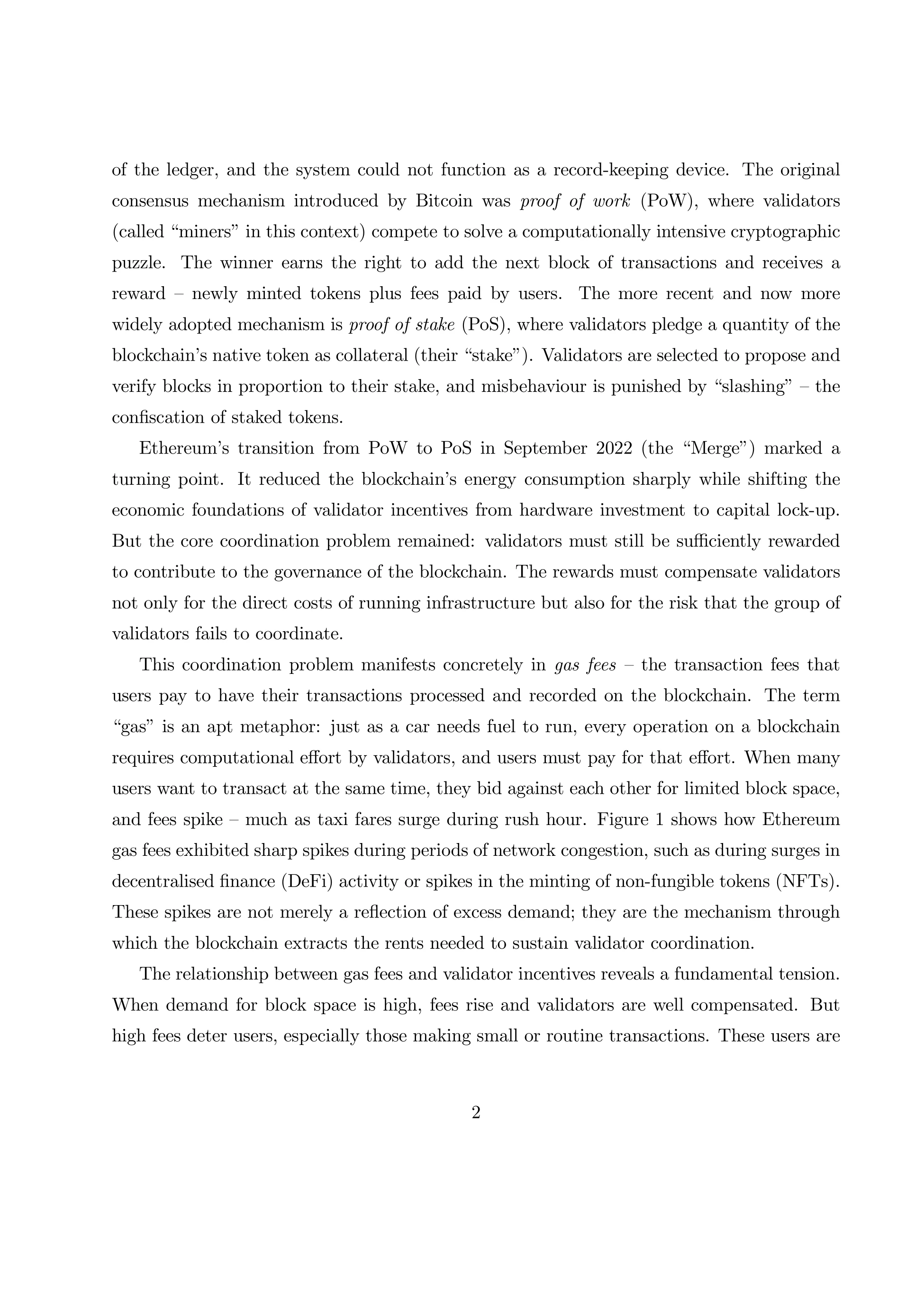
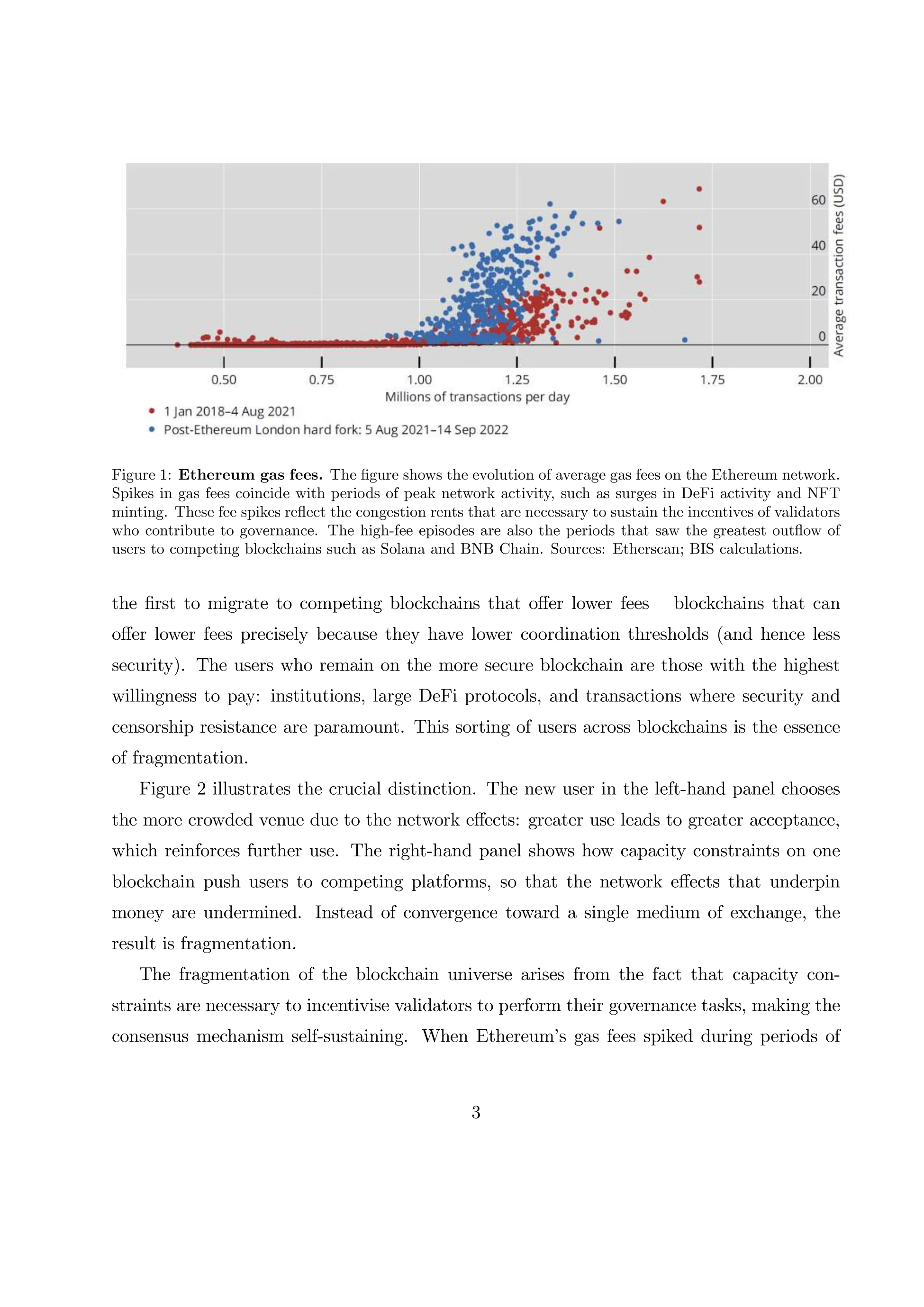
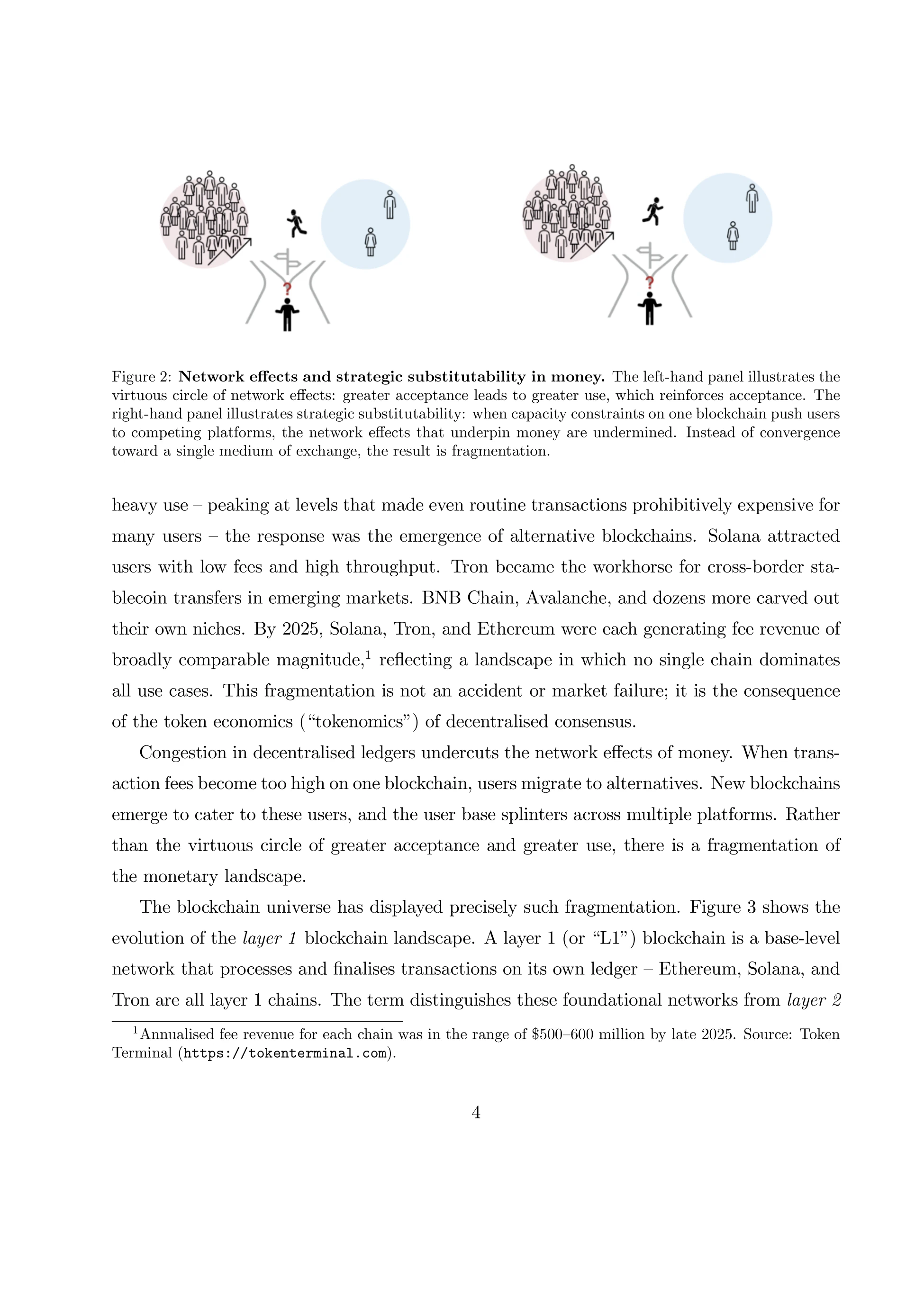
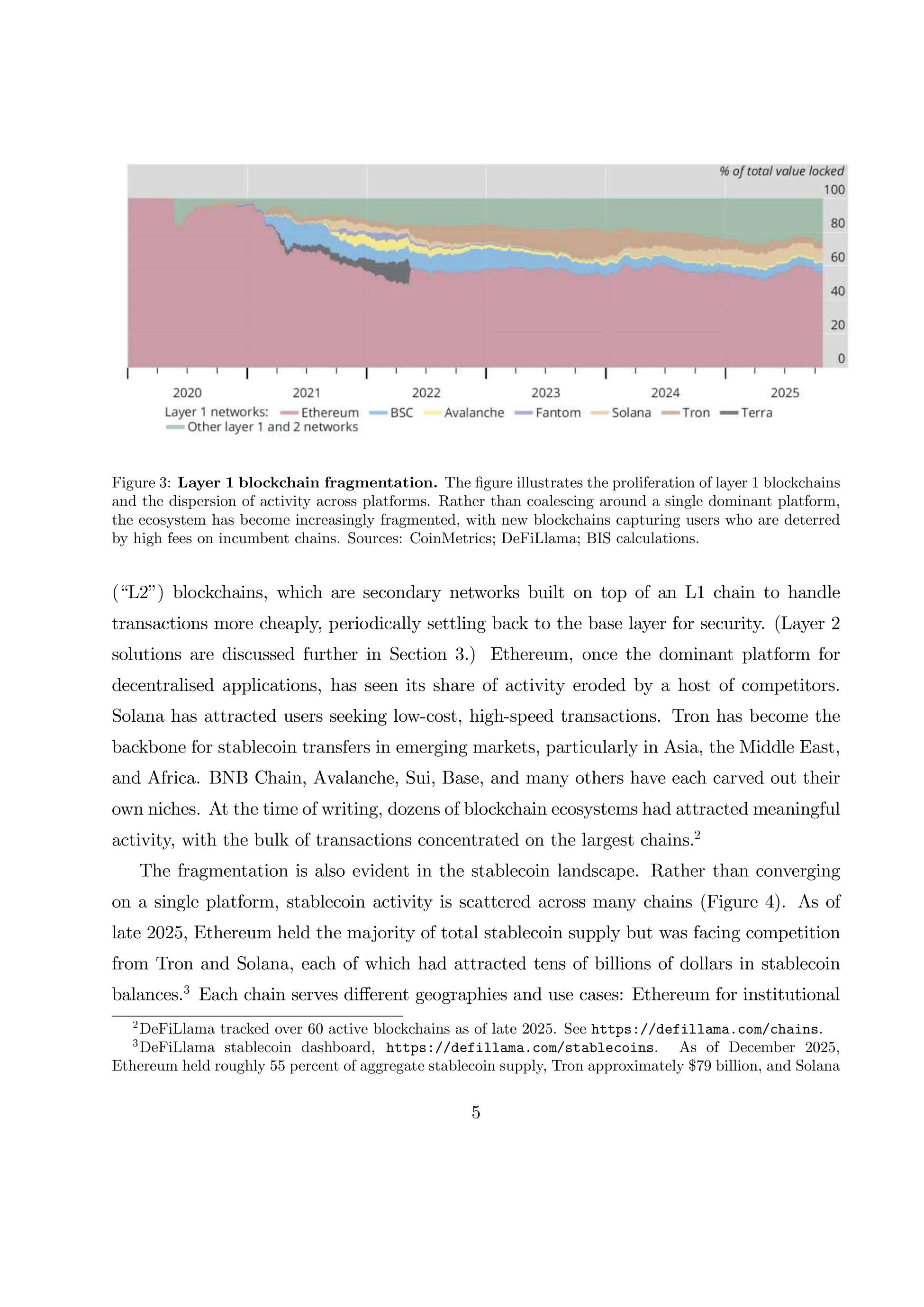
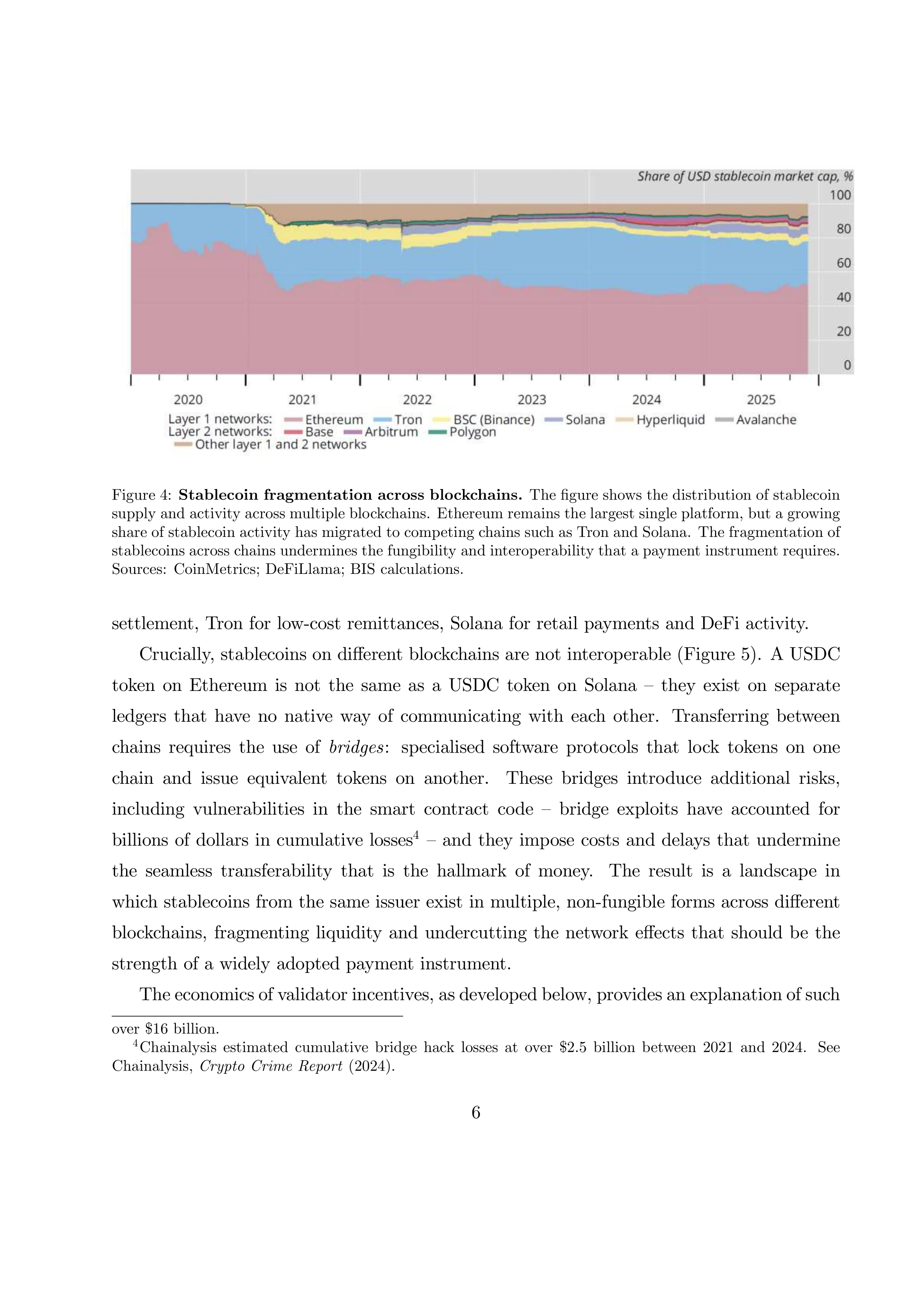
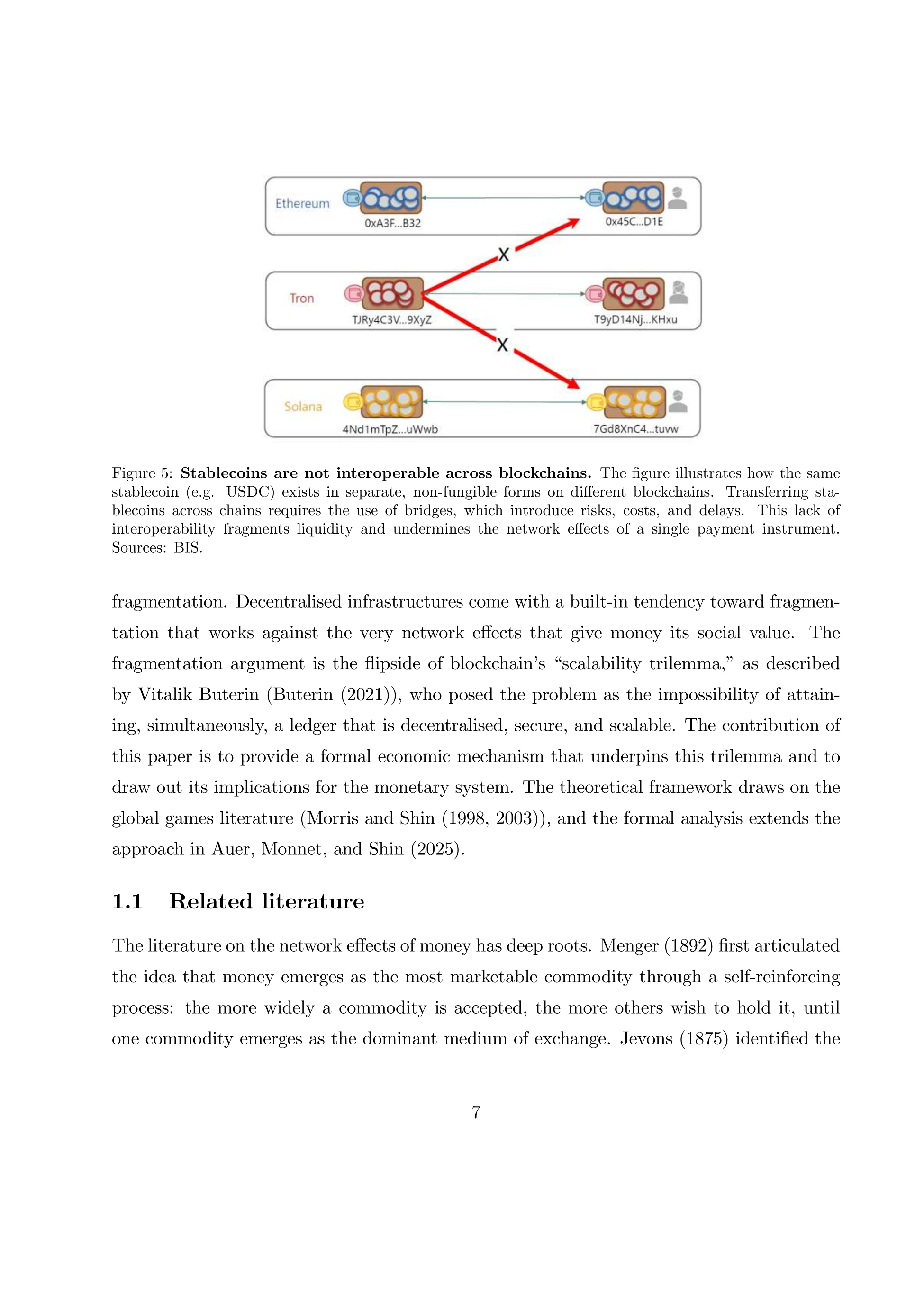
BIS Working PapersNo 1335 Tokenomics and blockchain fragmentation by Hyun Song Shin Monetary and Economic Department March 2026 JEL classification: D82, E42, G23, L14, O33 Keywords: blockchain, tokenomics, network effects, stablecoins, decentralised consensus, global games, monetary system, fragmentation BIS Working Papers are written by members of the Monetary and Economic Department of the Bank for International Settlements, and from time to time by other economists, and are published by the Bank. The papers are on subjects of topical interest and are technical in character. The views expressed in this publication are those of the authors and do not necessarily reflect the views of the BIS or its member central banks. This publication is available on the BIS website (www.bis.org). © Bank for International Settlements 2026. All rights reserved. Brief excerpts may be reproduced or translated provided the source is stated. ISSN 1020-0959 (print) ISSN 1682-7678 (online) Tokenomics and blockchain fragmentation∗Hyun Song ShinBank for International SettlementsMarch 5, 2026AbstractMoney is a coordination device underpinned by strong network effects: the moreothers accept a form of money, the more I wish to adopt it too. The decentralisationagenda of public permissionless blockchains undercuts these network effects and leads tofragmentation of the monetary landscape. Validators who maintain the blockchain needto be rewarded to play their role with the necessary reward increasing in the degree ofdependence on other validators’ actions to sustain consensus. Since these rewards mustultimately be borne by users through congestion rents, capacity constraints are a fea-ture, not a bug, especially for blockchains with more stringent standards for consensus.New blockchains with less stringent thresholds for consensus enter the market to serveusers priced out of incumbent chains. The resulting fragmentation undercuts the verynetwork effects that give money its social value. Stablecoins inherit this fragmentationfrom the blockchains on which they reside. The analysis has broader implications forthe future of the monetary system.JEL classification: D82, E42, G23, L14, O33Keywords: blockchain, tokenomics, network effects, stablecoins, decentralised consen-sus, global games, monetary system, fragmentation∗The views expressed here are my own and not necessarily those of the BIS.1 IntroductionNetwork effects underpin the coordination role of money. The key to its role is the feedback loop between greater acceptance and greater use. The more merchants accept a particular currency, the more consumers wish to hold it; the more consumers hold it, the more merchants wish to accept it. This virtuous circle is the hallmark of a well-functioning monetary system.Central banks have historically served as the institutional anchor for this coordination. By issuing a uniform currency and standin...










































