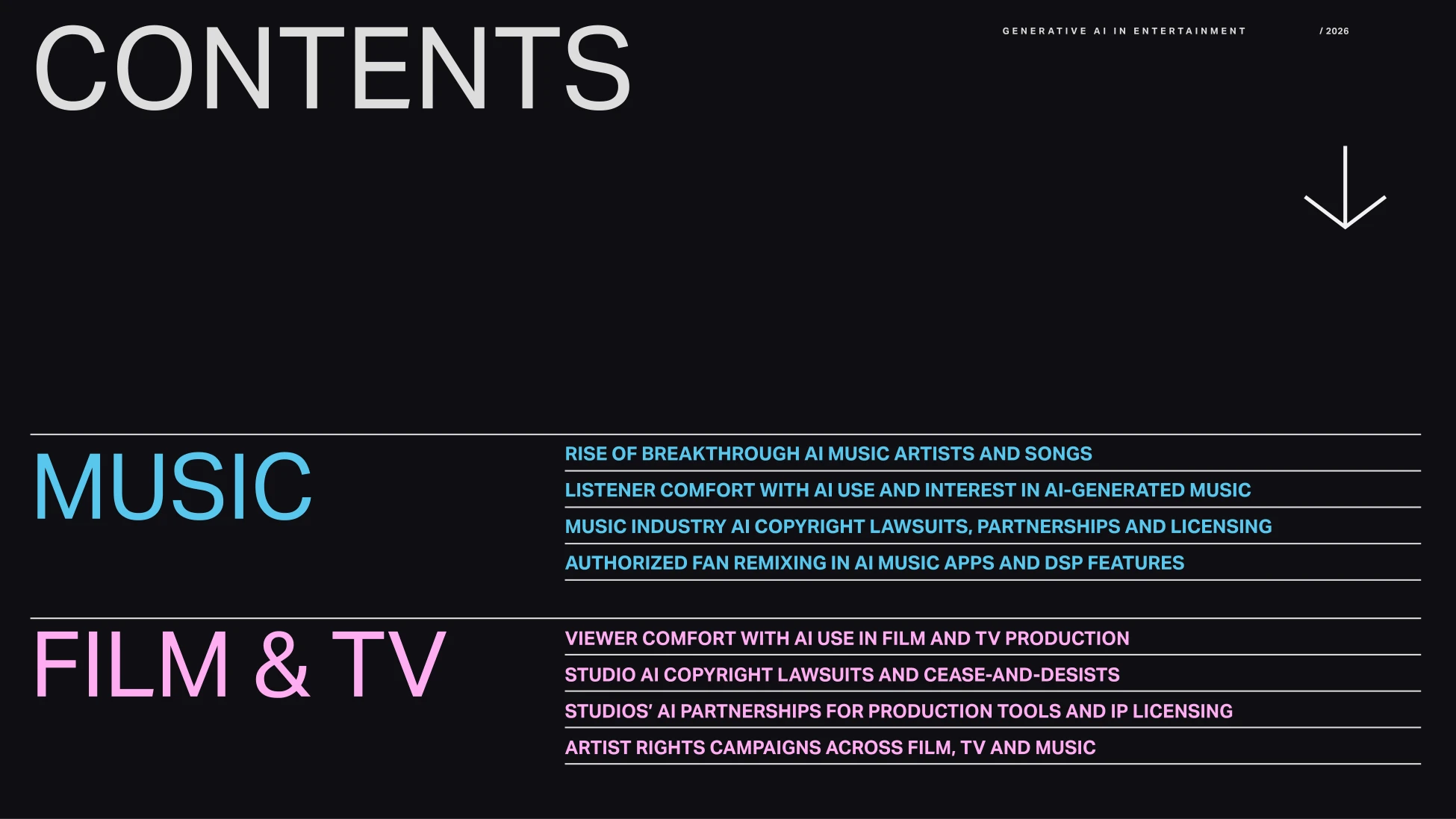
GENERATIVE AI IN MUSIC, FILM & TV UNDERSTANDING THE IMPACT ON CREATIVE INDUSTRIESAND CONSUMERS2026special report / MARCH 2026UNDERSTANDING THE IMPACTGENERATVEAINON CREATIVE INDUSTRIESAND CONSUMERSMUSIC.FILM&TV2026LUMINATESPECIAL REPORT / MARCH 2026INTRODUCTIONGenerative AI has provoked extreme upheavals in the entertainment sector. In music, the impact has been immediate: AI song generators have proven capable of high-quality outputs indistinguishable from songs made by human artists. In turn, AI-generated tracks have fooded music streaming platforms, where they compete for streams (and royalties). Meanwhile, in Hollywood and the wider flm and television industry, AI video hasn’t meaningfully displaced movies and shows, but its impact on production workfows and workforces remains a central concern. What the two industries have in common as far as generative AI goes is copyright chaos. That has meant legal battles with AI companies. At the same time, media companies face an urgent need to build strategies that will ensure consent and compensation for both rights holders and creators at either (ideally both) ends of AI models and services — training and output — and curb the onslaught of unauthorized derivatives of existing works, IP and real-world likeness. A further question in common for creative industries is the use of generative AI in content production — and how audiences will respond to that use in the content they consume, whether with interest, ambivalence or avoidance. In Generative AI in Music, Film & TV 2026, Luminate Intelligence lays out the key challenges of the tech in entertainment, progress toward solutions via licensing and partnerships and fux in consumer attitudes toward AI content.ABOUT THE AUTHORAudrey Schomer is a media analyst and research editor at Luminate Intelligence. She previously covered industry topics and trends in media, digital advertising and emerging technology as a research analyst at Barclays, eMarketer and Business Insider Intelligence.Generative Al has provoked extreme upheavals in the entertainment sector.INTRODUCTIONIn music, the impact has been immediate: Al song generators have provencapable of high-quality outputs indistinguishable from songs made by humanartists. In turn, Al-generated tracks have flooded music streaming platformswhere they compete for streams (and royalties).Meanwhile, in Hollywood and the wider film and television industry. Al videohasn't meaningfully displaced movies and shows, but its impact on productionworkflows and workforces remains a central concernWhat the two industries have in common as far as generative Al goes iscopyright chaos. That has meant legal battles with Al companies. At the sametime, media companies face an urgent need to build strategies that will ensureconsent and compensation for both rights holders and creators at either(ideally both) ends of Al models and services t...










































