

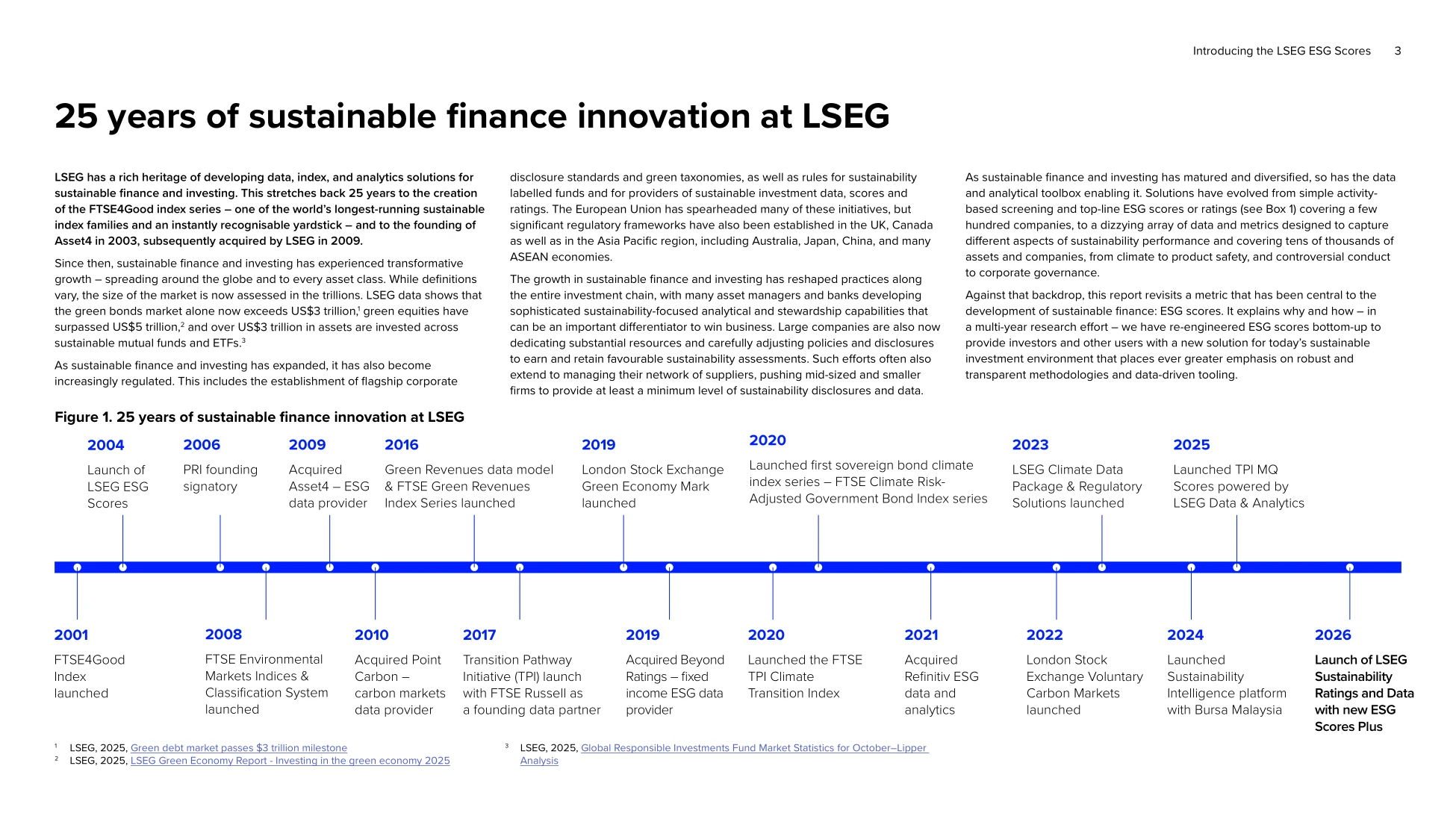
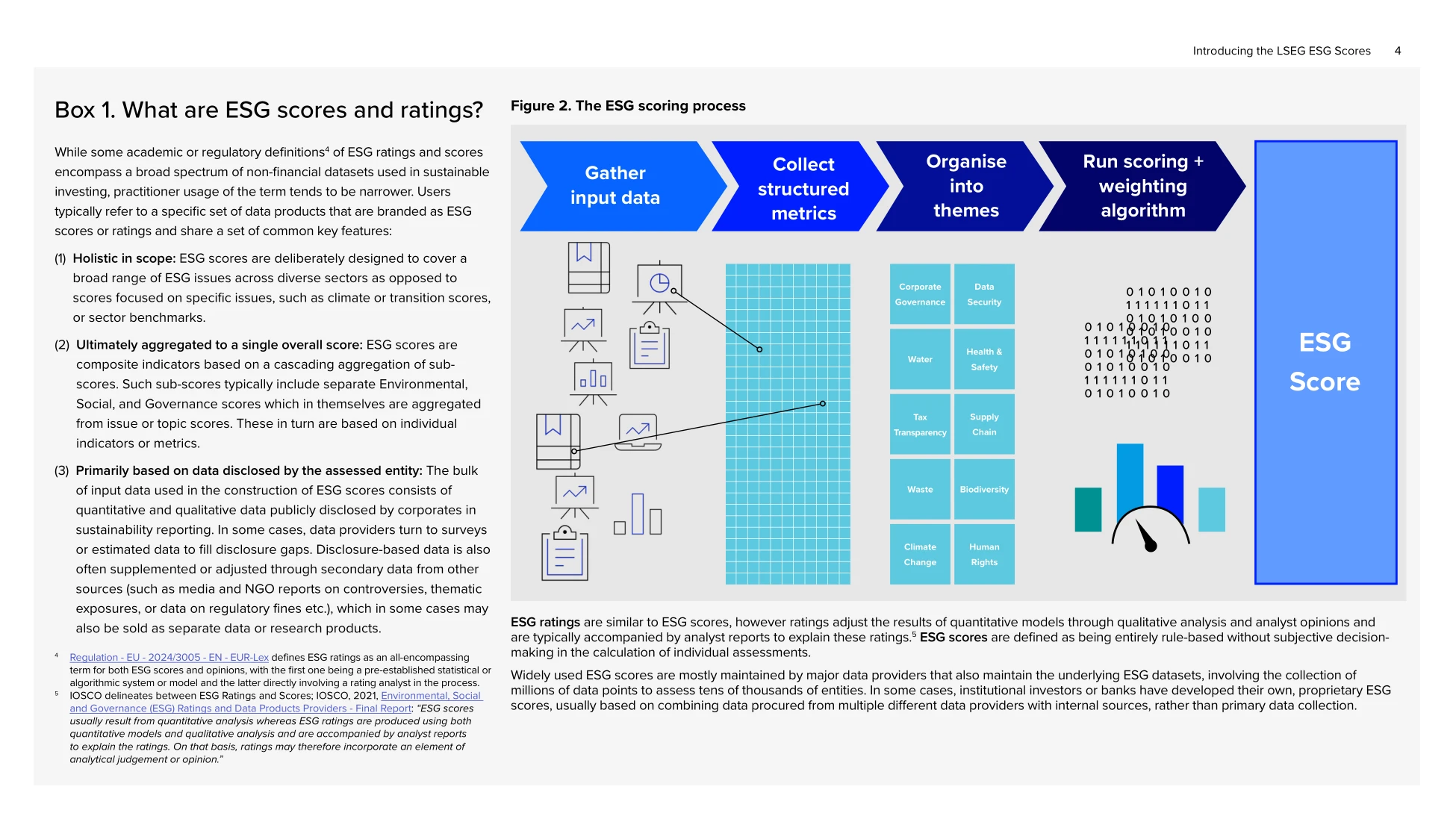
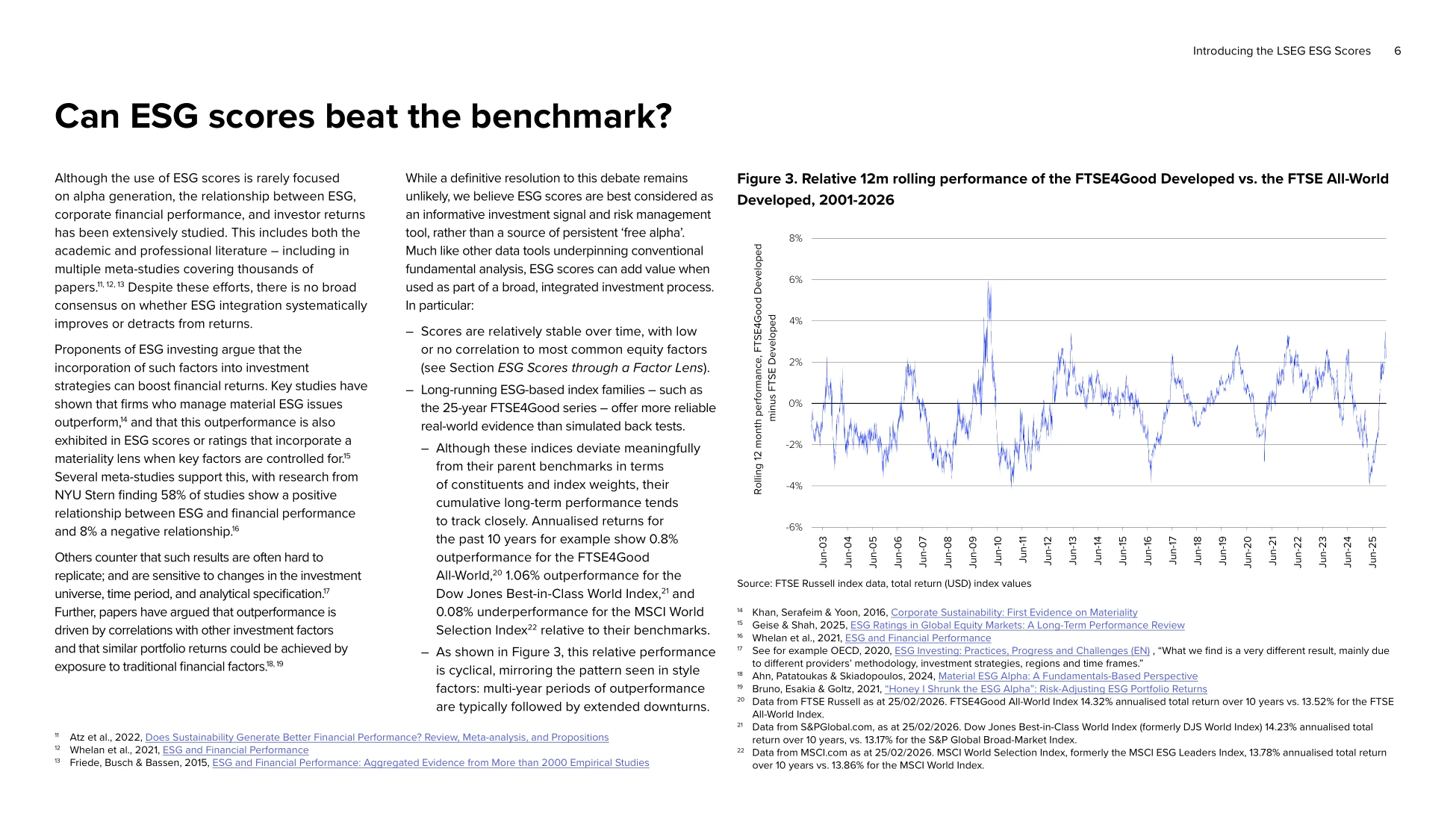
WhitepaperIntroducing the LSEG ESG Scores AuthorsCharles Dodsworth Senior Research Lead, Sustainable Investment ResearchBillie-Louise Schlich Senior Analyst, Sustainable Investment ResearchEdmund Bourne Research Lead, Sustainable Investment ResearchJaakko Kooroshy Global Head of Sustainable Investment Research25 years of sustainable finance innovation at LSEG ......................... 3ESG Scores – Huh…yeah...what is it good for? .................................... 5Can ESG scores beat the benchmark? ..................................................6Introducing a new modular set of LSEG ESG Scores .........................7Constructing Theme Scores ..................................................................... 8Calculating the LSEG ESG Scores .........................................................10Analysing the LSEG ESG Scores ...........................................................13LSEG ESG Scores through a factor lens .............................................15Why an LSEG ESG Score Plus? ...............................................................17Design features of the ESG Score Plus ................................................18Appendix 1. Comparison with Heritage Refinitiv and FTSE Russell ESG Scores ........................................................................20Appendix 2. Constructing LSEG ESG Theme Scores ......................22Appendix 3. Determining materiality weights....................................28Appendix 4. LSEG ESG Scores: Additional data and analysis ......33Appendix 5. LSEG ESG Plus Score .......................................................35Contents3Introducing the LSEG ESG ScoresLSEG has a rich heritage of developing data, index, and analytics solutions for sustainable finance and investing. This stretches back 25 years to the creation of the FTSE4Good index series – one of the world’s longest-running sustainable index families and an instantly recognisable yardstick – and to the founding of Asset4 in 2003, subsequently acquired by LSEG in 2009.Since then, sustainable finance and investing has experienced transformative growth – spreading around the globe and to every asset class. While definitions vary, the size of the market is now assessed in the trillions. LSEG data shows that the green bonds market alone now exceeds US$3 trillion,1 green equities have surpassed US$5 trillion,2 and over US$3 trillion in assets are invested across sustainable mutual funds and ETFs.3 As sustainable finance and investing has expanded, it has also become increasingly regulated. This includes the establishment of flagship corporate disclosure standards and green taxonomies, as well as rules for sustainability labelled funds and for providers of sustainable investment data, scores and ratings. The European Union has spearheaded many of these initiatives, but significant regulatory frameworks have also been established in the UK, Canada as well as in the Asia Pacific region, including A...










































