
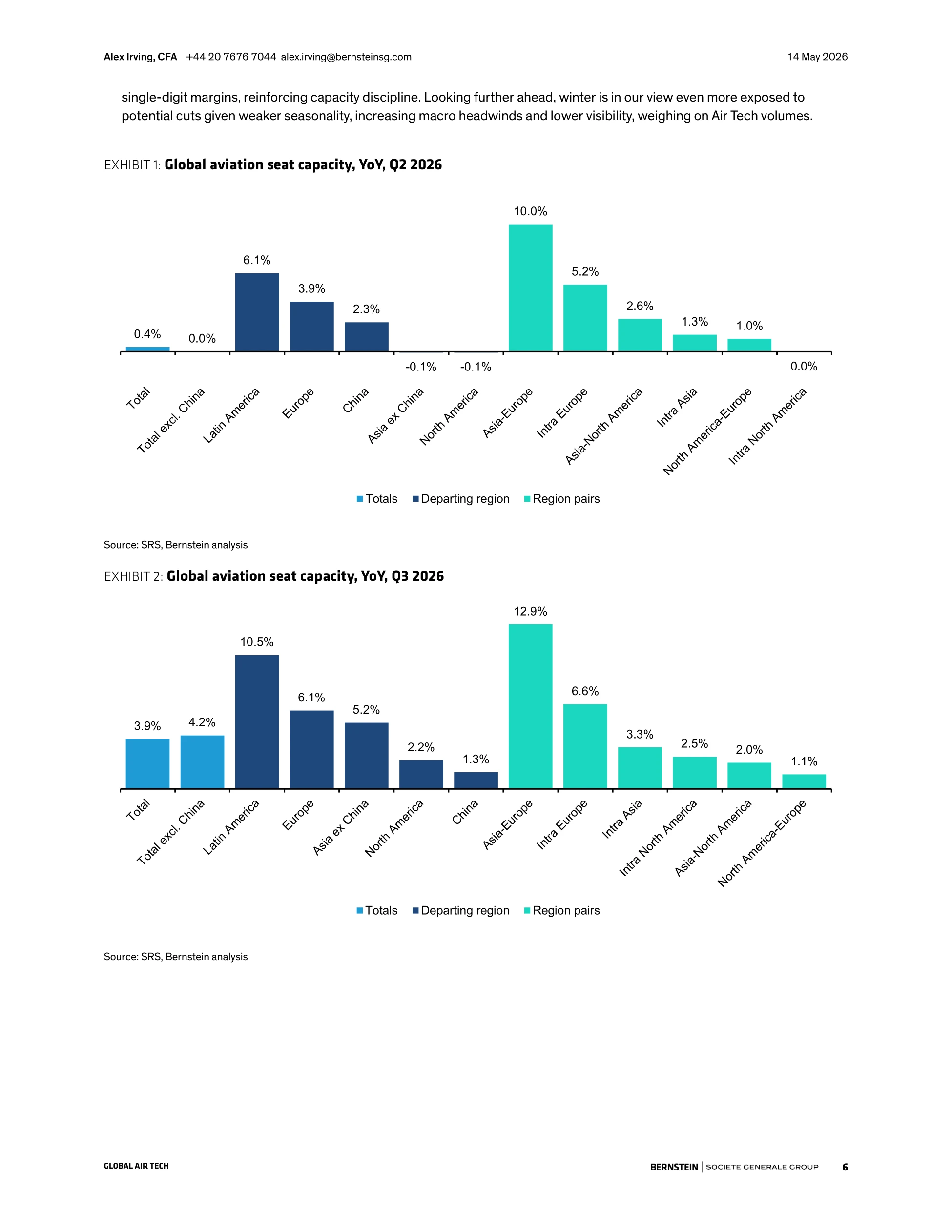
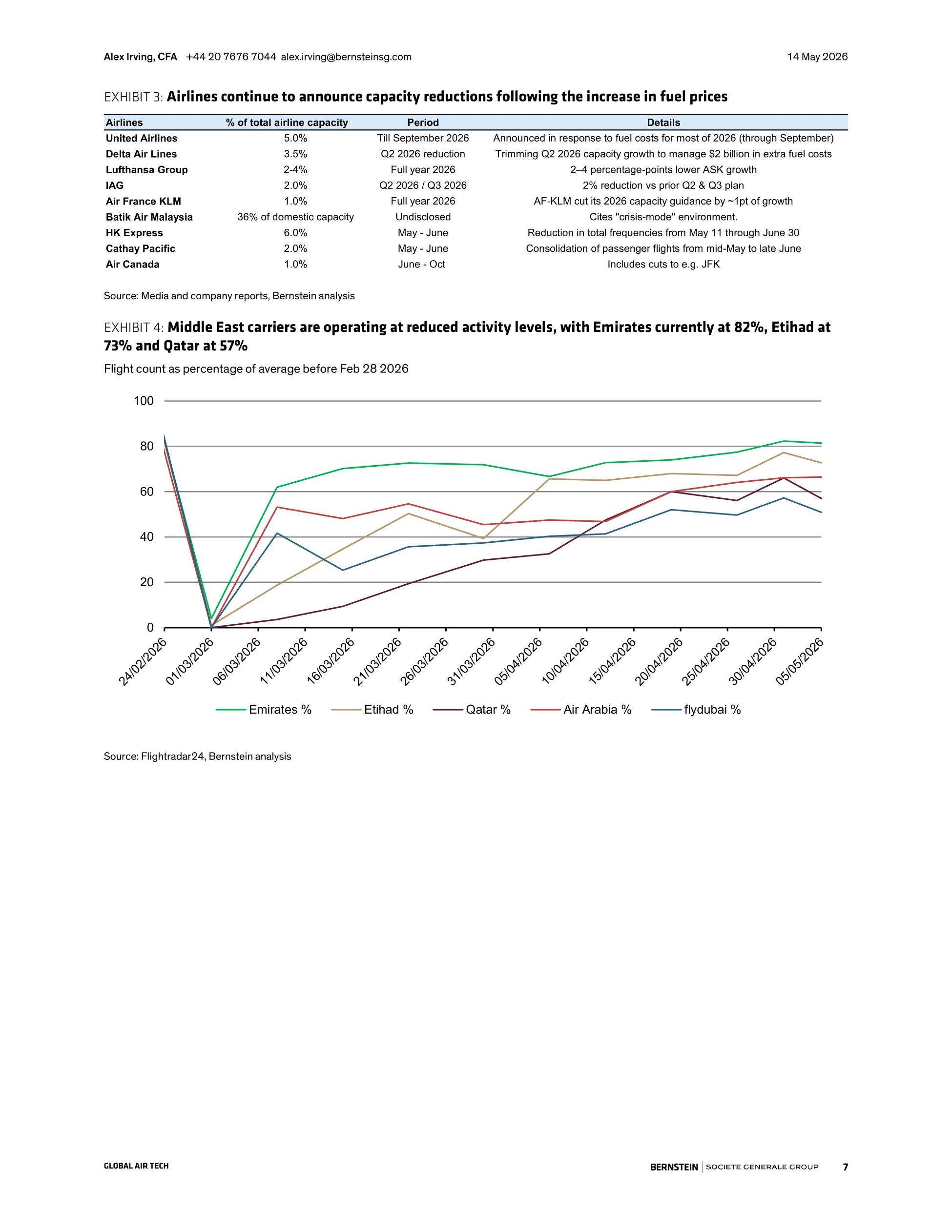
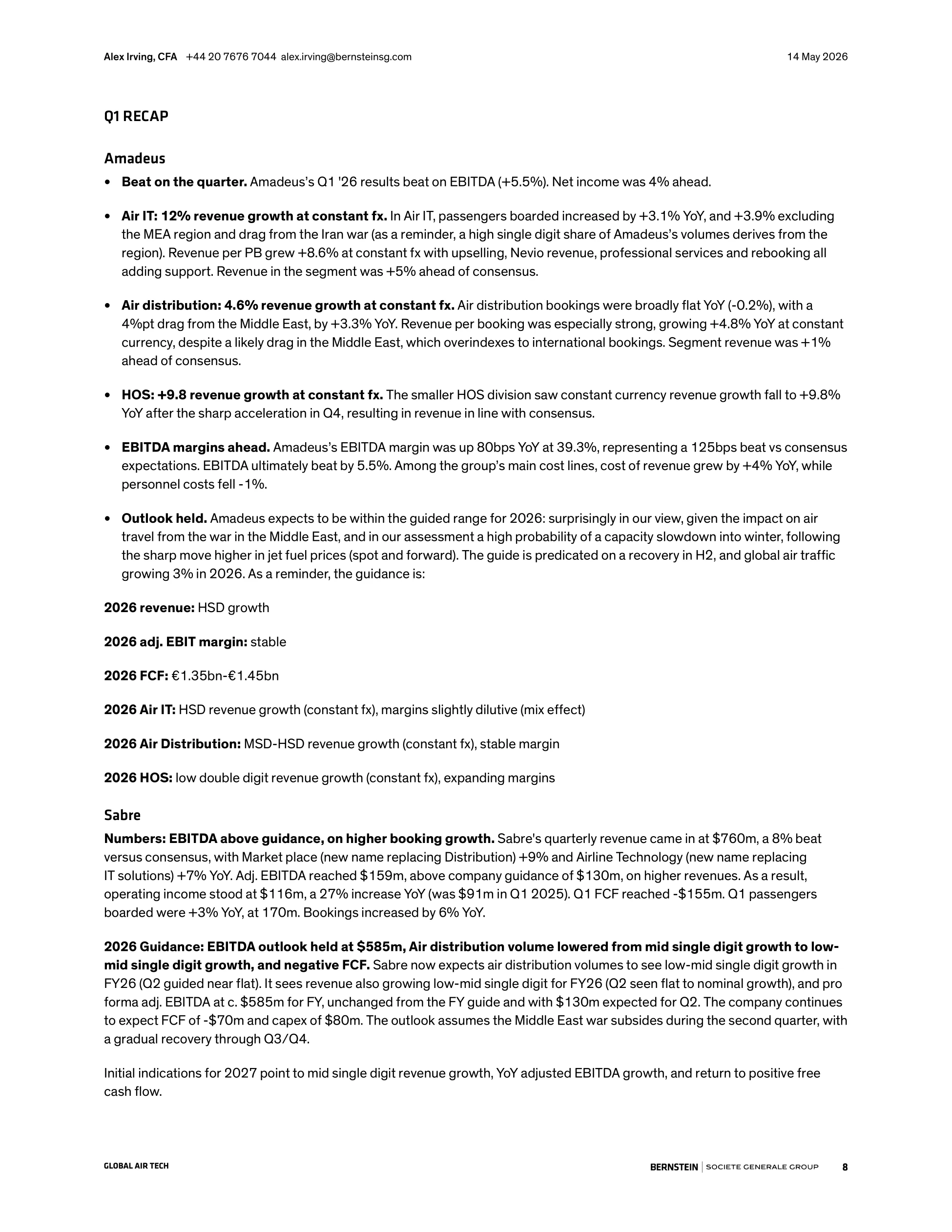

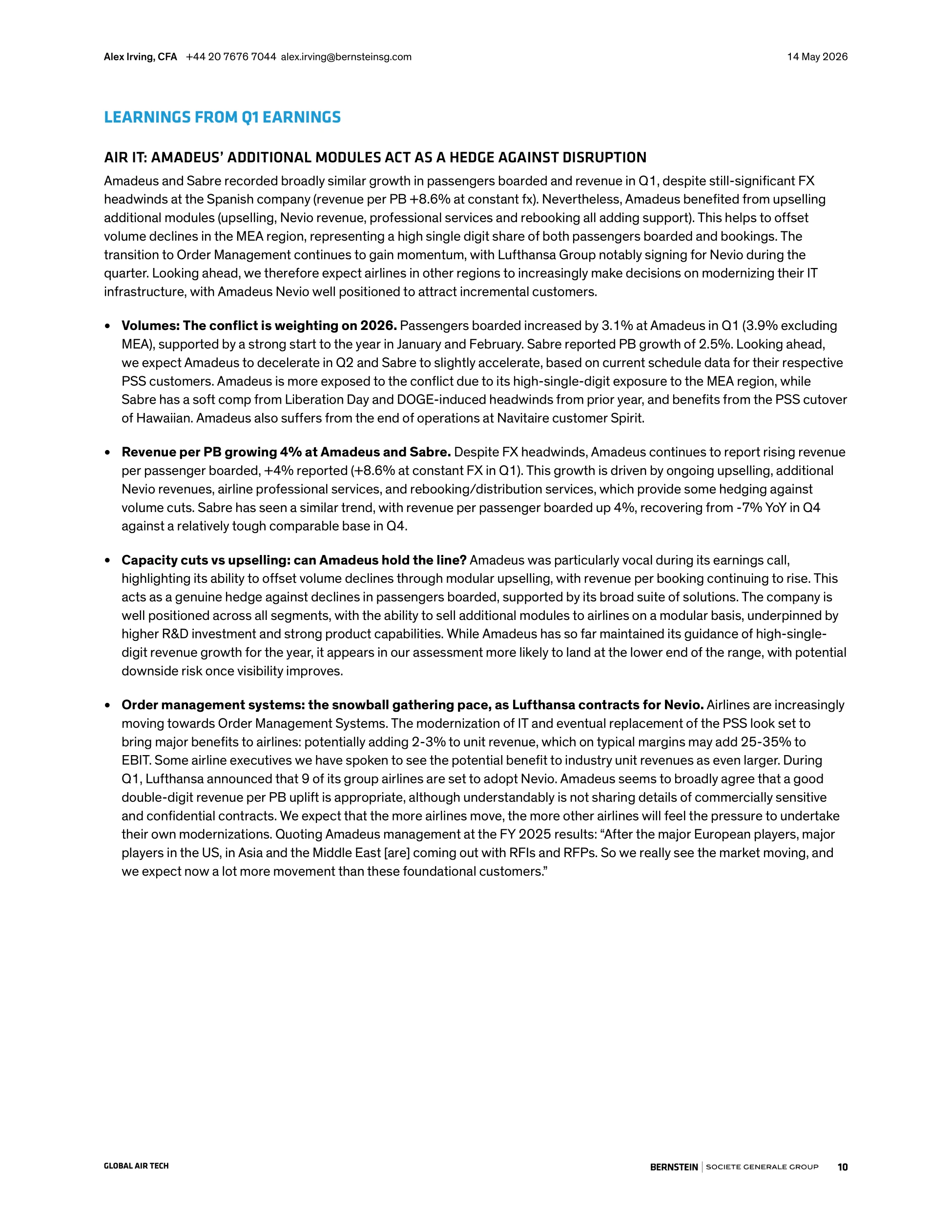
14 May 2026Global Air TechGlobal Air Tech: Airline supply under the microscope. MaintainOutperform on Amadeus and Market-Perform on SabreAlex Irving, CFA+44 20 7676 7044alex.irving@bernsteinsg.comAntoine Madre+33 1 58 98 74 52antoine.madre@bernsteinsg.comSpecialist SalesKiran Shah, CFA+44 20 3547 1533kiran.shah@bernsteinsg.comAI was dethroned as the hottest topic at air tech earnings, as investor focus shifted to near-term volume trends, and pressure on these following the outbreak of war in the Middle Eastand the rise in fuel prices. Q1 results were solid, despite cancellations weighing on bothbookings and passengers boarded, with a more pronounced impact at Amadeus than Sabregiven the regional footprints. However, the former was able to offset this through its broadIT product portfolio, with upselling, Nevio revenues, professional services and rebooking allcontributing. Looking ahead, airlines are adjusting capacity dynamically, and we see particularrisk to winter capacity should fuel remain expensive and/or demand worsen. We remainconviction buyers of Amadeus, supported by its low leverage, scale and strong productinnovation, and maintain Sabre at Market-Perform, given persistently high leverage that weexpect to remain above 5x through the end of the decade.A robust Q1. Amadeus’ results were strong, as upselling and other solutions mitigatedthe impact of geopolitical headwinds to volume. Somewhat surprisingly, full-year guidancewas maintained despite the geopolitical impact on air travel: we still see downside risk tothis year’s volume targets as airlines decide on winter capacity. Sabre, which has lowerdirect exposure to the conflict, reported its strongest air booking growth in over two years(+6%) despite cancellations. Its EBITDA guidance for the full year was maintained, despite amodest reduction in booking volume expectations (from MSD to LSD-MSD).Airlines are reducing schedules … The world’s airlines have reduced capacity since theconflict, with the Middle East most impacted by restrictions, and other carriers trimmingschedules to better absorb the c.70% increase in jet fuel prices versus pre-conflict levels.Global schedules are now flat YoY in Q2 and +3.9% in Q3. This represents a mid-single-digit decline in Q2 vs pre-conflict expectations and a low-single-digit shortfall in Q3.Amadeus and Sabre expect around 3% volume growth for the full year, supported by arecovery in H2.… with downside risks ahead. Air Tech stocks generate profit from volume, while airlinesrely on both volumes and fares, leading to a divergence in interests. The risk of capacitycuts remains, as despite a robust fare environment, and in our view if jet fuel prices remainelevated, the small reductions announced so far will not be enough. We see winter as moreexposed to potential cuts, given seasonally lower contribution margins. We also see shorterstagelength routes as more likely ...










































