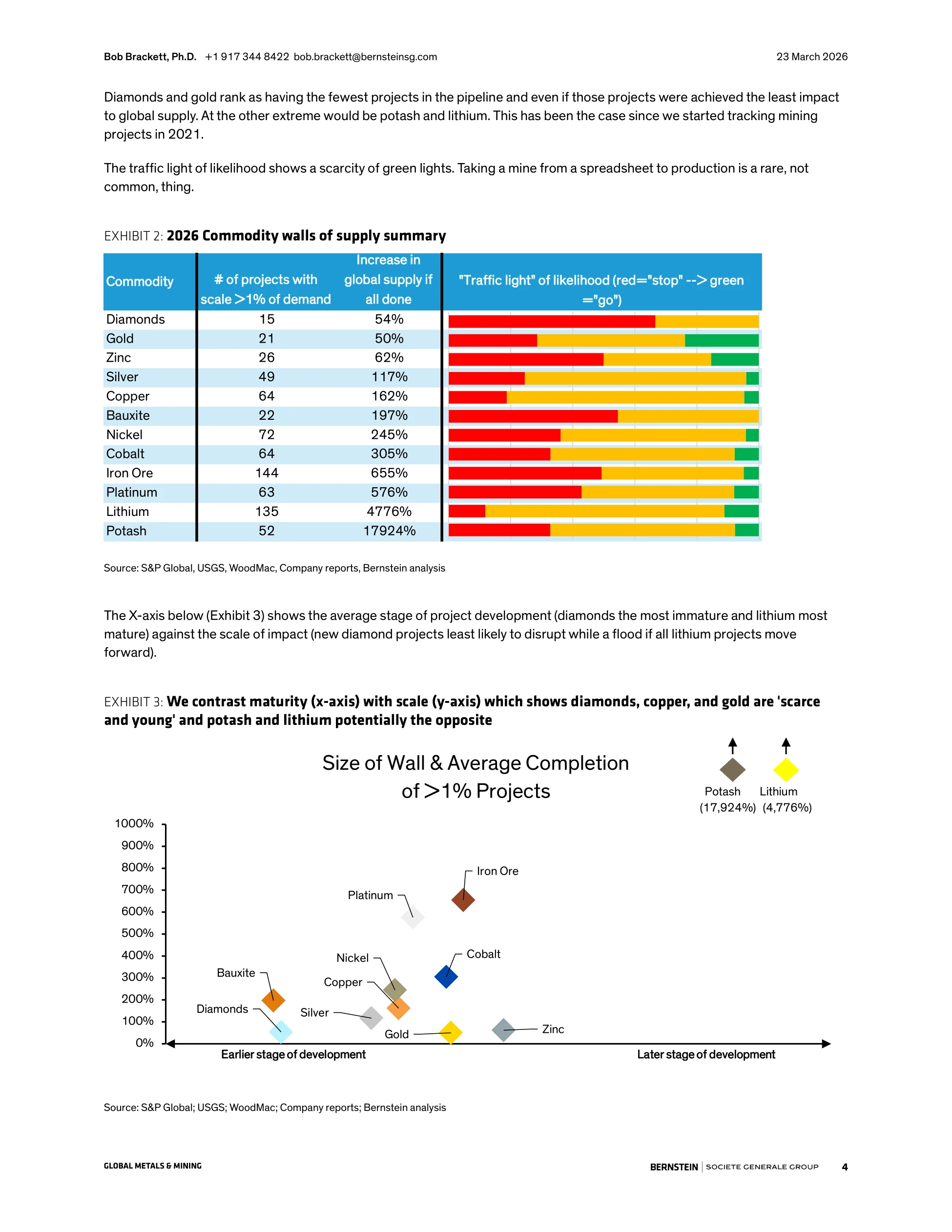
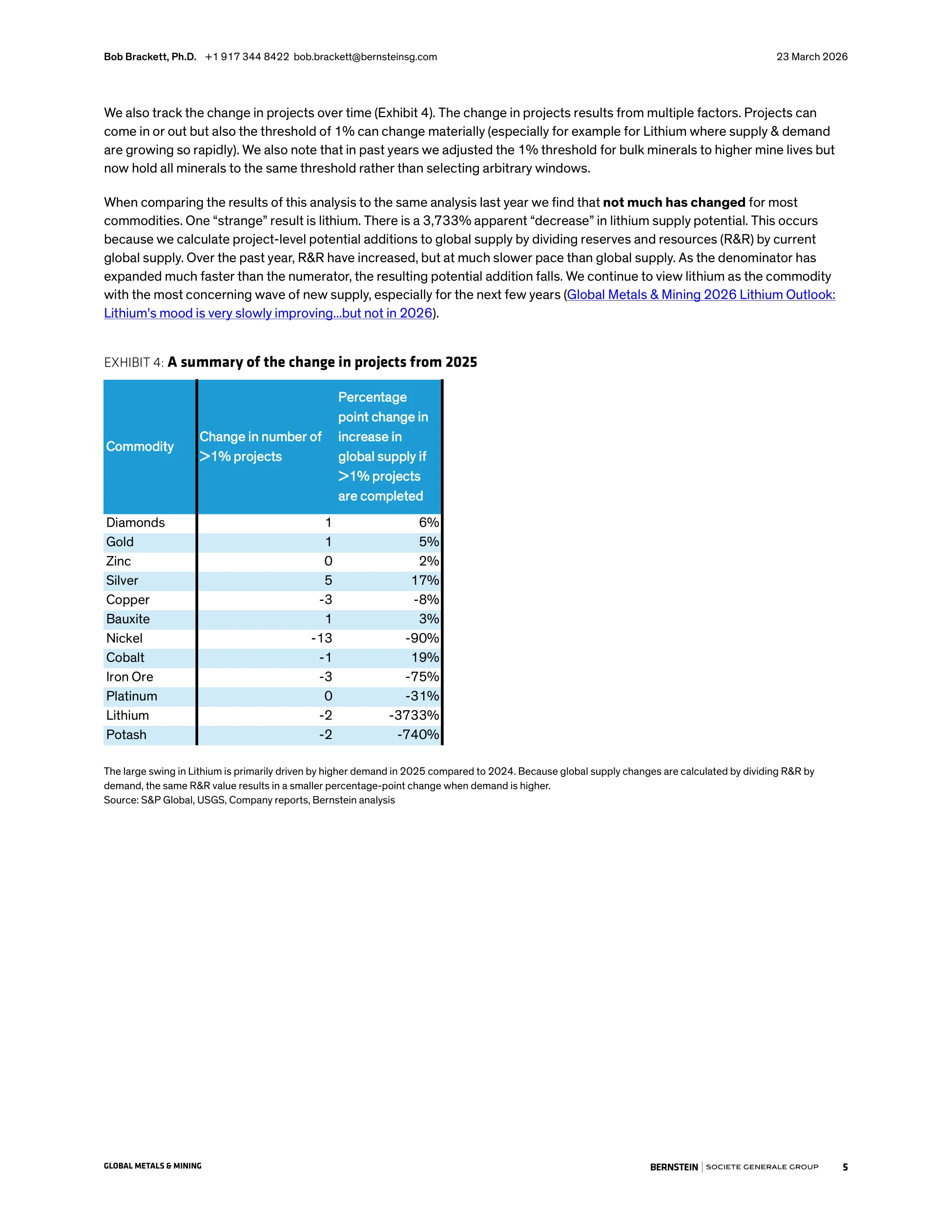
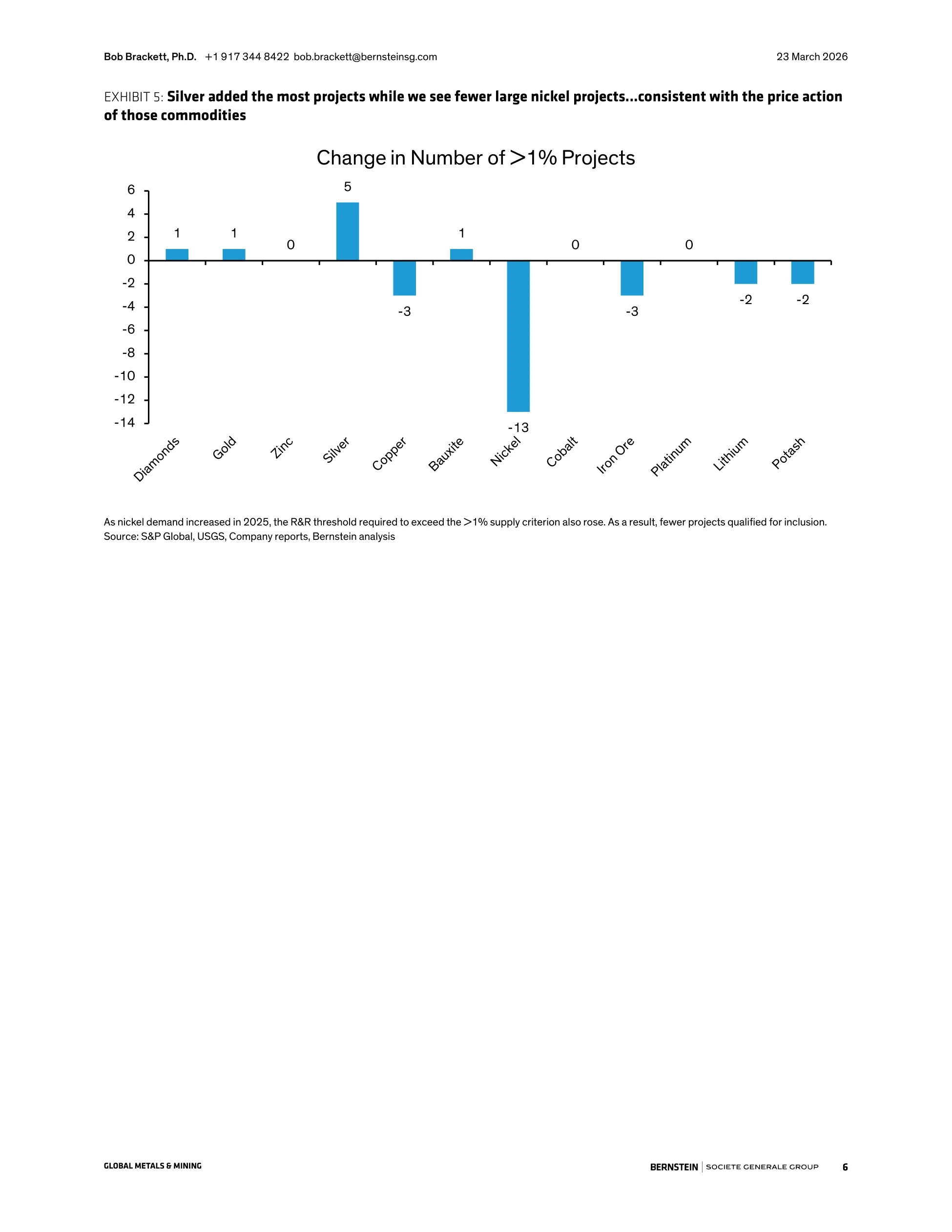
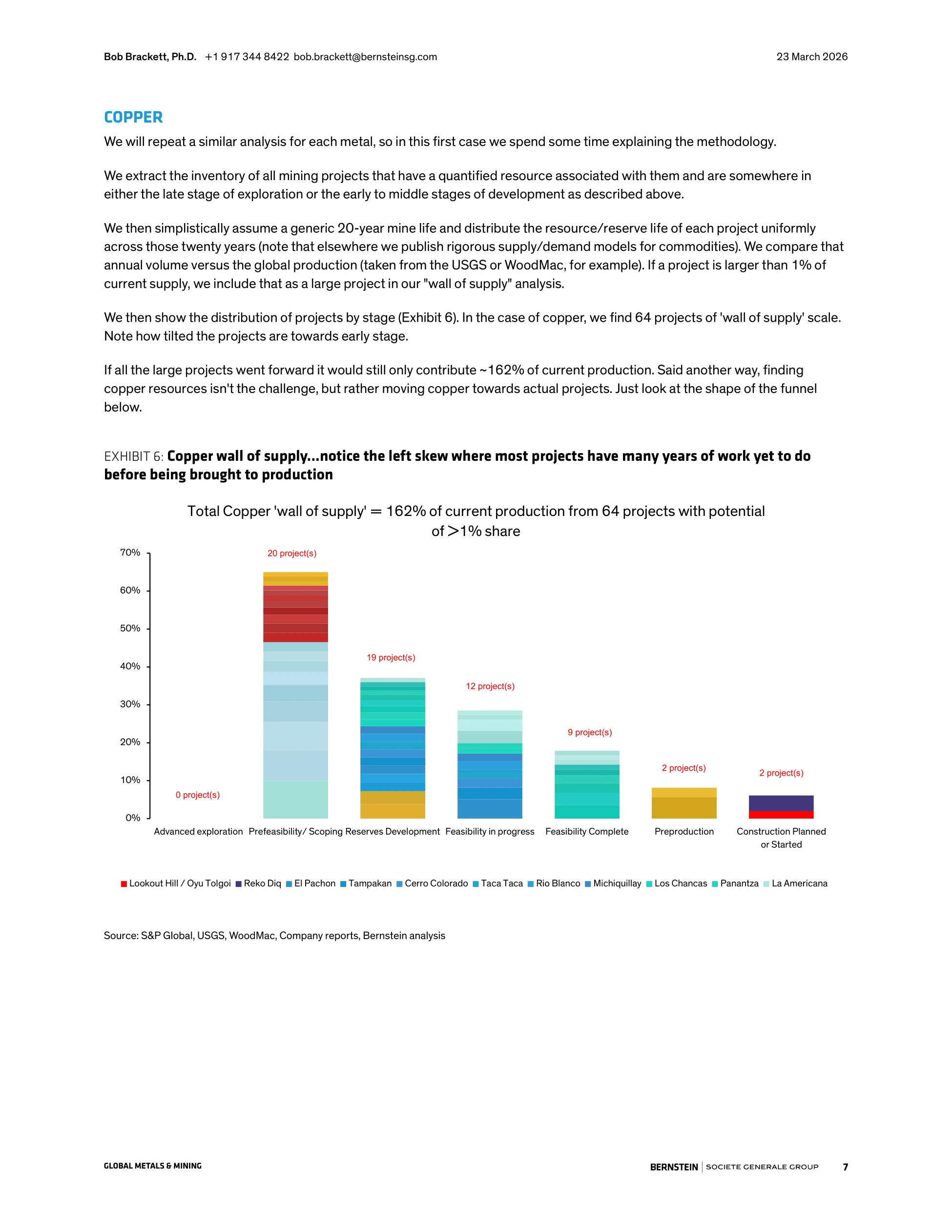
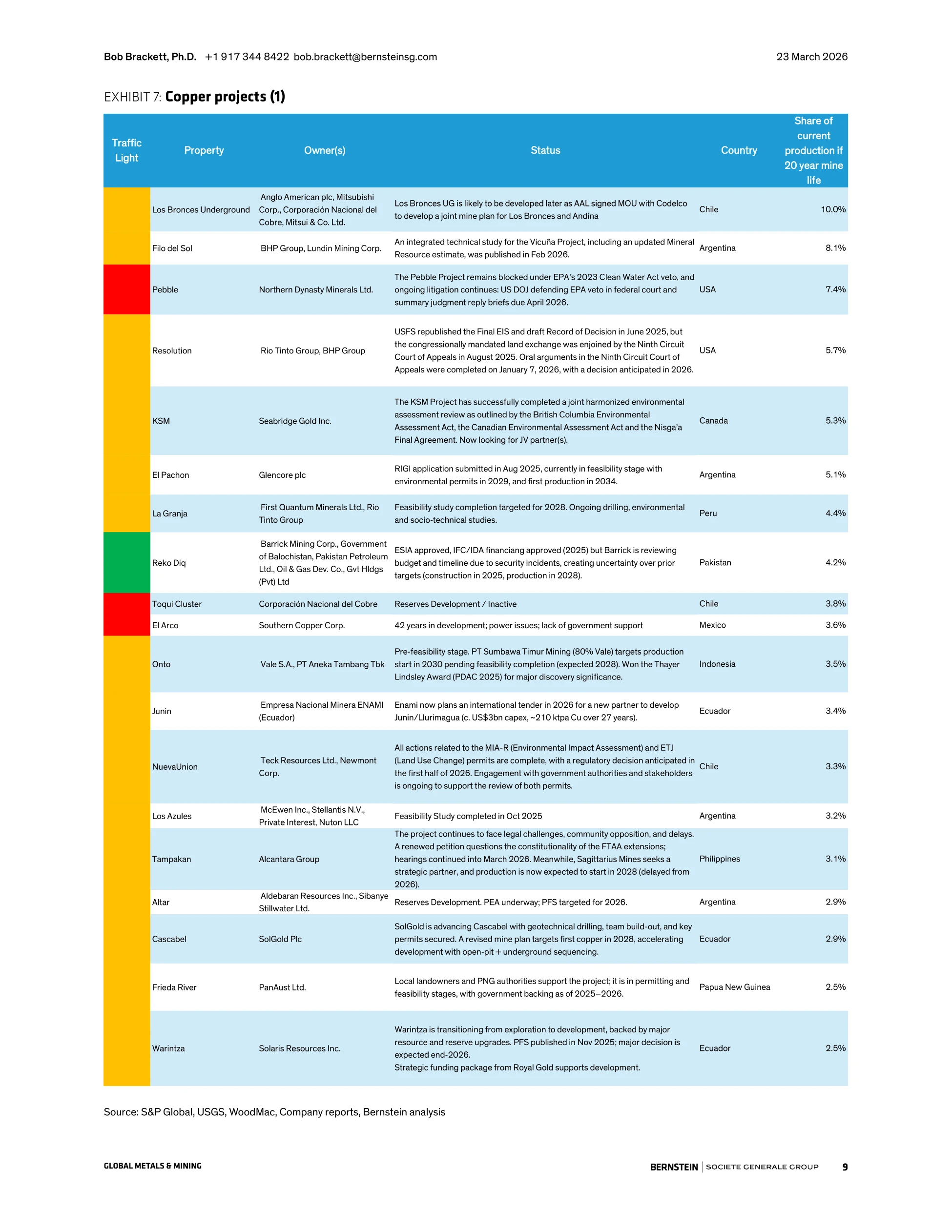
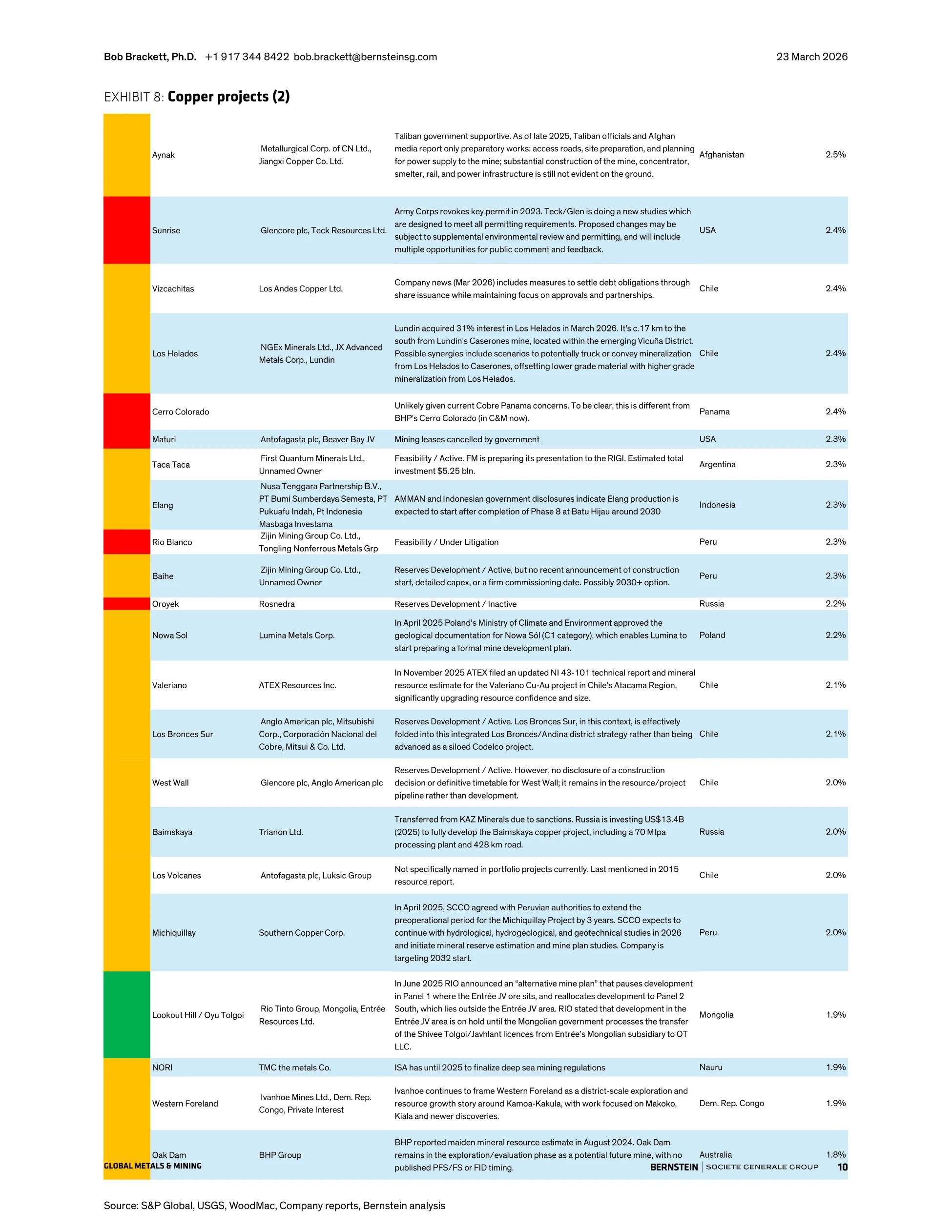
23 March 2026Global Metals & MiningGlobal Metals & Mining: 2026 Walls of SupplyBob Brackett, Ph.D.+1 917 344 8422bob.brackett@bernsteinsg.comAndrianto Guntoro+44 20 7676 6825andrianto.guntoro@bernsteinsg.comUnderstanding the progress of large/important mining projects is integral to our frameworkin analyzing the sector. In this note, we analyze hundreds of projects across twelvecommodities which have the potential (reserves & resources) to contribute more than 1% ofcurrent demand.Commodity up-cycles typically end when either (a) demand retreats or (b) supply surges.We investigate the threat of large-scale supply shocks for a variety of commodities in thisnote as we do every year. The high level answer if you choose to stop reading now is (butplease don't!)...we haven’t seen any evidence of a wall of large base metal or preciousmetal projects looming over the market. However, we still worry about the lithium andpotash wall of supply.There are at least two forms of a "wall of supply". One case is driven by "quantity" – lotsof small greenfield projects coming to market ("kindergarteners chasing the ball" or "theshale revolution" for example). We safely assume that small greenfields are high costgreenfields (the world's best mines are often the biggest mines, benefitting from economiesof scale and the minimization of fixed operating costs). We believe a combination of capitaldiscipline in the sector and lack of a technology revolution mitigates such worry of a flood ofsuch projects, so we ignore them for now.The second case is driven by "quality". When a sufficiently world-class mine enters themarket, it can itself be a significant supply surge. In this note we examine (for a number ofmetals) what the pre-sanctioned pipelines of projects look like, what might be holding themback and whether a wall of supply is imminent.Exhibit 2 and Exhibit 3 highlight the key findings. Consistent with our findings in previousyears, we still see the least threat of supply for diamonds, gold, zinc, and silver. Wesee the most threat for potash, lithium, platinum, iron ore and cobalt (although as aby-product, its fate is driven by other metals). In between metals include copper, bauxite,and nickel. In terms of concentration (i.e., how important are the mega-projects to theoverall supply), potash, lithium, and bauxite are most abundant elements with large chunksof supply while gold, silver, and zinc the most diffuse. This distinction between the moreabundant ("base & bulks") and the more rare ("precious') metals is not surprising.We deploy a traffic light approach to argue that the gap between a project sitting in aspreadsheet and a physical mine is quite a chasm to cross. The vast majority of projectswe review aren’t imminent and should be watched rather than feared. We compareour analysis to a similar analysis carried out last year and find that the walls ha...










































