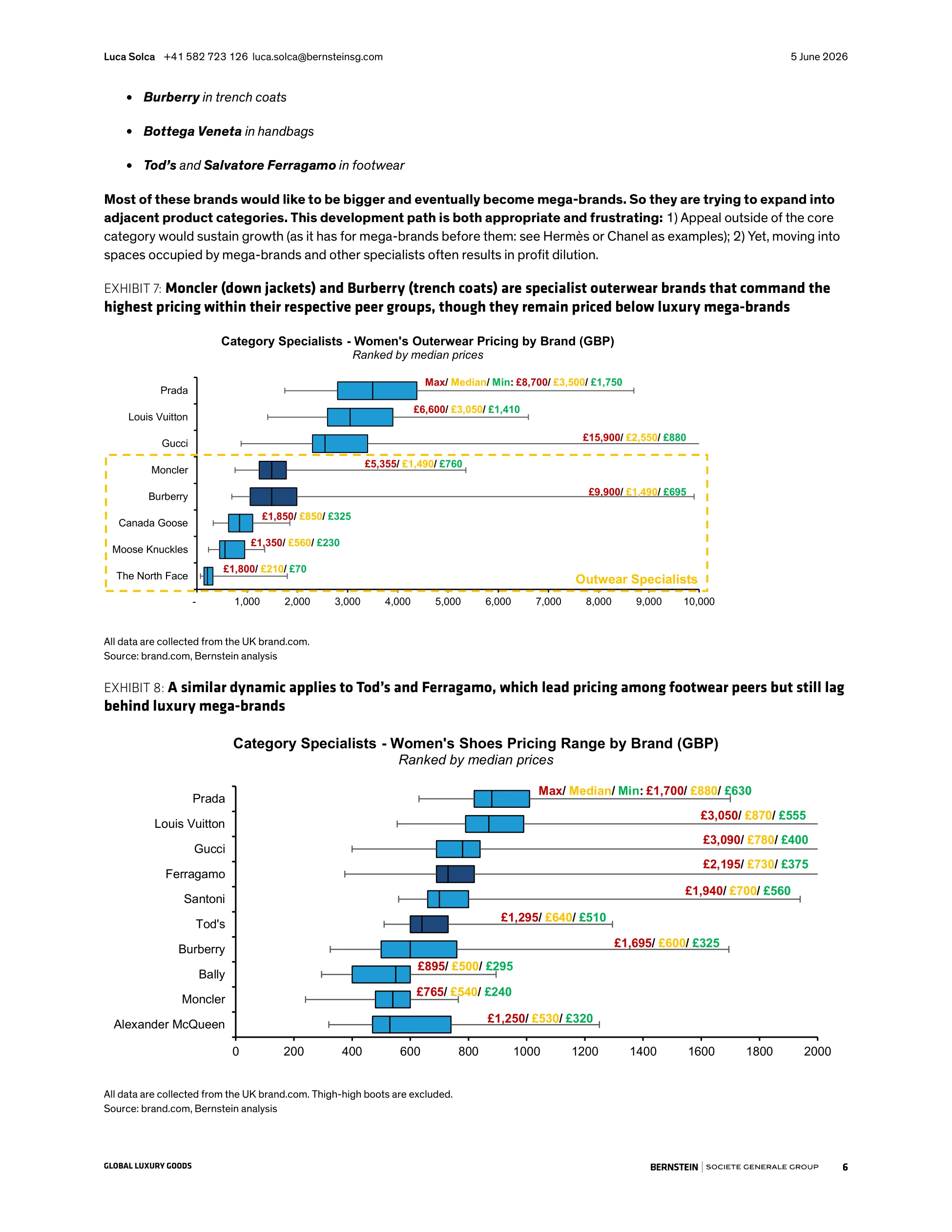
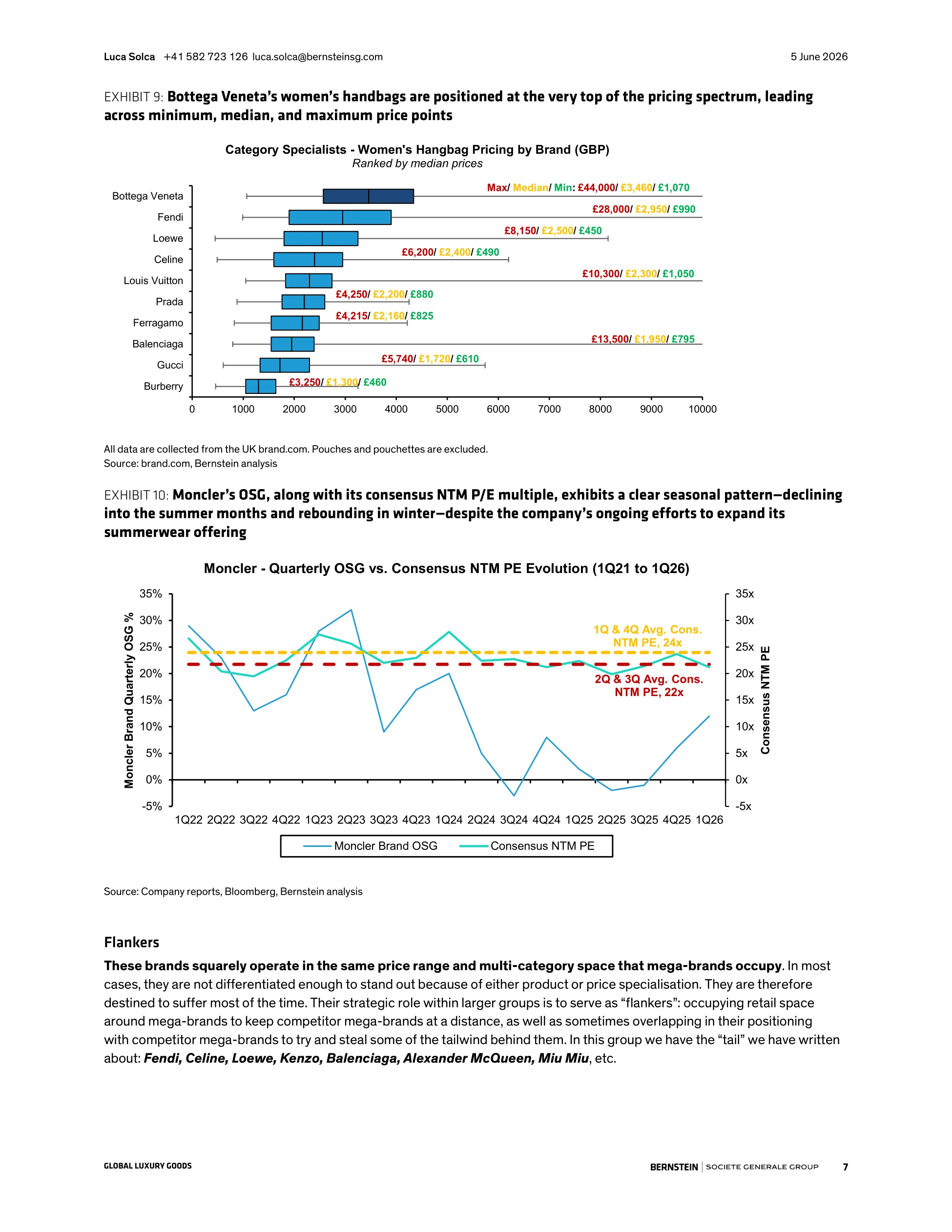
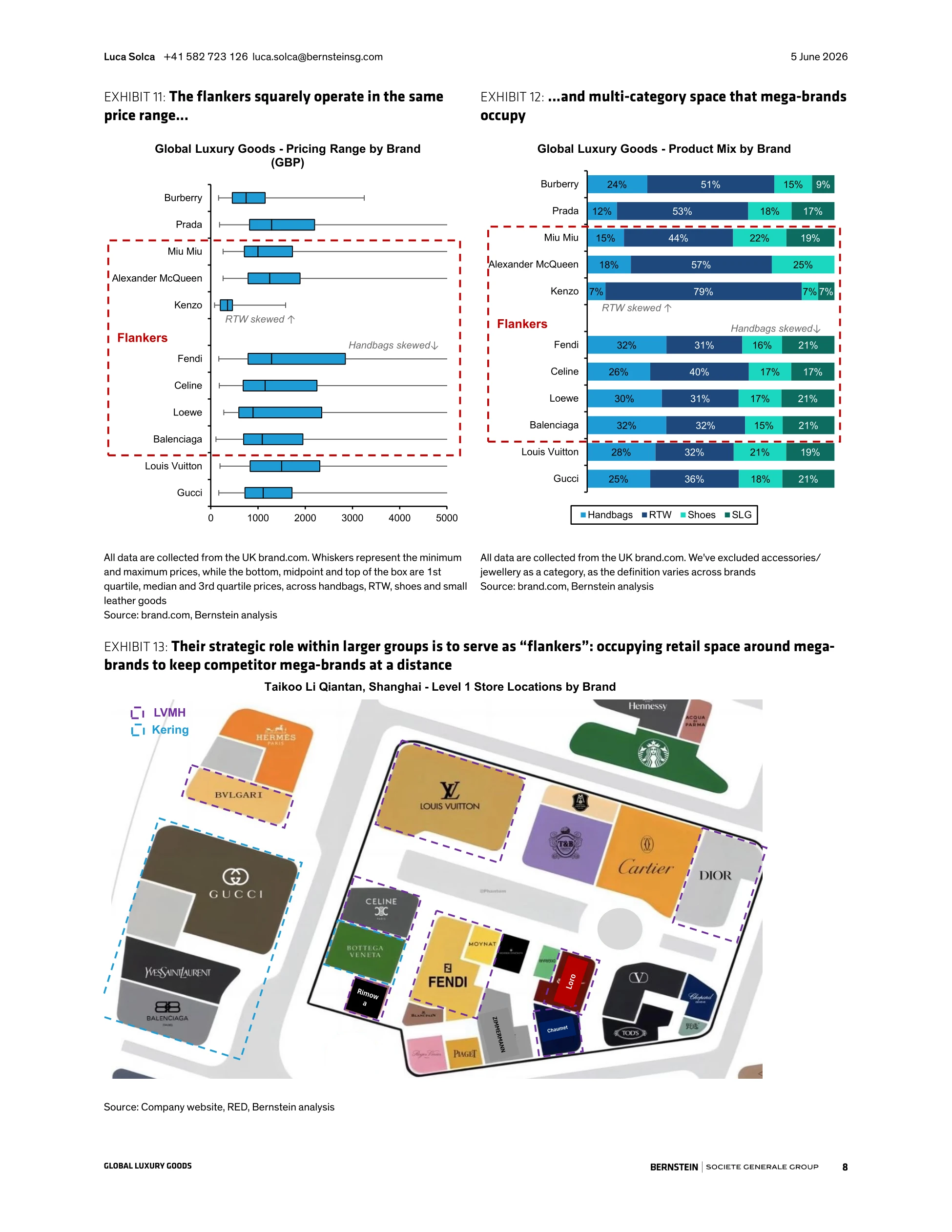
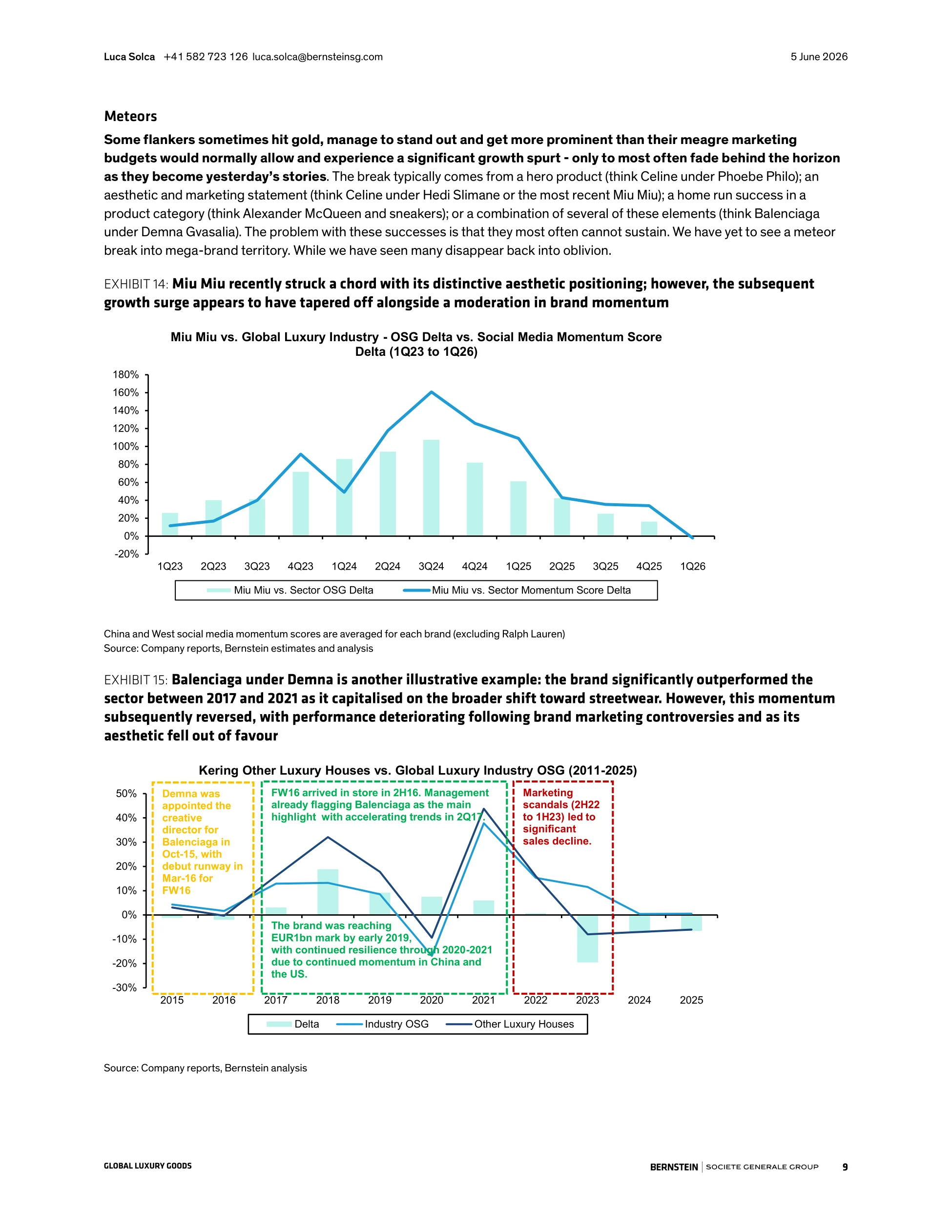
5 June 2026Global Luxury GoodsGlobal Luxury Goods: The Future of Small BrandsLuca Solca+41 582 723 126luca.solca@bernsteinsg.comMaria Meita+44 20 7170 0540maria.meita@bernsteinsg.comEric Chen, CFA+852 2123 2628eric.chen@bernsteinsg.comYi-Peng Khoo, CFA+44 20 7676 6822yi-peng.khoo@bernsteinsg.comSpecialist SalesAlix Turner+44 20 7762 4044alix.turner@bernsteinsg.comIt is time to put small luxury brands under the spotlight, following up on our work on mega-brands (The Future of Mega-Brands, 2013) and trailing “tail” brands (How Long Is Your Tail?2009, Global Luxury Goods: How Long is your Tail? Reloaded 2020).A more stable consumer base is producing a better environment for smaller brands.The fixed cost nature of the industry and new consumers driving most of the growth - allwanting to buy the “luxury essentials” - have favoured mega-brands in the past 30 years.The fixed cost structure of the industry doesn’t change. But a more established consumerbase needing something new to part with their money provides a more favourableenvironment for smaller brands (see Weekend Consumer Blast: The Luxury Mega-BrandBathtub – Redux).A CLEARER SMALL LUXURY BRANDS LANDSCAPE IS EMERGINGWe see four major groups:High-end specialistsThese brands operate at the highest price points and have virtually nothing foraspirational consumers in their assortment. They appear to be best positioned tocapture the richest consumers turning to mega-brand alternatives and have been doing sofor at least 15 years. Given their scale disadvantage, they are likely to continue to producesubstandard retail space productivity, EBIT%, and ROIC. Publicly traded examples of thisgroup are Zegna, Brunello Cucinelli, Loro Piana. Privately held companies include Kiton,Stefano Ricci.Category specialistsThese brands stand out as recognised specialists in their category, while occupyingthe upper end of the pricing pyramid within the broader fashion and leather goodsspace. We find a diverse array of players in this cohort, as a function of their idiosyncraticproduct origin - e.g.• Moncler in down jackets• Burberry in trench coats• Bottega Veneta in handbags• Tod’s and Salvatore Ferragamo in footwearMost of these brands would like to be bigger and eventually become mega-brands.So they are trying to expand into adjacent product categories. This developmentpath is both appropriate and frustrating: 1) Appeal outside of the core category wouldsustain growth (as it has for mega-brands before them: see Hermès or Chanel as examples);2) Yet, moving into spaces occupied by mega-brands and other specialists often results inprofit dilution.Continued on the next page…See the Disclosure Appendix of this report for required disclosures, analyst certifications and otherimportant information. Alternatively, visit our Global Research Disclosure Website.www.bernsteinresearch.comFirst Published: 05 Jun 2026 05:00 UTC Completion Date: 05 Jun...










































