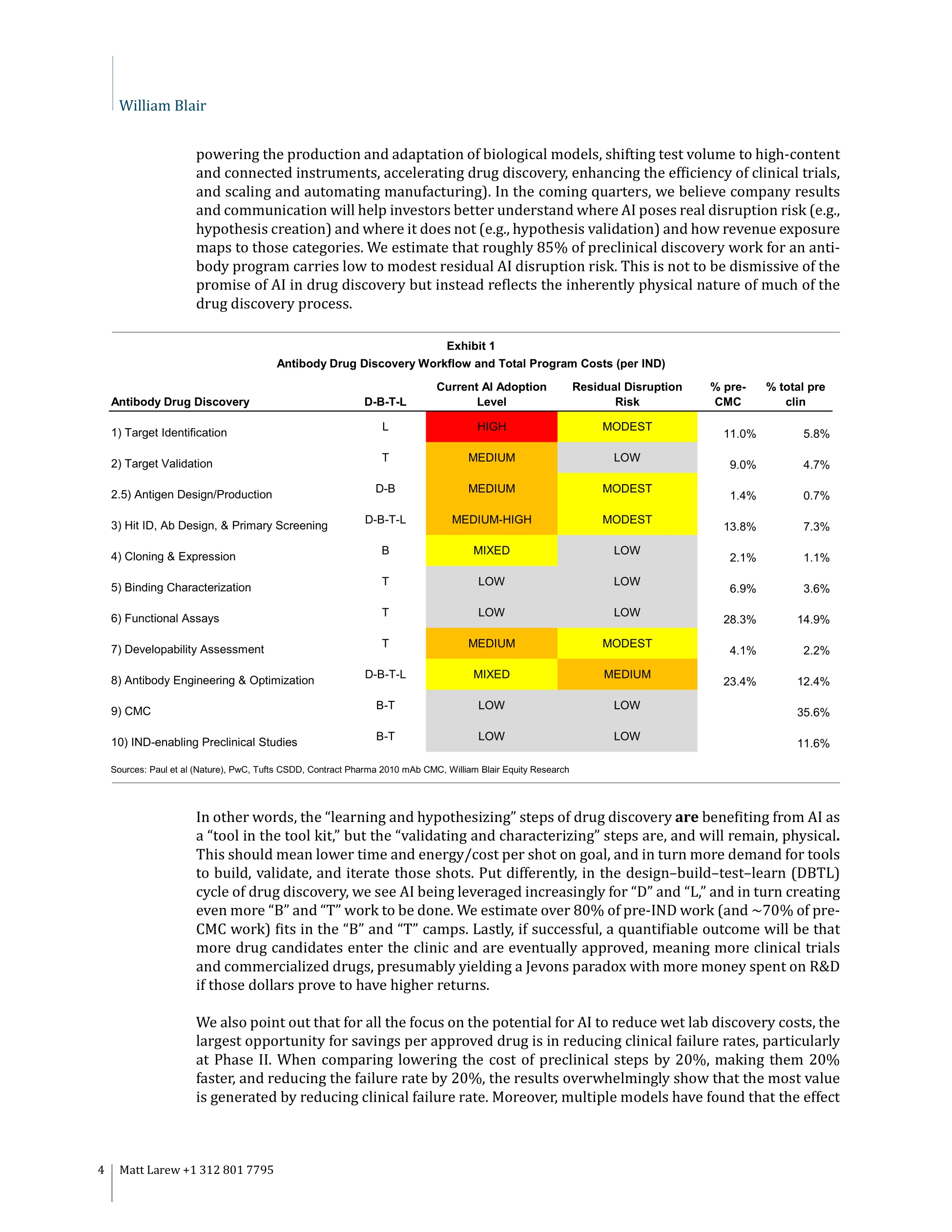
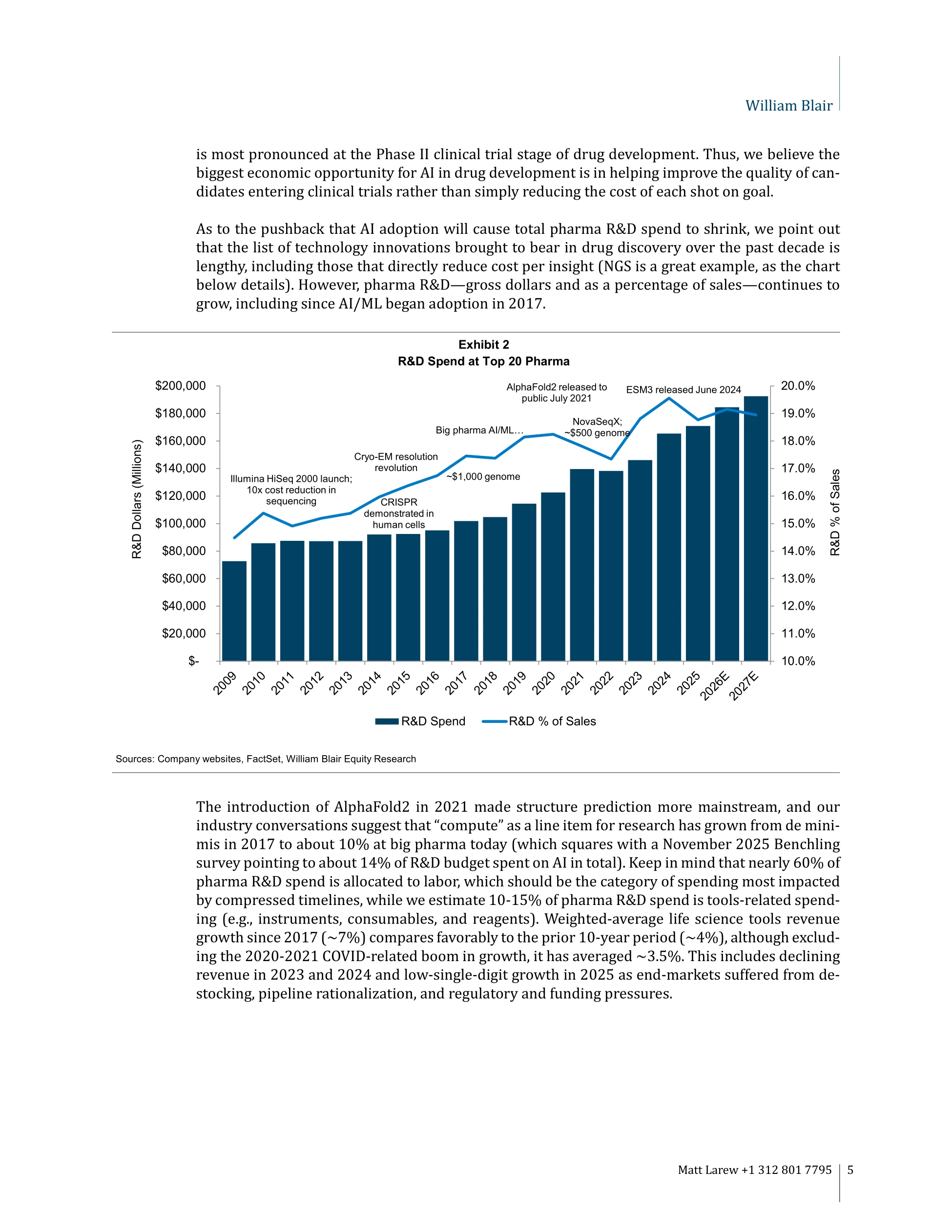
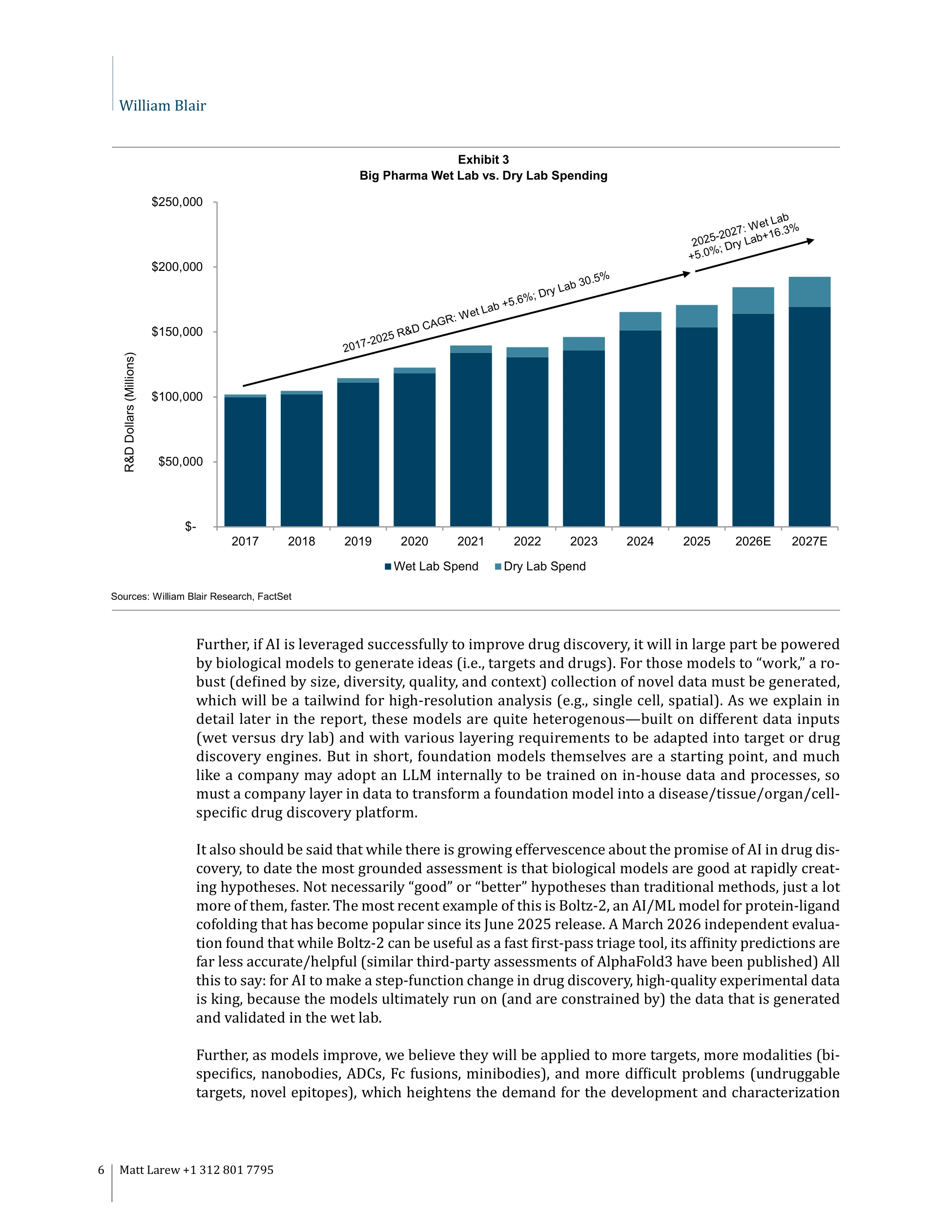
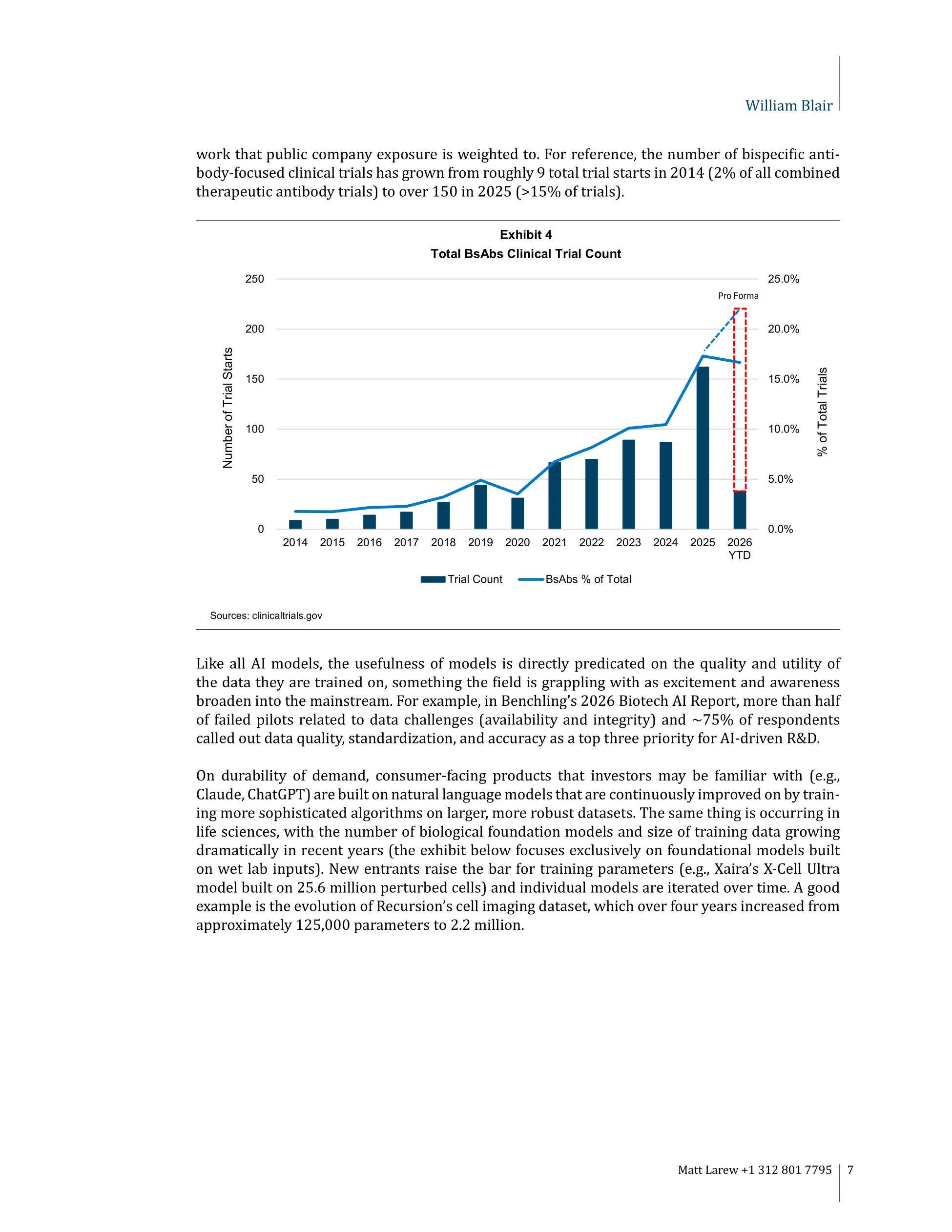
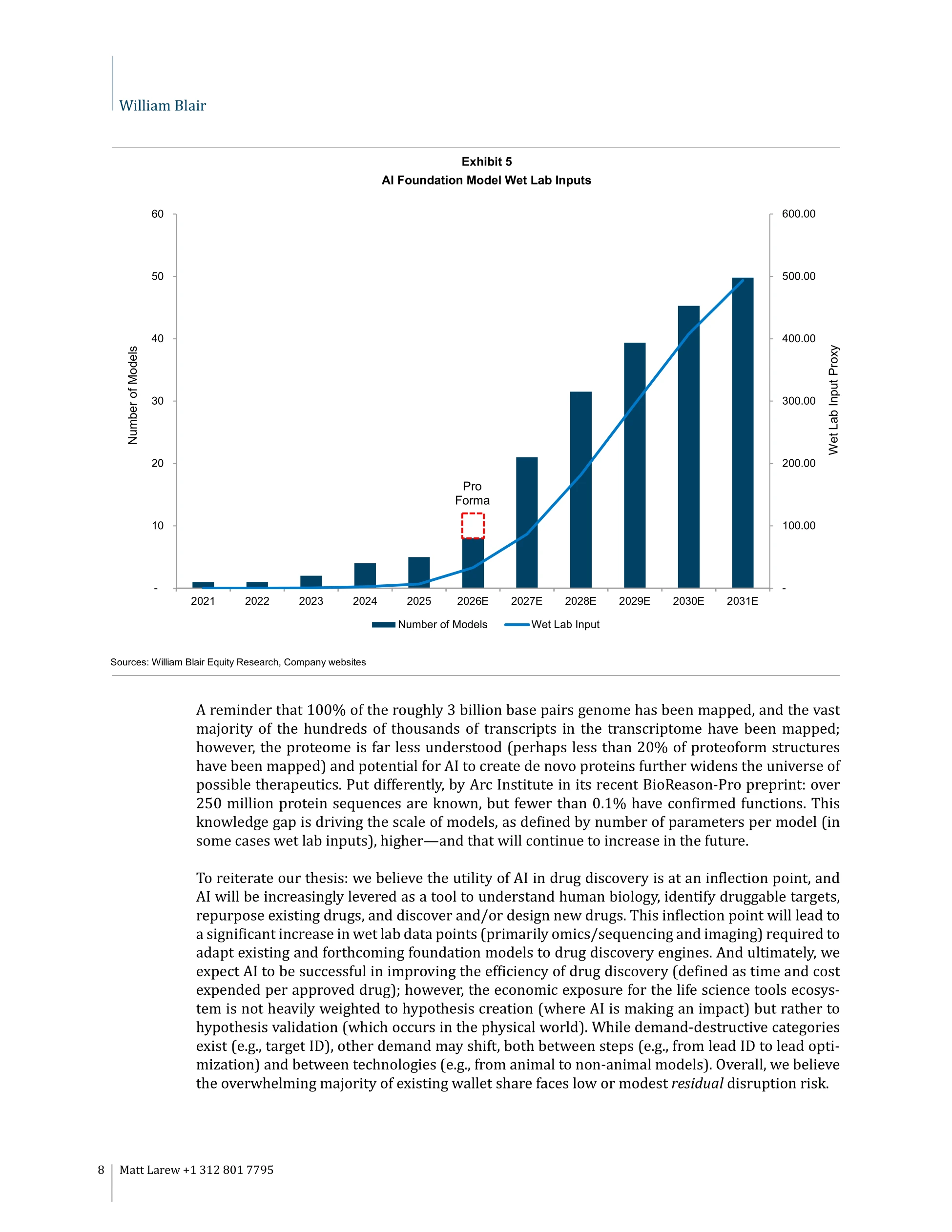
Please refer to important disclosures on pages 42 and 43. Analyst certification is on page 42.William Blair or an affiliate does and seeks to do business with companies covered in its research reports. As a result, investors should be aware that the firm may have a conflict of interest that could affect the objectivity of this report. This report is not intended to provide personal investment advice. The opinions and recommendations here-in do not take into account individual client circumstances, objectives, or needs and are not intended as recommen-dations of particular securities, financial instruments, or strategies to particular clients. The recipient of this report must make its own independent decisions regarding any securities or financial instruments mentioned herein.From Code to ClinicHow AI Is (and Isn’t) Rewriting the Life of a DrugEquity ResearchHealthcare | Life Science Tools and DiagnosticsMarch 30, 2026Industry Report Matt Larew +1 312 801 7795mlarew@williamblair.comJacob Krahenbuhl +1 312 364 8171jkrahenbuhl@williamblair.comThis report is intended for Agraber@williamblair.com. Unauthorized distribution prohibited.2 Matt Larew +1 312 801 7795William Blair ContentsContentsPortfolio Manager Summary .............................................................................................3Executive Summary ...........................................................................................................3Ecosystem Overview ..........................................................................................................9Public Company Coverage ...............................................................................................11How AI Will Impact the “Life of a Drug” ..........................................................................12Why AI Is Relevant: Drug Discovery Is Expensive and Biology Is Programmable .........12Biological Foundation Models – In the Dry Lab, Data Is the Limiting Reagent .............14How AI Is Impacting Antibody Discovery – Smarter Funnels and Faster Cycles ...........20Target Selection (Steps 1-2) ............................................................................................22Step 1 – Target Identification ........................................................................................22Step 2 – Target Validation .............................................................................................23Step 2.5 – Antigen and Assay Preparation (Screening Preparation) ............................24Lead Discovery (Steps 3-4) ..............................................................................................25Step 3 – Hit Identification, Antibody Design, and Primary Screening ..........................25Step 4 – Cloning and Expression ...................................................................................26Lead Characterization (Steps 5-7) ..................................................................................27Step 5 – Binding Characterization .................










































