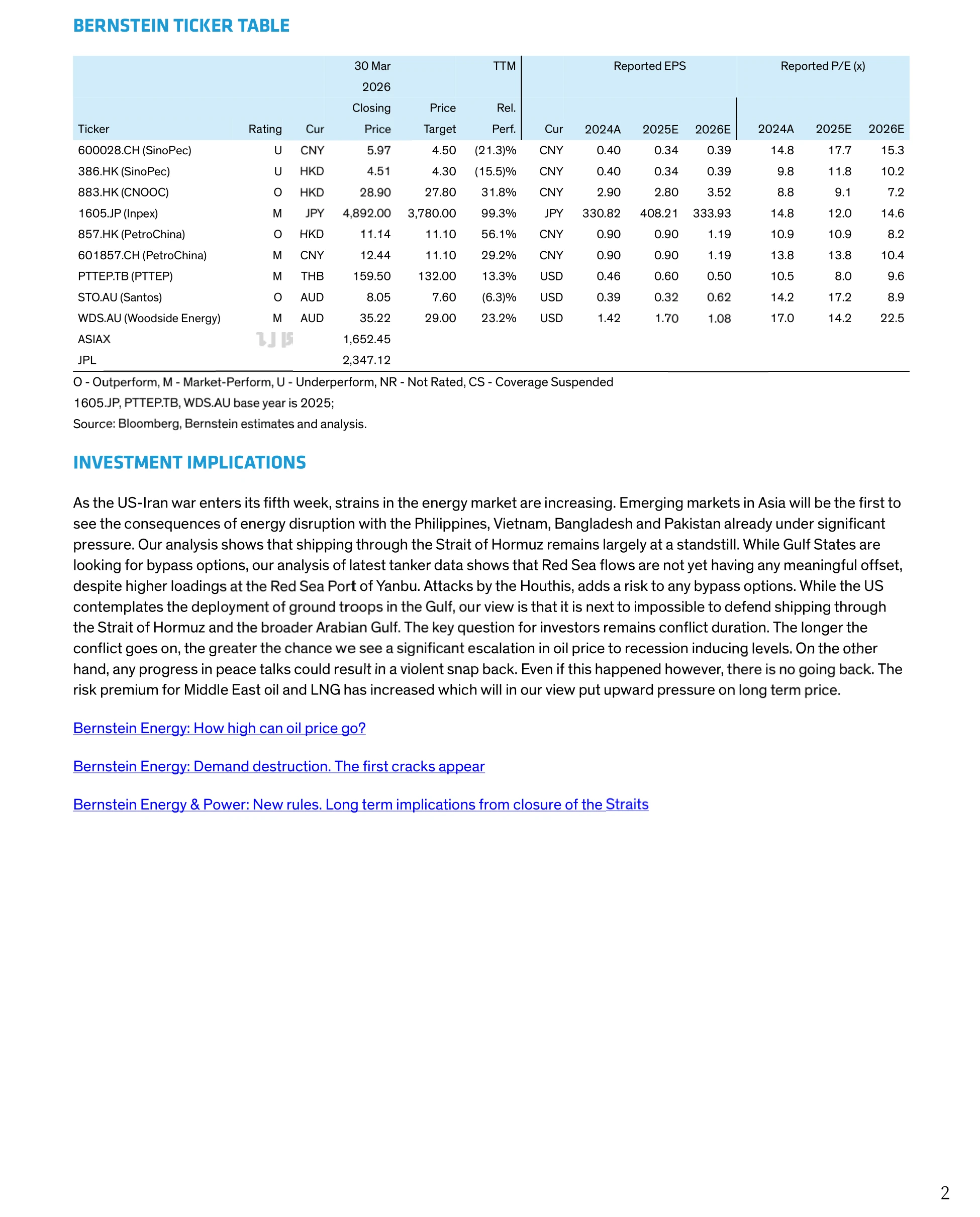
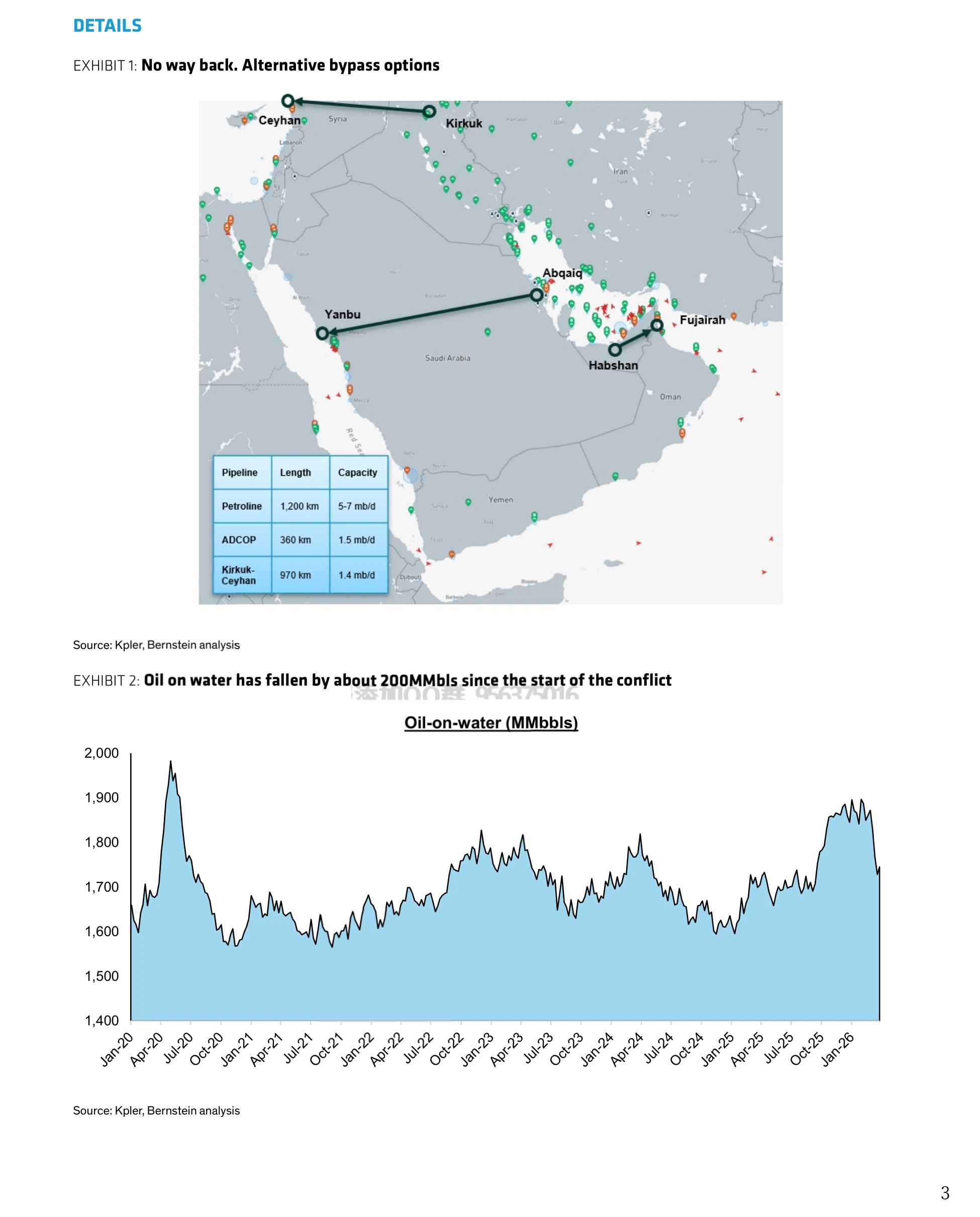
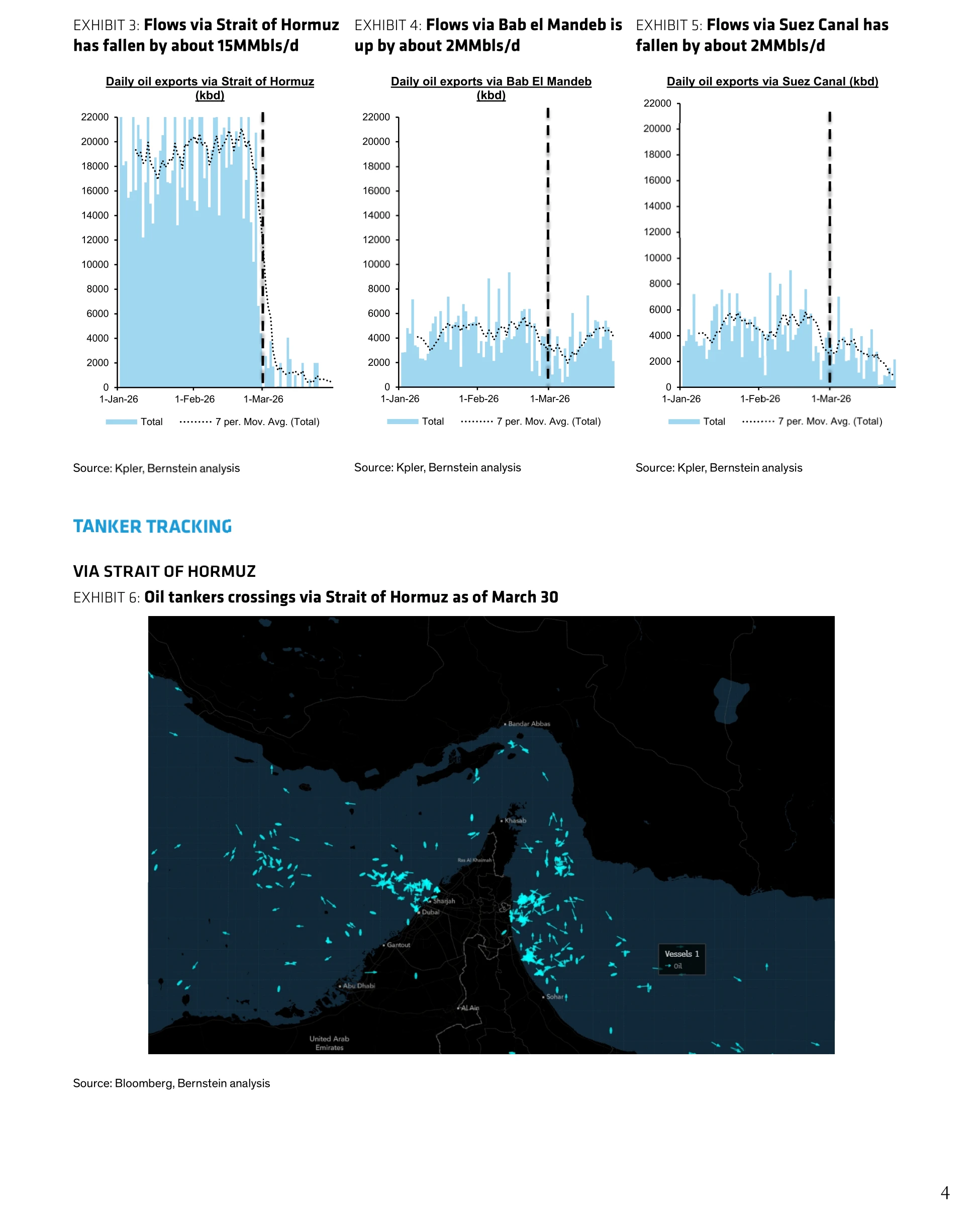
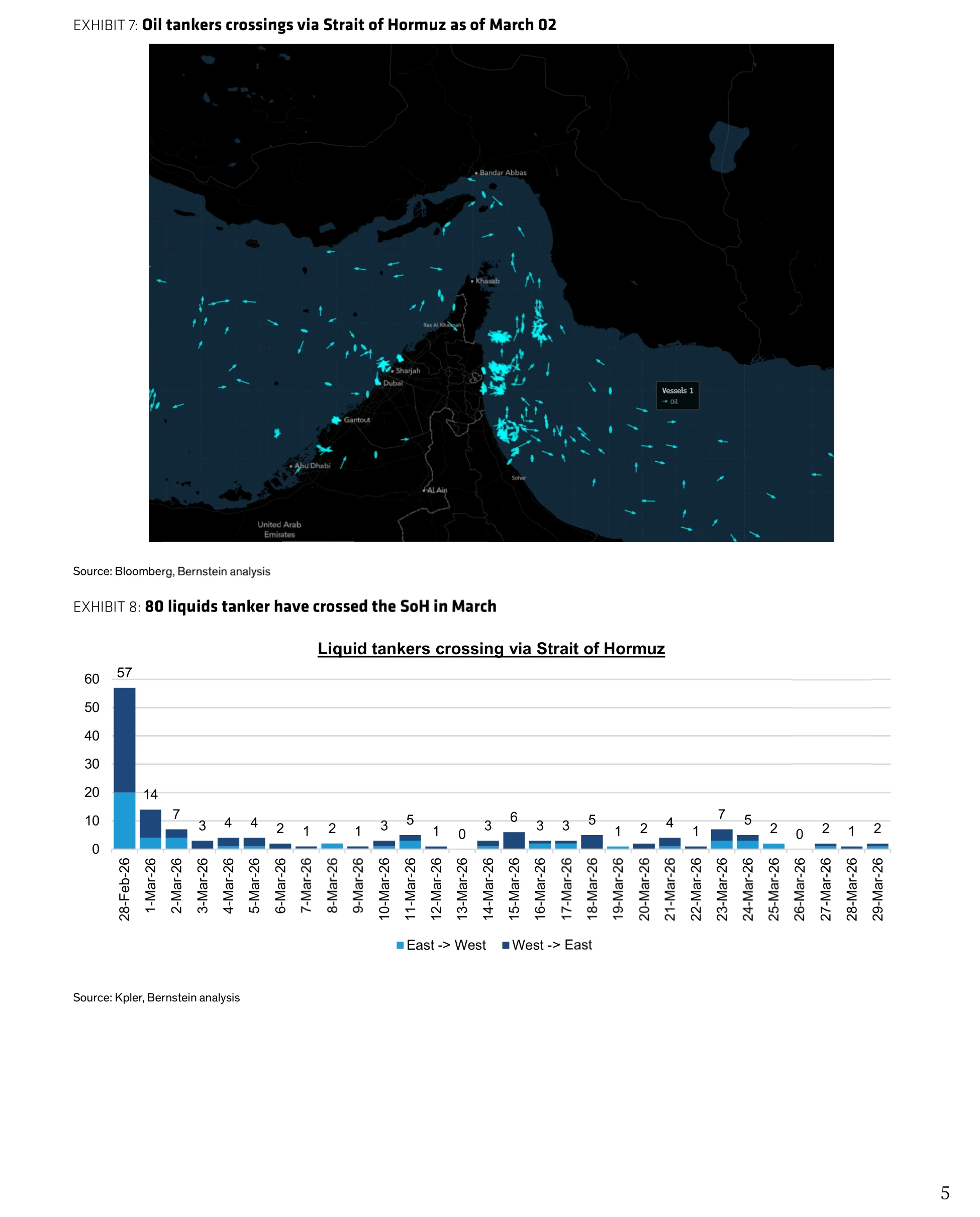
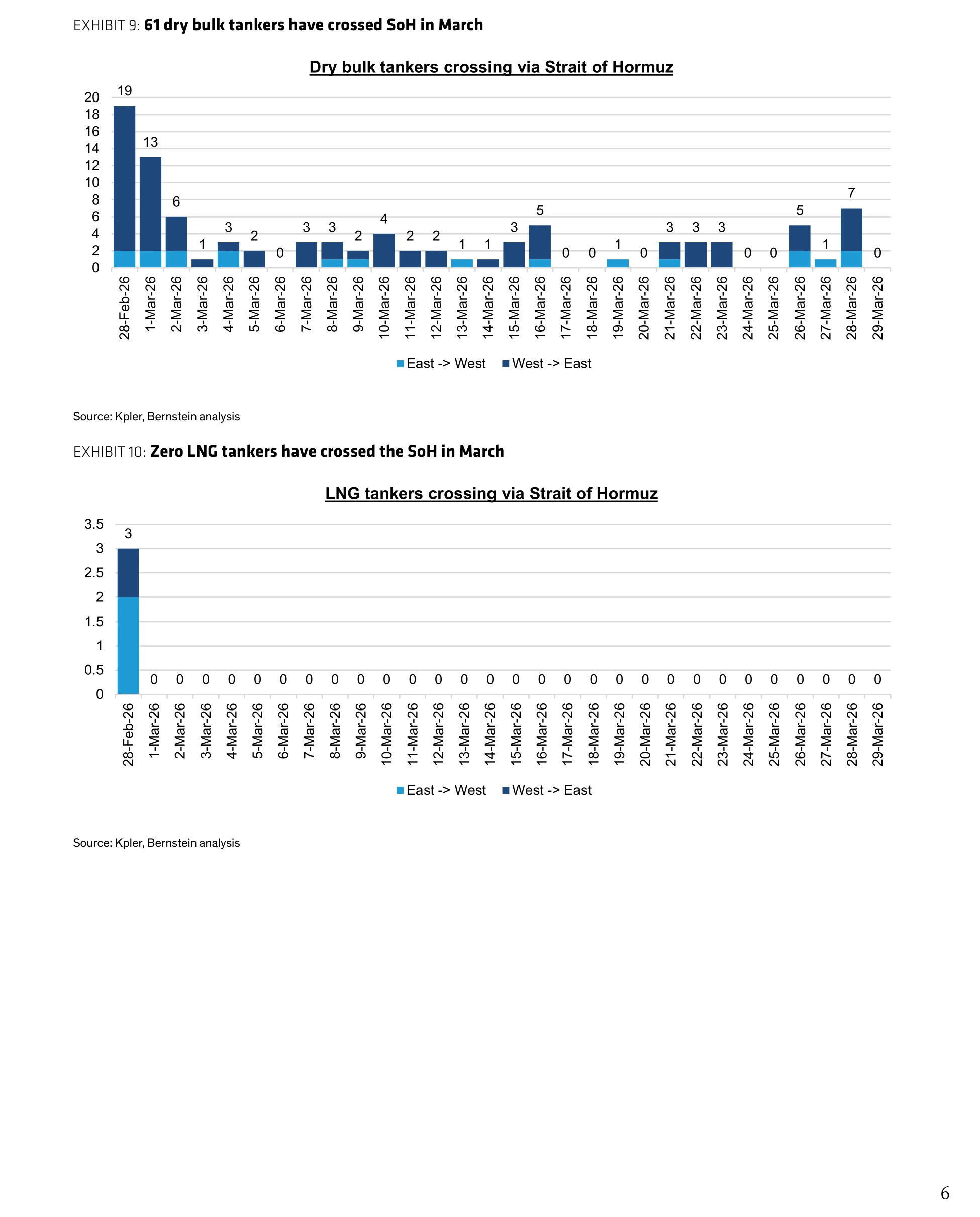
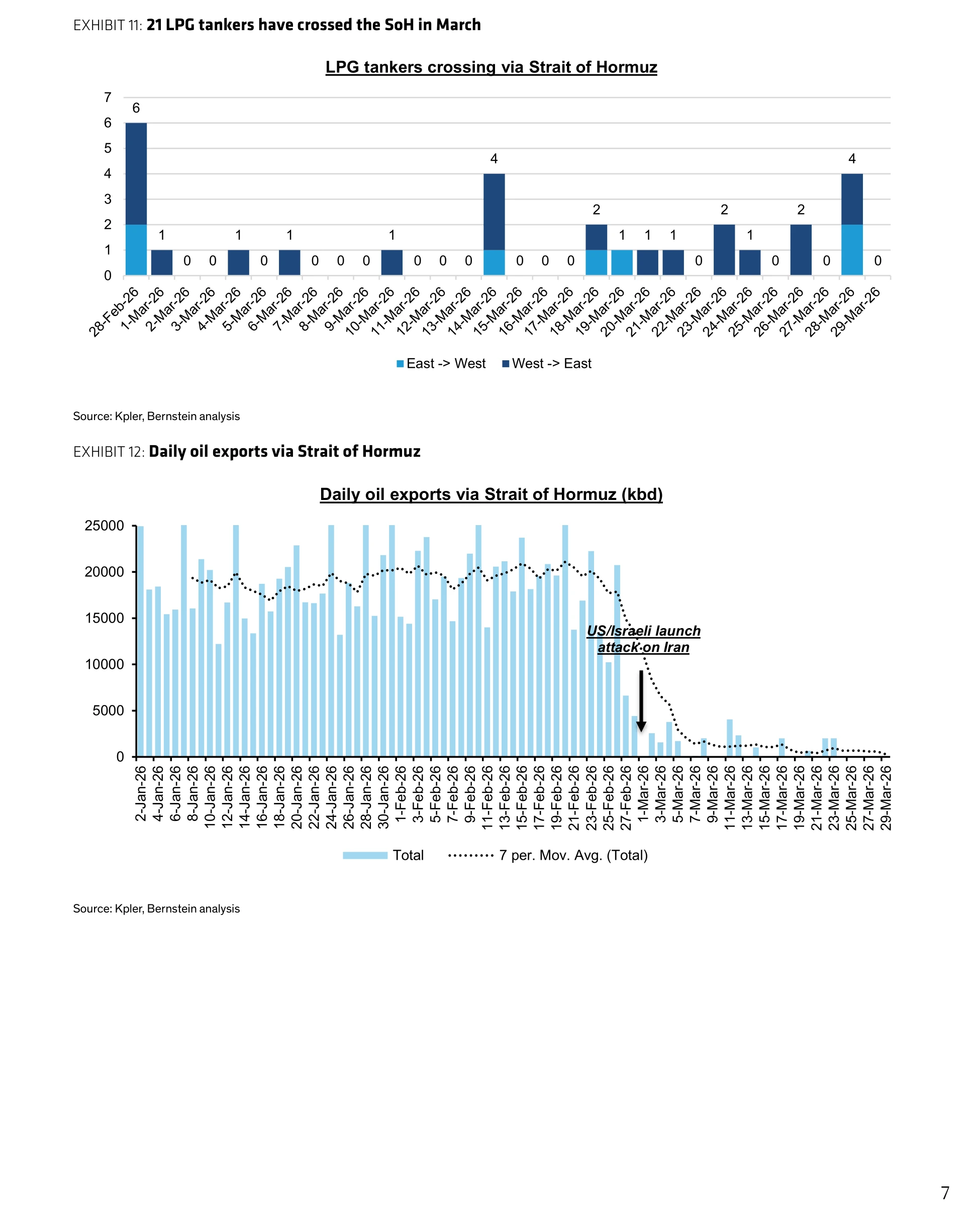
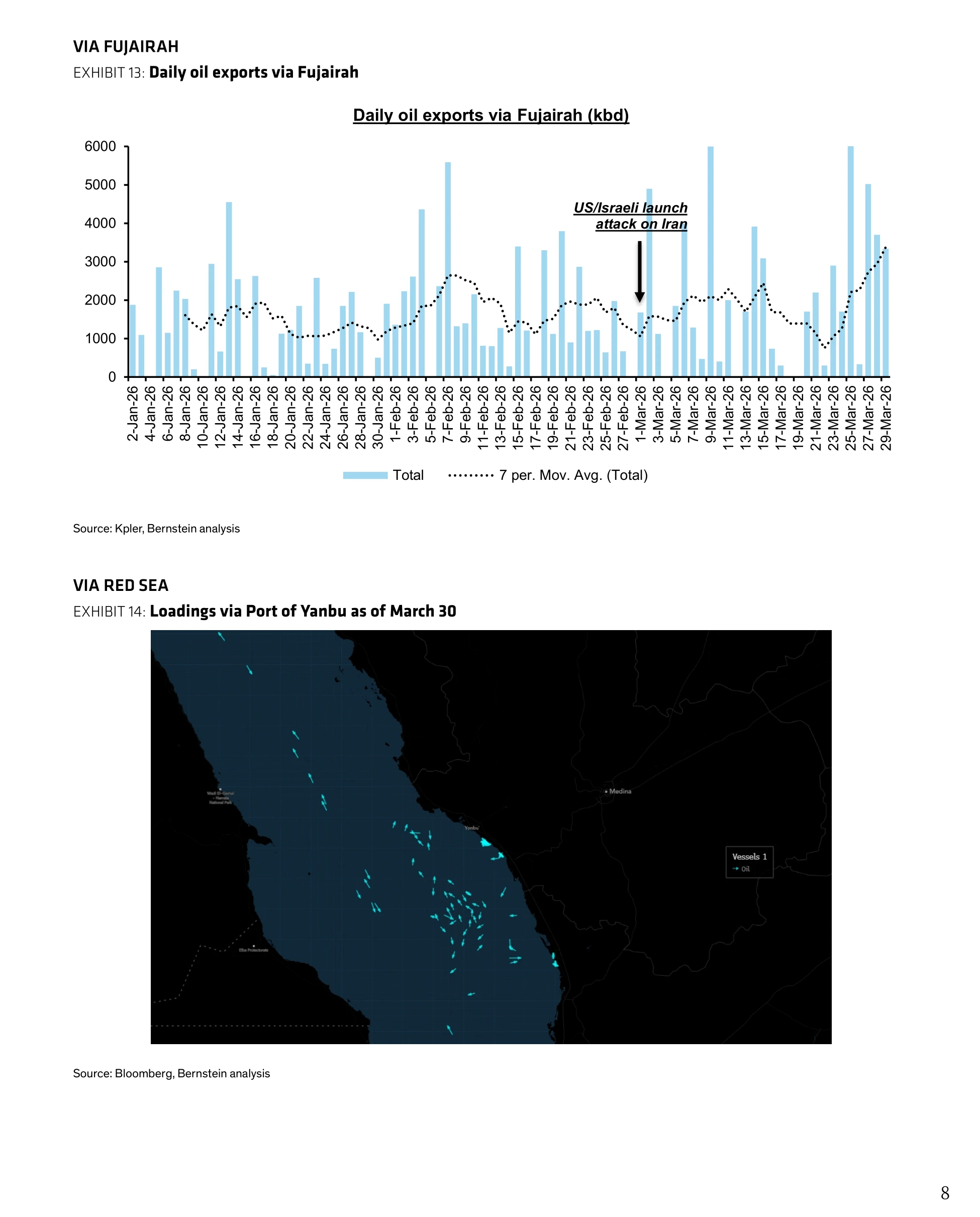
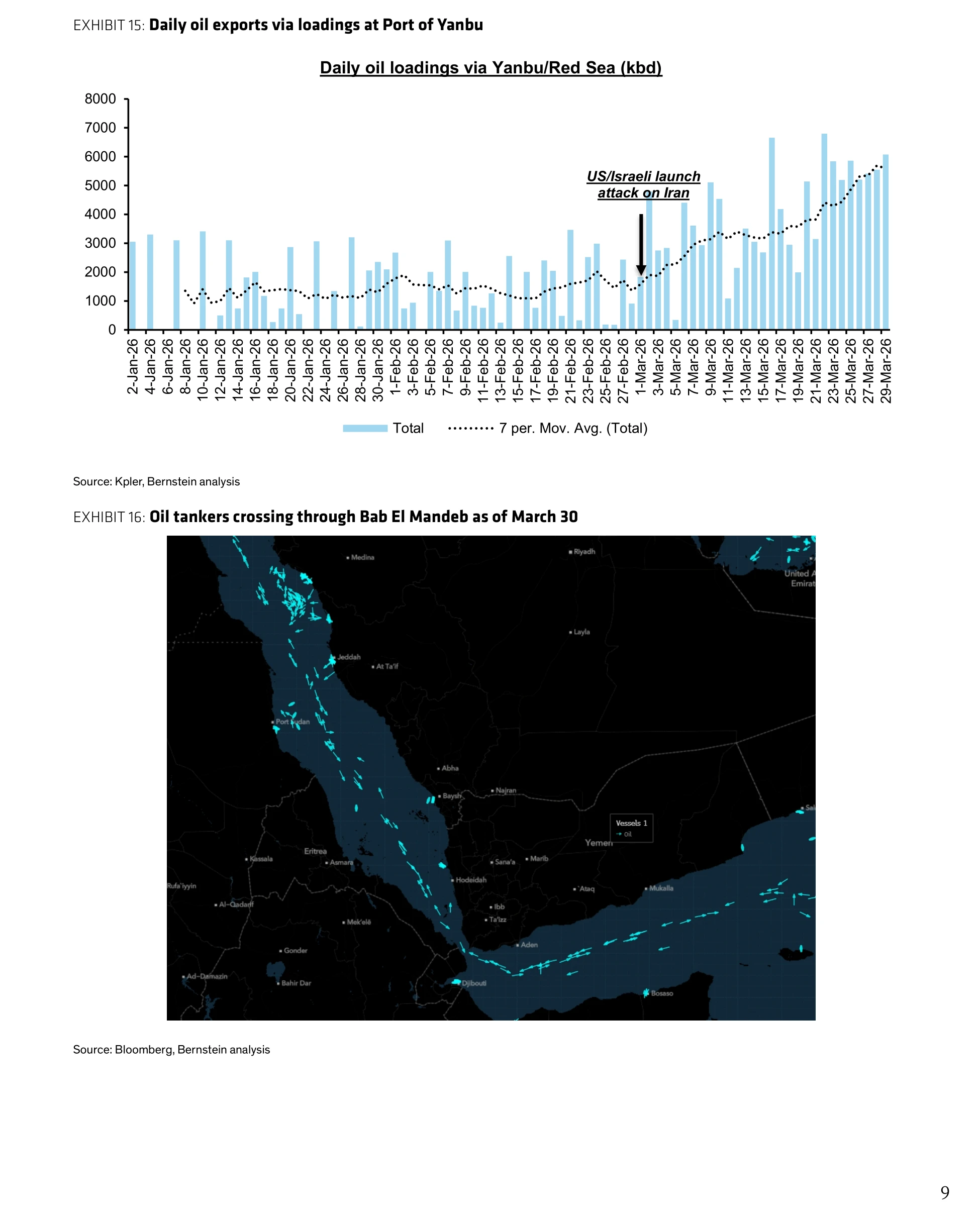
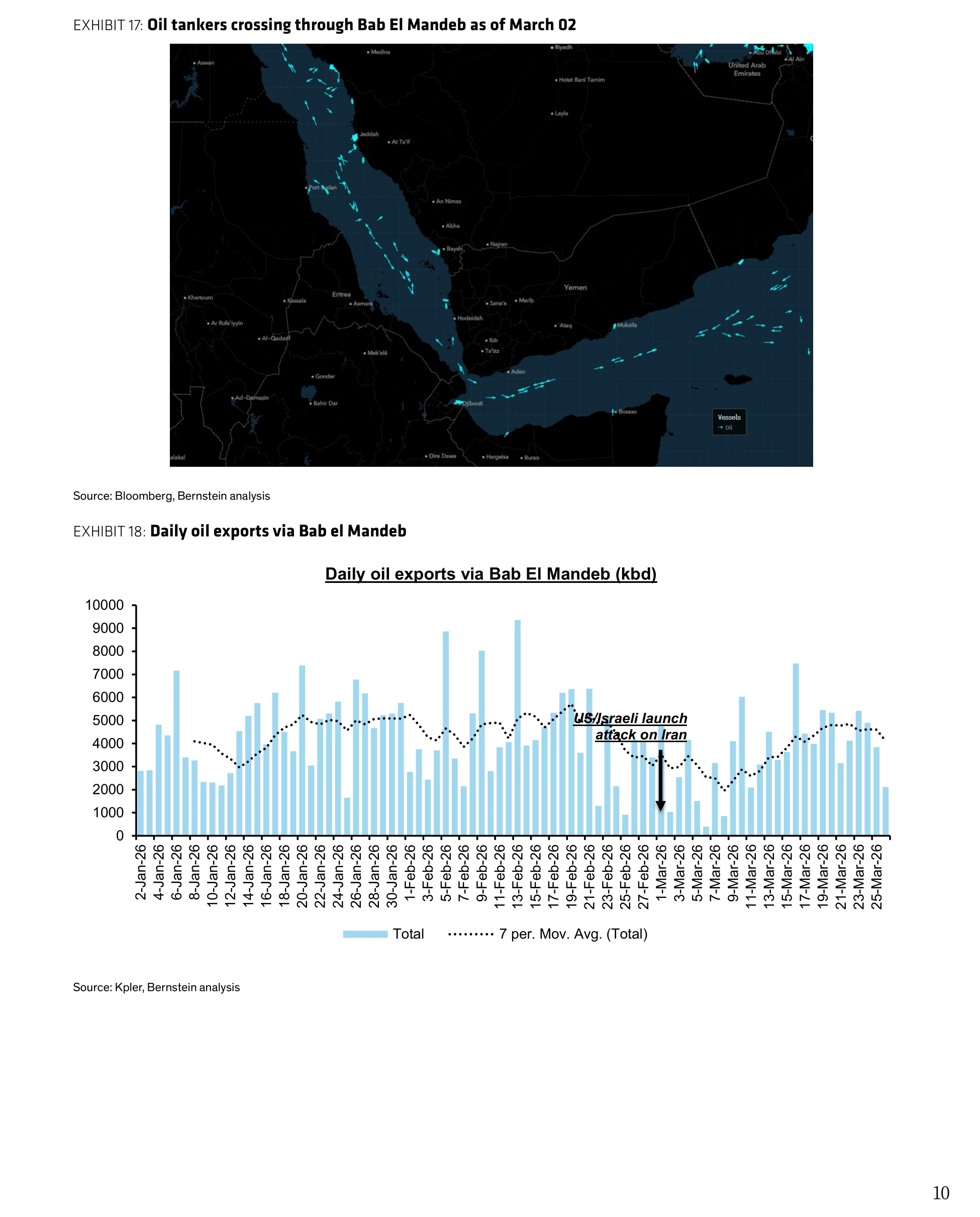
Asia-Pacific Oil & GasBernstein Energy: One month in and no way outNeil Beveridge, Ph.D.+852 2123 2648Brian Ho, CFA+852 2123 2615Hengliang Zhang+852 2123 2629Tanker tracking data highlights the Strait of Homruz (SoH) remains largely closedoff for oil and LNG. Prior to the conflict, there were roughly 120 transits per day, whichhas declined to 5 per day. Since the 1st of March only 160 vessels have transited the SoH,compared with over 3000 in March a year ago. In addition to reduced shipment of oil, drybulk carriers have also reduced significantly in number to 2-3 per day. LNG tankers crossingthe strait have declined to zero with the shut-ins of LNG facilities in the Gulf.We estimate that liquids supply through the SoH has been reduced by 15MMbls/d as a result of the disruption. Since the start of the conflict, 80 liquids tankers havecrossed the SoH, equating to 2 per day traveling eastward, compared to roughly 20 transitsper day prior to the conflict, a 90% reduction.We do not see a meaningful increase in oil supply from through the Red Sea tocompensate for the reduction through the SoH despite increased loading. Asshippers look for alternative routes, loadings at Yanbu on the Red Sea have increasedby 4MMbls/d to 6MMbls/d. The East West pipeline can notionally transport 7MMbls/d. Despite this, oil exports through the Bab El Mandeb have only increased by at most2MMbls/d. At the same time shipments through the Suez Canal have dropped by 2MMbls/d, implying no net increase from the Red Sea. Shipments through Fujairah, which is the UAEbypass option have remained stable, despite attacks on infrastructure.While it could take time for Red Sea loadings to translate to shipments, attacks onshipping by the Houthis could render bypass options challenging. Increased loadingat Yanbu of 4MMbls/d highlight efforts to make up for lost crude supply through the SoH.Attacks by the Houthis on shipping in the Red Sea and rocket attacks on Israel (according tomedia) could well limit how effective this option is.Inventory draw down is not happening across many Asian and OCED countrieswhich will push oil prices higher as long as the conflict continues. The loss of15MMbls/d of supply should have resulted in a loss of 450MMbls. Oil on water has declinedby 200MMbls and will continue to decline as the conflict persists putting upward pressureon oil price. The remaining 250MMbls consists of shut in’s in their Middle East which areestimated to be close to 8-10MMbls/d (240-300MMbls).1BERNSTEIN TICKER TABLE30 Mar2026TTMReported EPSReported P/E (x)ClosingPriceRel.TickerRatingCurPriceTargetPerf.Cur2024A2025E2026E2024A2025E2026E600028.CH (SinoPec)UCNY5.974.50(21.3)%CNY0.400.340.3914.817.715.3386.HK (SinoPec)UHKD4.514.30(15.5)%CNY0.400.340.399.811.810.2883.HK (CNOOC)OHKD28.9027.8031.8%CNY2.902.803.528.89.17.21605.JP (Inpex)MJPY4,892.003,780.0099.3%JPY330.82408.21333.9314.812.014.6857.HK (PetroChina)OHKD11...










































