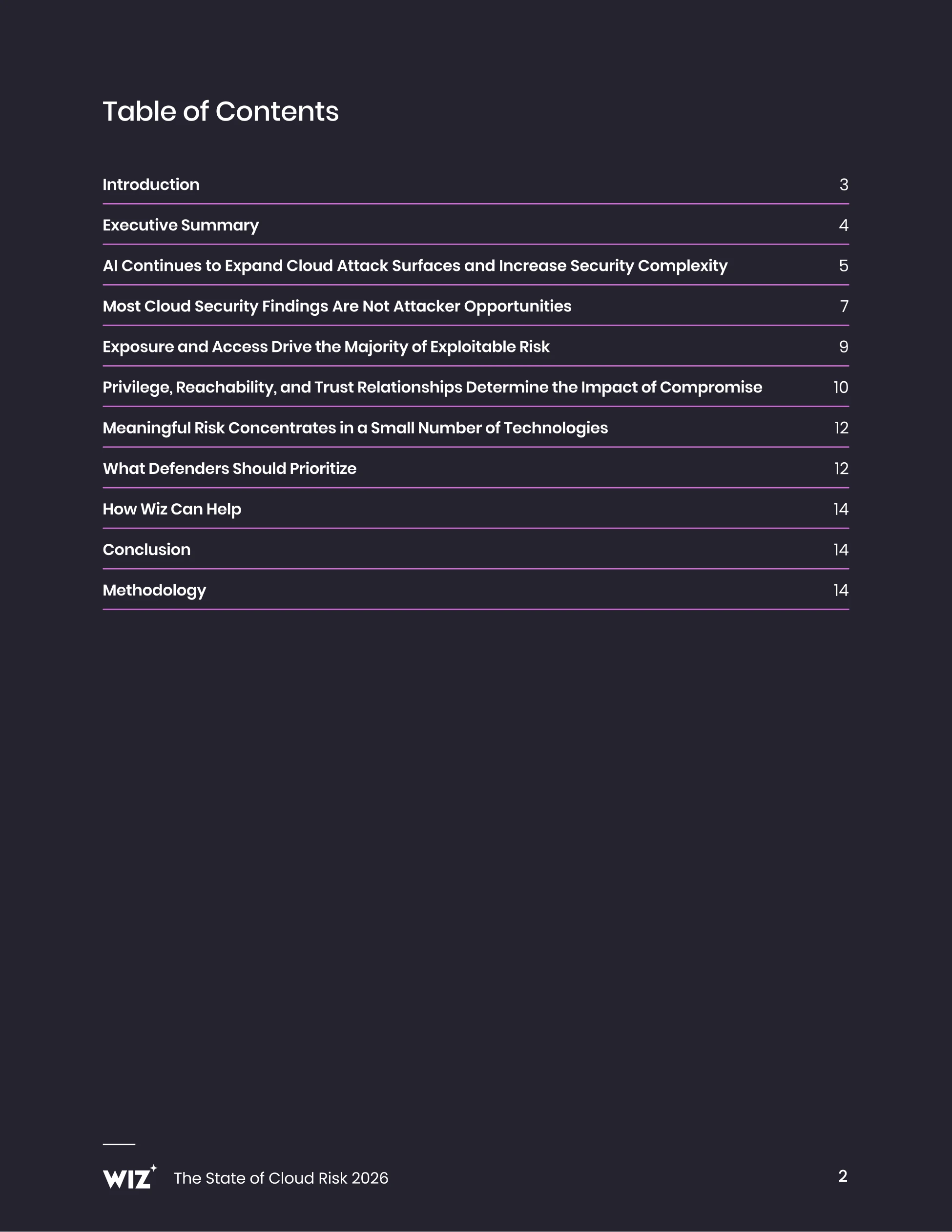
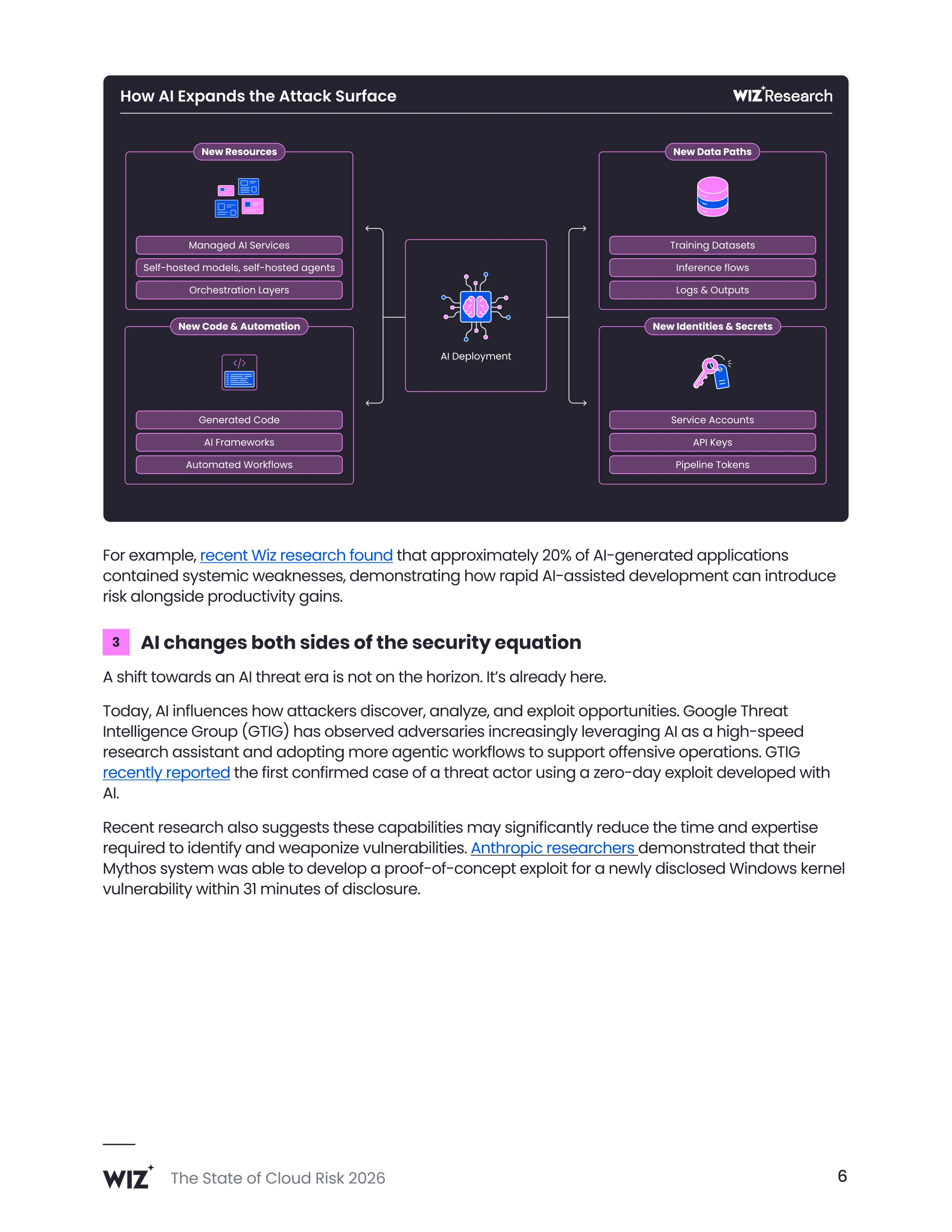
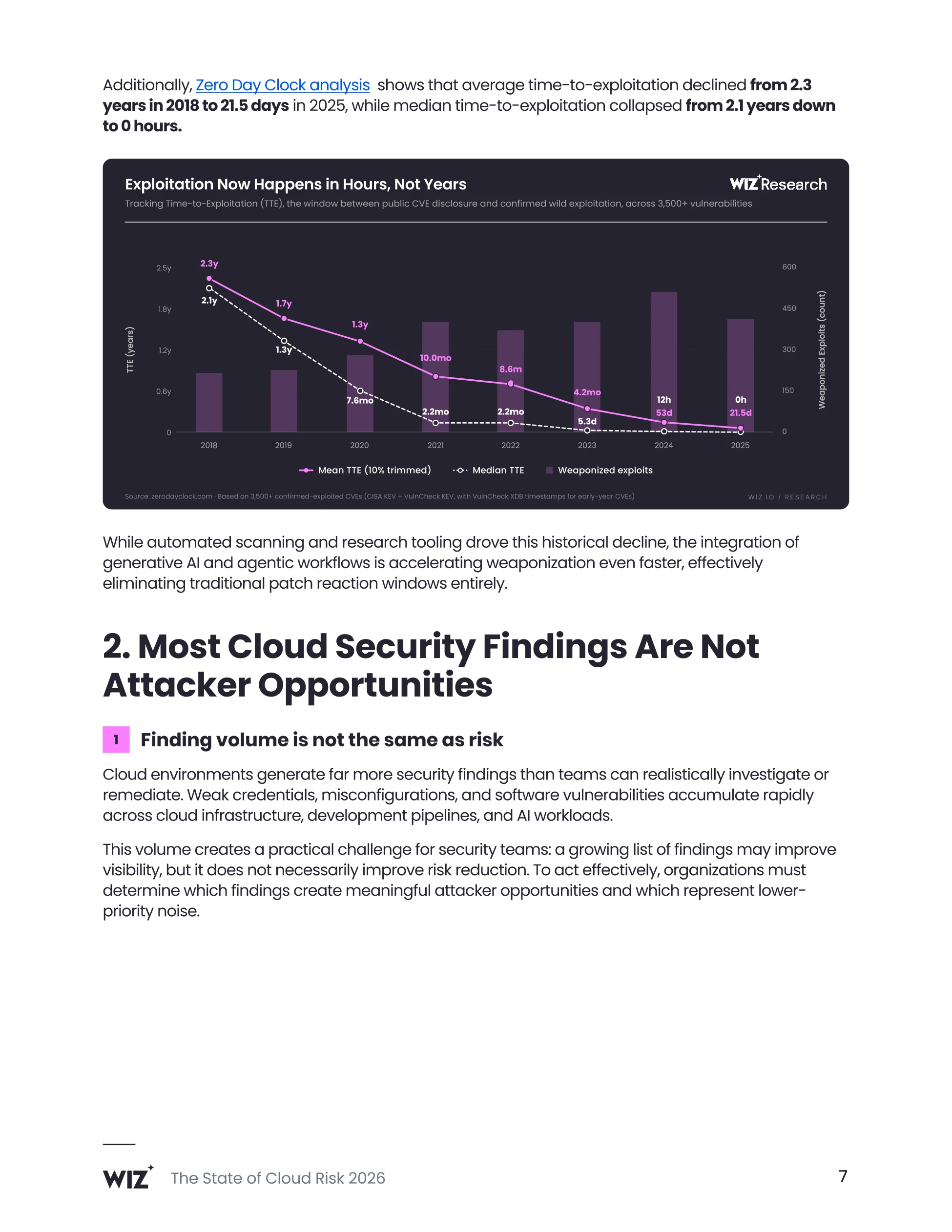
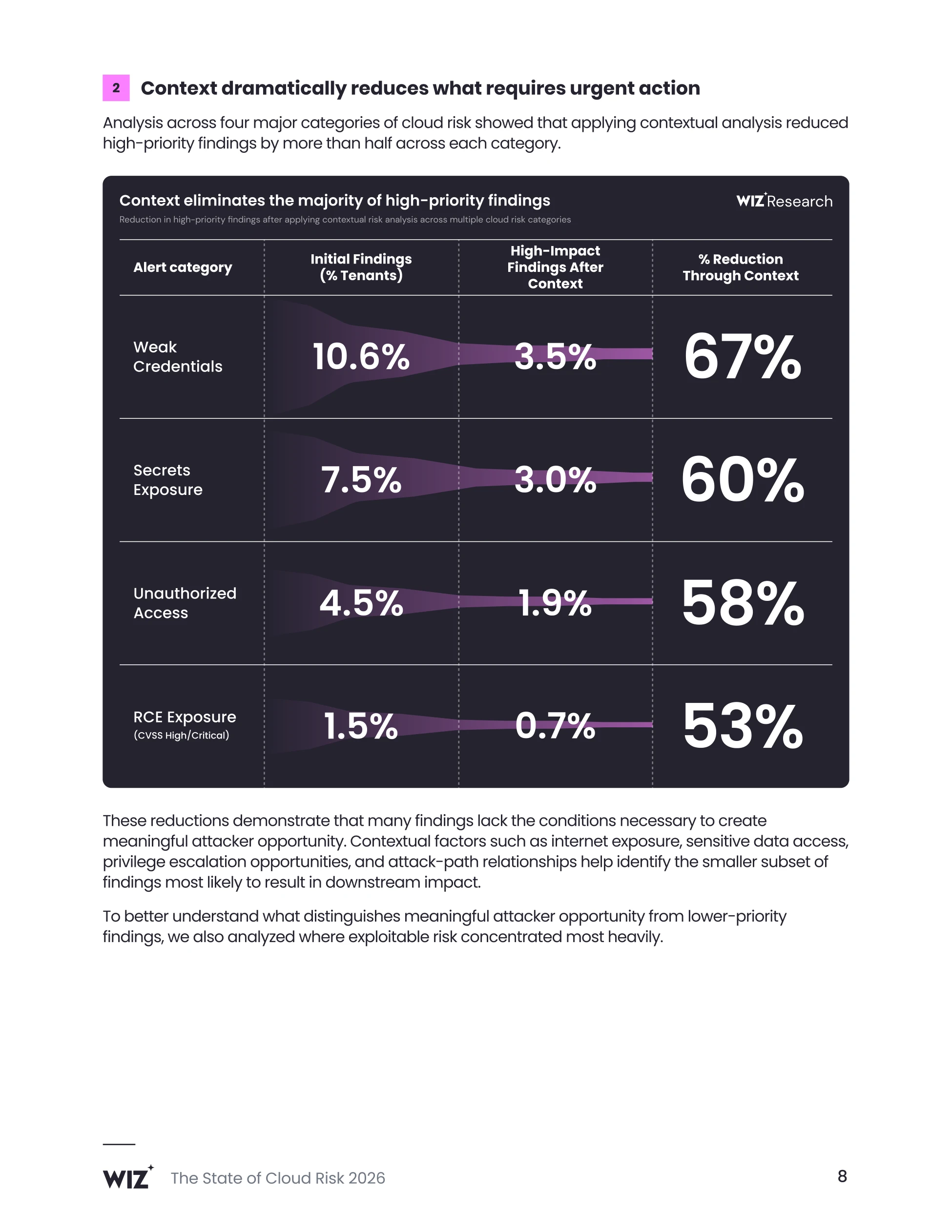
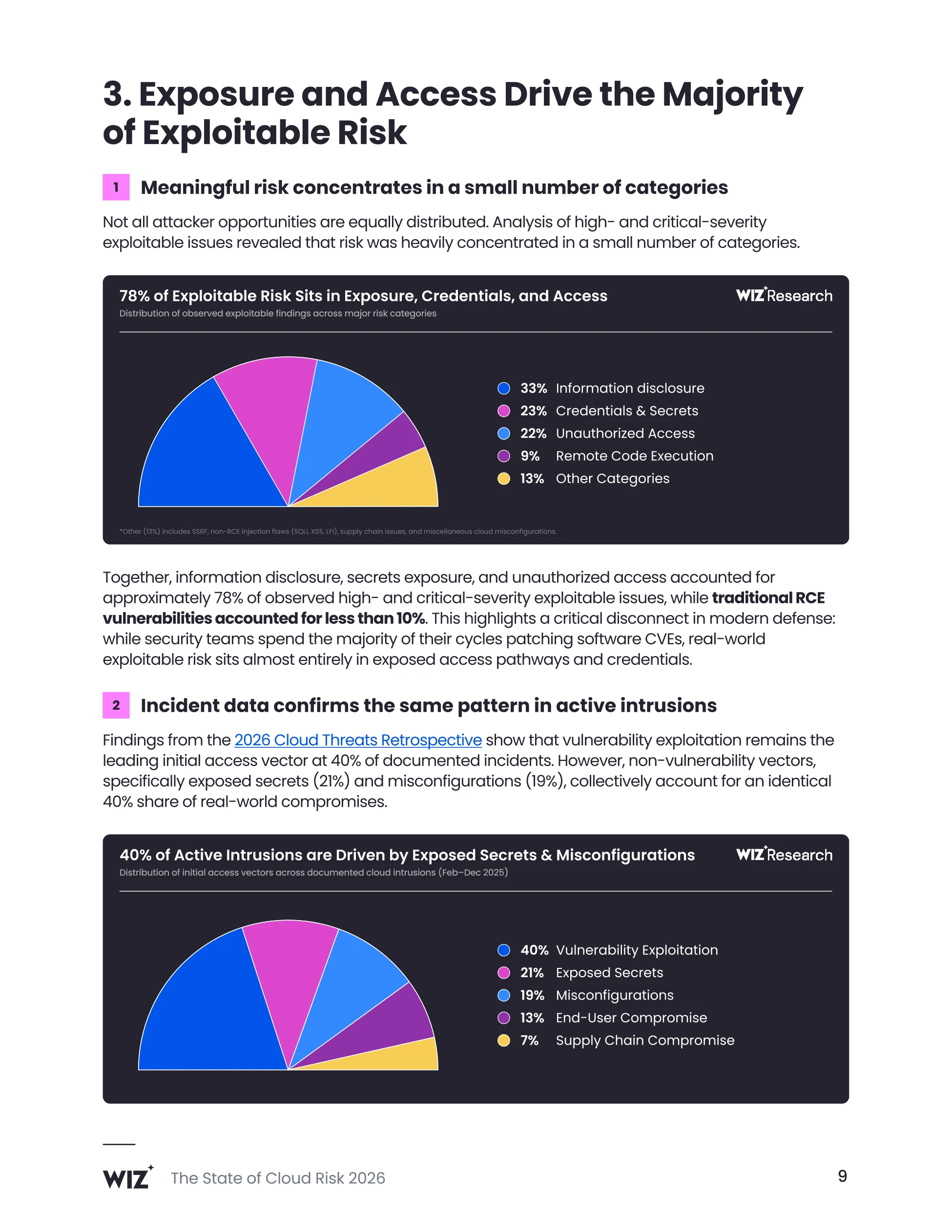
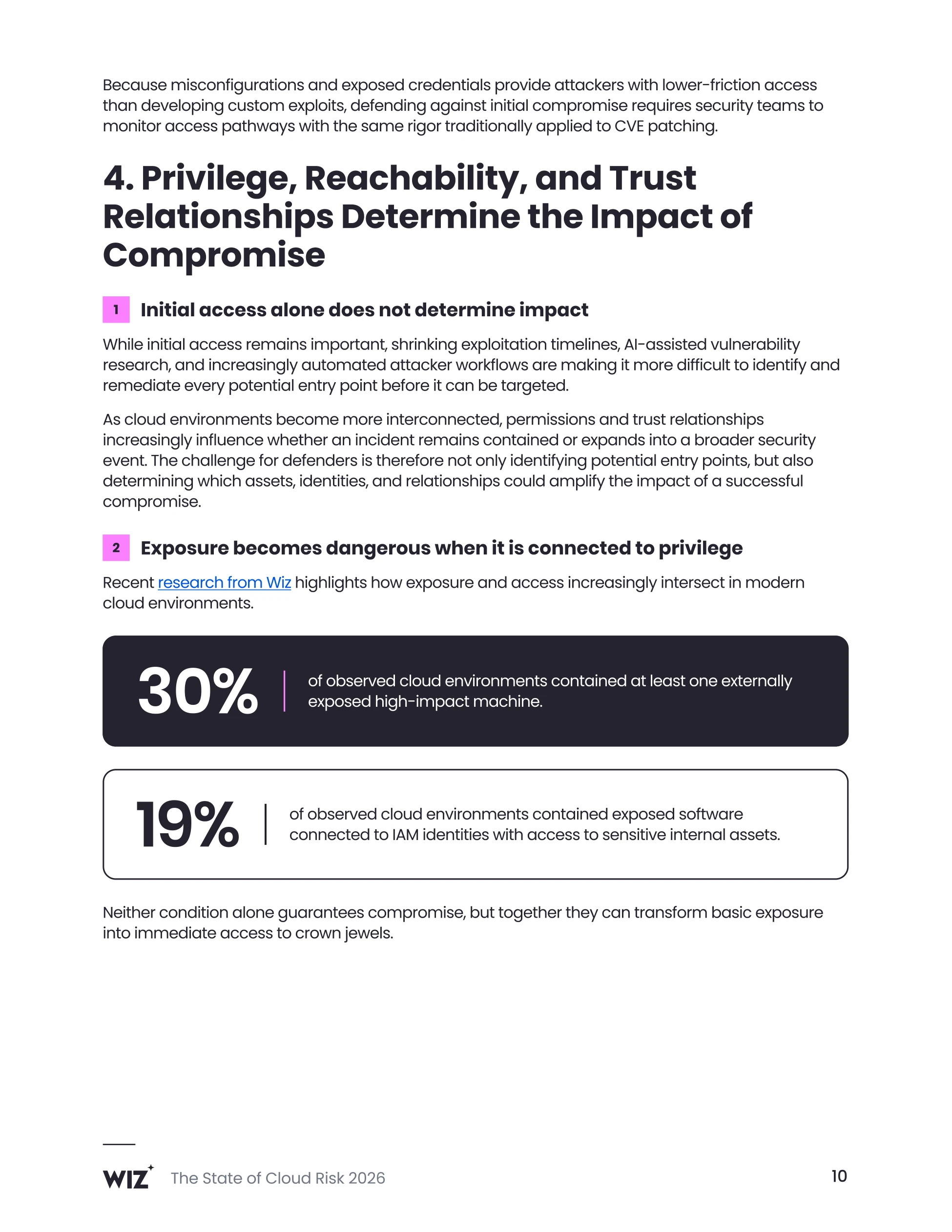
The State ofCloud Risk 2026How exposure, access, and AIare reshaping cloud securityWIZThe state OfCloudRisk 2026How exposure, access, and Alare reshaping cloud securityTable of ContentsPrivilege, Reachability, and Trust Relationships Determine the Impact of CompromiseMeaningful Risk Concentrates in a Small Number of TechnologiesWhat Defenders Should PrioritizeHow Wiz Can HelpConclusionMethodology34579101212141414IntroductionExecutive SummaryAI Continues to Expand Cloud Attack Surfaces and Increase Security Complexity Most Cloud Security Findings Are Not Attacker OpportunitiesExposure and Access Drive the Majority of Exploitable Risk The State of Cloud Risk 20262Table of ContentsIntroductionExecutive SummaryAl Continues to Expand Cloud Attack Surfaces and Increase Security Complexity5Most Cloud Security Findings Are Not Attacker OpportunitiesExposure and Access Drive the Majority of Exploitable Risk9Privilege, Reachability, and Trust Relationships Determine the Impact of Compromise10Meaningful Risk Concentrates in a Small Number of Technologies12What Defenders Should Prioritize12How Wiz Can Help14Conclusion14Methodology14WIZThe State of Cloud Risk 2026IntroductionCloud security is being shaped by two converging trends: expanding attack surfaces and shrinking response windows.Organizations are rapidly adopting AI services, agents, coding assistants, and automated workflows that introduce new identities, permissions, integrations, and attack paths across already complex environments.In addition, recent industry research shows the gap between vulnerability disclosure and exploitation continues to shrink, while AI-assisted offensive workflows are accelerating vulnerability research, exploit development, and reconnaissance activities.As the opportunity and speed of attacker ability both rapidly expand, security teams face a fundamental operational challenge:Where should defenders focus limited attention and resources to achieve maximum risk reduction?Based on our research, meaningful cloud risk rarely emerges from exposure, vulnerabilities, or permissions alone. The most significant risks typically arise when externally reachable systems are connected to privileged identities, sensitive data, or critical business functions across interconnected environments.Findings from the 2026 Cloud Threats Retrospective showed that vulnerabilities, exposed secrets, and misconfigurations remained the dominant initial access vectors in documented attacks. However, the ultimate impact of a compromise depends on what attackers could reach after gaining access.Knowing this, the next challenge security teams must address is determining which combinations of exposure, privilege, and reachability create real paths to compromise and downstream impact.Drawing on telemetry from real-world cloud environments and findings from Wiz Research, this report examines how cloud risk concentrates across modern environments and why continuous, context-driven ...










































