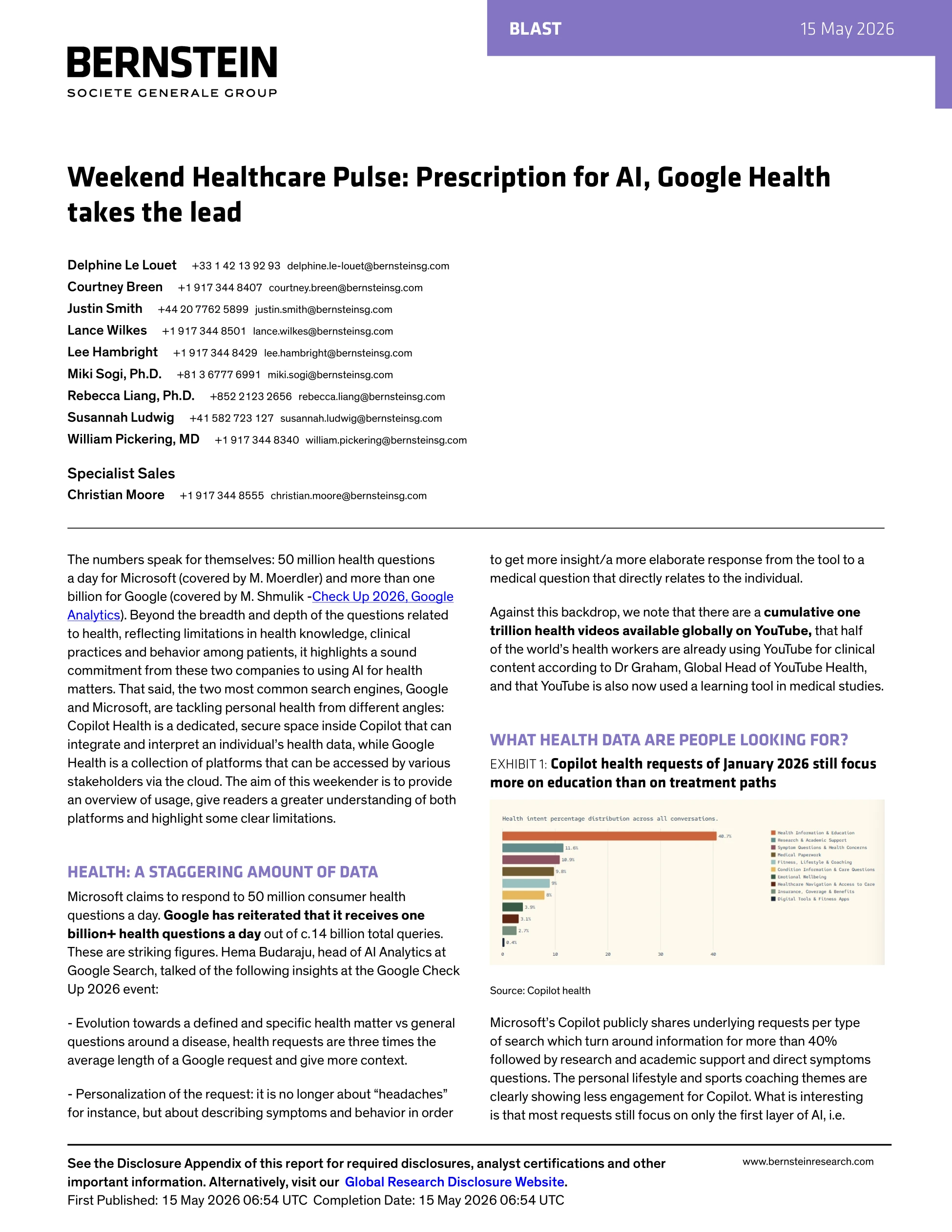
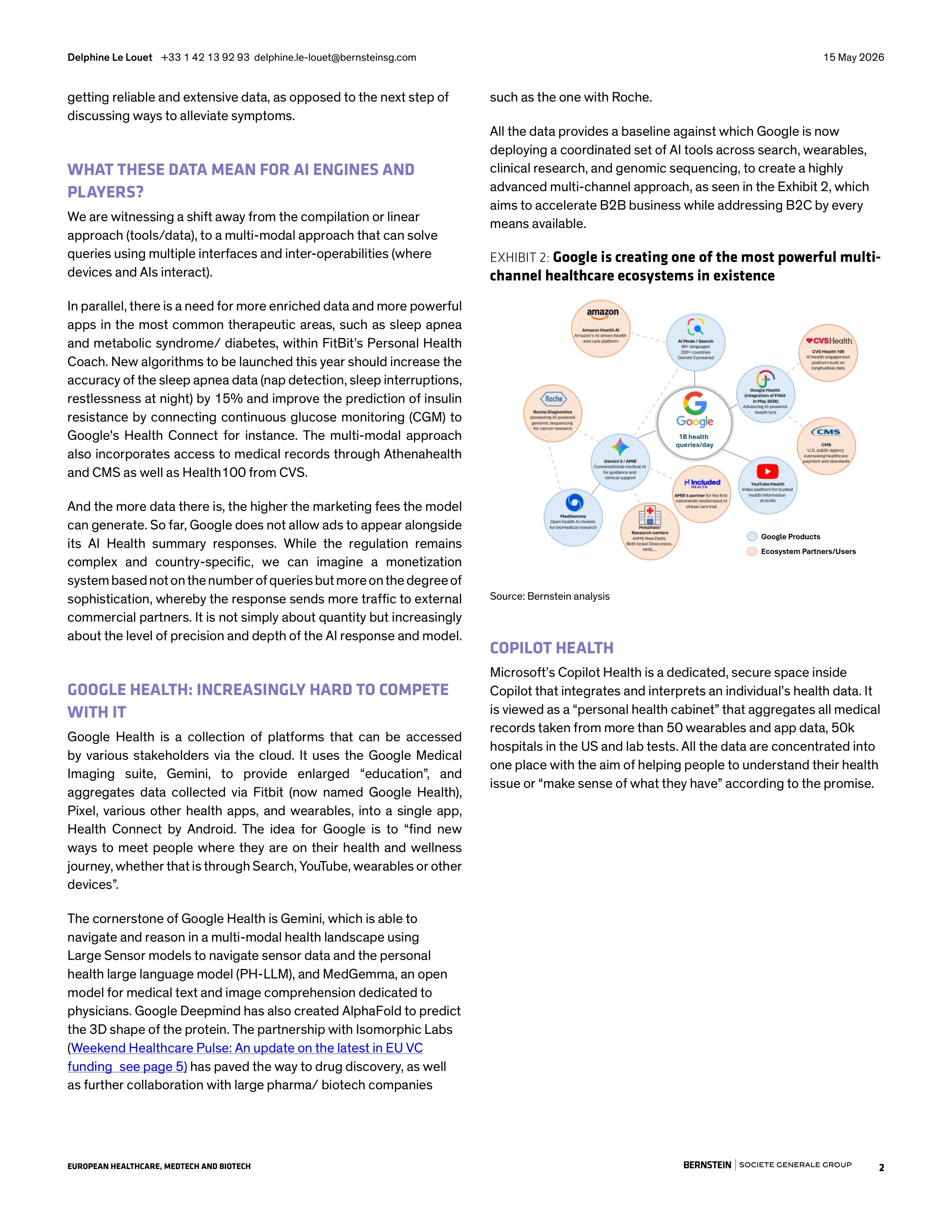
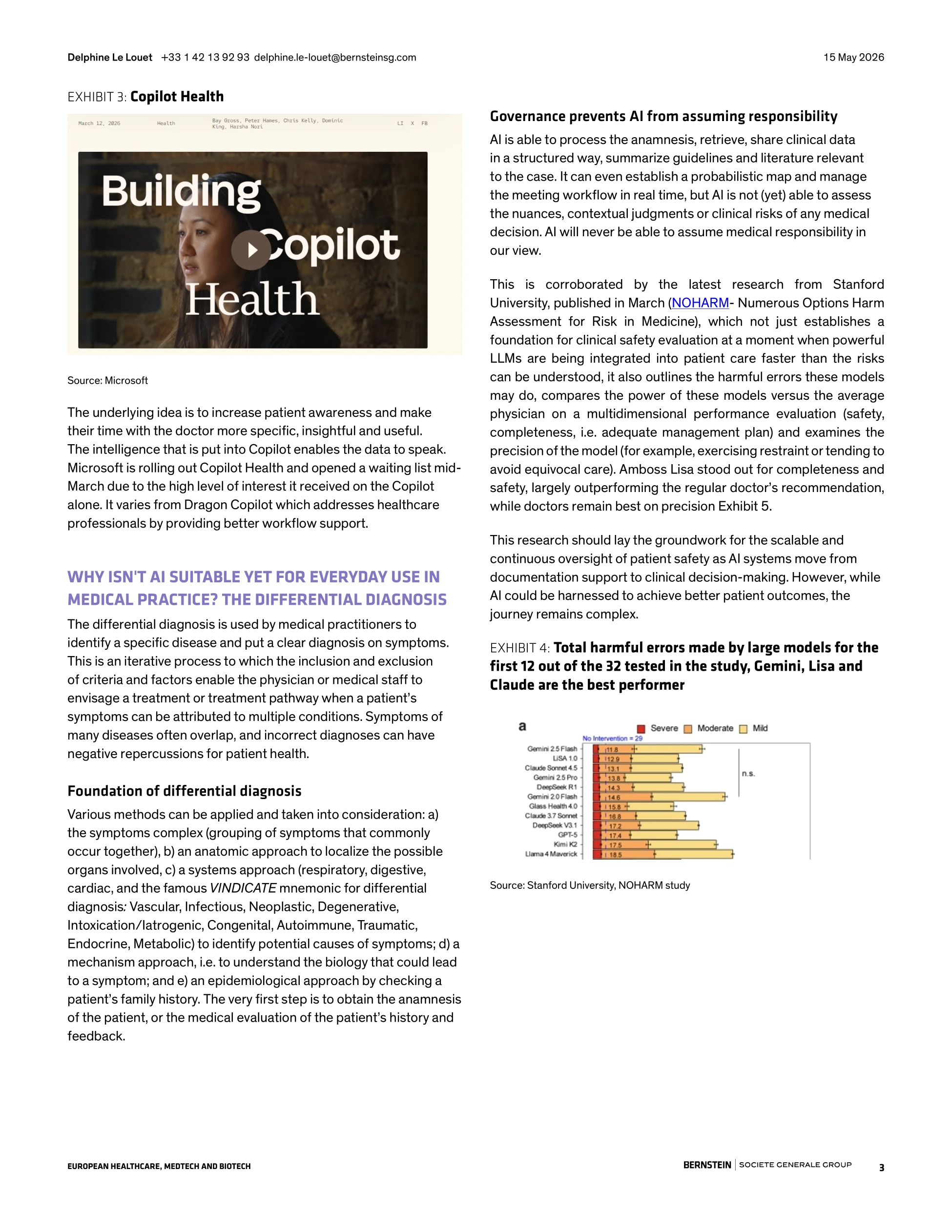
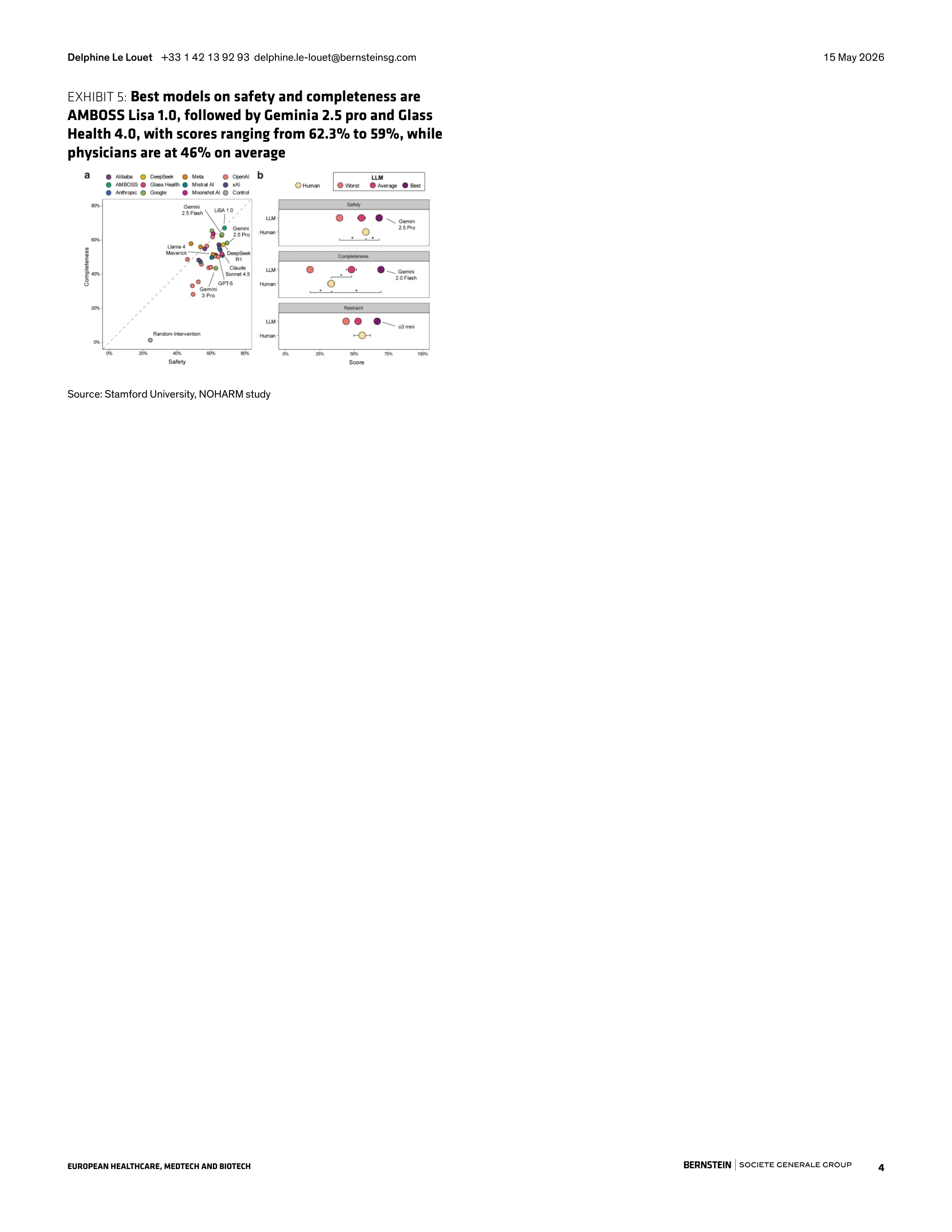
BLAST15 May 2026Weekend Healthcare Pulse: Prescription for AI, Google Healthtakes the leadDelphine Le Louet +33 1 42 13 92 93 delphine.le-louet@bernsteinsg.comCourtney Breen +1 917 344 8407 courtney.breen@bernsteinsg.comJustin Smith +44 20 7762 5899 justin.smith@bernsteinsg.comLance Wilkes +1 917 344 8501 lance.wilkes@bernsteinsg.comLee Hambright +1 917 344 8429 lee.hambright@bernsteinsg.comMiki Sogi, Ph.D. +81 3 6777 6991 miki.sogi@bernsteinsg.comRebecca Liang, Ph.D. +852 2123 2656 rebecca.liang@bernsteinsg.comSusannah Ludwig +41 582 723 127 susannah.ludwig@bernsteinsg.comWilliam Pickering, MD +1 917 344 8340 william.pickering@bernsteinsg.comSpecialist SalesChristian Moore +1 917 344 8555 christian.moore@bernsteinsg.comThe numbers speak for themselves: 50 million health questionsa day for Microsoft (covered by M. Moerdler) and more than onebillion for Google (covered by M. Shmulik -Check Up 2026, GoogleAnalytics). Beyond the breadth and depth of the questions relatedto health, reflecting limitations in health knowledge, clinicalpractices and behavior among patients, it highlights a soundcommitment from these two companies to using AI for healthmatters. That said, the two most common search engines, Googleand Microsoft, are tackling personal health from different angles:Copilot Health is a dedicated, secure space inside Copilot that canintegrate and interpret an individual’s health data, while GoogleHealth is a collection of platforms that can be accessed by variousstakeholders via the cloud. The aim of this weekender is to providean overview of usage, give readers a greater understanding of bothplatforms and highlight some clear limitations.HEALTH: A STAGGERING AMOUNT OF DATAMicrosoft claims to respond to 50 million consumer healthquestions a day. Google has reiterated that it receives onebillion+ health questions a day out of c.14 billion total queries.These are striking figures. Hema Budaraju, head of AI Analytics atGoogle Search, talked of the following insights at the Google CheckUp 2026 event:- Evolution towards a defined and specific health matter vs generalquestions around a disease, health requests are three times theaverage length of a Google request and give more context.- Personalization of the request: it is no longer about “headaches”for instance, but about describing symptoms and behavior in orderto get more insight/a more elaborate response from the tool to amedical question that directly relates to the individual.Against this backdrop, we note that there are a cumulative onetrillion health videos available globally on YouTube, that halfof the world’s health workers are already using YouTube for clinicalcontent according to Dr Graham, Global Head of YouTube Health,and that YouTube is also now used a learning tool in medical studies.WHAT HEALTH DATA ARE PEOPLE LOOKING FOR?EXHIBIT 1: Copilot health requests of January 2026 still focusmore on education than on t...










































