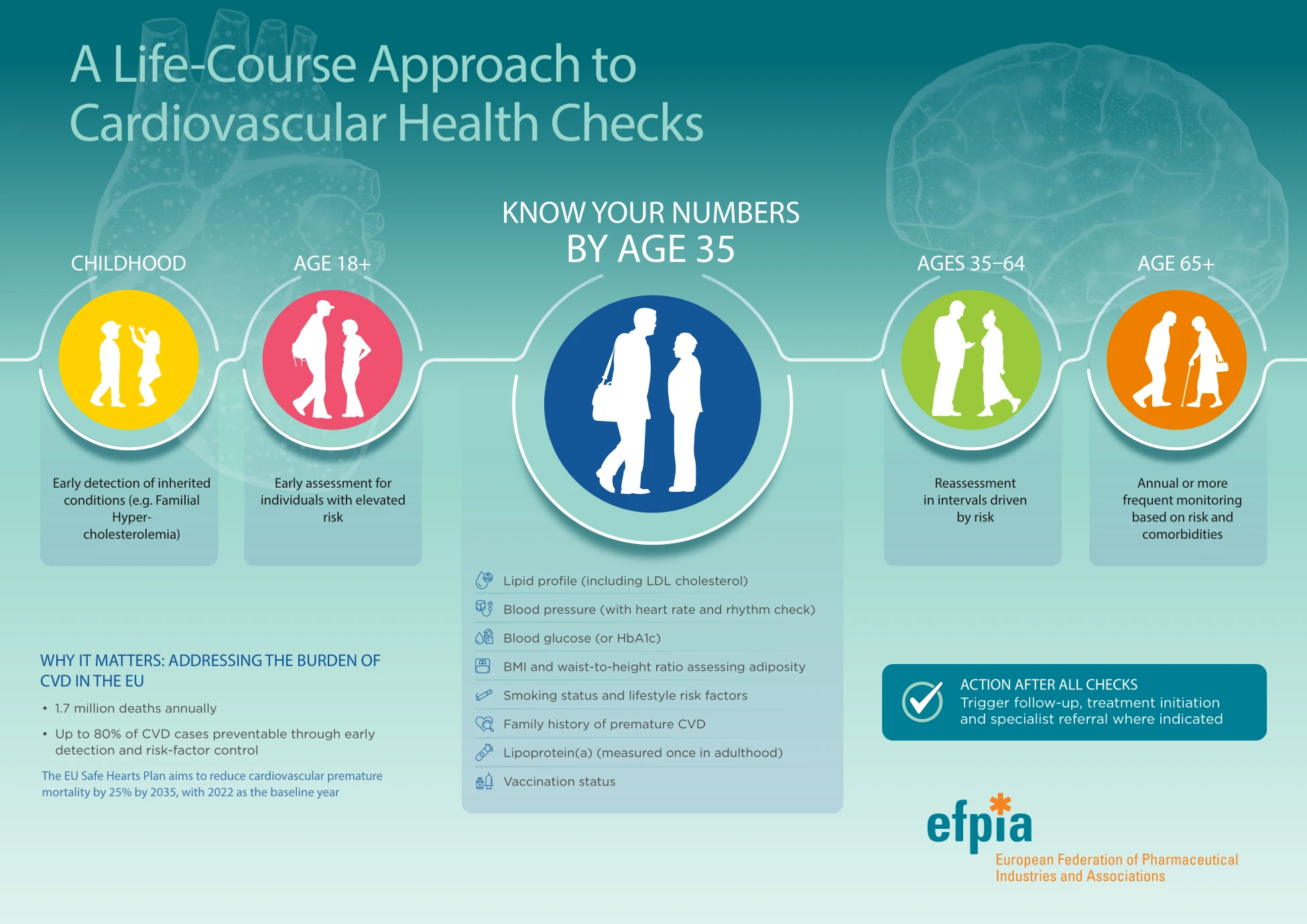
EFPIA position on Cardiovascular Health Checks May 20262Cardiovascular diseases (CVDs), which include heart disease and stroke, remain the leading public health challenge in the European Union (EU). They account for approximately 1.7 million deaths each year, affect around 62 million people, and generate economic costs exceeding EUR 282 billion annually.Early detection and prevention should be viewed as long term investments in health system sustainability. Strong evidence shows that effective control of major modifiable cardiovascular risk factors - including hypertension, elevated LDL cholesterol, diabetes, smoking, and obesity - substantially reduces myocardial infarction, stroke, and cardiovascular mortality, while delayed detection is associated with acute events and hospitalisations that drive healthcare costs across Europe [1] [2] [3]To effectively address this pressing burden, in December 2025 the European Commission launched the first ever EU Cardiovascular Health Plan - the Safe Hearts Plan. EFPIA welcomes the Plan and considers it an important step towards addressing CVDs in a comprehensive and structured manner, by establishing a more preventive life-course approach to cardiovascular health across the EU. The Commission identifies prevention and early detection as underused levers in tackling CVDs, noting that risk factors and interconnected diseases (e.g., high blood pressure, high cholesterol, diabetes, obesity, arrhythmias) often remain undiagnosed and untreated. It further notes that current EU approaches are fragmented and lack a common protocol, leading not only to limited data comparability across Member States but also to variation in clinical care pathways, treatment standards, and follow up, which constrains scalability and equitable implementation.EFPIA supports the Commission’s plan to propose a Council Recommendation on health checks for cardiovascular diseases in 2026 and to pilot and launch an EU protocol on health checks to support a common approach for Member States in the development and implementation of national health checks. These initiatives will be supported by “Know Your Numbers” awareness campaigns and mobile and community-based outreach approaches to increase coverage.Why cardiovascular health checks: The case for EU action WHAT IS A HEALTH CHECK?A health check is a routine appointment with a primary care provider where key aspects of heart and metabolic health (e.g. blood pressure, cholesterol, blood sugar and weight) are reviewed. The aim is to detect early signs of potential health risks, and to guide timely prevention or treatment. If any of the results are outside of the recommended range, the healthcare provider will suggest a clear plan to address them, which may include lifestyle changes, treatment and follow-up care. Health checks can be implemented as part of population wide programmes (like Greece’s Prolamvan...










































