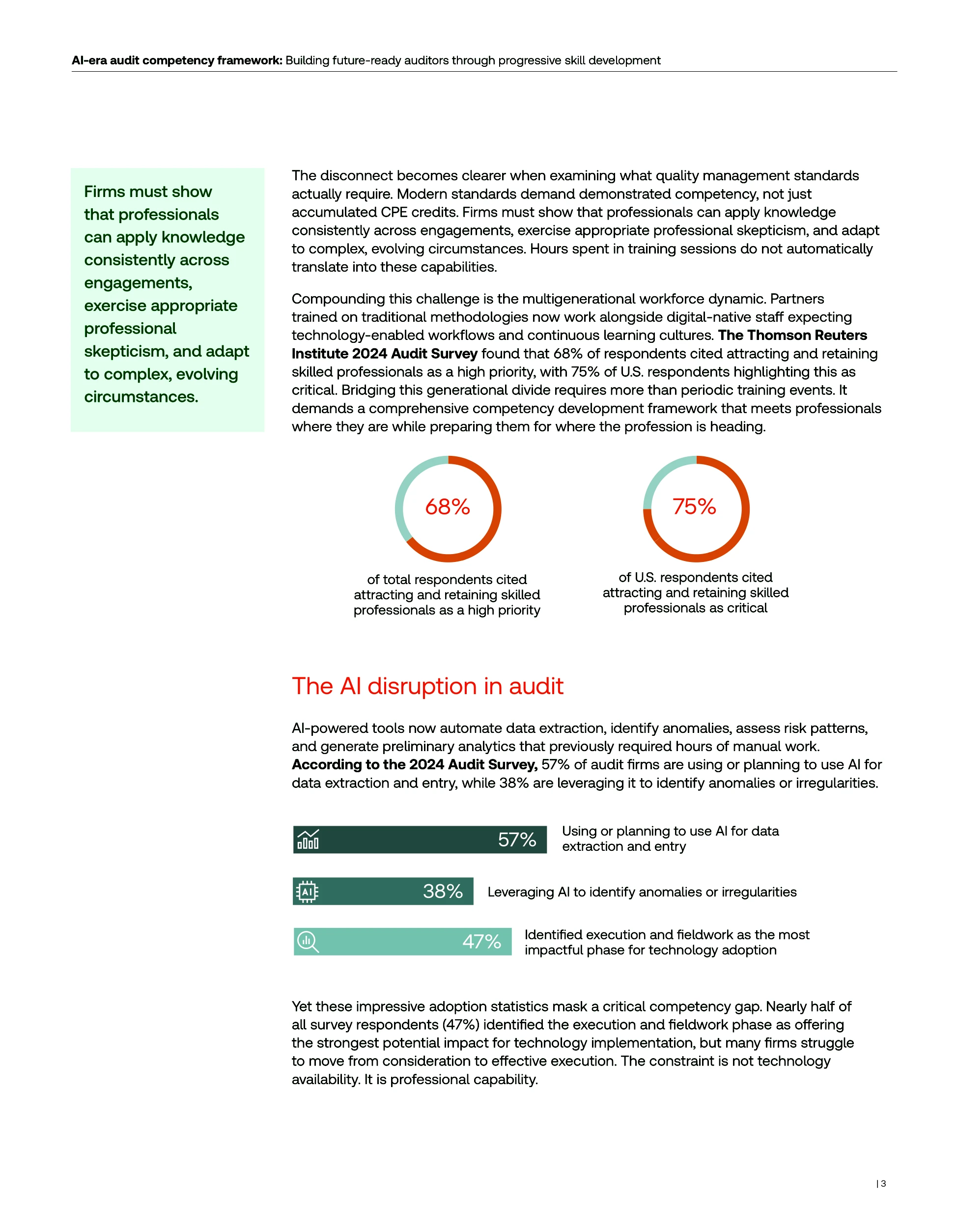
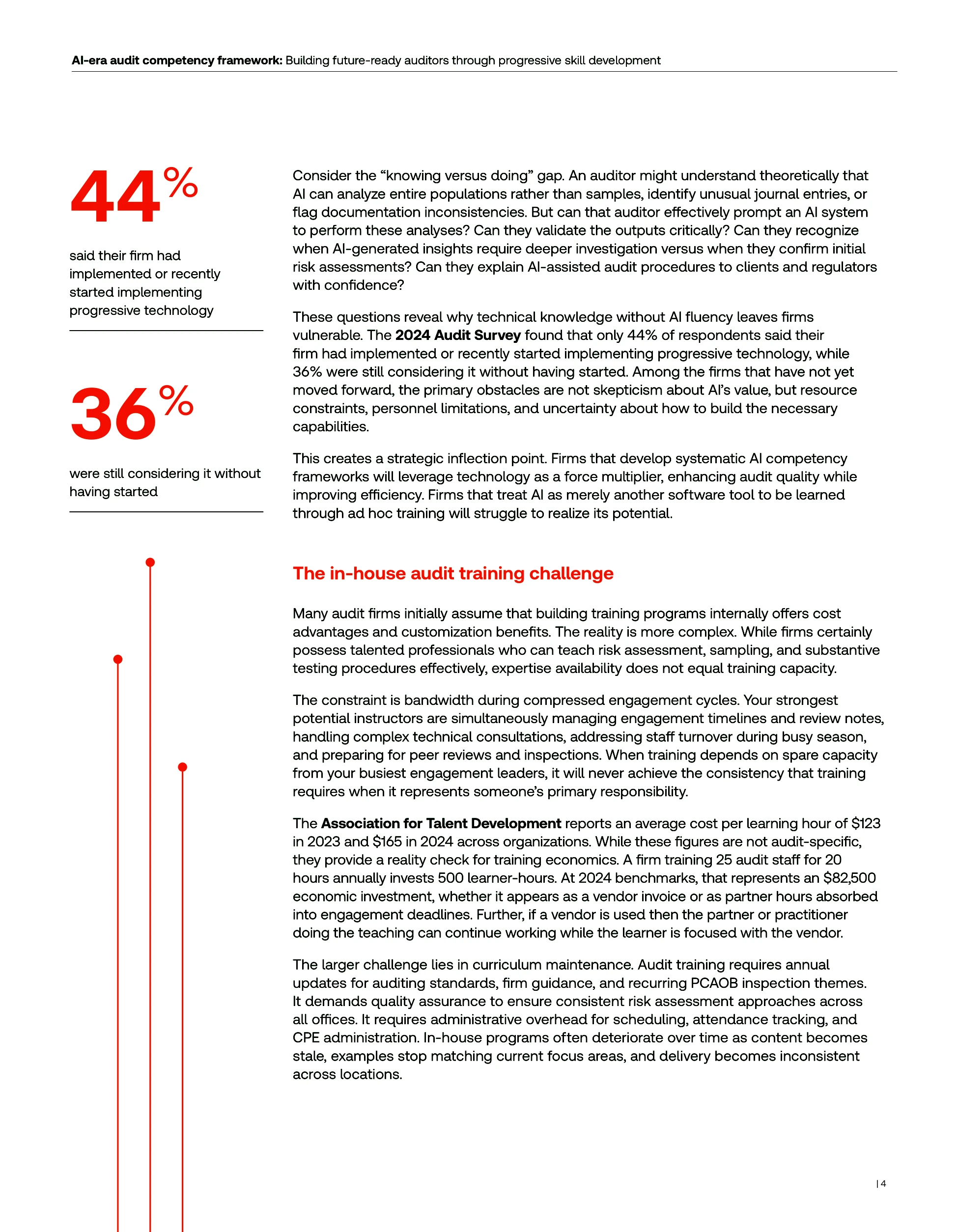
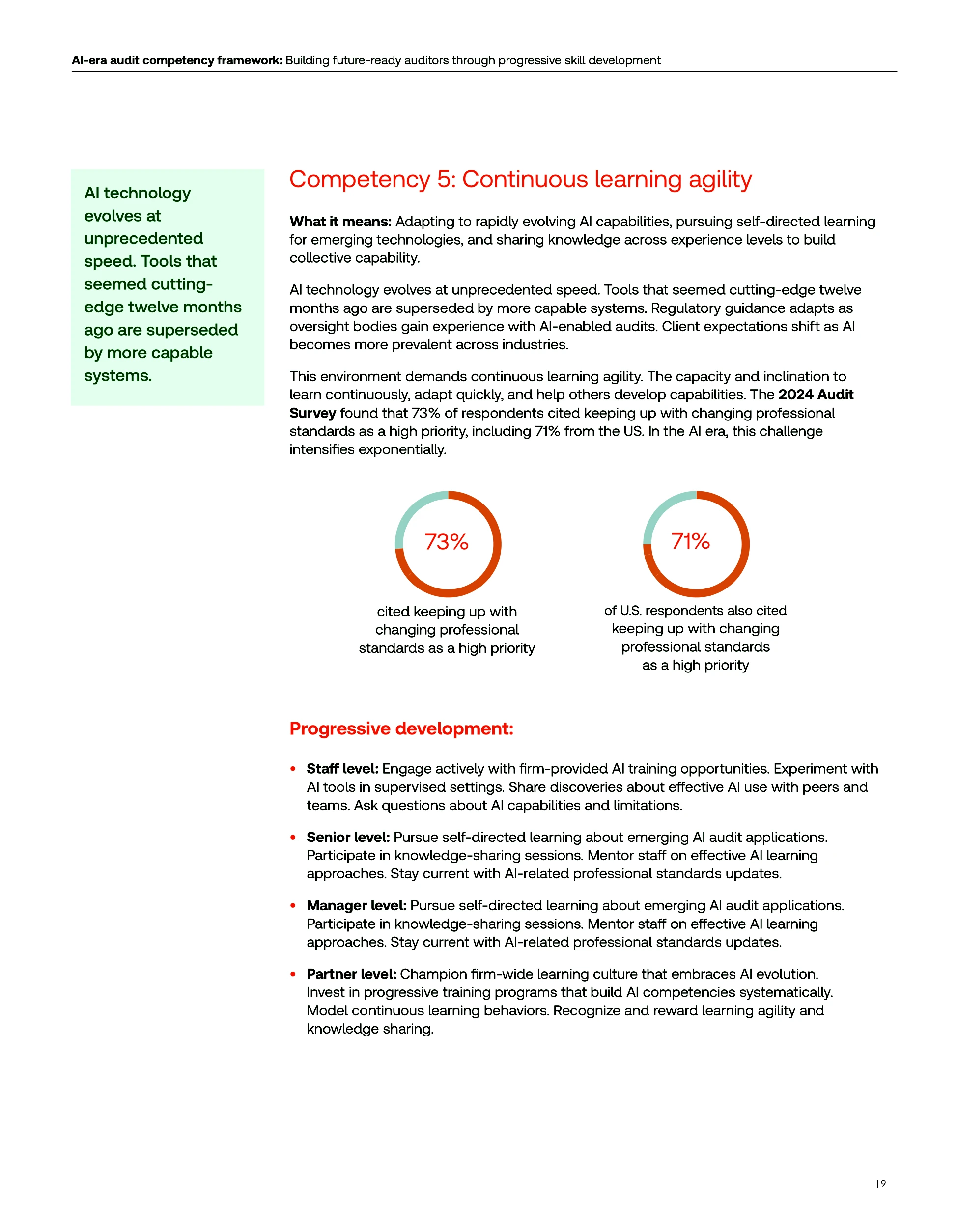
AI-era audit competency framework: Building future-ready auditors through progressive skill developmentAI-era audit competency framework: Building future-ready auditors through progressive skill developmentThe audit profession faces a fundamental challenge that traditional continuing professional education (CPE) cannot solve. While CPE compliance ensures auditors accumulate hours, it does not guarantee they develop the competencies required to navigate artificial intelligence-powered workflows, evolving client expectations, and intensifying regulatory scrutiny.Audit firms need a strategic shift from static, compliance-focused training to an AI-era audit competency framework that develops critical skills progressively across all experience levels. This framework addresses five core competencies: AI literacy and tool proficiency, enhanced professional skepticism, data analytics and visualization, strategic communication and advisory skills, and continuous learning agility.According to the Thomson Reuters® Institute 2024 Audit Survey of 180 audit professionals across the United States, United Kingdom, and Canada, roughly two-thirds of firms are considering adding progressive digital technologies to their audit workflow, yet only a minority believe their firm is harnessing technology to its full potential. The gap between ambition and execution stems not from lack of awareness, but from inadequate competency development infrastructure.This white paper presents a practical framework for building future-ready auditors through progressive skill development. By anchoring training programs in three foundational pillars (culture, purpose, and technology) and implementing experience-level-specific learning paths, audit firms can transform their talent development approach. The result: auditors who leverage AI as a force multiplier while exercising enhanced professional judgment, firms that achieve measurable audit quality improvements, and organizations that attract and retain top talent in an increasingly competitive market.The competency crisis: Why traditional training no longer worksAudit has evolved far beyond compliance verification. Today’s clients demand strategic insights, proactive risk identification, and advisory services that inform critical business decisions. They expect auditors to function as trusted business advisors who provide transparency, governance expertise, and forward-looking analysis, not just accurate financial statements.This expectation shift collides with a troubling reality: despite substantial training investments, audit quality challenges persist. The Public Company Accounting Oversight Board (PCAOB) has reported that approximately 40% of audits reviewed contain one or more Part I.A deficiencies — serious findings related to insufficient appropriate audit evidence. These deficiency rates remain stubbornly elevated even as firms increase training budgets and CPE hours.The disconnect b...










































