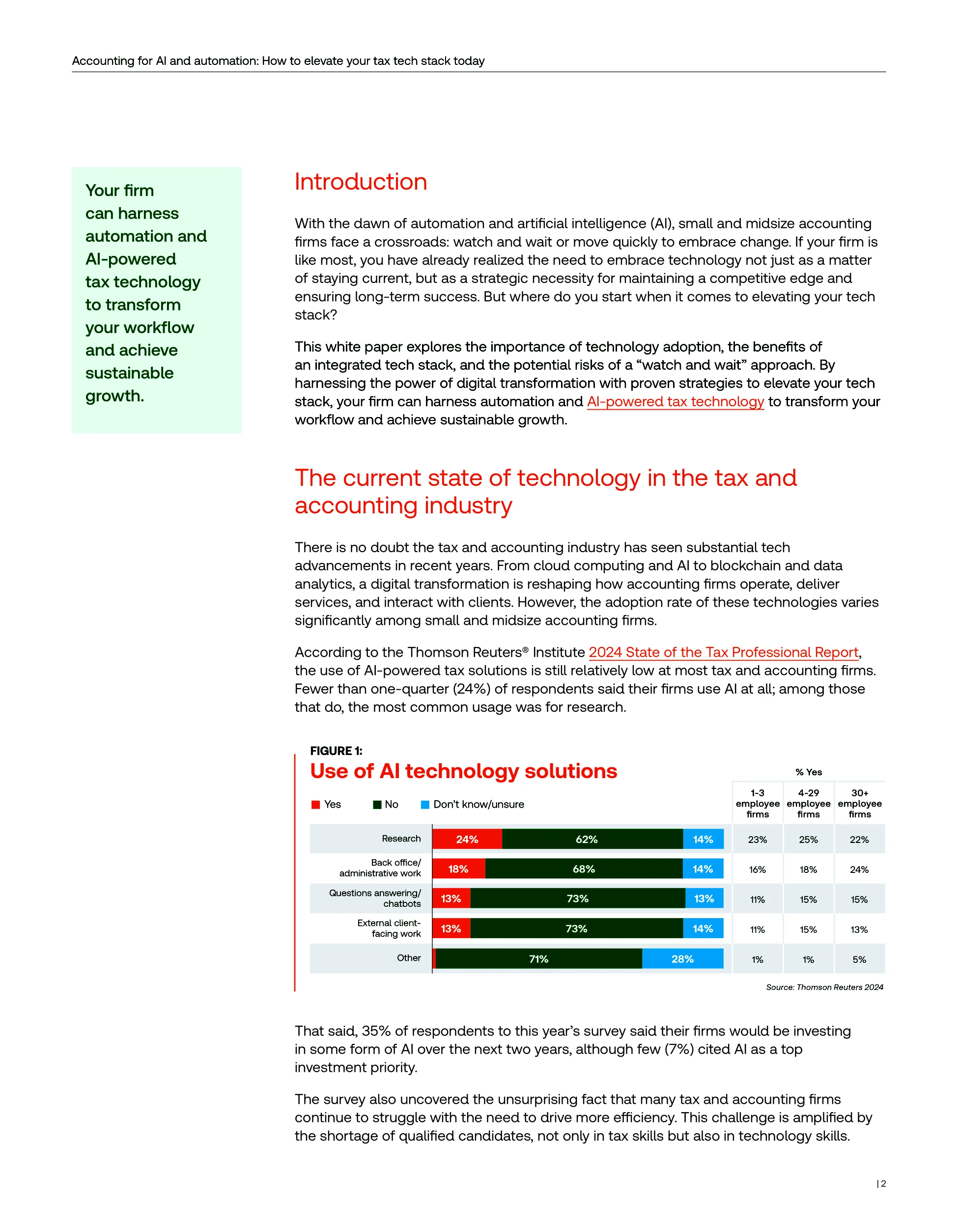
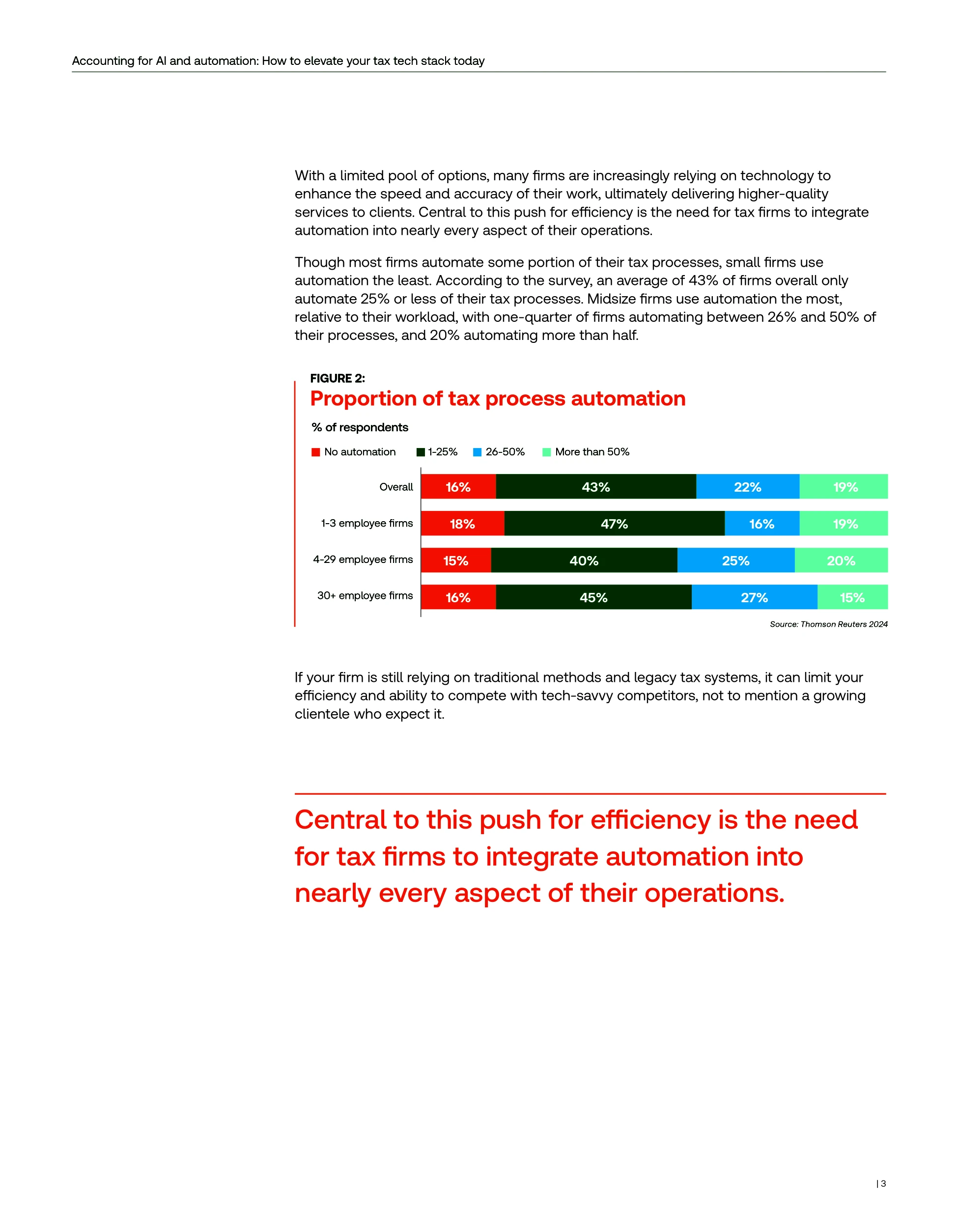
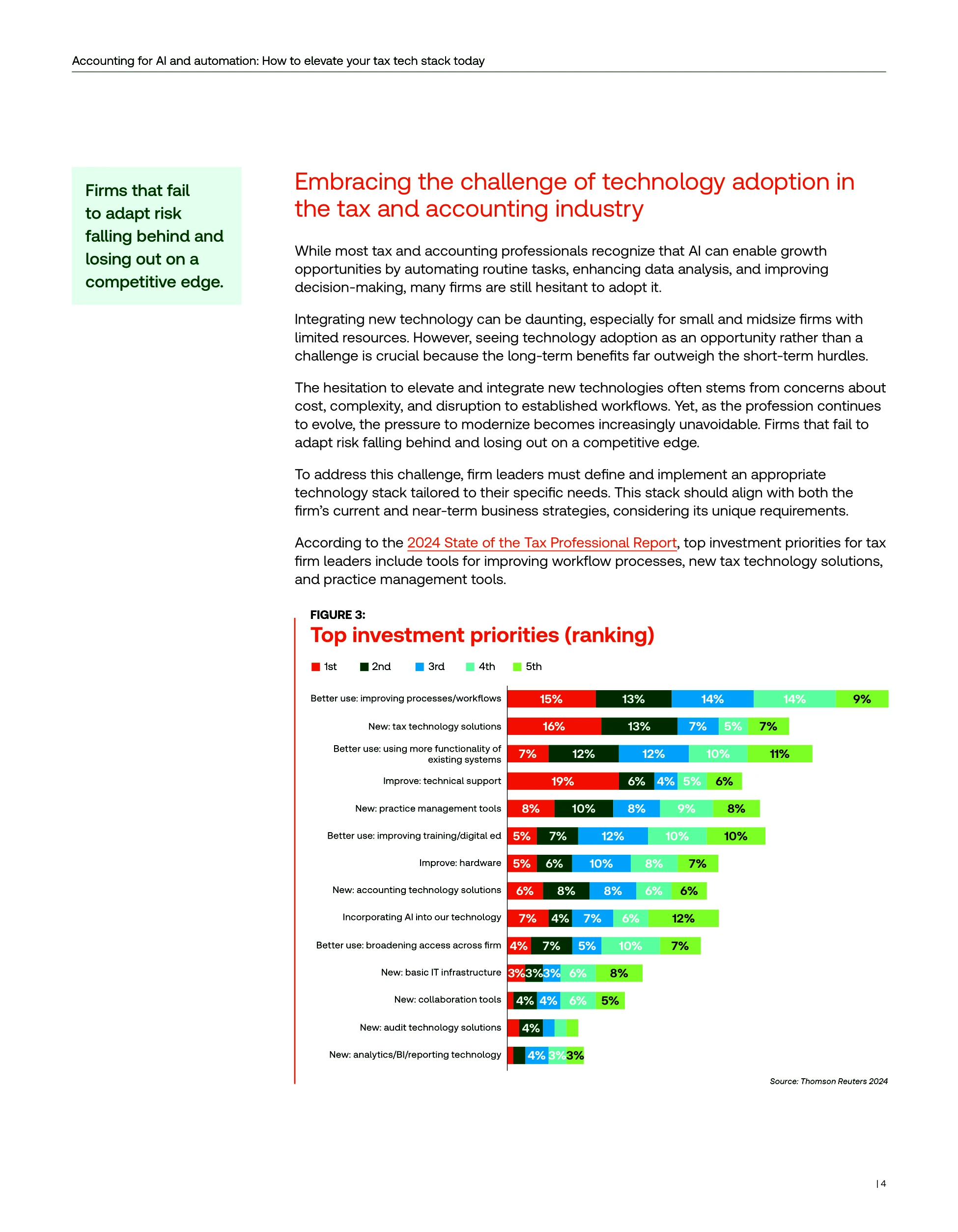
Accounting for AI and automation: How to elevate your tax tech stack todayWhy embracing technological change is a strategic advantage for small and midsize accounting firmsAccounting for AI and automation: How to elevate your tax tech stack today| 2IntroductionWith the dawn of automation and artificial intelligence (AI), small and midsize accounting firms face a crossroads: watch and wait or move quickly to embrace change. If your firm is like most, you have already realized the need to embrace technology not just as a matter of staying current, but as a strategic necessity for maintaining a competitive edge and ensuring long-term success. But where do you start when it comes to elevating your tech stack?This white paper explores the importance of technology adoption, the benefits of an integrated tech stack, and the potential risks of a “watch and wait” approach. By harnessing the power of digital transformation with proven strategies to elevate your tech stack, your firm can harness automation and AI-powered tax technology to transform your workflow and achieve sustainable growth.The current state of technology in the tax and accounting industryThere is no doubt the tax and accounting industry has seen substantial tech advancements in recent years. From cloud computing and AI to blockchain and data analytics, a digital transformation is reshaping how accounting firms operate, deliver services, and interact with clients. However, the adoption rate of these technologies varies significantly among small and midsize accounting firms.According to the Thomson Reuters® Institute 2024 State of the Tax Professional Report, the use of AI-powered tax solutions is still relatively low at most tax and accounting firms. Fewer than one-quarter (24%) of respondents said their firms use AI at all; among those that do, the most common usage was for research.That said, 35% of respondents to this year’s survey said their firms would be investing in some form of AI over the next two years, although few (7%) cited AI as a top investment priority.The survey also uncovered the unsurprising fact that many tax and accounting firms continue to struggle with the need to drive more efficiency. This challenge is amplified by the shortage of qualified candidates, not only in tax skills but also in technology skills.% Yes1-3 employee firms4-29 employee firms30+ employee firms23%25%22%16%18%24%11%15%15%11%15%13%1%1%5%YesNoDon’t know/unsureResearchBack office/ administrative workQuestions answering/chatbotsExternal client- facing workOther14%24%68%73%14%13%13%73%14%13%71%28%18%Source: Thomson Reuters 2024FIGURE 1: Use of AI technology solutions 62%Your firm can harness automation and AI-powered tax technology to transform your workflow and achieve sustainable growth.Accounting for AI and automation: How to elevate your tax tech stack today| 3With a limited pool of options, many f...










































