
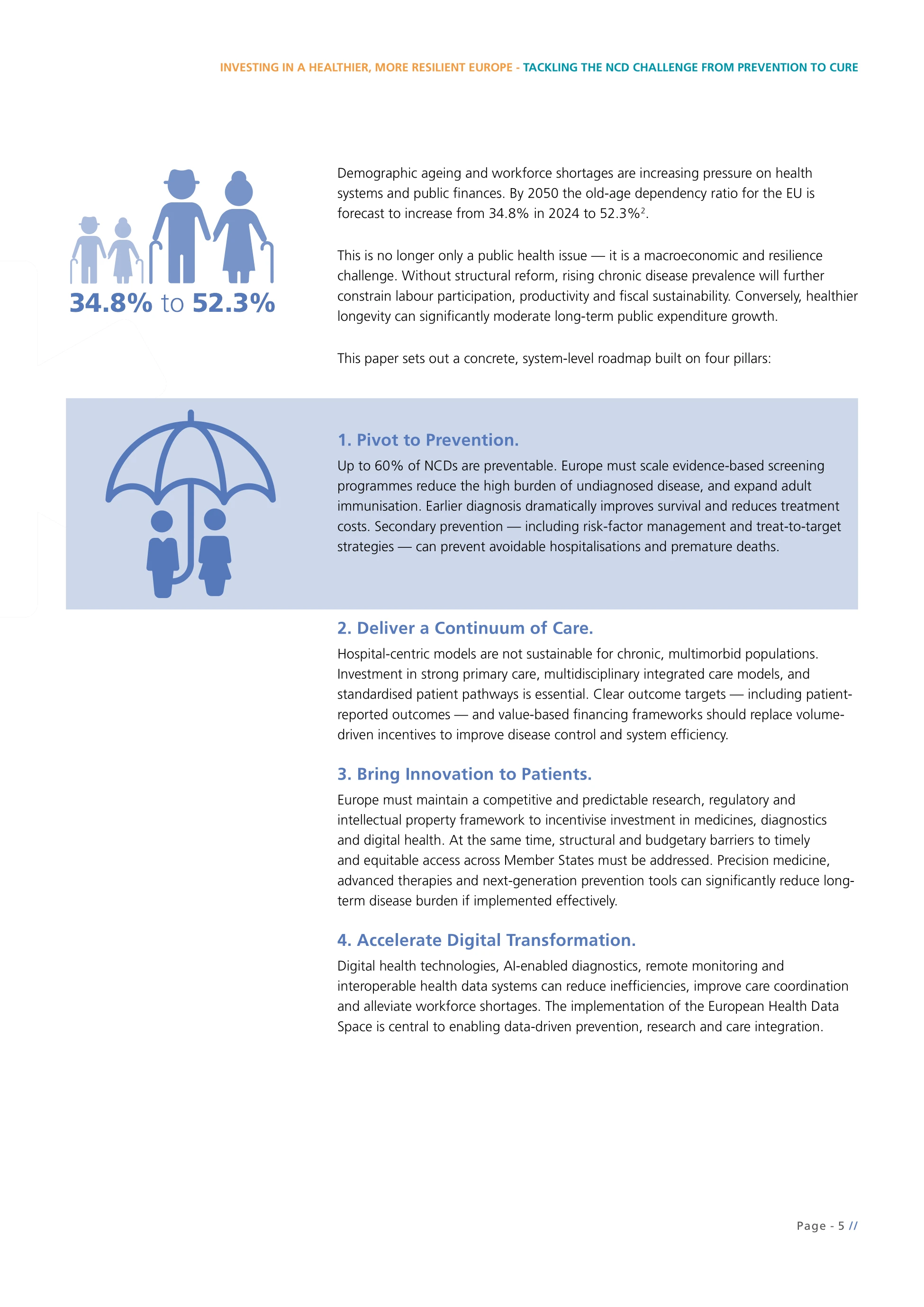
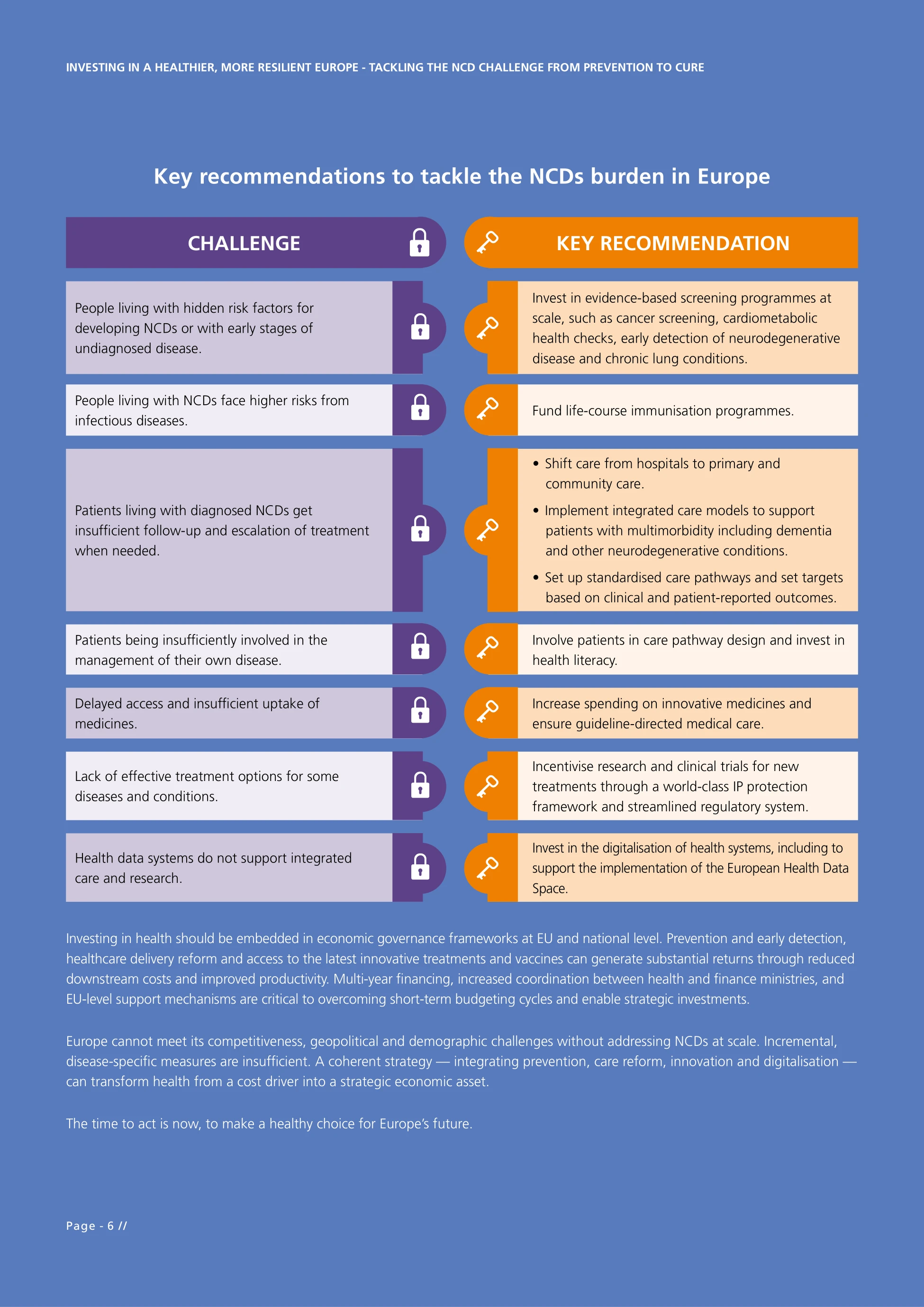

Investing in a Healthier, More Resilient EuropeTackling the NCD Challenge from Prevention to CureINVESTING IN A HEALTHIER, MORE RESILIENT EUROPE - TACKLING THE NCD CHALLENGE FROM PREVENTION TO CUREPage - 2 //1324EXECUTIVE SUMMARYBREAKING THE CYCLE: CON-FRONTING THE NCD BURDENINTRODUCTIONFROM PREVENTION TO CARE TO CURE - A ROADMAP FOR A HEALTHIER EUROPE04110815TABLE OF CONTENTSINVESTING IN A HEALTHIER, MORE RESILIENT EUROPE - TACKLING THE NCD CHALLENGE FROM PREVENTION TO CUREPage - 3 //Page - 3 //Page - 4 //INVESTING IN A HEALTHIER, MORE RESILIENT EUROPE - TACKLING THE NCD CHALLENGE FROM PREVENTION TO CURENon-communicable diseases (NCDs) are Europe’s largest health challenge and a growing economic risk. They account for 88–90% of all deaths in Europe. In 2023 alone, five major NCDs cost the EU an estimated €530 billion — more than 3% of EU GDP. Nearly 1 in 3 Europeans aged 50+ live with two or more chronic conditions (multimorbidity) — and this prevalence is rising in several European countries1. EXECUTIVE SUMMARY1Page - 4 //INVESTING IN A HEALTHIER, MORE RESILIENT EUROPE - TACKLING THE NCD CHALLENGE FROM PREVENTION TO CUREPage - 5 //Demographic ageing and workforce shortages are increasing pressure on health systems and public finances. By 2050 the old-age dependency ratio for the EU is forecast to increase from 34.8% in 2024 to 52.3%2. This is no longer only a public health issue — it is a macroeconomic and resilience challenge. Without structural reform, rising chronic disease prevalence will further constrain labour participation, productivity and fiscal sustainability. Conversely, healthier longevity can significantly moderate long-term public expenditure growth.This paper sets out a concrete, system-level roadmap built on four pillars:1. Pivot to Prevention.Up to 60% of NCDs are preventable. Europe must scale evidence-based screening programmes reduce the high burden of undiagnosed disease, and expand adult immunisation. Earlier diagnosis dramatically improves survival and reduces treatment costs. Secondary prevention — including risk-factor management and treat-to-target strategies — can prevent avoidable hospitalisations and premature deaths.2. Deliver a Continuum of Care.Hospital-centric models are not sustainable for chronic, multimorbid populations. Investment in strong primary care, multidisciplinary integrated care models, and standardised patient pathways is essential. Clear outcome targets — including patient-reported outcomes — and value-based financing frameworks should replace volume-driven incentives to improve disease control and system efficiency.3. Bring Innovation to Patients.Europe must maintain a competitive and predictable research, regulatory and intellectual property framework to incentivise investment in medicines, diagnostics and digital health. At the same time, structural and budgetary barriers to timely and equitable access acro...










































