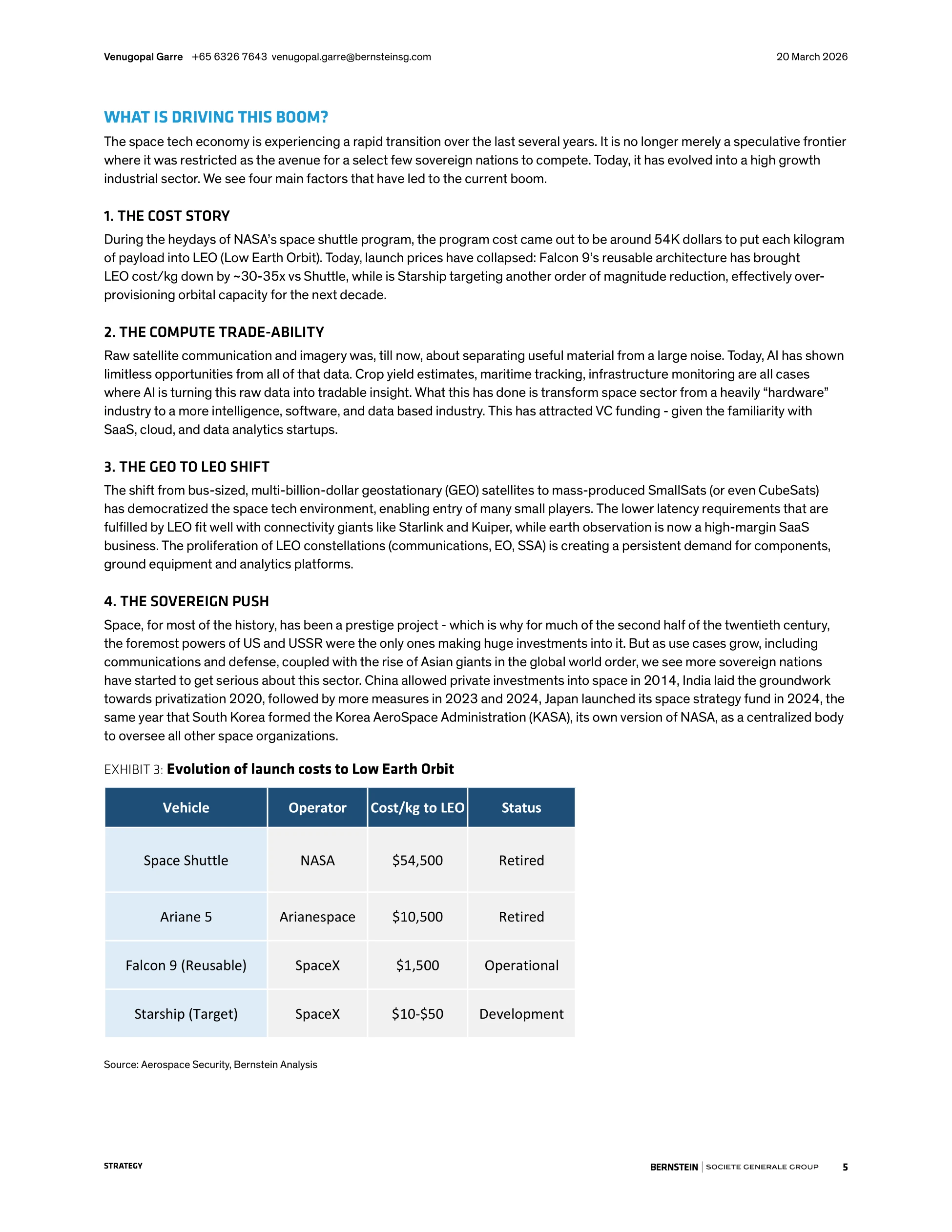
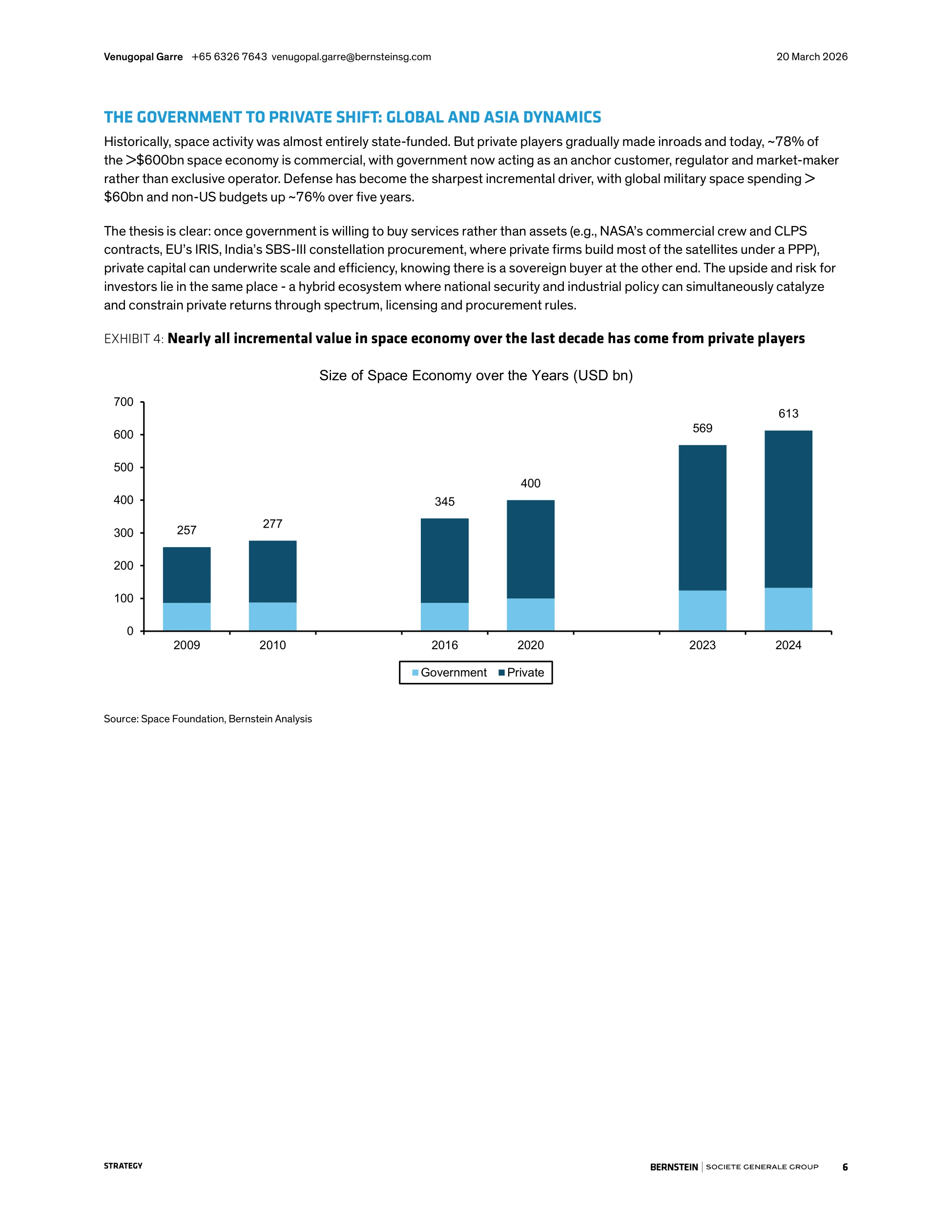
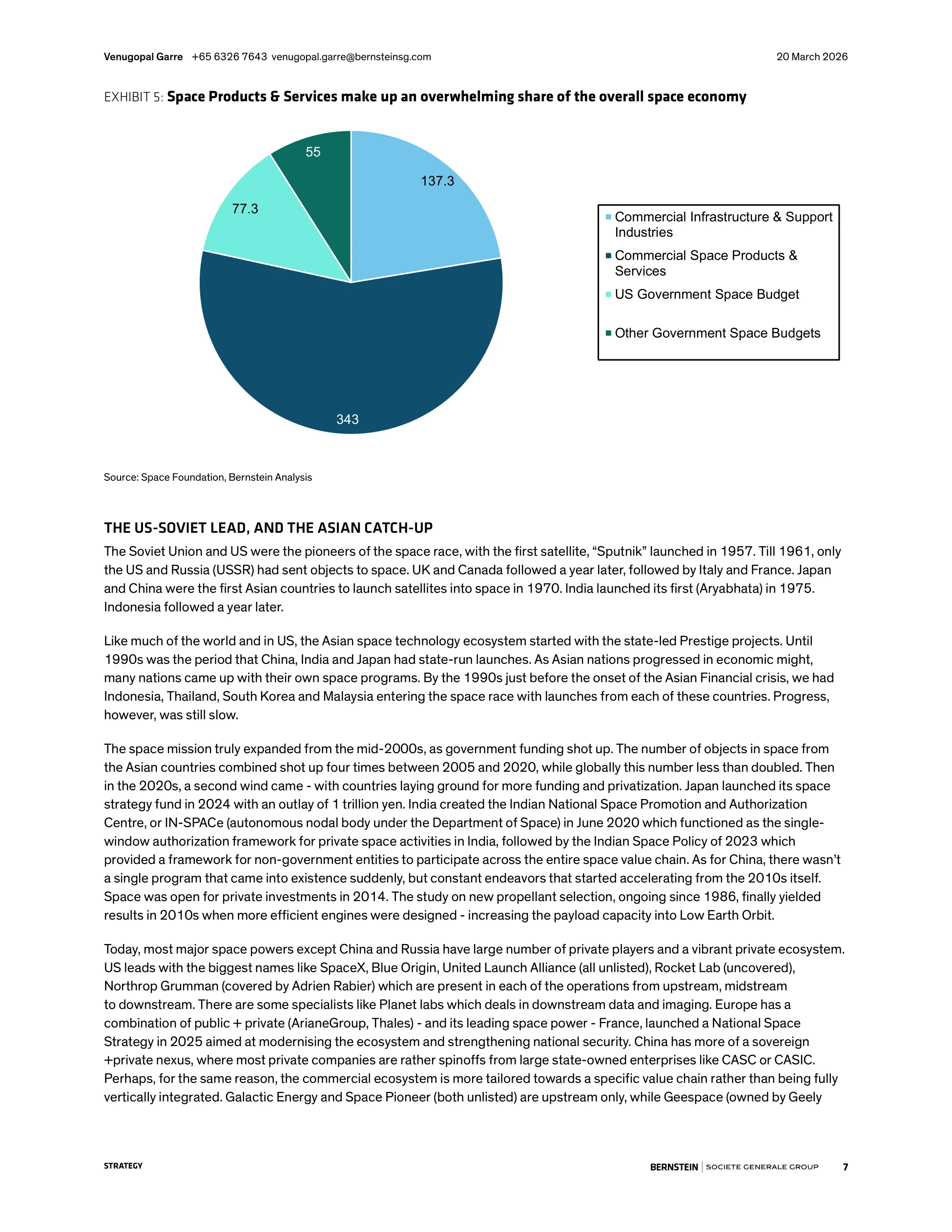
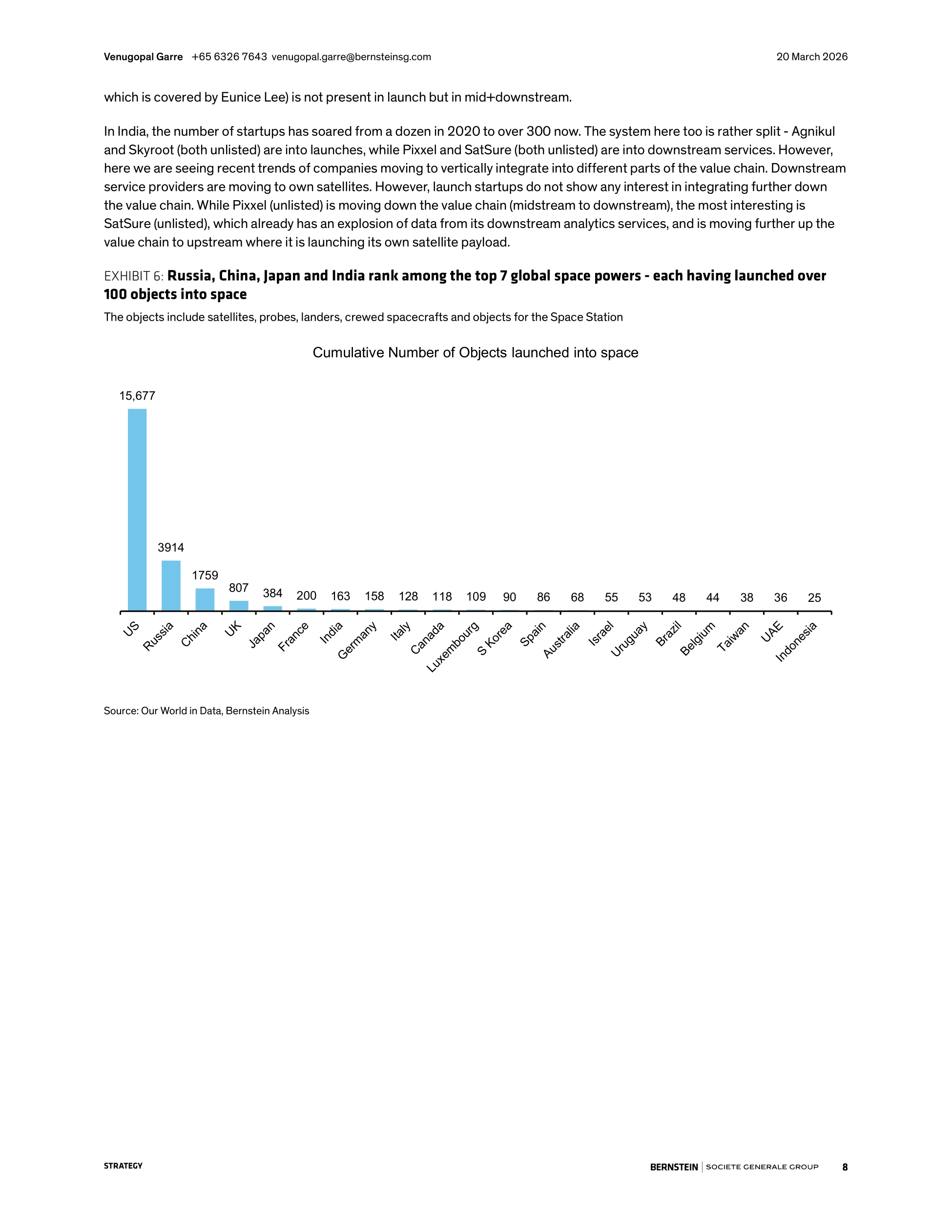
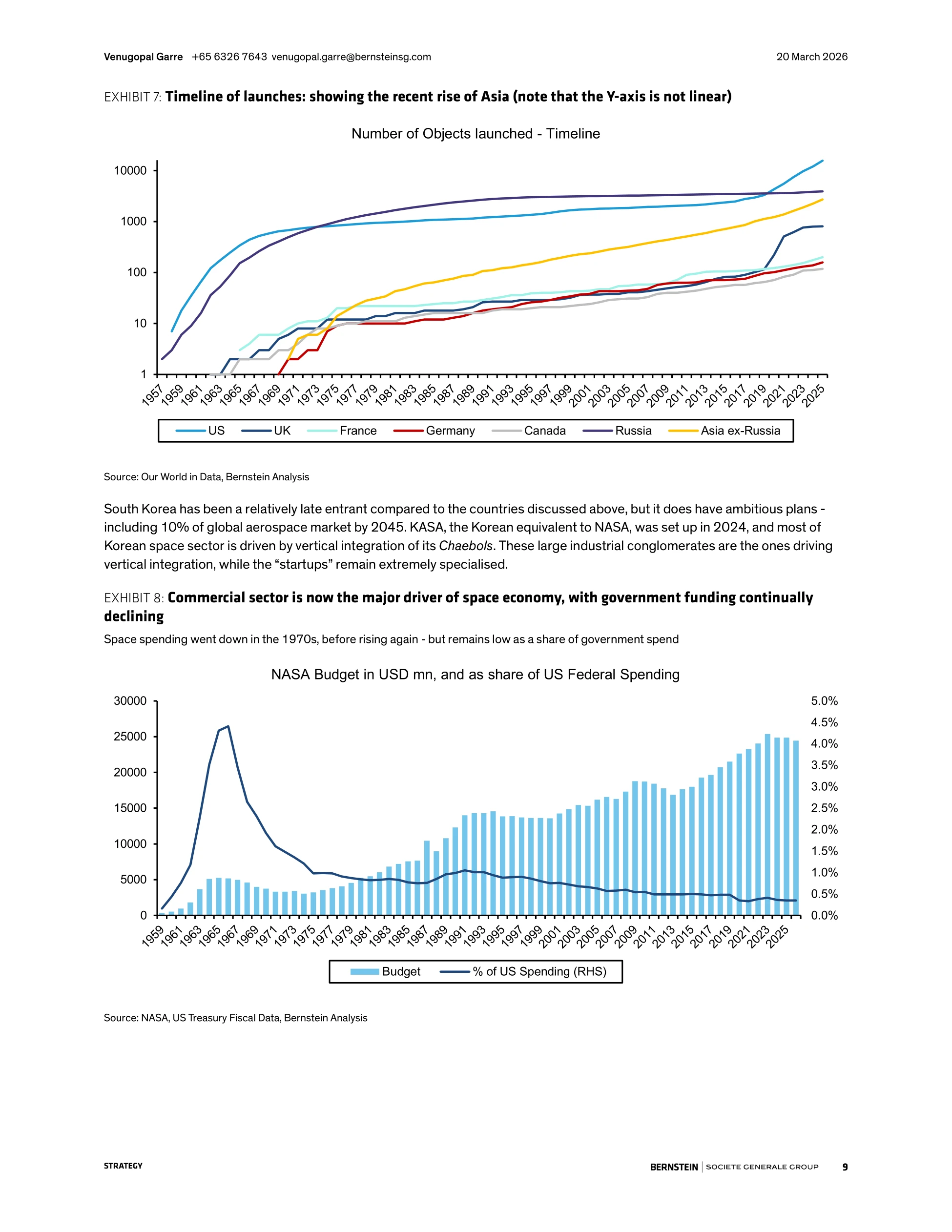
FUTURE OF TECH20 March 2026StrategyFuture of Tech: Space Tech— global opportunitiesVenugopal Garre+65 6326 7643venugopal.garre@bernsteinsg.comNikhil Arela+91 226 842 1482nikhil.arela@bernsteinsg.comParam Shah+91 226 842 1417param.shah@bernsteinsg.comThe race to participate in the space economy is shifting from a distant ambition to a relevantinvestment theme. While rocket science remains hard, understanding the space value chainand how to invest in it isn’t. That’s where our focus lies: breaking down the evolving spaceecosystem and uncovering the areas for opportunity.From Prestige to Priority: For much of history, space was a vanity race betweensuperpowers. After the moon landing boom faded, funding collapsed, U.S. space spendingdropped from over 4% of the federal budget in the 1960s to under 1% by the 1980s. Whatkept the flame alive was broader global participation. By the 1990s, more than 20 nationsacross Asia, Europe, and South America had satellites in orbit. The past decade, however,has transformed the landscape. Communications, earth observation, and defense havereignited demand, while governments from Japan to India and France have opened thegates to commercialization. Space is no longer a prestige project; it’s industrial strategy.The Space Value Chain: The space economy can be viewed two ways, by use case or bysupply chain. On a use-case basis, launch vehicles and satellite manufacturing form theupstream, while data and analytics drive the downstream. Frontier markets like miningand interplanetary missions sit beyond. From a supply-chain view, five layers definethe ecosystem: supply of raw materials, component manufacturing, and launch at theupstream; ground infrastructure and operations at the midstream; and analytics or dataservices at the downstream. Understanding where value pools concentrate across thesetiers is key to investing.The Commercialization of Space: The opportunity is currently at about $615 billion, asper estimates from the Space Foundation, with 78% driven by private sector. More than70% of value is currently in satellites and downstream communications, navigation, anddata services. Launch remains a smaller but rapidly scaling segment, helped by collapsingcosts and the rise of smallsats and LEO constellations. Launch costs have plunged fromover $50,000 to roughly $1,500 per kilogram for low-earth orbit payloads. Smallsatshave democratized access, making space accessible without massive rockets. AI-enabledsatellite data and analytics are the fastest-growing niche and have turned raw satelliteimagery into actionable intelligence, from predicting crop yields to tracking supply chainsand defense activity. The rising private market and end applications will push the overallopportunity to over a trillion dollars per annum in less than a decade, in our viewHow to invest: Several trends will shape the space industry in the times to come. The firstis...










































