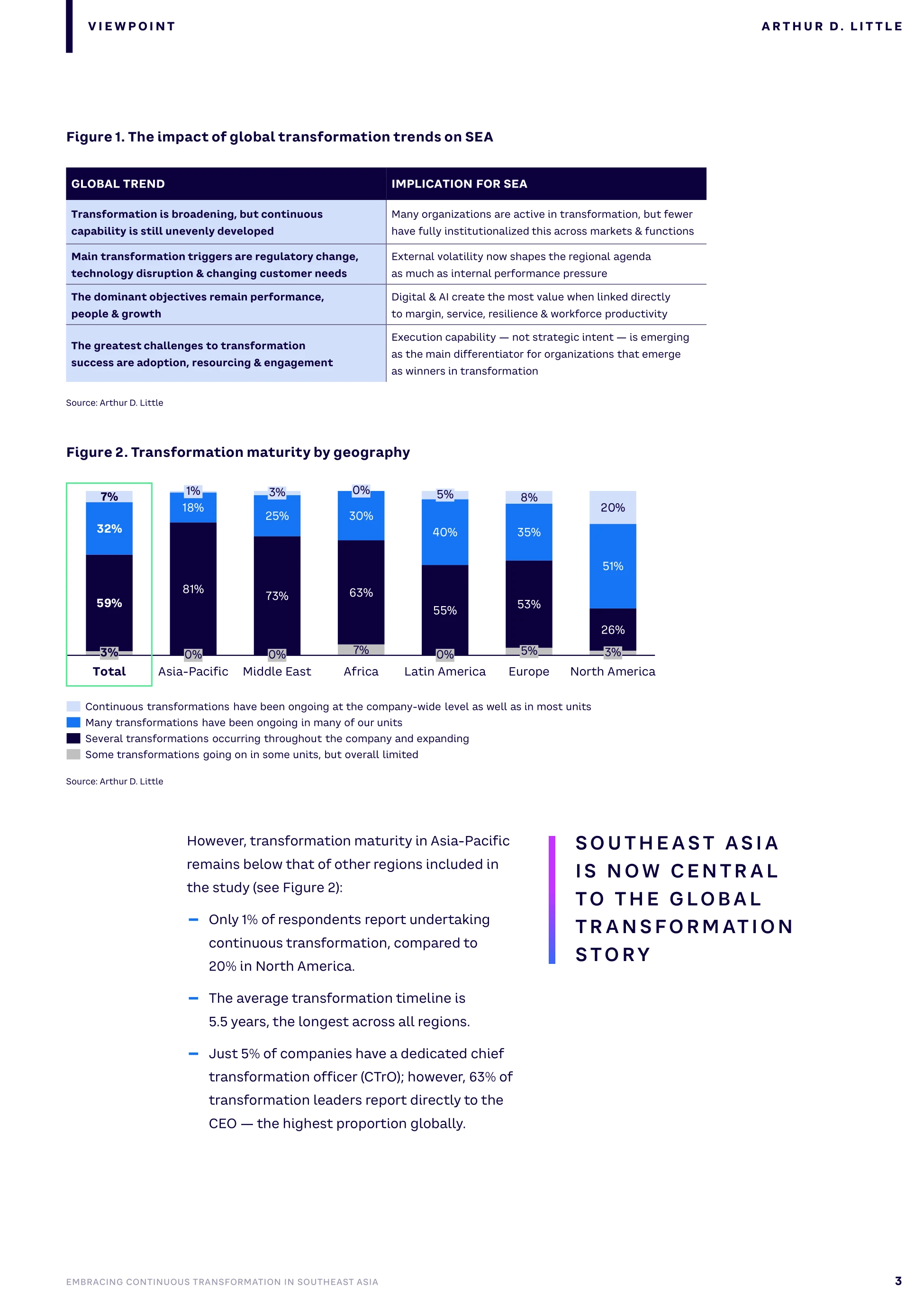

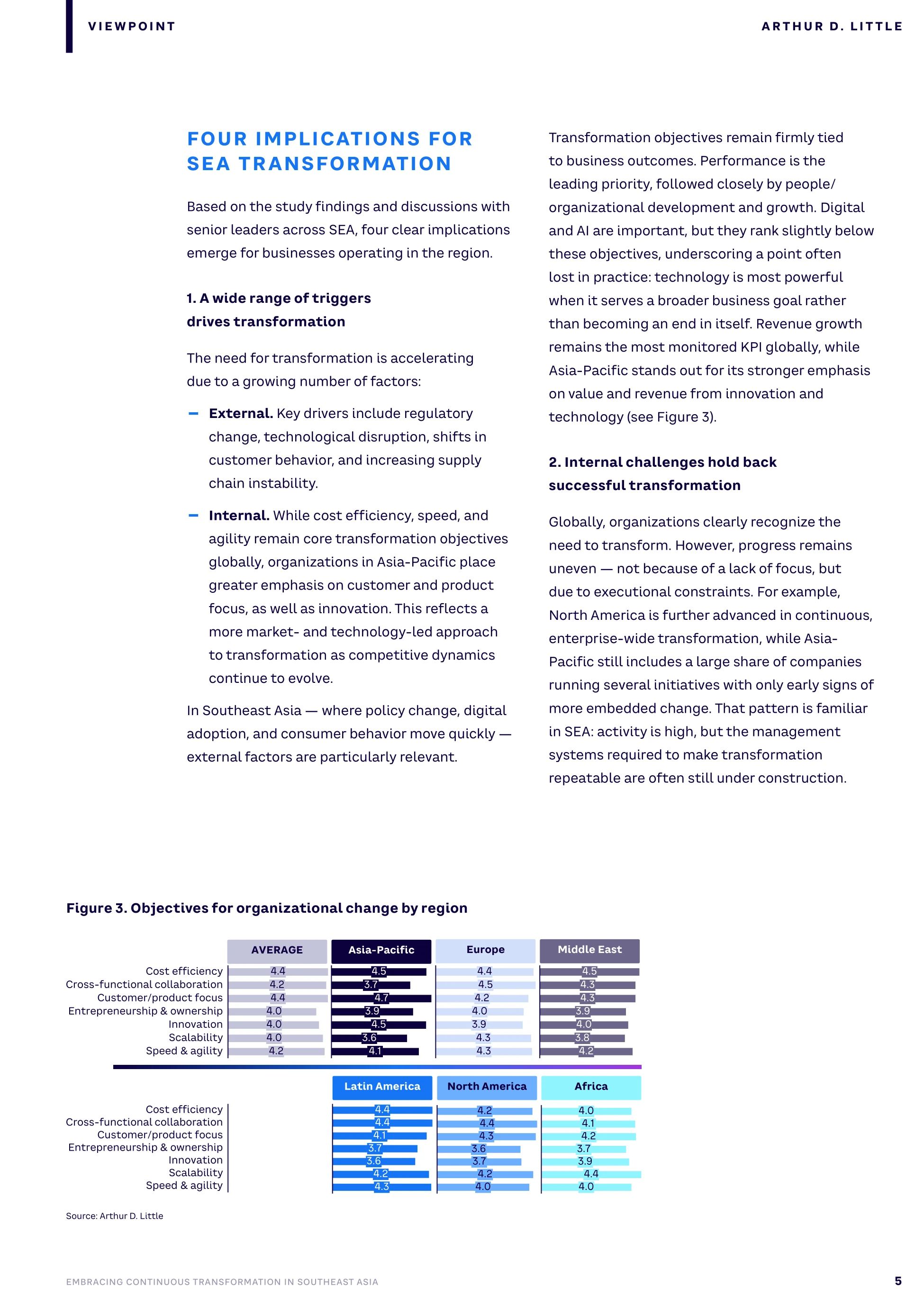
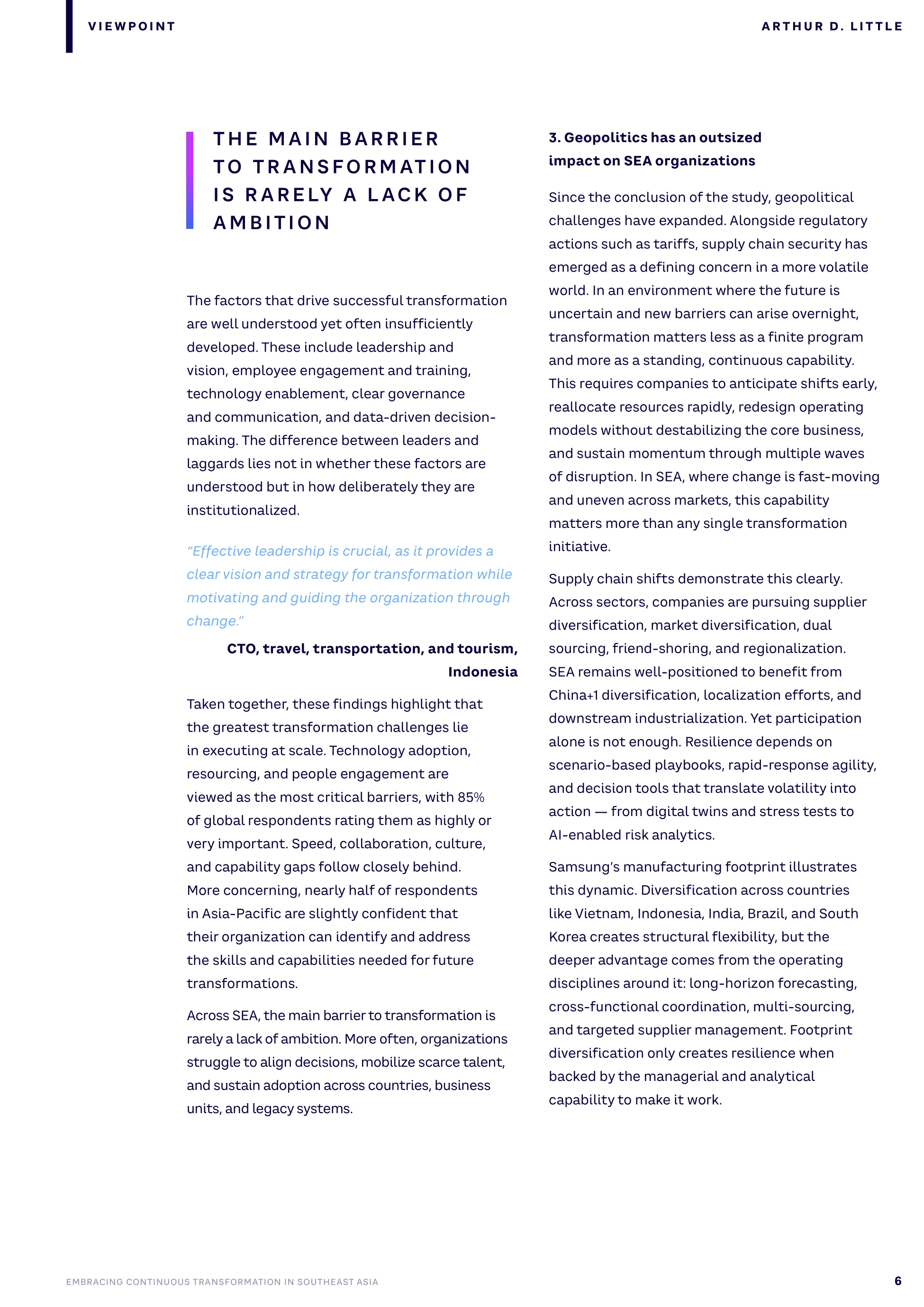
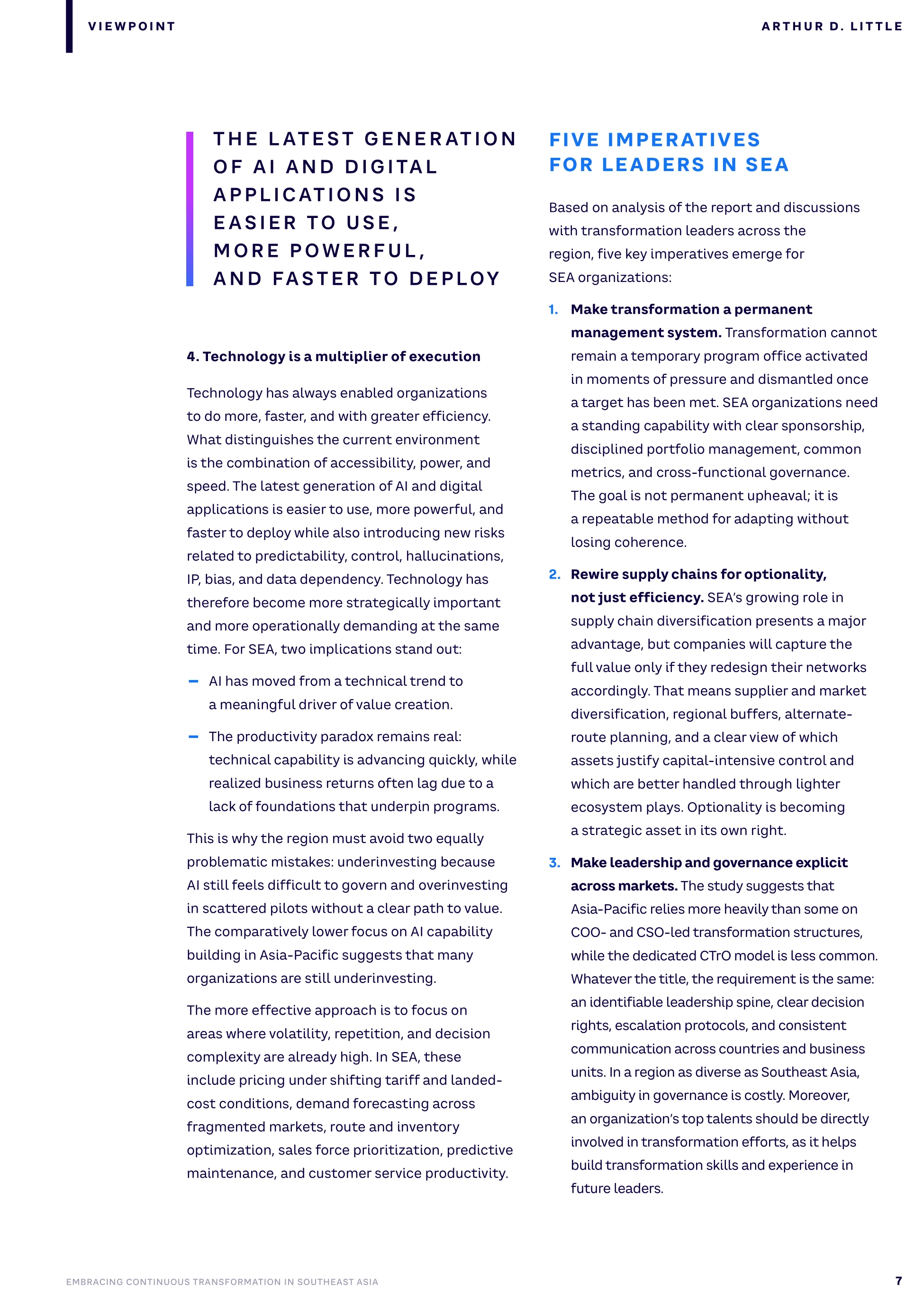
2026AUTHORSTrung GhiChui LeeFrancesco MarsellaEMBR ACING CONTINUOUS TR ANSFORMATION IN SOUTHE AST ASIAImperatives & best practices for future regional successTo succeed, organizations across Southeast Asia (SEA) must build the capability to transform continuously. Factors such as supply chain reconfiguration, industrial policies, corridor volatility, digital acceleration, and rising expectations around AI-enabled productivity are reshaping how companies compete across the region and beyond. Drawing on data from the Arthur D. Little (ADL) Global Transformation Study, this Viewpoint explores the imperatives and best practices driving SEA transformation programs.VIE WP OINTEMBRACING CONTINUOUS TRANSFORMATION IN SOUTHEAST ASIAThe SEA perspectiveFor Southeast Asia, transformation is vital to competitiveness. The region is playing an increasingly central role in global supply chain realignment and industrial investment while remaining exposed to trade friction, logistics disruption, energy volatility, and regulatory divergence. As a result, opportunity and vulnerability are rising in parallel. Figure 1 highlights the implications of the global trends identified in the study for the region. Driven by competitive manufacturing bases, large and growing domestic markets, expanding digital consumption, and policy agendas focused on localization, industrialization, and economic upgrading, SEA is now central to the global transformation story. These attributes make the region attractive to capital and supply chain reconfiguration, but they also raise the bar for execution. Companies must now operate across different regulatory regimes, talent pools, infrastructure conditions, and customer maturity levels within a single regional footprint.CURRENT STATE OF GLOBAL & SEA TRANSFORMATIONUnderstanding the global pictureOrganizations now operate in an increasingly volatile and disrupted environment, creating a pressing need for continuous transformation. This is essential to thrive amid shifting regulations, technological disruption, evolving customer expectations, and a more fragmented operating landscape.Success requires a step change in transformation, moving from one-off programs to building and deploying an embedded organizational transformation muscle. The findings from the inaugural ADL Global Transformation Study, “Embracing Transformation in a Disrupted World,” highlight this requirement and how companies are responding. The study reveals the scale, scope, and success rates of transformation initiatives across industries and regions worldwide. The study shows that: - 65% of companies are undertaking broad or expanding transformation initiatives across the organization, driven by regulatory change (including government actions such as tariffs), technological disruption, and evolving customer needs and behaviors. - 95% of respondents are highly confident that their transformation programs will deliver succes...










































