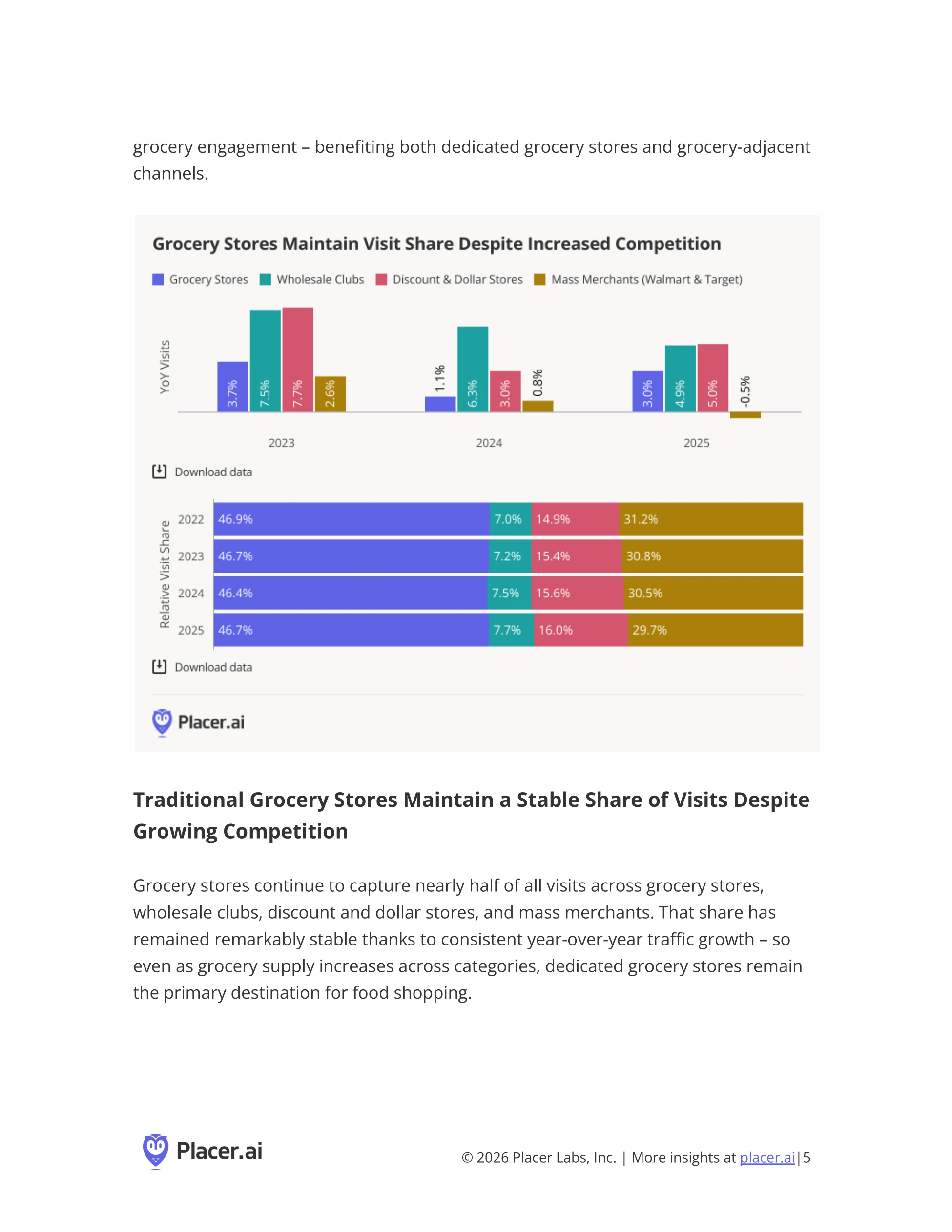
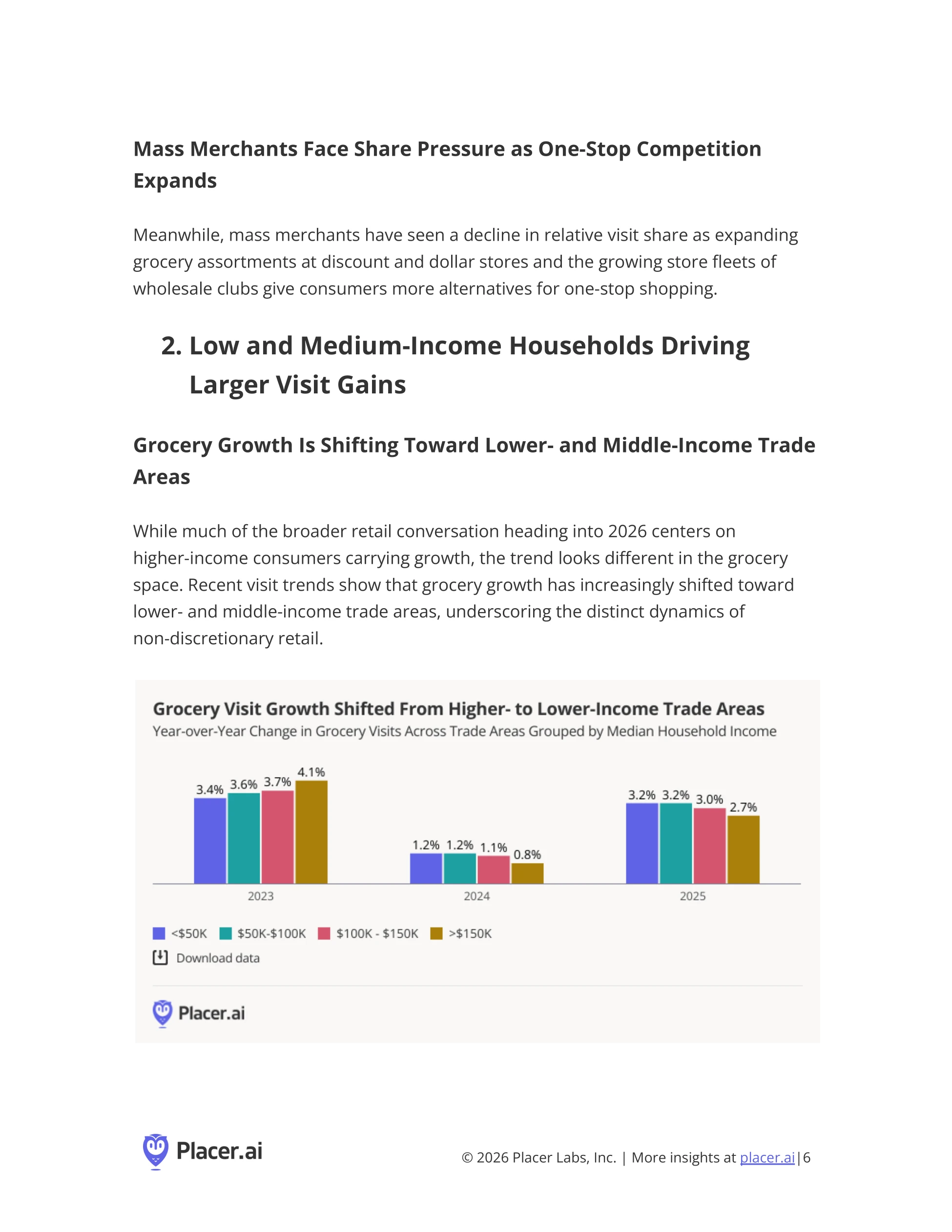
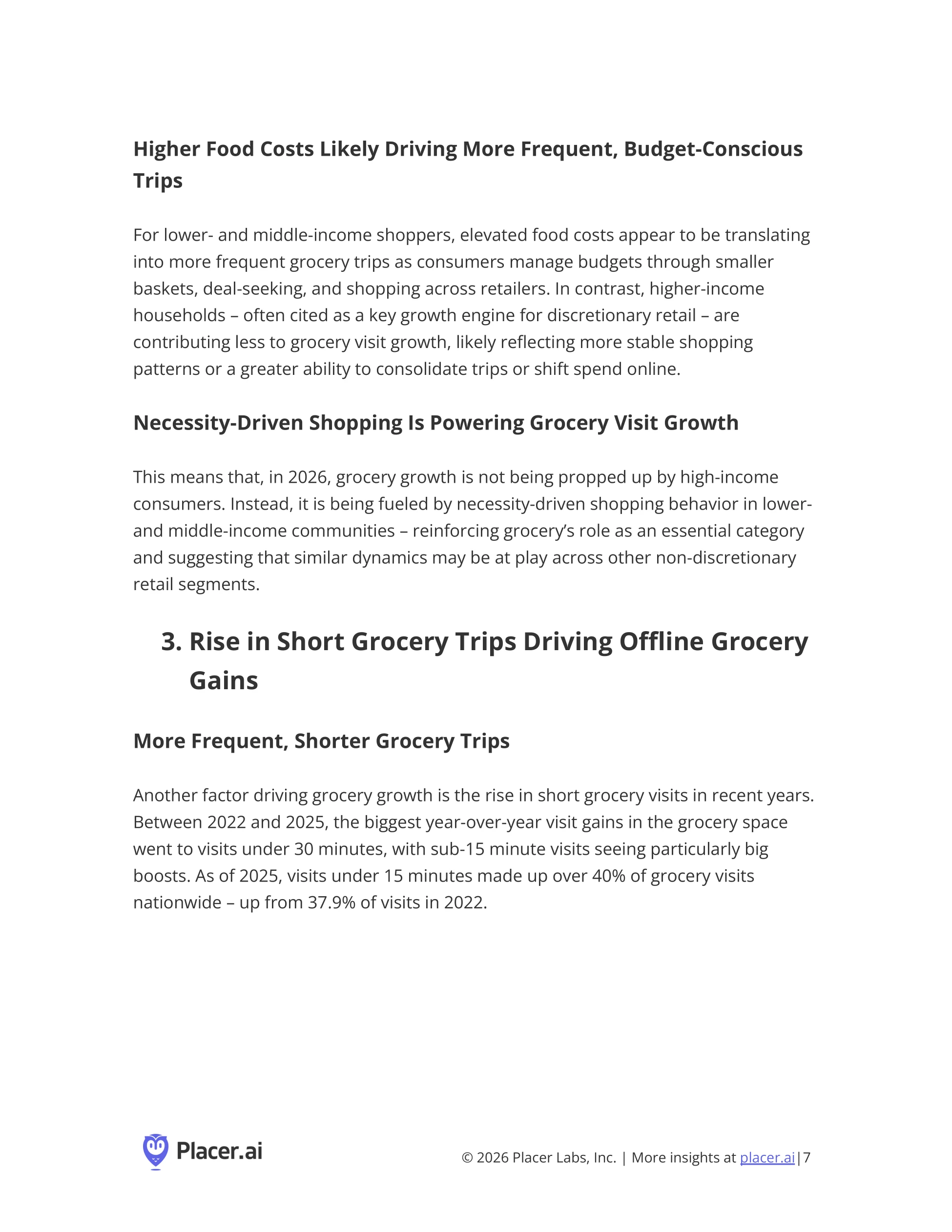
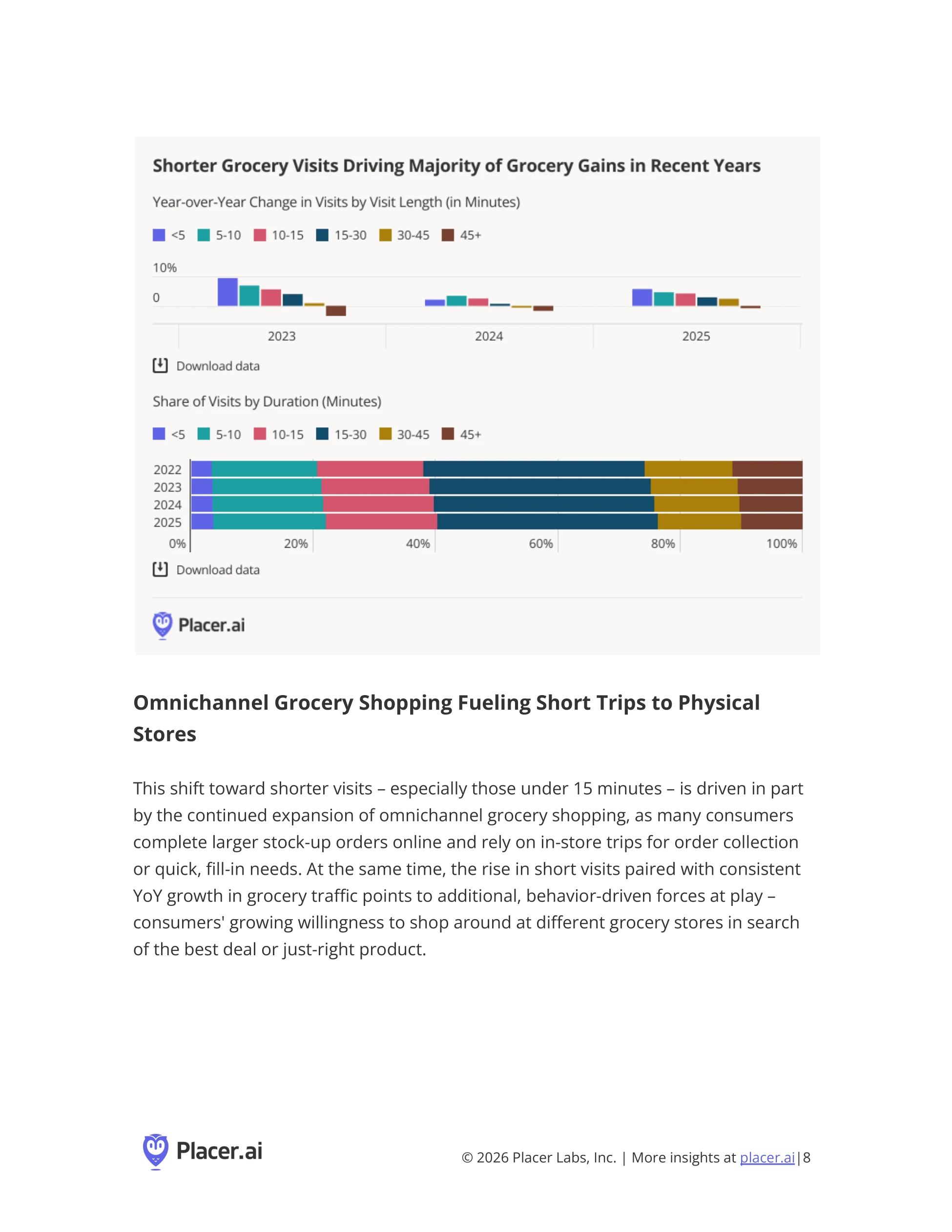
Office Attendance Drivers in 2026: The New Rules of Showing Up Table of Contents Key Takeaways 2 What is Driving Grocery Growth in 2026? 3 More Trips, More Formats, and a Shift Toward Mission-Driven Shopping 3 Scale Captures Demand – But Fragmented Trips Leave Room to Grow 4 The Core Drivers of Grocery Growth in 2026 4 1. Expanded Grocery Supply Is Fueling Growth While Traditional Grocery Stores Hold Their Lead 4 Expanded Grocery Access Is Increasing Overall Category Engagement 4 Traditional Grocery Stores Maintain a Stable Share of Visits Despite Growing Competition 5 Mass Merchants Face Share Pressure as One-Stop Competition Expands 6 2. Low and Medium-Income Households Driving Larger Visit Gains 6 Grocery Growth Is Shifting Toward Lower- and Middle-Income Trade Areas 6 Higher Food Costs Likely Driving More Frequent, Budget-Conscious Trips 7 Necessity-Driven Shopping Is Powering Grocery Visit Growth 7 3. Rise in Short Grocery Trips Driving Offline Grocery Gains 7 More Frequent, Shorter Grocery Trips 7 Omnichannel Grocery Shopping Fueling Short Trips to Physical Stores 8 Grocery Shoppers Are Splitting Trips Across Multiple Retailers 9 Different Trip Types, One Outcome: Continued Store Traffic Growth 9 4. Consolidation as a Growth Driver 9 Large Chains Continue to Pull Ahead in Visit Share 9 Scale Enables Broader Assortment, Stronger Value, and Better Execution 10 5. Competition for "Share of List" Growing Grocery Visit Pie 11 Both Long and Short Trips Are Driving Grocery Traffic Growth 11 Large and Small Chains Win by Competing for Different Shopping Missions 12 What These Trends Mean for Grocery Growth in 2026 12 © 2026 Placer Labs, Inc. | More insights at placer.ai|2 Key Takeaways 1. Expanded grocery supply is increasing overall category engagement. New locations and deeper food assortments across formats are bringing shoppers into the category more often, rather than fragmenting demand. 2. Grocery visit growth is being driven by low- and middle-income households. Elevated food costs are leading to more frequent, budget-conscious trips, reinforcing grocery’s role as a non-discretionary category. 3. Short, frequent trips are a major driver of brick-and-mortar traffic growth. Fill-in shopping, deal-seeking, and omnichannel behaviors are pushing visit frequency higher, even as trip duration declines. 4. Scale is accelerating consolidation among large grocery chains. Larger retailers are using their size to invest in value, assortment, private label, and execution, allowing them to capture longer and more engaged shopping trips. 5. Both large and small grocers have viable paths to growth. Large chains are winning by competing for the full grocery list, while smaller banners can grow by specializing, owning specific missions, or offering compelling value that earns them a place in shoppers’ routines. What is Driving Grocery Growth in ...










































