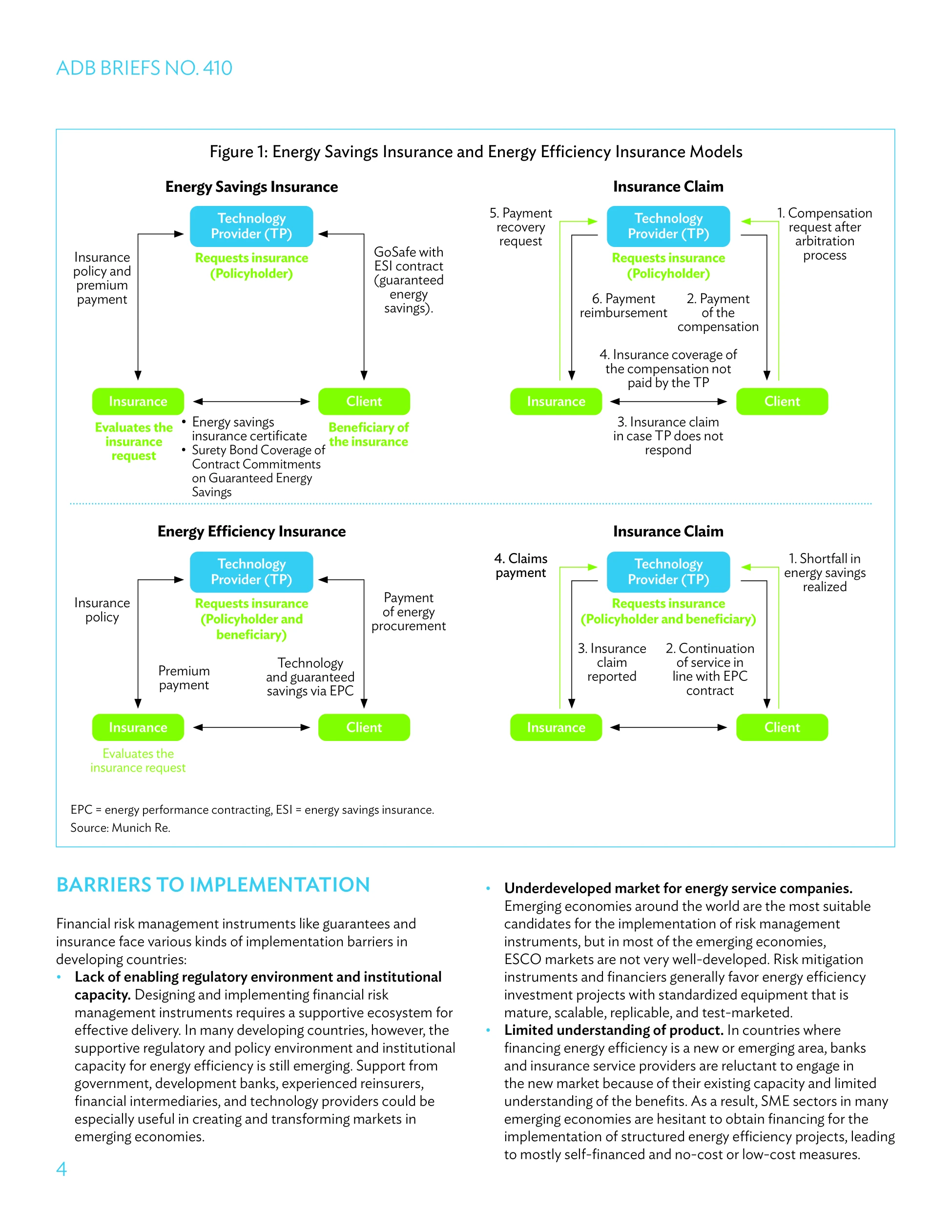
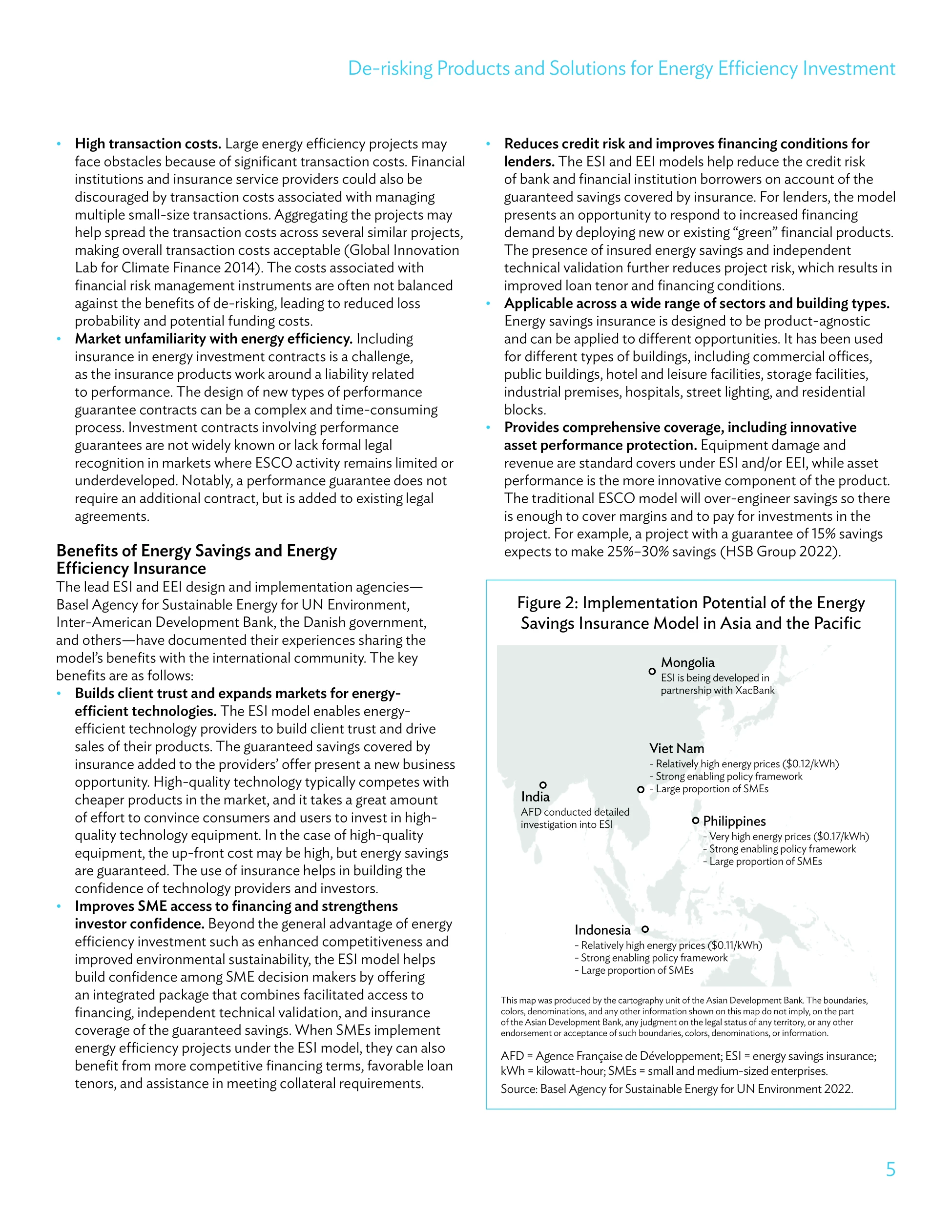
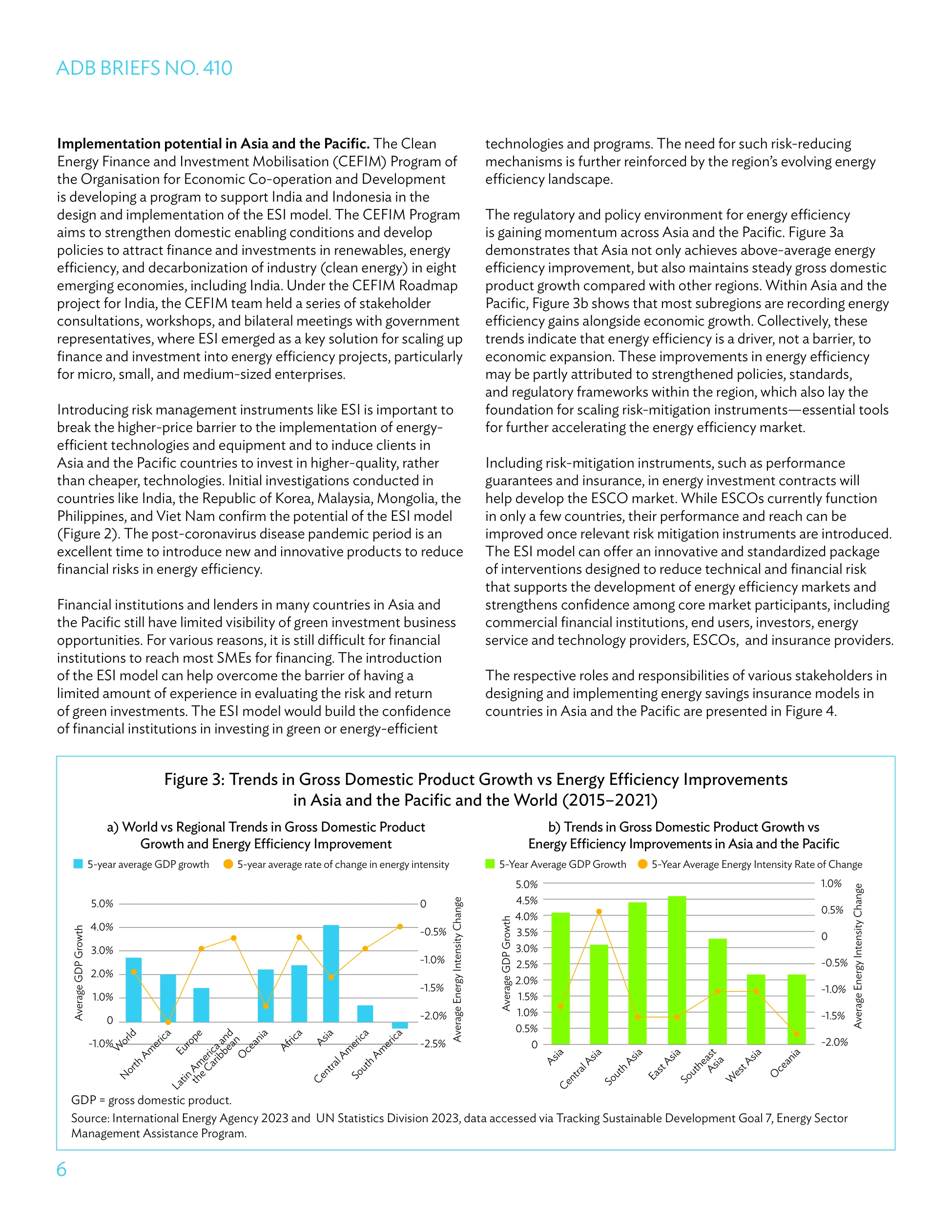
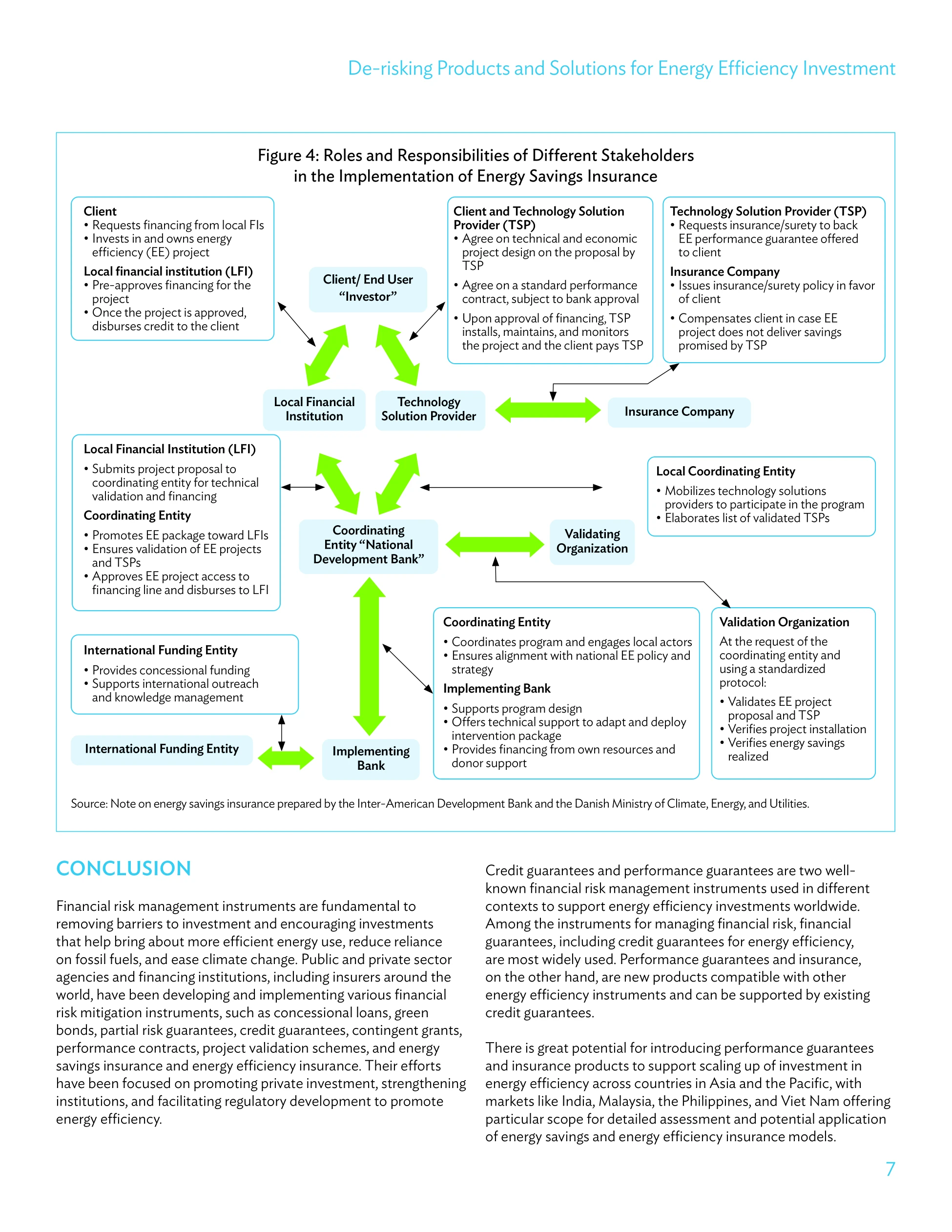
ADB BRIEFSNO. 410SEPTEMBER 2026ISBN 978-92-9277-959-7 (print)ISBN 978-92-9277-960-3 (PDF)ISSN 2071-7202 (print) ISSN 2218-2675 (PDF)Publication Stock No. BRF260423-2DOI: http://dx.doi.org/10.22617/BRF260423-2De-risking Products and Solutions for Energy Efficiency InvestmentKEY POINTS• Energy efficiency reduces energy use, lowers fossil fuel reliance, and mitigates climate change, but investing in energy efficiency projects and technologies faces technical and financial barriers.• Energy savings insurance and energy efficiency insurance reduce technical risk and boost investor confidence, making projects more bankable.• Energy savings insurance and energy efficiency insurance complement other financial instruments and require collaboration among governments, financial institutions, insurers, technology providers, and energy service companies, with support from enabling policies and regulatory frameworks.• Asia and the Pacific show strong potential for the wider application of these instruments, with growing policy support and market demand creating opportunities to scale energy efficiency investments across the region.Sanjay DubeChief Executive Officer International Institute for Energy ConservationJunkyu Lee1Representative North American Representative OfficeAsian Development Bank (ADB)Thomas W. KesslerPrincipal Finance Specialist (Disaster Insurance), ADBSectors Department 3, ADBAndreas LundingSenior Climate Change Specialist (Climate Finance), Climate Change and Sustainable Development Department, ADBAi Yoon SooConsultantClimate Change and Sustainable Development Department, ADBMikko Marl V. DiazConsultantSectors Department 3, ADBINTRODUCTIONEnergy efficiency is widely viewed as one of the most effective ways of achieving various economic, social, and environmental benefits. It is fundamental to making significant progress toward a country’s commitments to the United Nations Sustainable Development Goals and meeting the objectives of the Paris Agreement. The International Energy Agency has estimated that energy efficiency could contribute more than 40% of the emissions reduction needed under a sustainable development scenario. However, in most Asian countries, economic growth remains closely linked to rising energy consumption, underscoring the importance of accelerating efforts to decouple economic growth from energy use through enhanced energy efficiency measures.Yet, despite its potential, investment in energy efficiency—especially among small and medium-sized enterprises (SMEs)—is still impeded by barriers such as costly product development, data limitations, restricted marketing and distribution, unclear market adoption, and low awareness and trust among customers.Notes: In this publication, “$” refers to United States dollars. ADB recognizes “Vietnam” as Viet Nam.1 Current designation. At the time this publication was completed, Junkyu Lee served as director, Finance Sector Group, ADB.ADB BRIEFS NO....