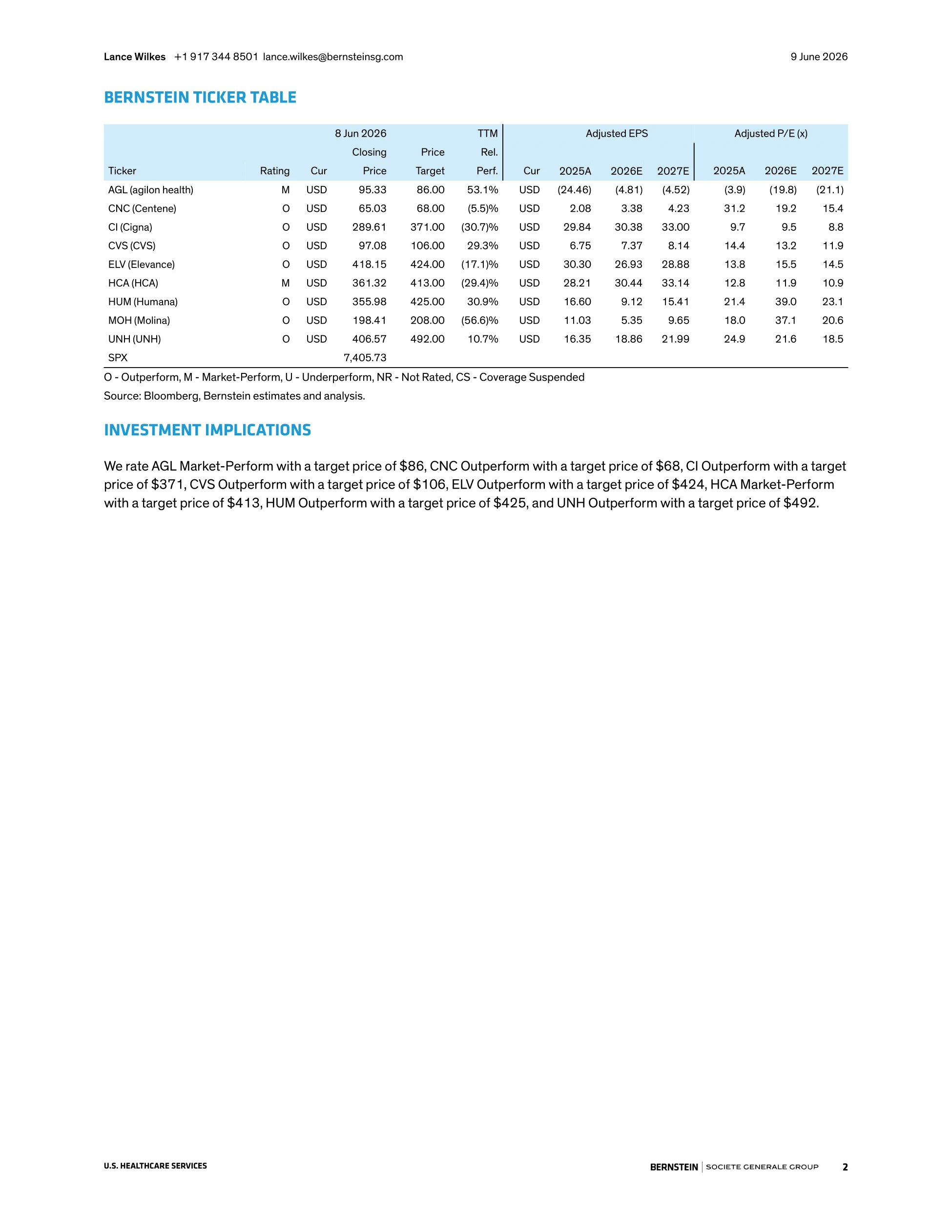
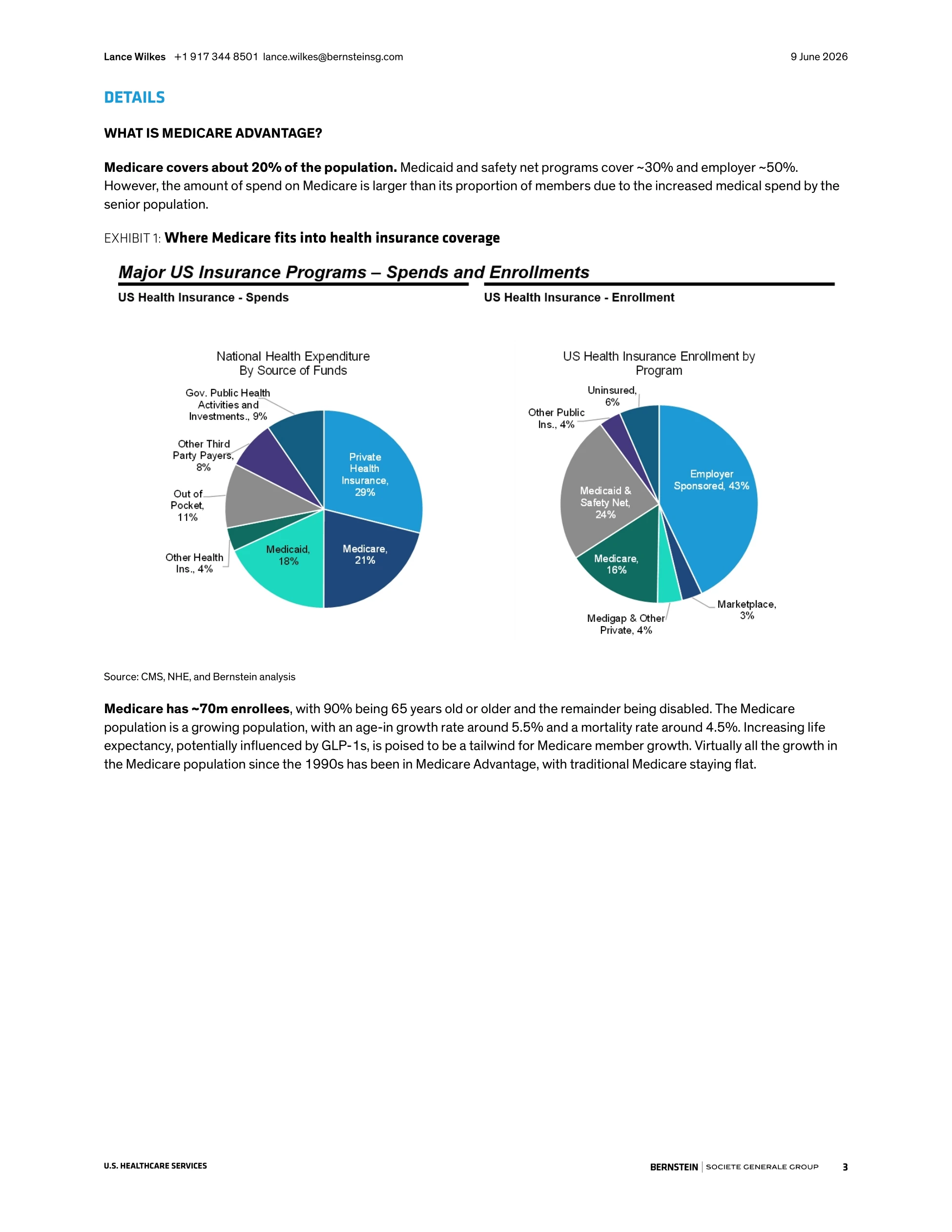
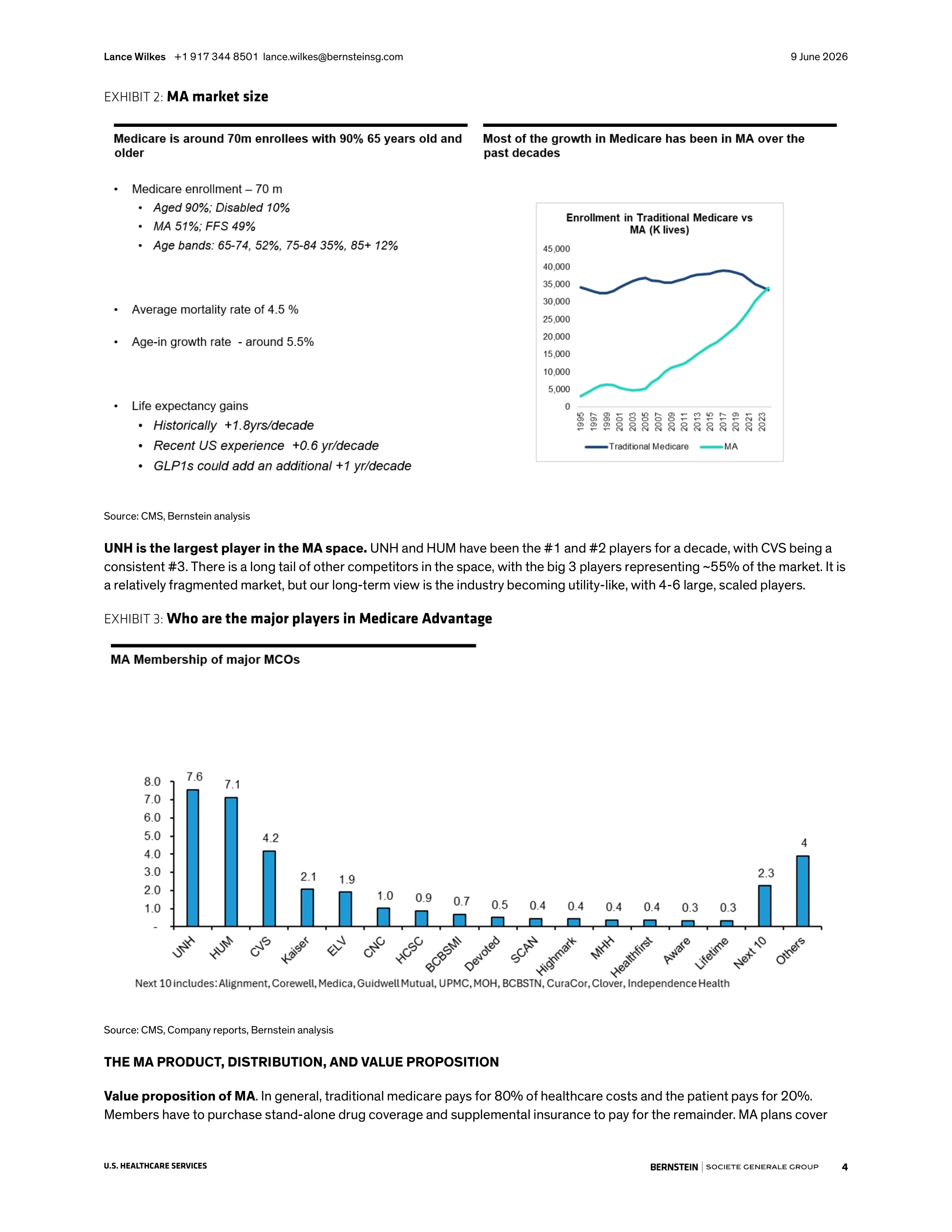
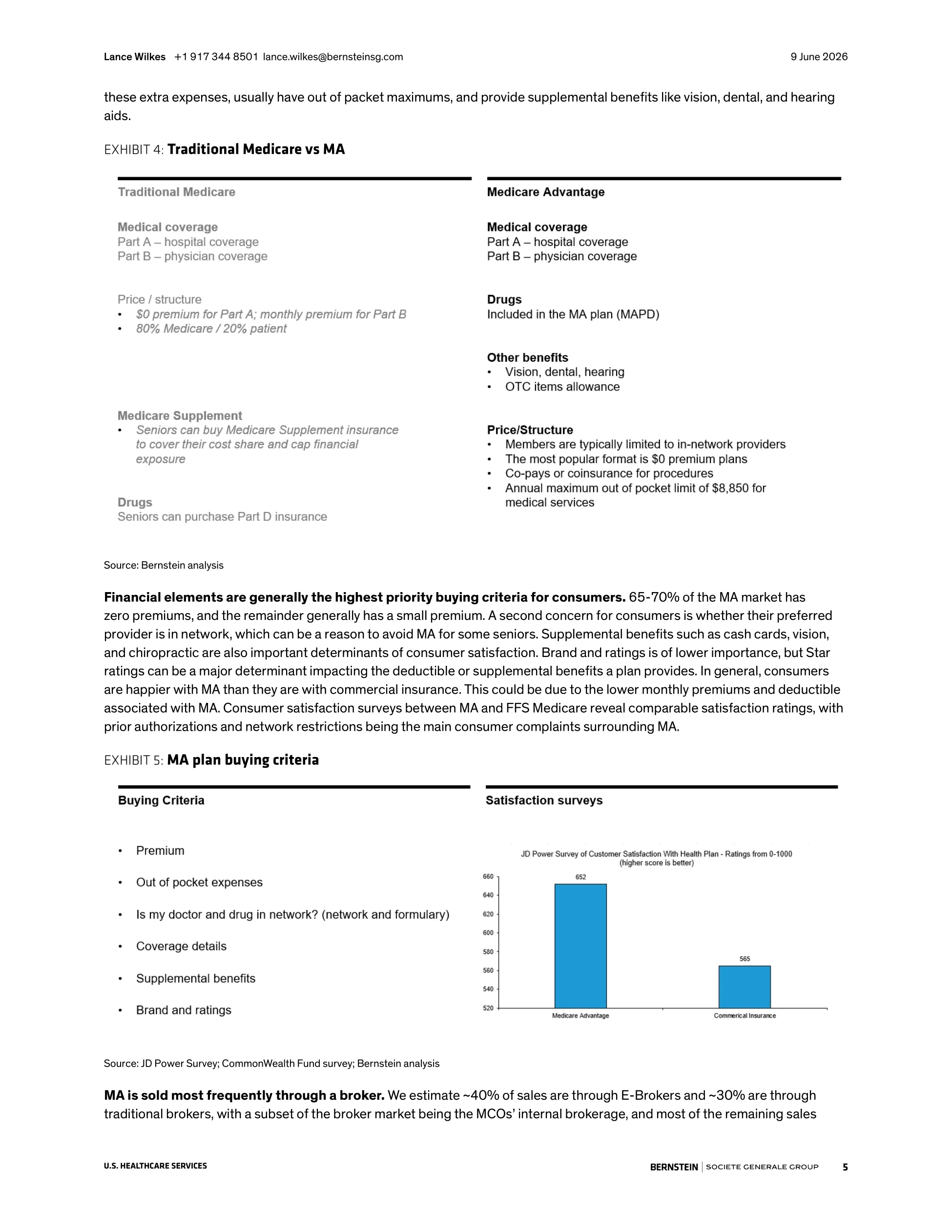
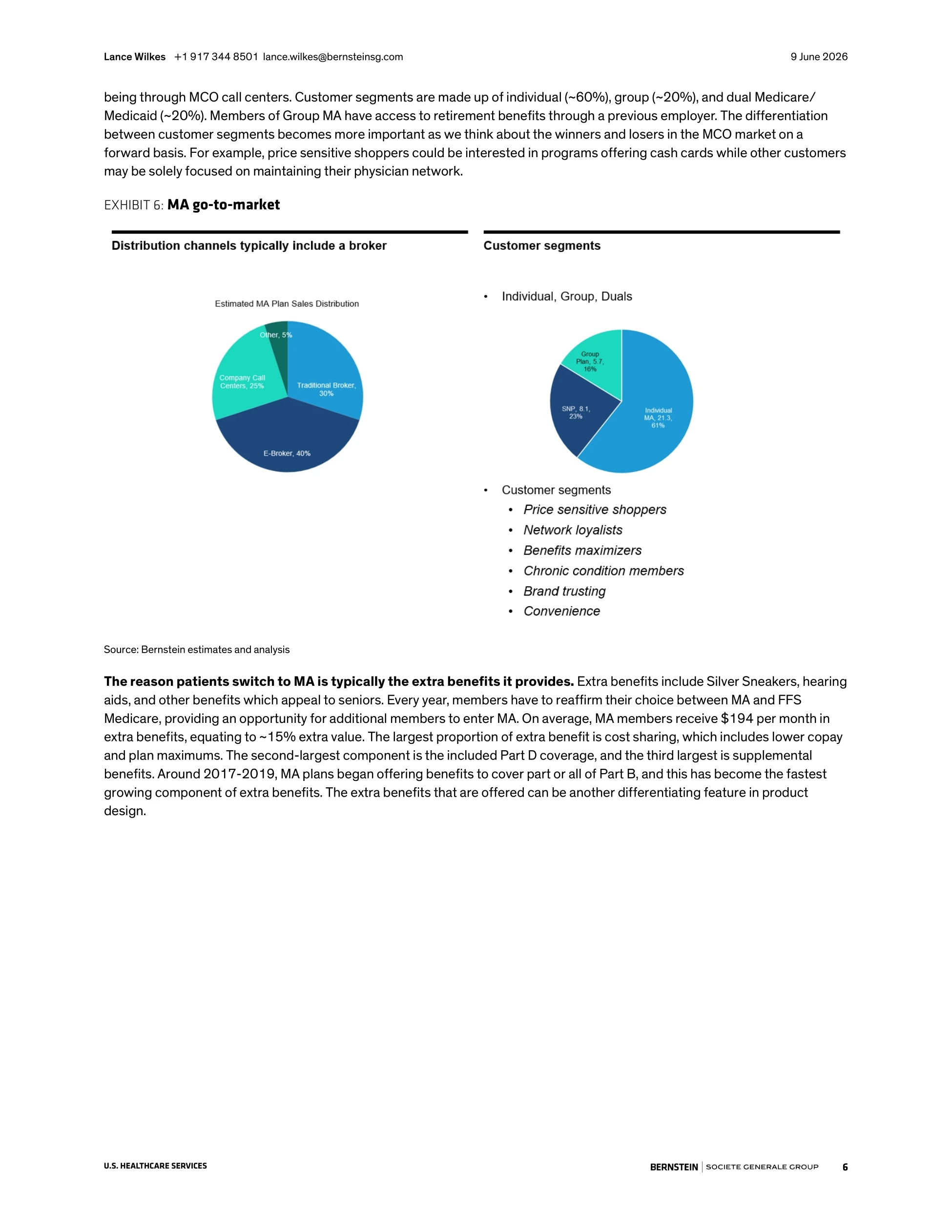
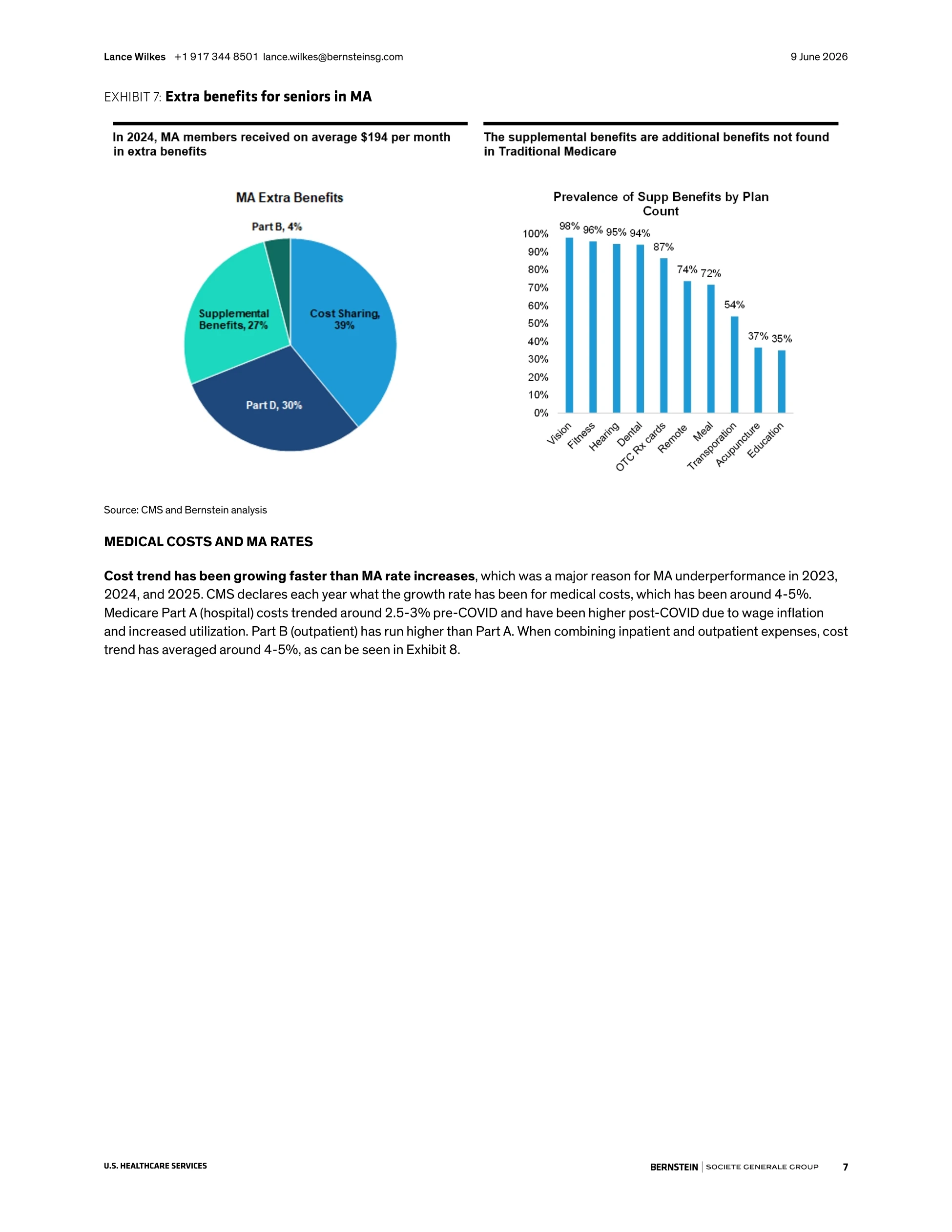
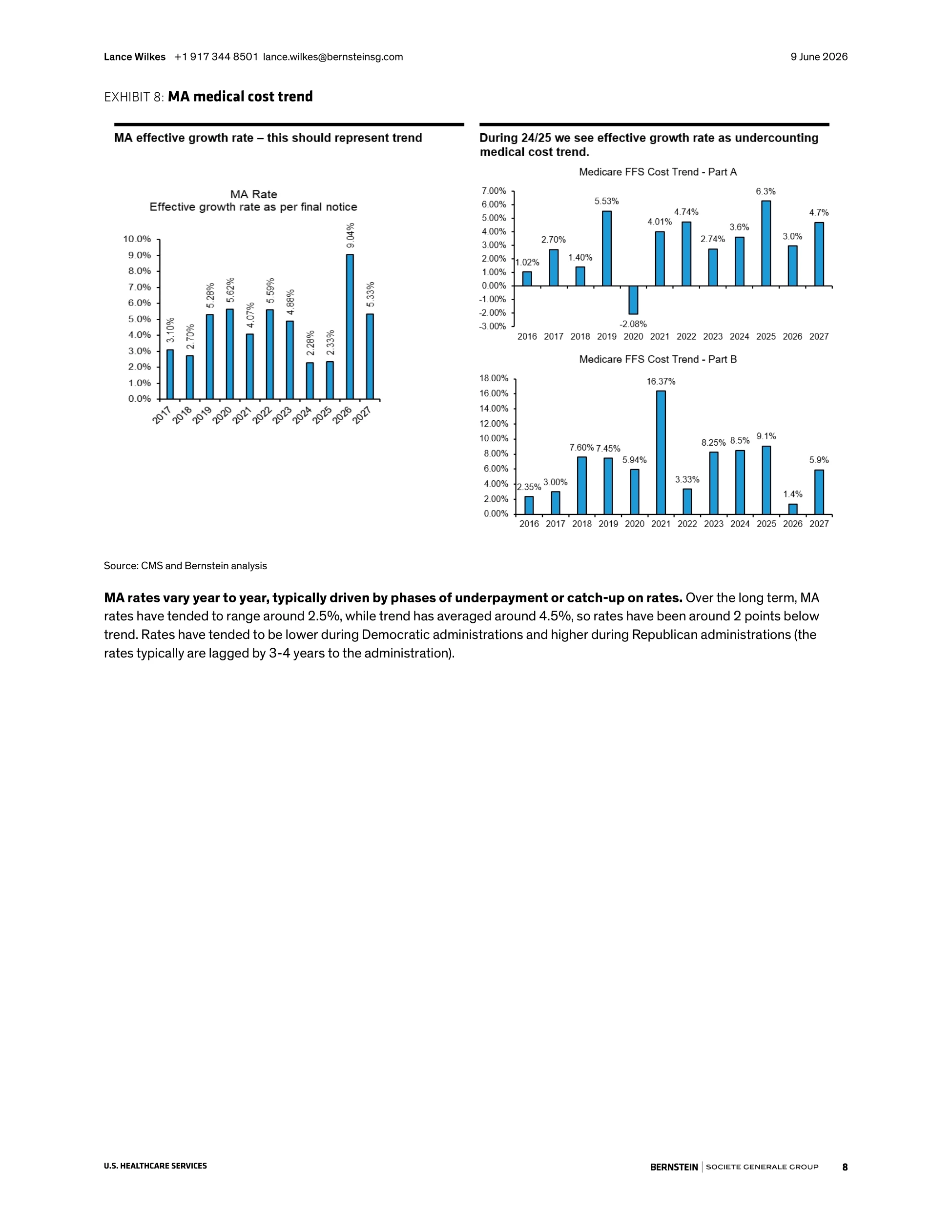
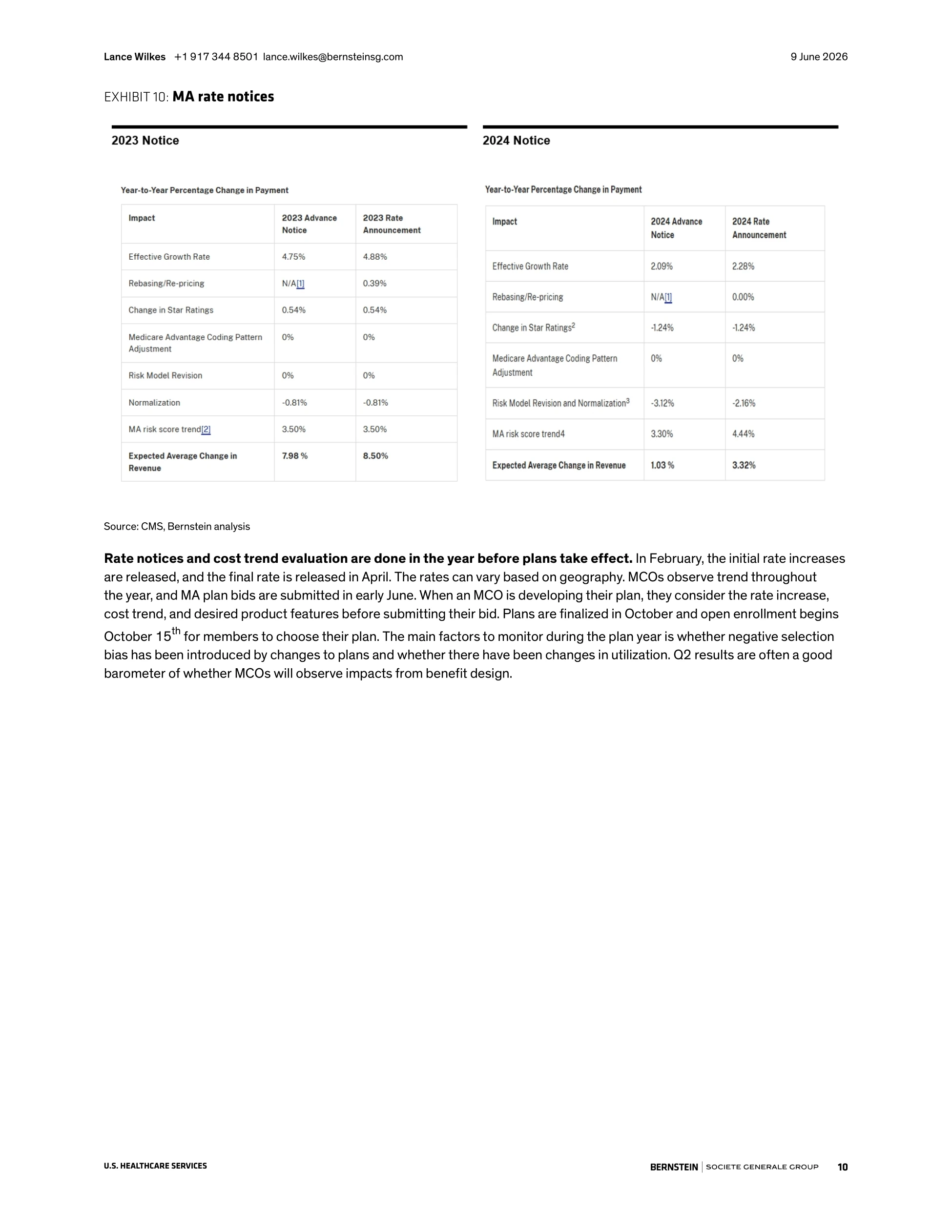
9 June 2026U.S. Healthcare ServicesUS Healthcare Services: A summary of our teach in on MedicareAdvantageLance Wilkes+1 917 344 8501lance.wilkes@bernsteinsg.comWe kicked off our Summer Healthcare Teach In Series last Friday, providing an overview ofMedicare Advantage, its history, policy and margin impacts, and future outlook (replay hereand slides here). This note provides key takeaways from our session.We will continue our Summer Teach In series with a session on Optum Health (6/18)at 11am ET (Click here to register);Insurance cycle - We see the recent negative margins in MA as having been the result ofa traditional insurance cycle driven by excessive competition. Revenue growth rates in the15-20% range during 2005-2015 and margins of around 5% attracted a significant amountof additional competition. This competition lead to reduced margins and set the stage for amargin crisis as rates shocks occurred.We see MA margins inflecting after a trough period. Following a period of margincompression, we expect industry MA margins to expand ~1% in 2026, followed by ~0.5%annual growth through 2030. This recovery is driven by a withdrawal of competition, rateimprovement off 2024–25 lows, and an industry focus on pricing for profitability.MA growth remains durable, but is moderating. Moving forward, we expect MAenrollment to grow at a ~4–5% pace. The value proposition remains compelling with MAoffering enhanced supplemental benefits for beneficiaries and structurally lower costsversus FFS for the government. We ultimately see MA capturing virtually all the Medicaremarket.The long-term Government MCO market will trend “utility-like.” Over time, we expectboth MA and Medicaid to resemble utility-like markets, consolidating around ~4–5 scaledplayers and operating with relatively modest margins (~1.5% for Medicaid; ~2–3% for MA).Key disruptors include GLP-1s, AI, and VBC. GLP-1s will contribute to rising pharmacycosts, but offer the potential of increasing life span, potentially expanding Medicare TAMby 5-10%. AI offers the opportunity to improve the efficiency of hospital operations andpatient care. VBC will become increasingly central as margin pressure persists, driven byour view that reimbursement rates will lag medical cost trend by ~100–150 bps long-term.Affordability and access will dominate the policy debate. Policy focus is increasinglycentered on affordability and coverage expansion. Medicare for All appears less viable thanin prior cycles, particularly with MA now representing ~55% of Medicare enrollment vs. ~1/3during earlier reform debates. We expect a Democratic push to restore the uninsured rate toaround the 5% level, from what we see could drift towards a potential 9% by 2028.See the Disclosure Appendix of this report for required disclosures, analyst certifications and otherimportant information. Alternatively, visit our Global Research Disclosure Website.ww...










































