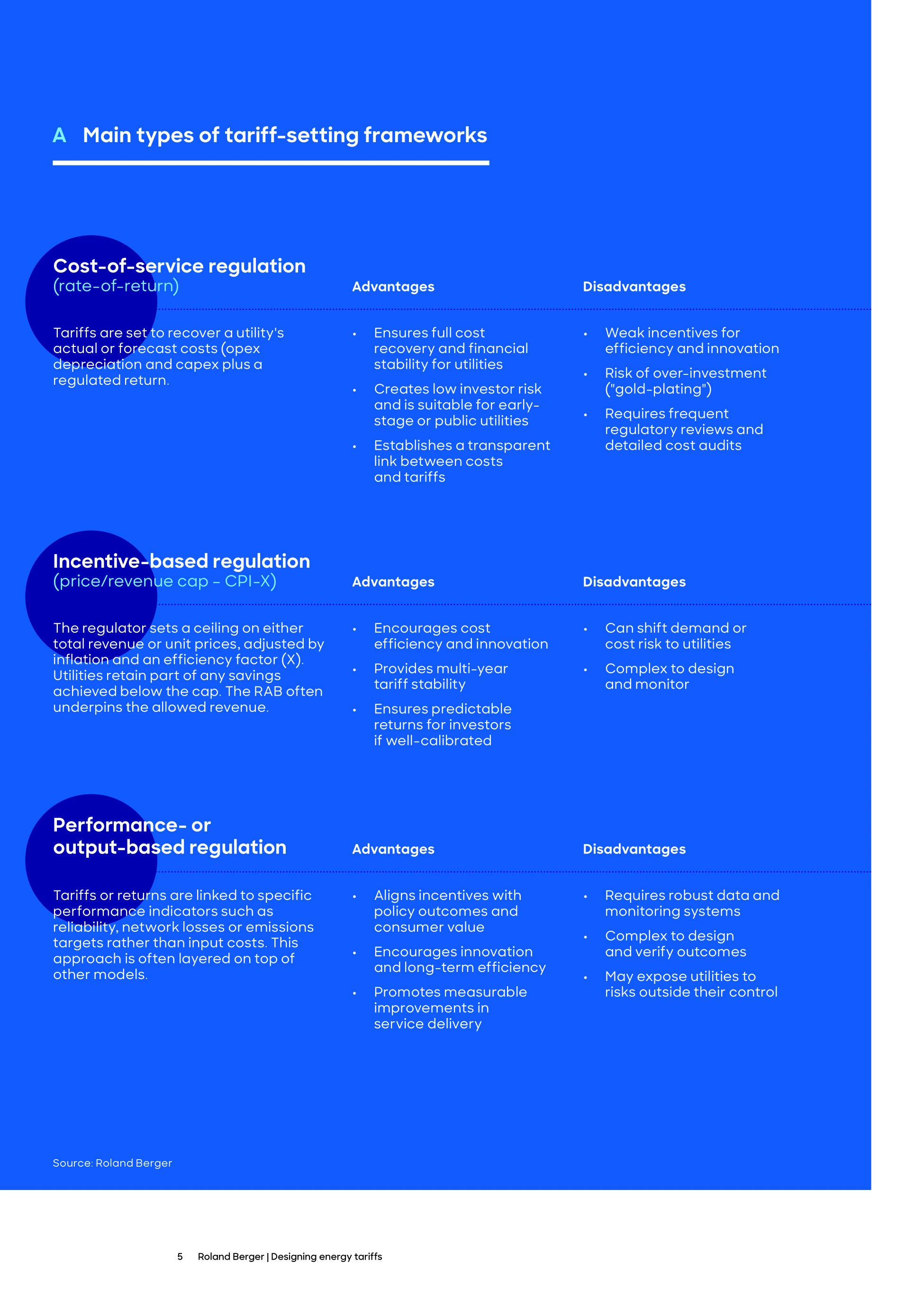
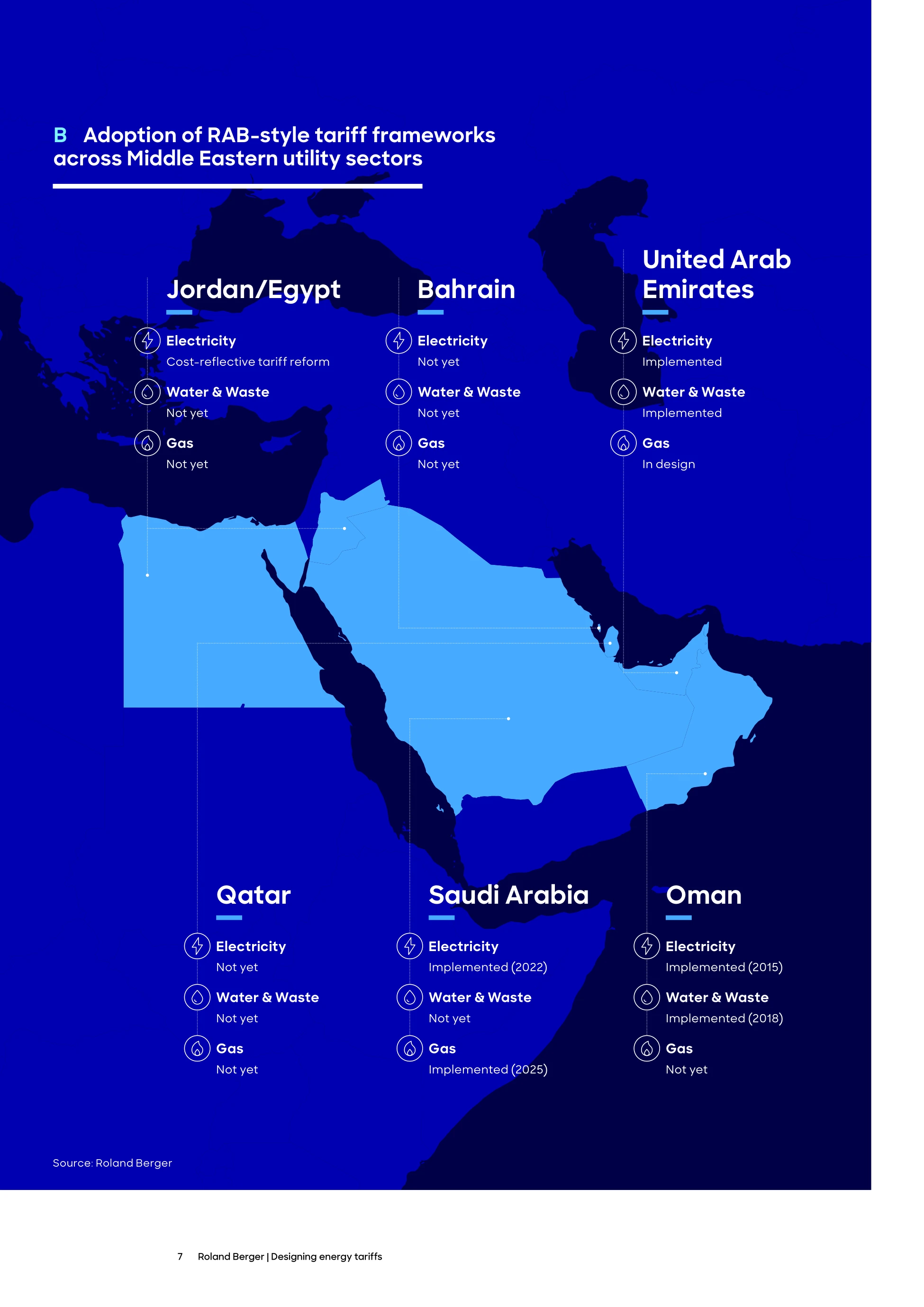
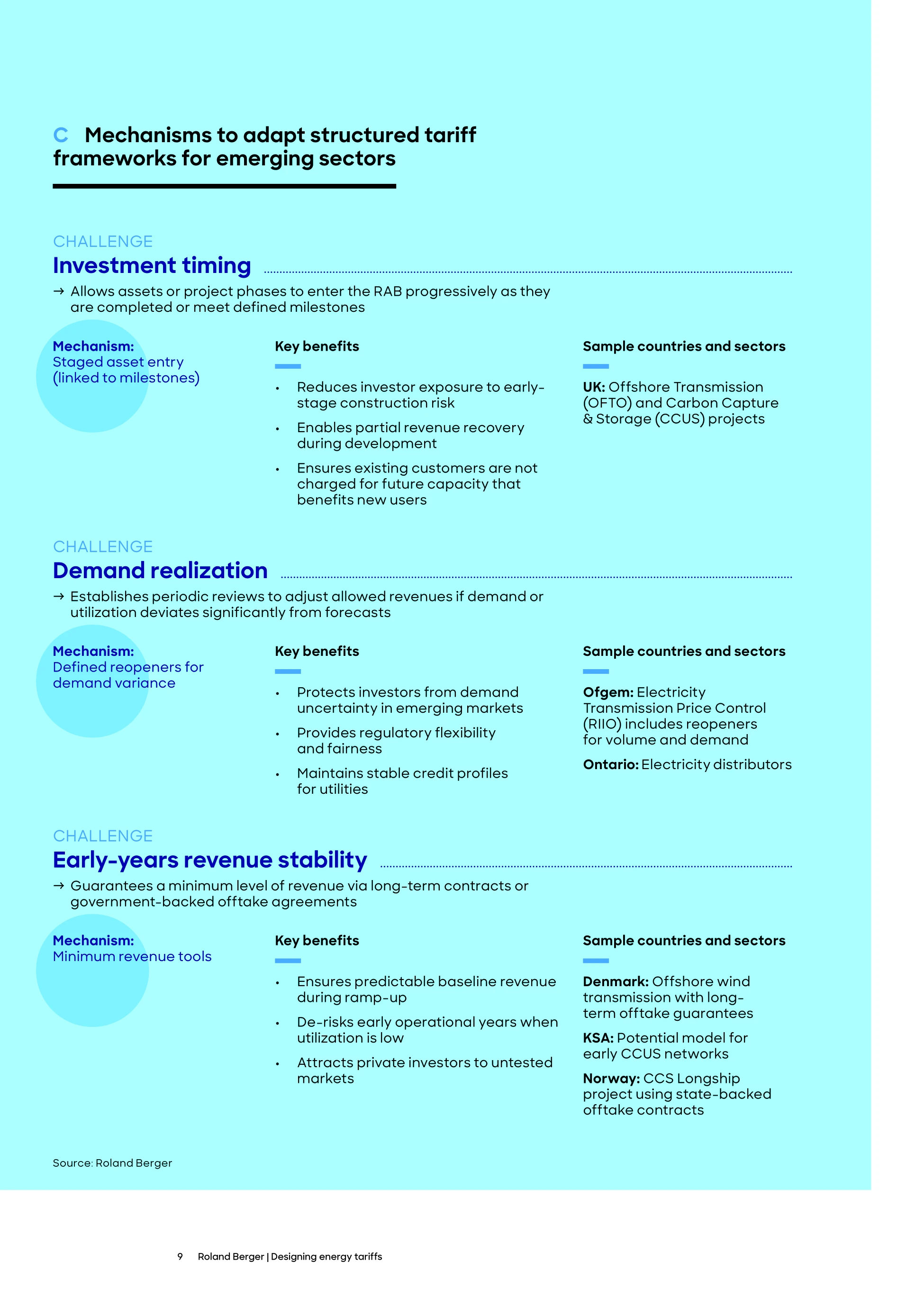
Designing pricing frameworks that enable investmentREPORTTurning policy ambition into viable projects in the Middle East and beyondTariff frameworks for utility services in the Middle East are designed to balance affordability for consumers with financial viability for operators and attractiveness for investors. Achieving this balance is essential for delivering capital-intensive networks such as electricity, water and gas among other sectors – assets that underpin public welfare and competitiveness.For many years, tariff setting relied on ad hoc, project-specific negotiations between authorities and utility operators. The result was volatility and limited transparency. Regulators have since moved toward rules-based frameworks that provide greater predictability and stability. These include cost-of-service regulation, incentive-based models such as CPI-X and RAB and performance- or output-based regulation.Structured tariff models such as these are particularly effective in the Middle East, where state-led sectors and large-scale infrastructure investment is essential. Affordability is best protected through subsidies or direct support for low-income consumers rather than cross-subsidies. Even where data gaps persist, regulators can maintain confidence through periodic reviews and adjustments.When it comes to implementation, design is crucial. Transparent rules for capital investment and asset entry help translate policy into bankable projects. Financial parameters such as the weighted average cost of capital must balance investor returns with consumer affordability. Mechanisms that manage demand uncertainty and early-years risk, such as staged asset entry into RAB and defined reopeners, are critical for emerging sectors where utilization remains uncertain.Mature sectors like electricity, water and gas benefit from standardized frameworks, while newer areas such as carbon capture and district cooling need greater flexibility and risk-sharing. By embedding scenario analysis and sensitivity testing in tariff reviews, regulators can anticipate delays or demand shocks and adjust proactively.Looking ahead, it is important that frameworks remain closely aligned with policy. As sectors mature, tariff models should evolve. Roland Berger's holistic approach connects customer tariffs and operator revenues in a coherent framework, stress-tested with stakeholders to ensure fiscal discipline and in so doing turns tariffs into an effective instrument for moving infrastructure from concept to reality.Cover: Rangsarit Chaiyakun/iStockManagement summary2 Roland Berger | Designing energy tariffsContents 1 2 3 4 5 The tariff challengeMaking rule-based tariff models work in the Middle EastImplementation challenges in mature versus emerging sectorsThe value of scenario thinking in tariff designThe path forwardOur approach to tariff setting46101011 14Page3 Roland Berger | Designing energy tariffsThe tariff challe...