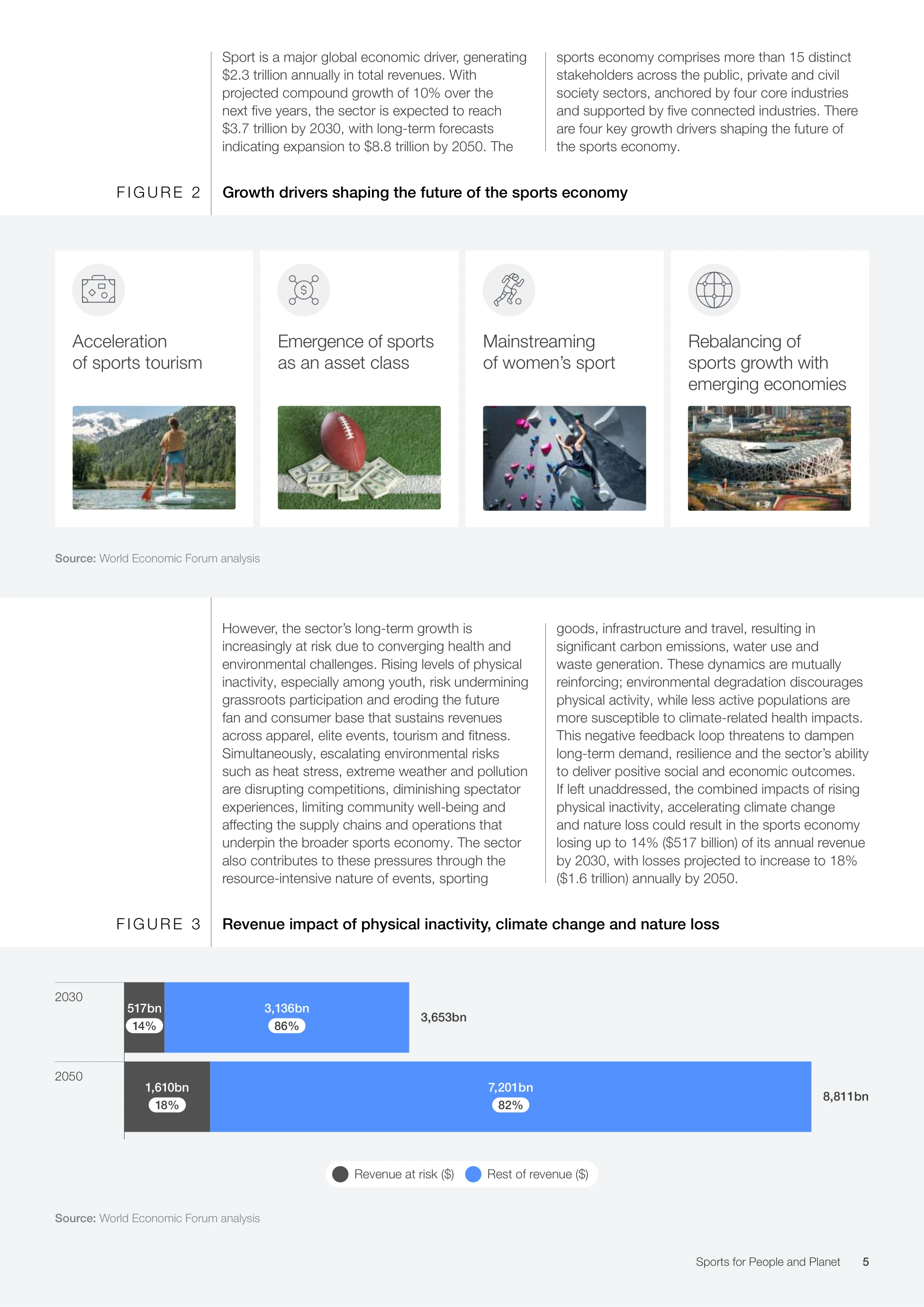
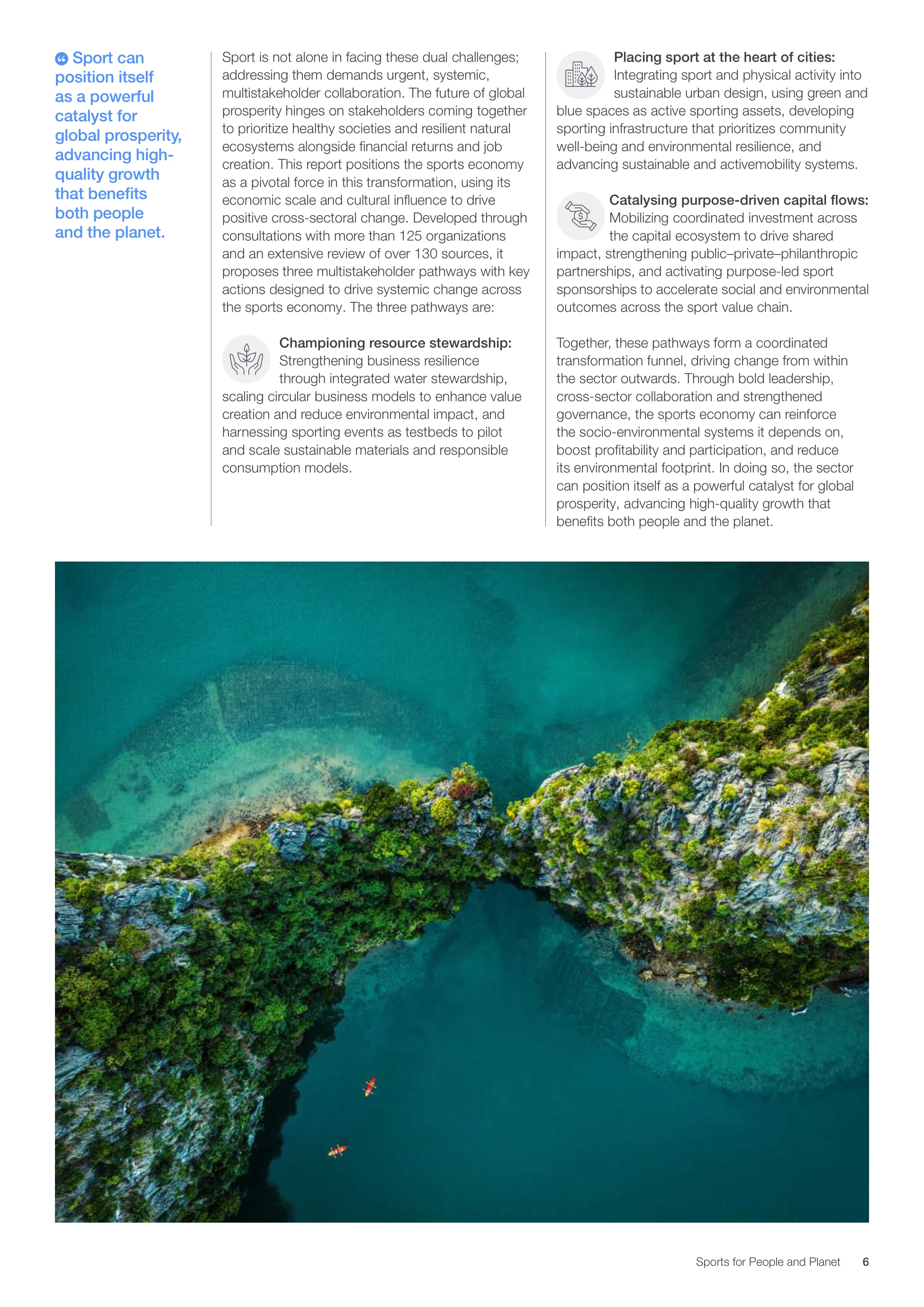
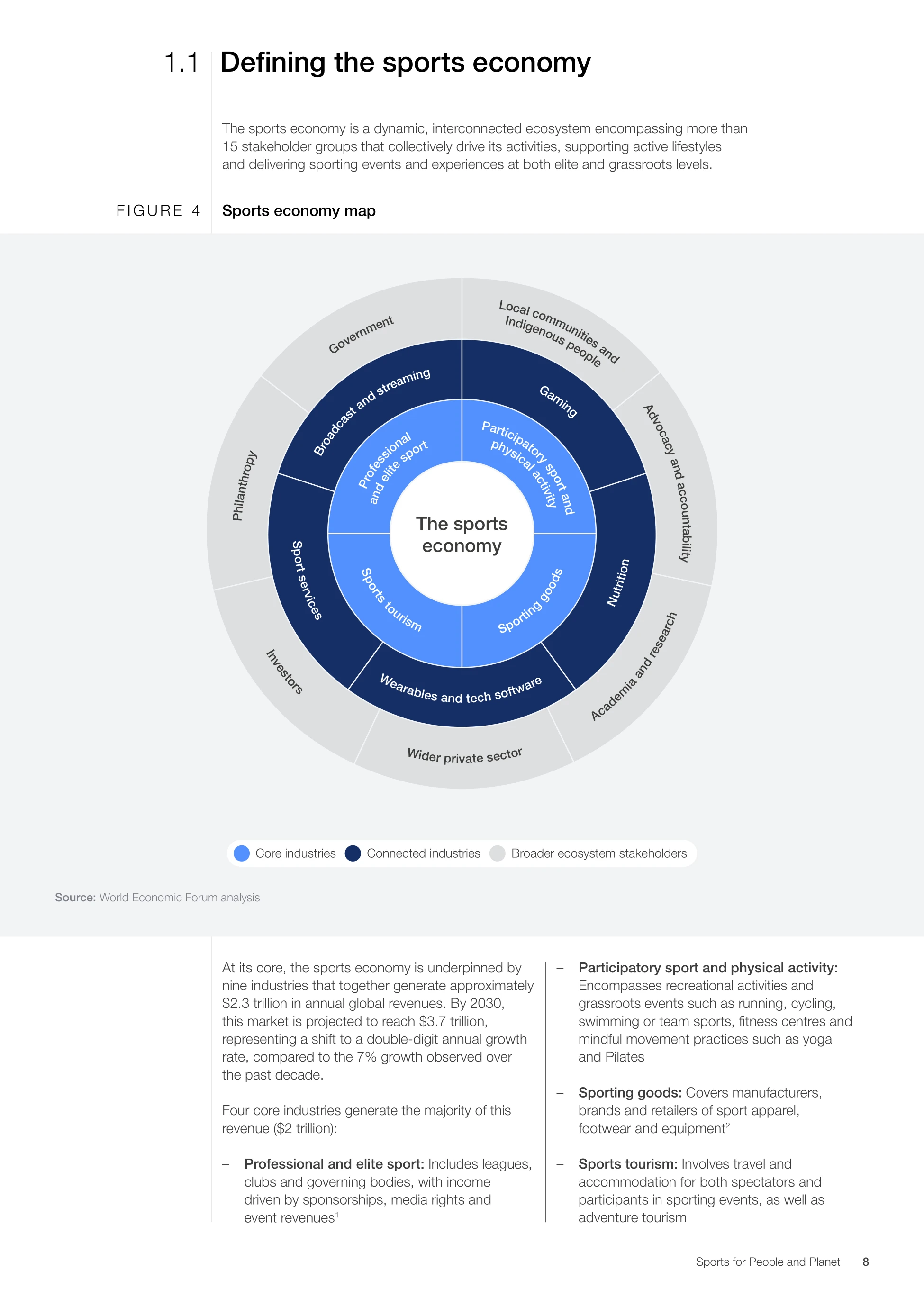
Sports for People and PlanetI N S I G H T R E P O R TJ A N U A R Y 2 0 2 6In collaboration with Oliver WymanImages: Adobe Stock, Getty ImagesDisclaimer This document is published by the World Economic Forum as a contribution to a project, insight area or interaction. The findings, interpretations and conclusions expressed herein are a result of a collaborative process facilitated and endorsed by the World Economic Forum but whose results do not necessarily represent the views of the World Economic Forum, nor the entirety of its Members, Partners or other stakeholders.© 2026 World Economic Forum. All rights reserved. No part of this publication may be reproduced or transmitted in any form or by any means, including photocopying and recording, or by any information storage and retrieval system.ContentsForeword 3Executive summary 41 Setting the context – the sports economy today 71.1 Defining the sports economy 81.2 Growth drivers shaping the future 121.3 Converging risks to the sports economy’s 15 growth: Health and environment 2 Pathways to prosperity 22Pathway 1 Championing resource stewardship 23Pathway 2 Placing sport at the heart of cities 27Pathway 3 Catalysing purpose-driven capital flows 32Conclusion 35Contributors 36Endnotes 37Sports for People and Planet2ForewordSport is one of humanity’s most powerful social and economic forces – shaping culture, health and community life across the globe. It evokes a multitude of images: watching athletes at the Olympic and Paralympic Games, a weekend hike in the mountains or a childhood ball game with friends. Few fields have such a profound influence on culture and community, uniting people across borders and backgrounds. Today, the sports economy is a fast-growing, multitrillion-dollar ecosystem powering global sporting mega-events, adventure tourism, sporting goods and equipment, and active lifestyles. It unlocks business opportunities, drives trade, creates jobs and enhances workforce productivity. This potential is especially significant in emerging markets, where sport serves as a catalyst for economic and social development. For millennia, sport has connected humanity and nature – on fields, in oceans and atop ski slopes. Far beyond entertainment and elite competition, it is a vital force for health, inclusion and connection: a microcosm of the systems that shape how societies thrive. Yet rising health and environmental risks, from sedentary behaviour and extreme heat to air and water pollution, threaten not only the growth of this dynamic economy but also its positive impact on people and communities. A thriving sports economy is inseparable from a thriving natural environment; the two are fundamentally intertwined. The ability of sport to inspire, unite and drive well-being depends on the health of the environments in which it takes place. At the same time, the sector faces a ...










































