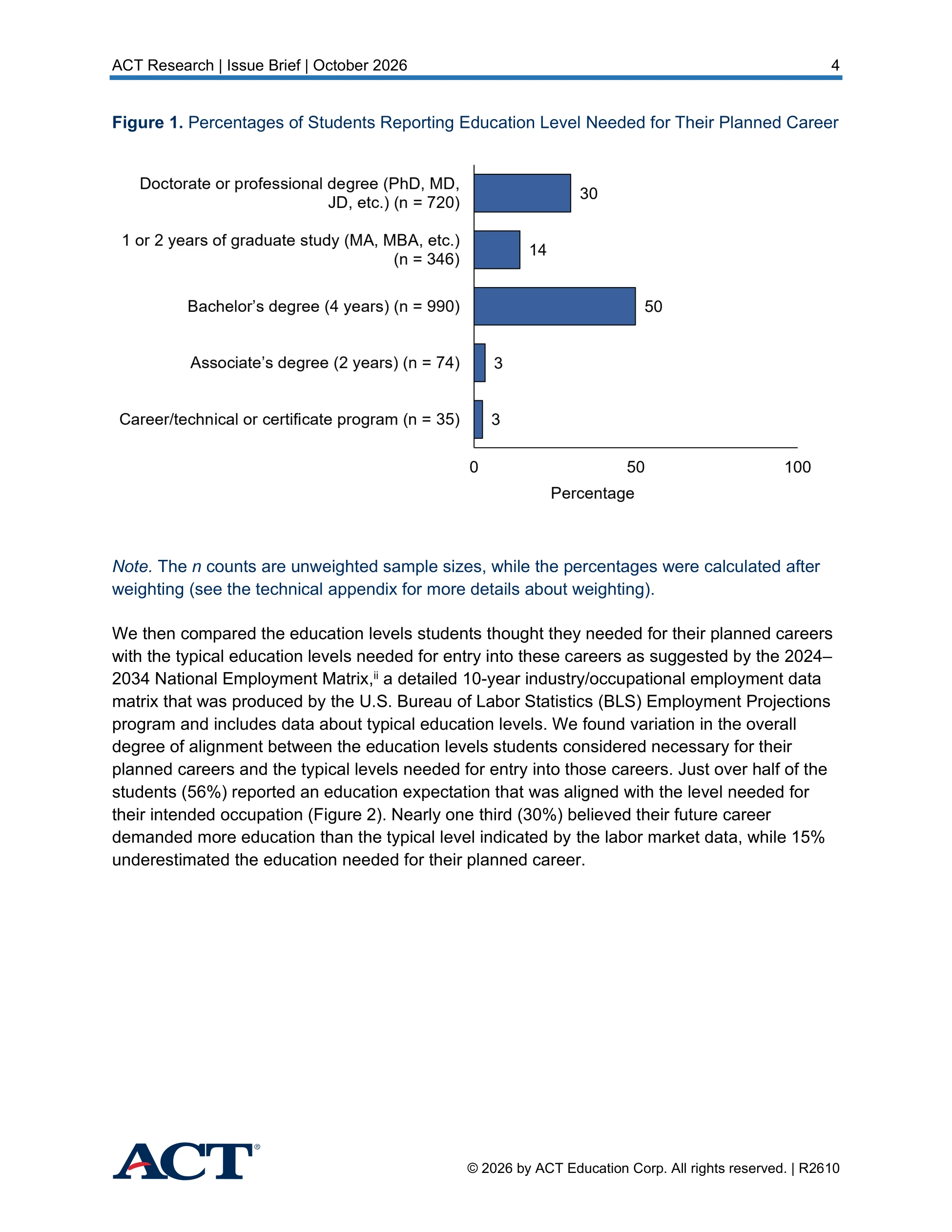
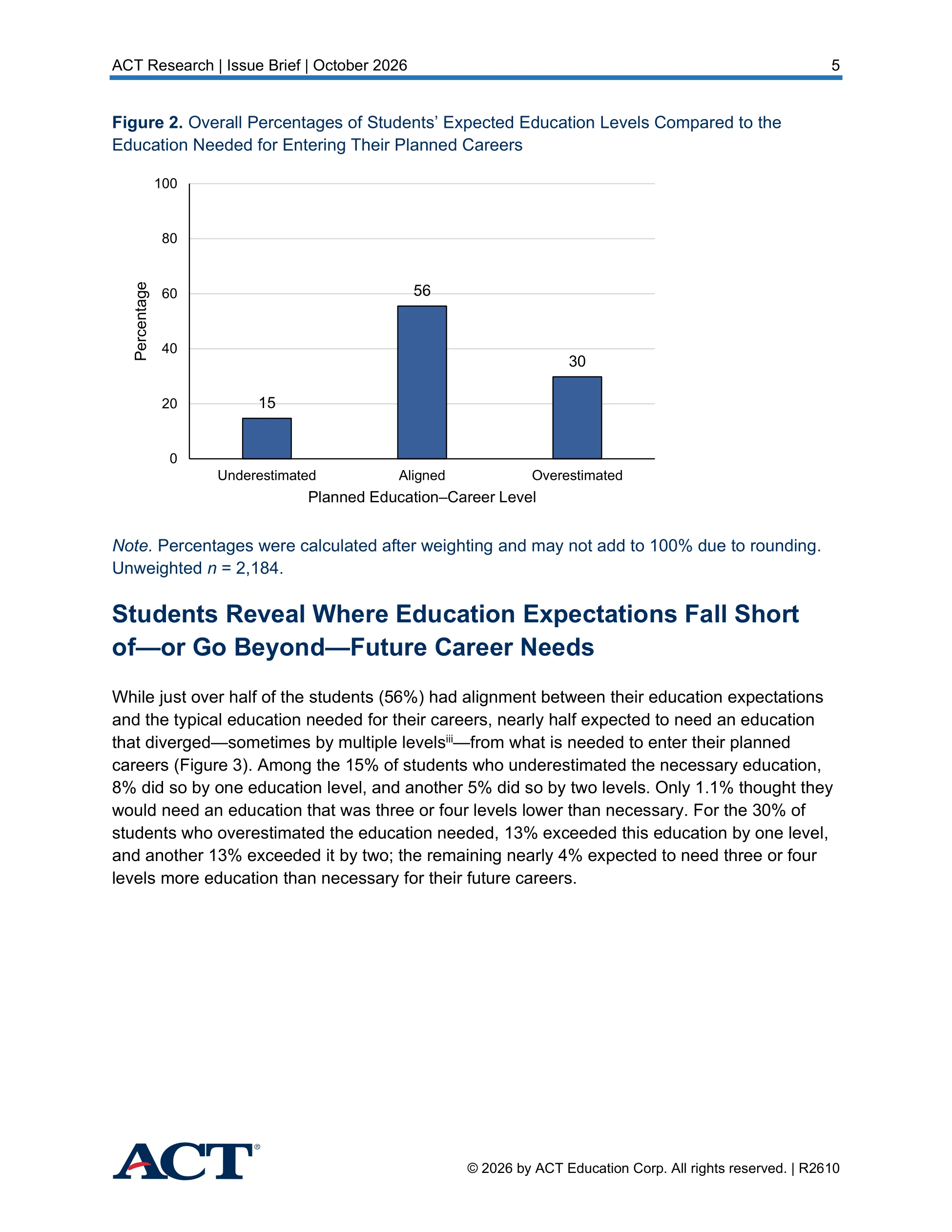
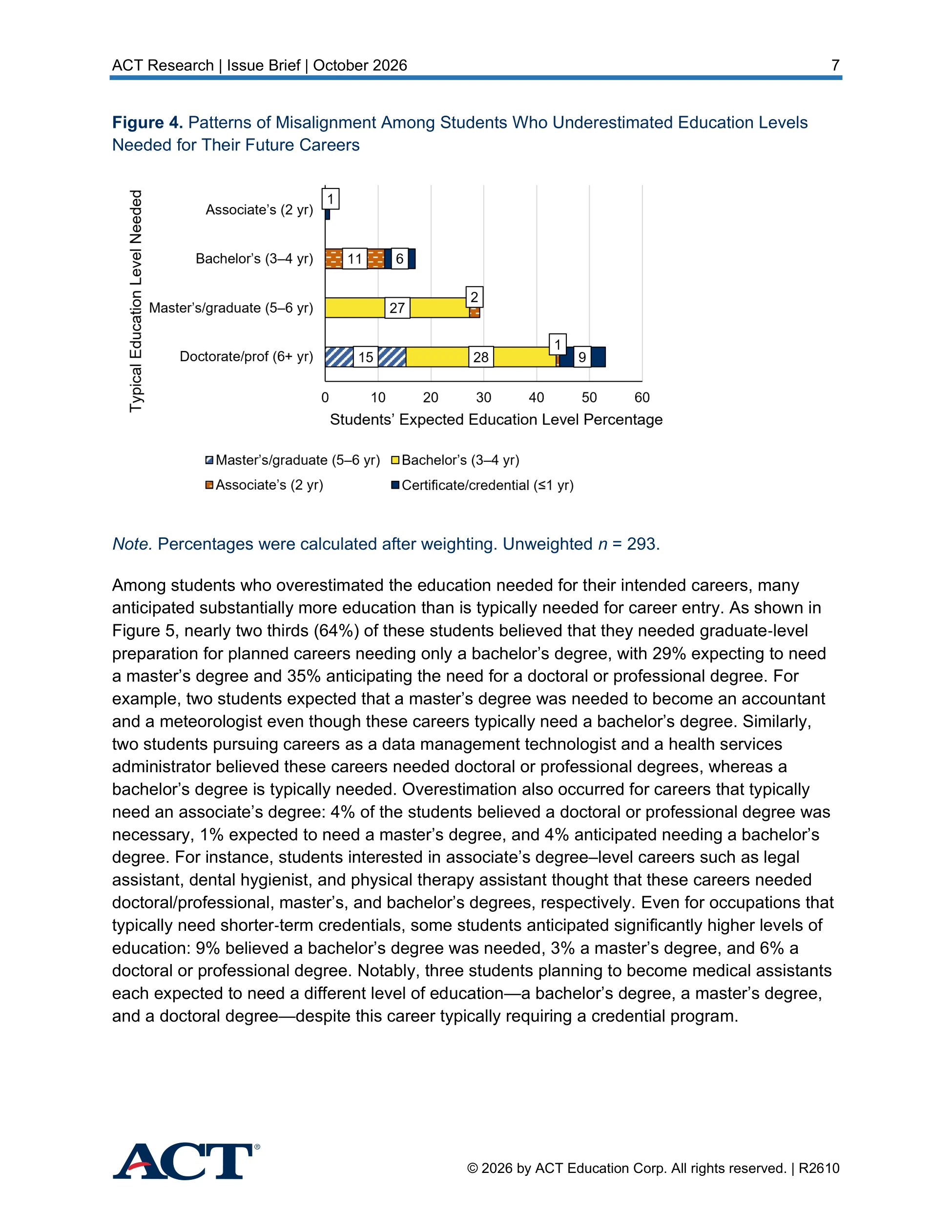
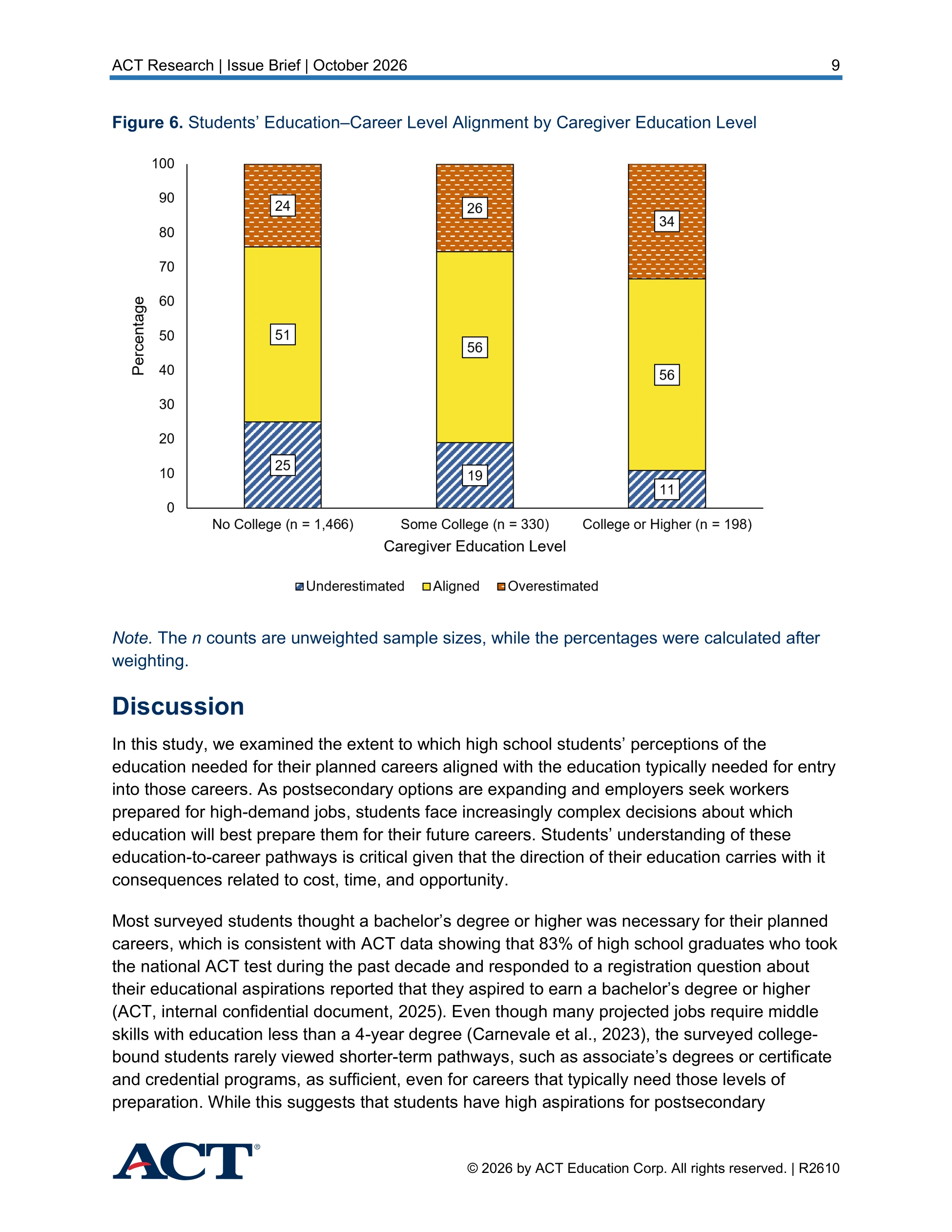
ACT Research | Issue Brief | October 20261 Education Paths to Careers: How High School Students’ Expectations Compare to Career Needs Becky L. Bobek, Joyce Z. Schnieders, and Alex Casillas Introduction As students prepare to graduate from high school, many are considering postsecondary education or envisioning a specific career path. They may also be trying to determine which educational pathway will best support their goals. Choosing the best path can be challenging, especially as the education landscape and the workforce continue to shift, with postsecondary institutions offering more degree and credential options than in the past, as well as employers seeking to meet labor market needs more quickly while still ensuring a skilled and appropriately educated workforce. These changes make it more critical than ever to understand how well students’ educational expectations align with their career plans and to support them in identifying the education needed for the careers they intend to pursue. Postsecondary enrollment has increased across degree types, with bachelor’s programs up 2.1%, associate’s programs up 6.3%, and certificate programs up 4.8% between spring 2024 and spring 2025 (National Student Clearinghouse, 2025). Longer-term projections from Irwin et al. (2024) also indicate further increases by the 2030–2031 academic year: Associate’s degrees are expected to rise by 38%, bachelor’s by 20%, master’s by 17%, and doctorates by 16%. Meanwhile, rising college costs, uncertainty about the return on investing in a degree, and employers’ growing need to fill high-demand jobs more quickly have contributed to rapid growth in alternative postsecondary education options. For example, more colleges are shortening some traditional 4-year bachelor’s degree programs to 3 years, trimming required credits for completion and reducing the time it takes students to enter the workforce (Marcus, 2026). Dual mission institutions—those offering combinations of credentials, associate’s degrees, and bachelor’s degrees—are also becoming more common (Committee for Economic Development, 2024). Enrollment in certificate and credential programs rose nearly 10% in 2024 and has increased 29% since 2019 (Irwin et al., 2024). Students also have access to more nondegree credentials, including micro-credentials—earned through short programs targeting specific skills—and certificates, with more than one million such credentials offered nationwide by over 50,000 providers (Credential Engine, 2022). Further, apprenticeships are on the rise, with U.S. registered apprenticeships increasing by 3.9% from 2024 to 2025 and 678,000 active apprentices overall (U.S. Department of Labor, Employment and Training Administration, 2025). These developments illustrate an increasingly complex postsecondary landscape, one that © 2026 by ACT Education Corp. All rights reserved. | R2610ACT Research...










































