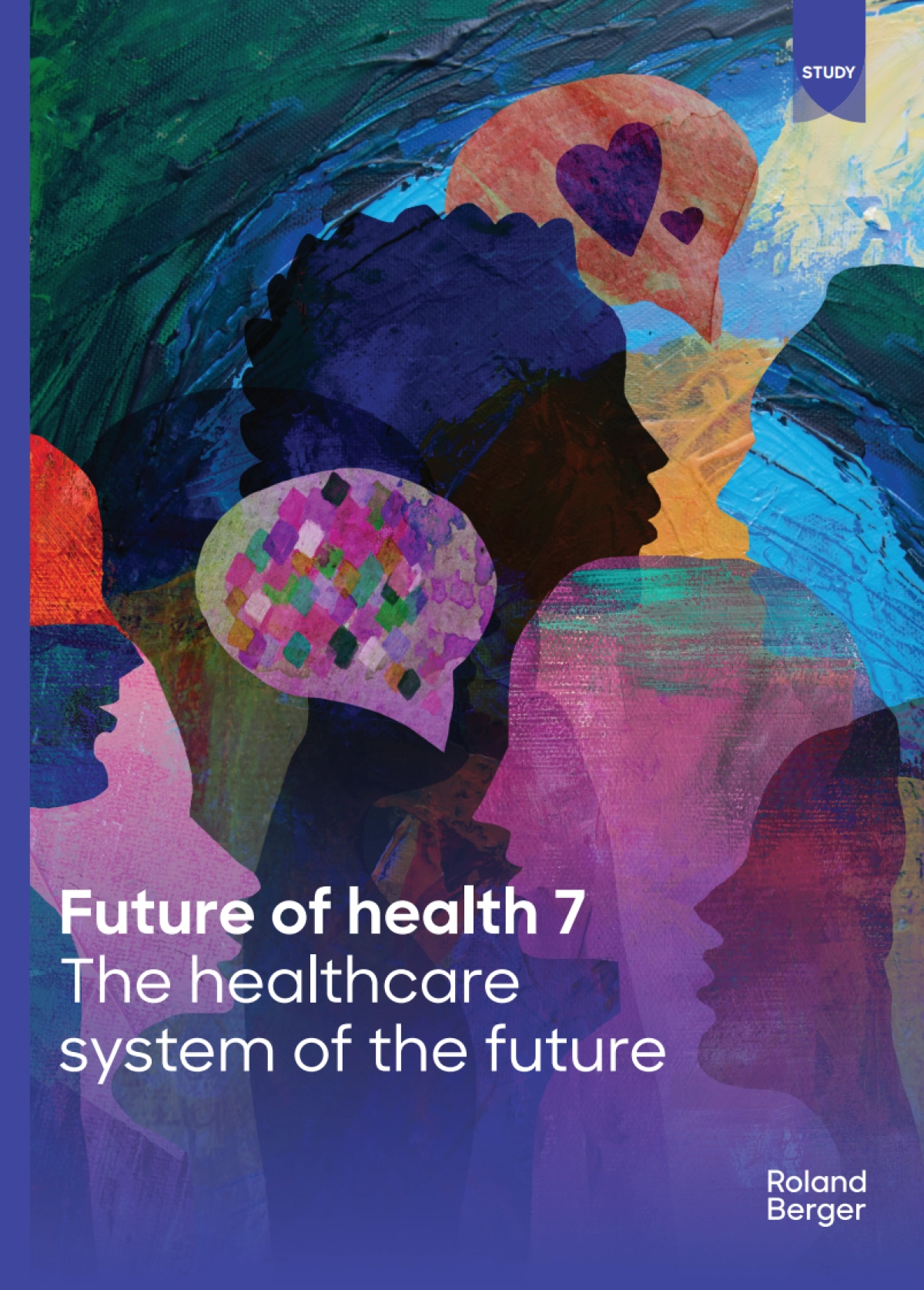
STUDYFutureofhealth 7The nealthcaresystem of the futureRolandBerger
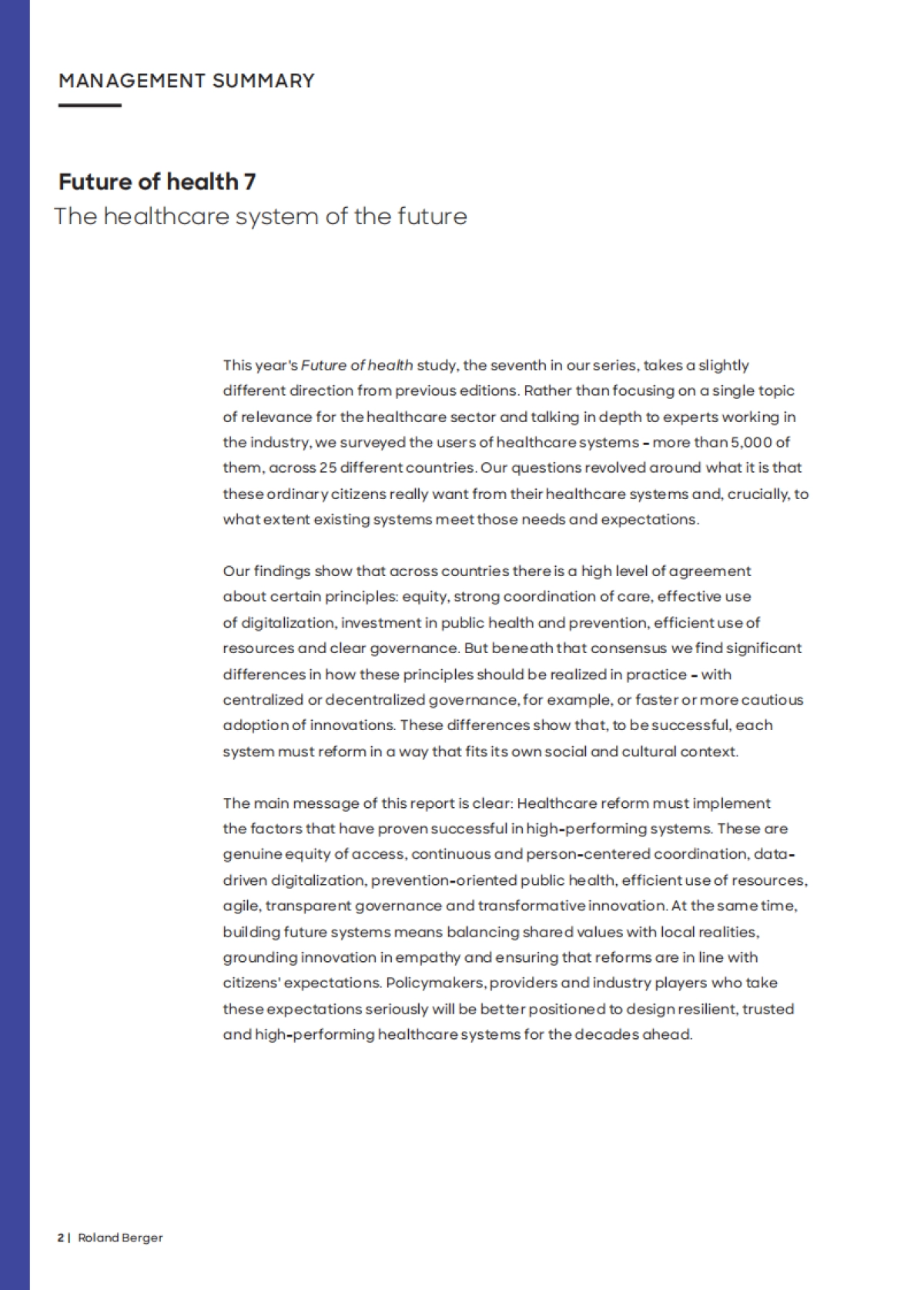
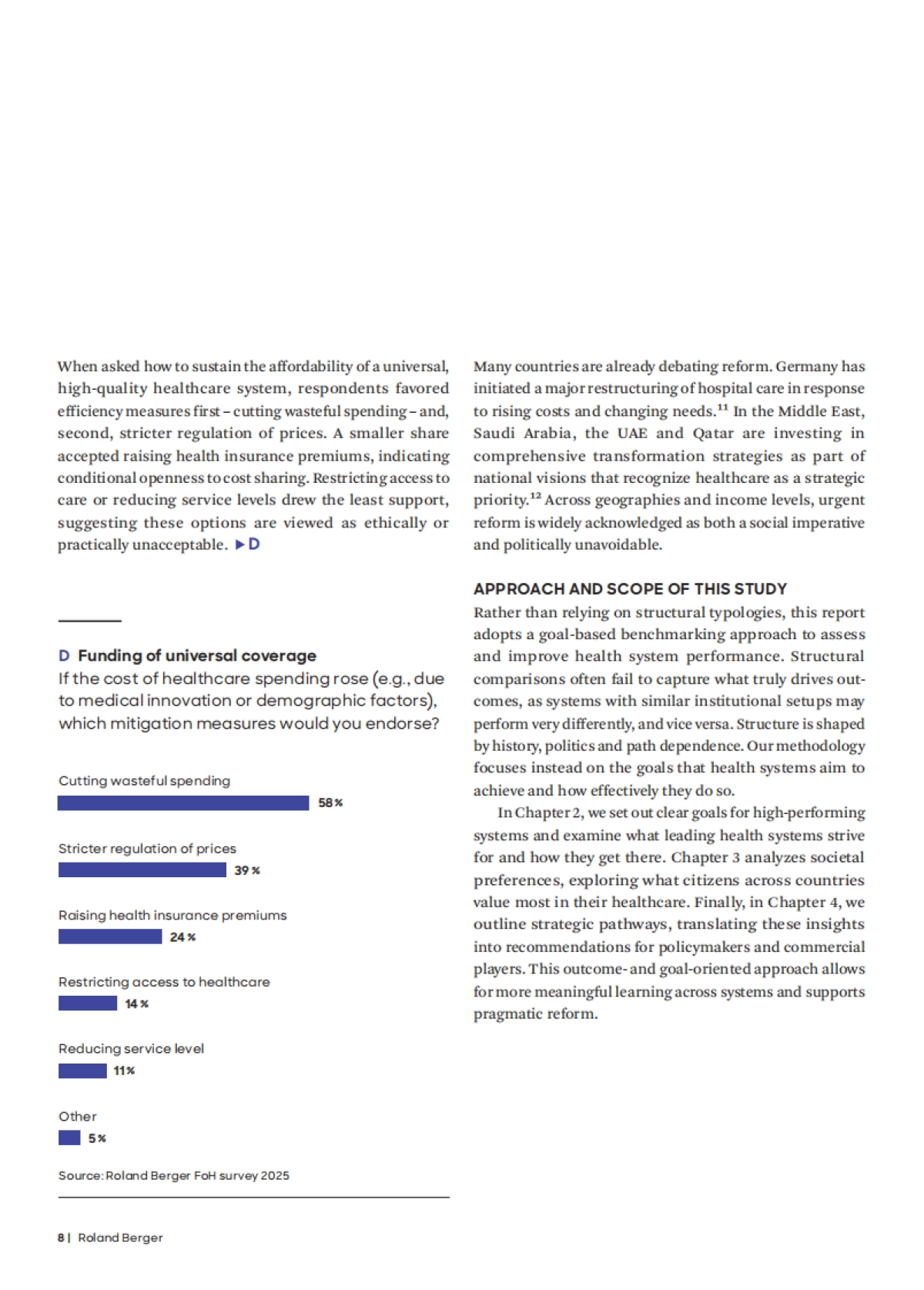
MANAGFMENTSUMMARYFutureof health7The healthcare system of the futureThisyer'sFatureofhealthstudly,theseventhinourseries,tokesaslightydifferentdirection frompreviouseditions.Ratherthanfocusingonasingle topicofrelevanceforthehealthcaresectorandtalkingindepth toexpertsworking intheindustrv.wesurvevedtheusersofhealthcaresvstems-morethan5.000 ofthem,across25 differentcountries. Our questionsrevolved around what itis thattheseordinarycitizensreallywantfrom their-healthcare systems and,cruaially, towhatextent existing systems meet those needs and expectations.about certainprinciples:equity,strongcoordination ofcare, effective useofdiaitalization. investmentinoublichealthandorevention.efficientuseofresourcesandcleargovernance.Butbeneaththatconsensus welfindsignificantrdecentralizedaovernance.forexamole.orfasterormorecautiousadoption of innovations. These differencesshow that, to besuccessful, eachsystemmustreforminawaythatfitsitsownsocialandculturalcontextereformmustimplementcenteredcoordination, data-drivendigitolization,prevention-orientedpublichedlth,fficientuseofresourcesagile,trnsparentgovernance andransforativeinovation.Atthesametime,ans balancina shared values withlocal realitiesgthat reformsareinline withs and industry players who takeusly will be better positioned to designresilient, trustedandhigh-performinghealthcaresystersforthedecadesaheac>1RolandBerger
ContentsP4Thecaseforanewperspective1/RethinkingsystemsforachanginghealthlandscapeP92/PursuingexcellenceWhatleadinahealthsvstemsstrive for and how thev aet thereP233/SocietalpreferencesGlobal perspectives on fairness. access and choiceP424/StrategicpathwaysFromsvstemaoalsandsociatalbraferencastoactiorso6ougA11eg/voplosopoydsanogThe hedthcaresystemofthefuture|3
The case foranew perspectiveRethinkingsystemsforachanginghealth landscape1
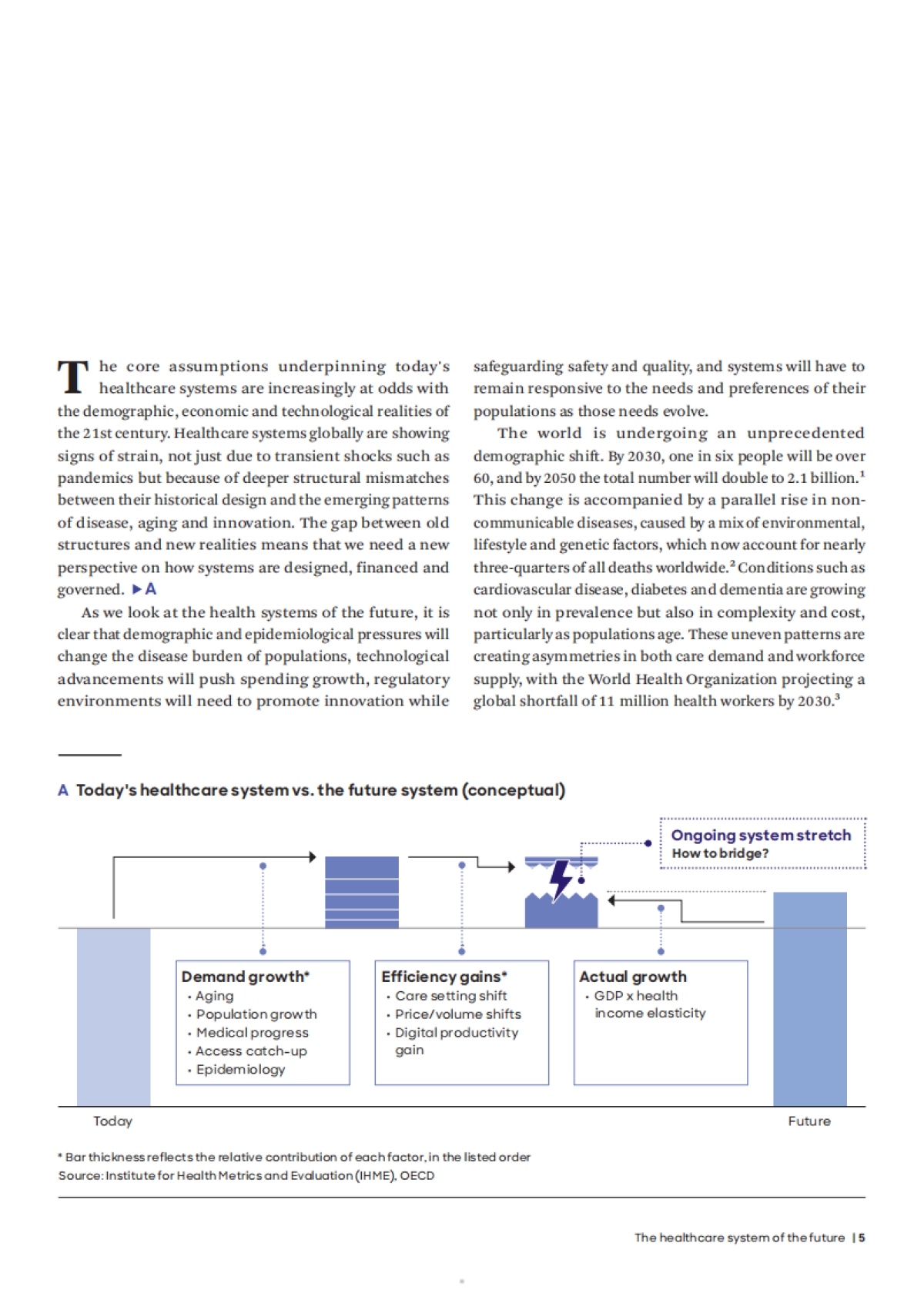
he core assumptions underpinning today's safeguarding safety and quality, and systems will have to healthearesystems are increasingly at odds with remainresponsive to the needs and prerences of theitpopulations as thoseneeds evolve.the 21stcentury. Healthcare systems globally are showingsigns of strain, notjust due to transient shocks suchhographic shift. By 2030, one in six people will be oveof disease, aging and innovation.The gap bet wessuchasclear that derchange the disease burden ofpopulations, technolocicatadvancements will oush spendine erowth. reculatoranizationprojectingaenvironments will need to promote innovation whileA Today'shealthcaresystemvs. the futuresEfficiencygains*AgingCaresettingshift.GDP xhealthPopulationgrowthPrice/volumeshiftsincomeelasticityMedicalprogressDigitalproductivitygainEpidemiologyTodayFutureBr thickesrflectstherelative contribution of eachfactor,inthelisted orderSource:InstituteforHealthMetricsandEvaluation(IHME),OECD
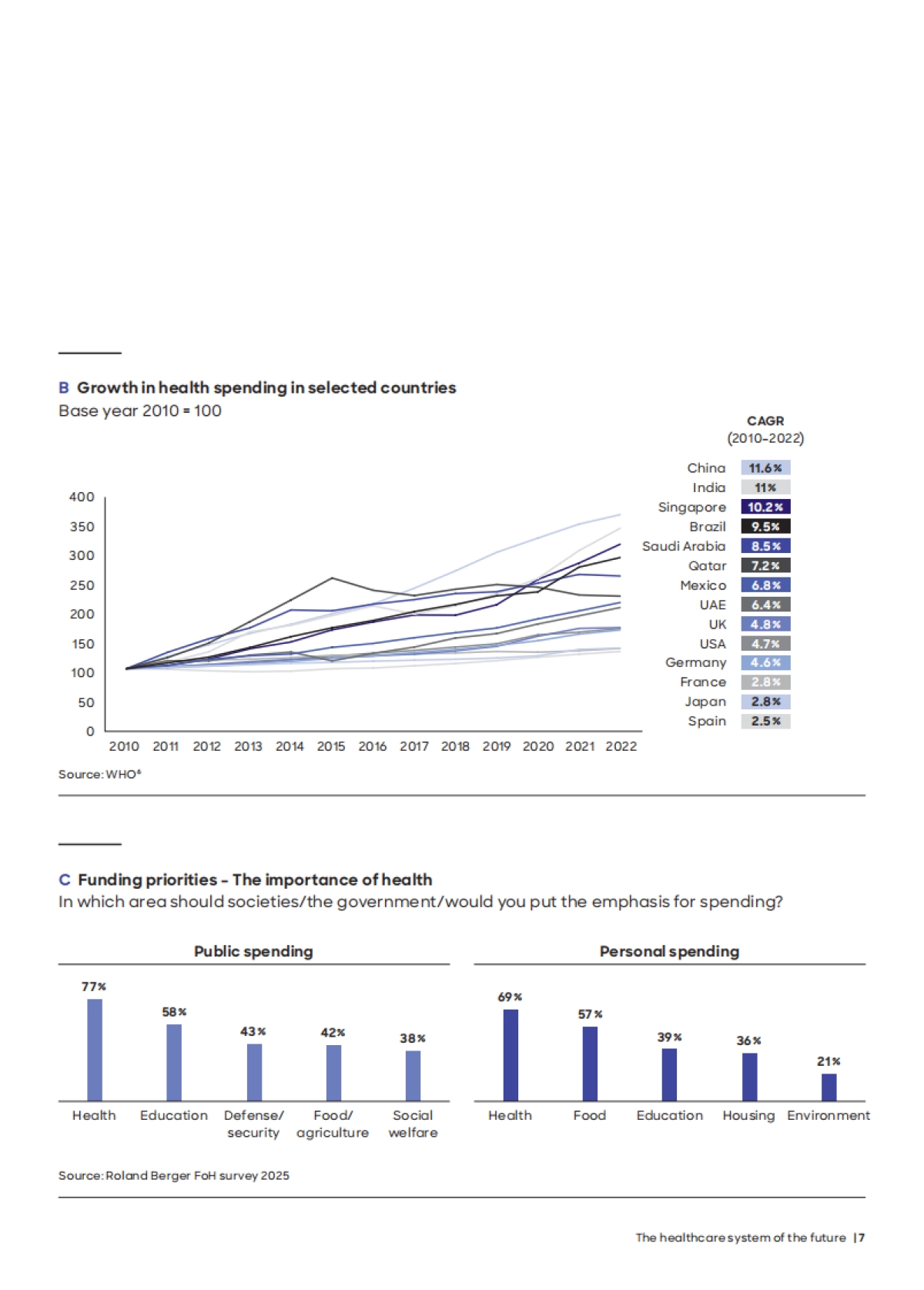
Healthcare spending is rising faster than economic To meet these challenges and harness new thinking growth in many regions. In the United States healthereealth officials are calling forfundamental reform.As onexpenditure grew at a CAGR of4.7 percent betweemment...