
热门文档
- 2025-04-21 11:02:12 2025年中国宠物行业白皮书
- 2024-11-17 13:23:03 Mckinsey:2024中国消费趋势调研
- 2025-06-17 17:31:50 2024中国医疗器械行业发展报告
- 2024-07-31 22:30:59 城市飞行营地总体规划及主题体验区概念设计规划案
- 2025-10-14 11:53:22 中国微短剧精品化发展研究报告(2025)-新京智库
- 2025-03-07 11:57:25 【剧星传媒】《哪吒2》资源推荐0205
- 2024-12-23 13:57:51 哩哔哩《灵笼2》招商方案
- 2025-01-16 15:13:48 2025年全新品牌屋框架模型
- 2024-10-13 08:47:52 联合国:2024世界投资报告
- 2024-05-19 21:59:54 2024小红书餐饮行业方法论
- 2025-05-13 10:34:19 中国茶叶品牌发展报告(2024)会
- 2025-06-10 15:18:07 2025年秋冬淘宝服饰白皮书-篆商业智库

1、本文档共计 184 页,下载后文档不带水印,支持完整阅读内容或进行编辑。
2、当您付费下载文档后,您只拥有了使用权限,并不意味着购买了版权,文档只能用于自身使用,不得用于其他商业用途(如 [转卖]进行直接盈利或[编辑后售卖]进行间接盈利)。
3、本站所有内容均由合作方或网友上传,本站不对文档的完整性、权威性及其观点立场正确性做任何保证或承诺!文档内容仅供研究参考,付费前请自行鉴别。
4、如文档内容存在违规,或者侵犯商业秘密、侵犯著作权等,请点击“违规举报”。
2、当您付费下载文档后,您只拥有了使用权限,并不意味着购买了版权,文档只能用于自身使用,不得用于其他商业用途(如 [转卖]进行直接盈利或[编辑后售卖]进行间接盈利)。
3、本站所有内容均由合作方或网友上传,本站不对文档的完整性、权威性及其观点立场正确性做任何保证或承诺!文档内容仅供研究参考,付费前请自行鉴别。
4、如文档内容存在违规,或者侵犯商业秘密、侵犯著作权等,请点击“违规举报”。
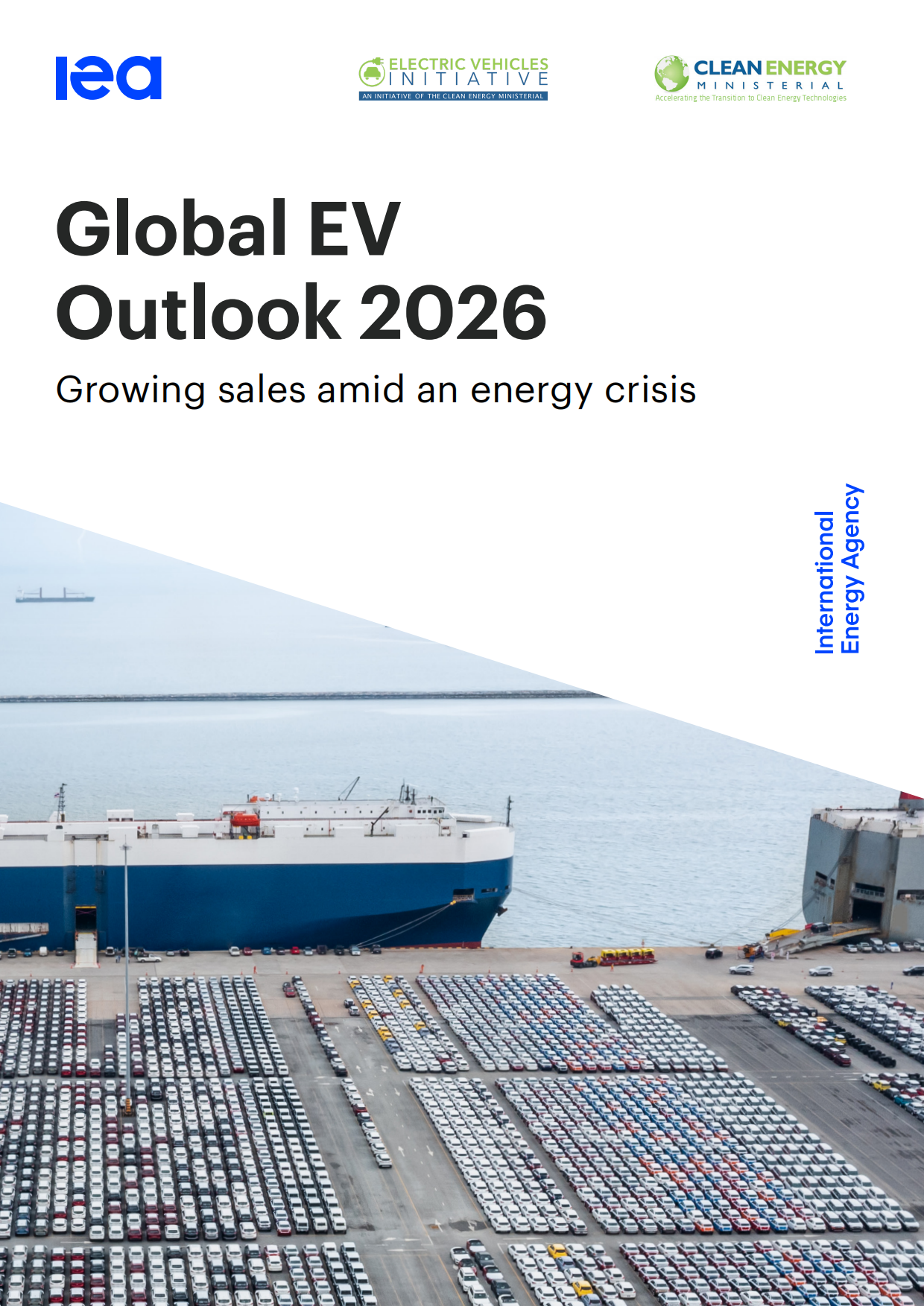
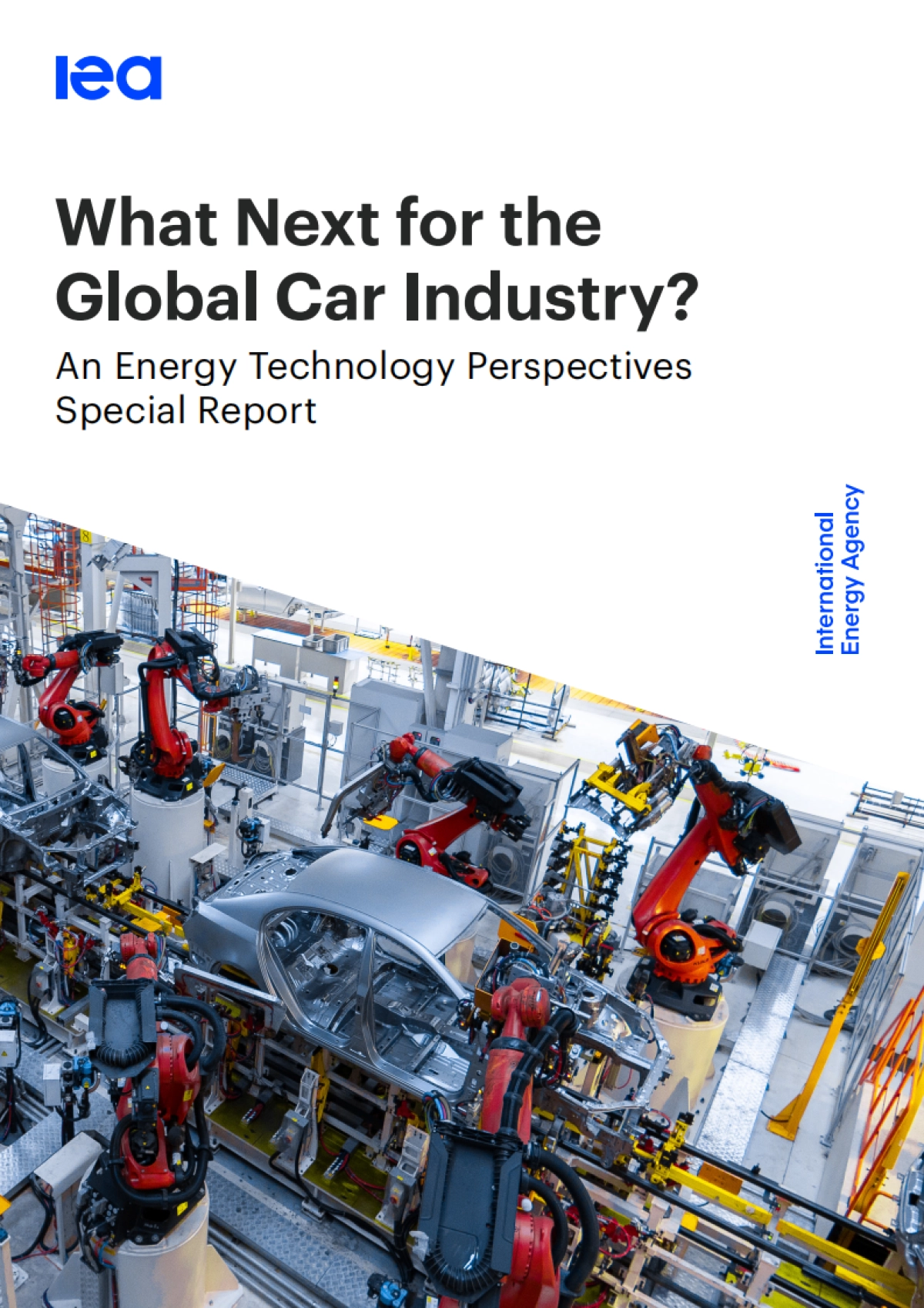
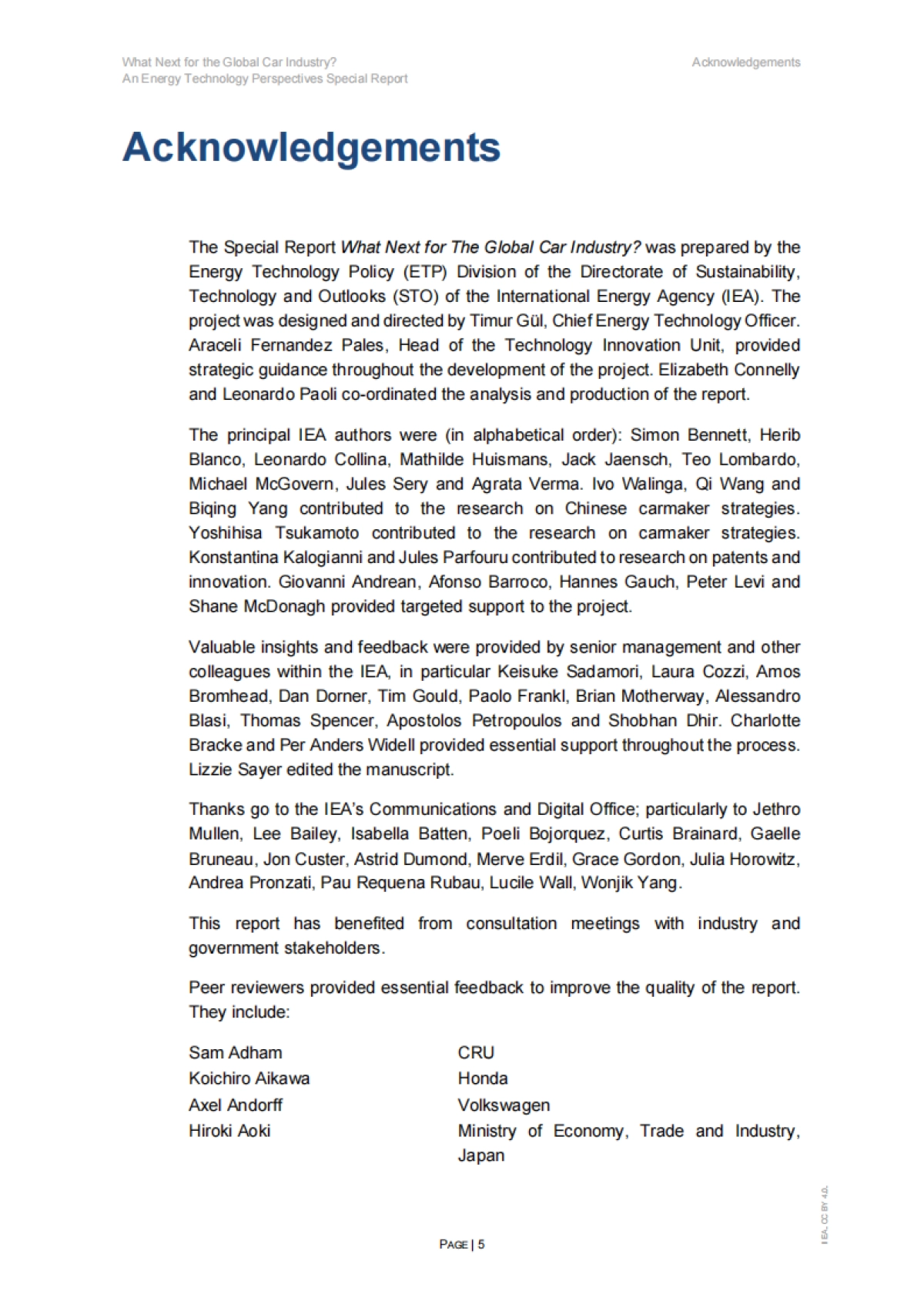
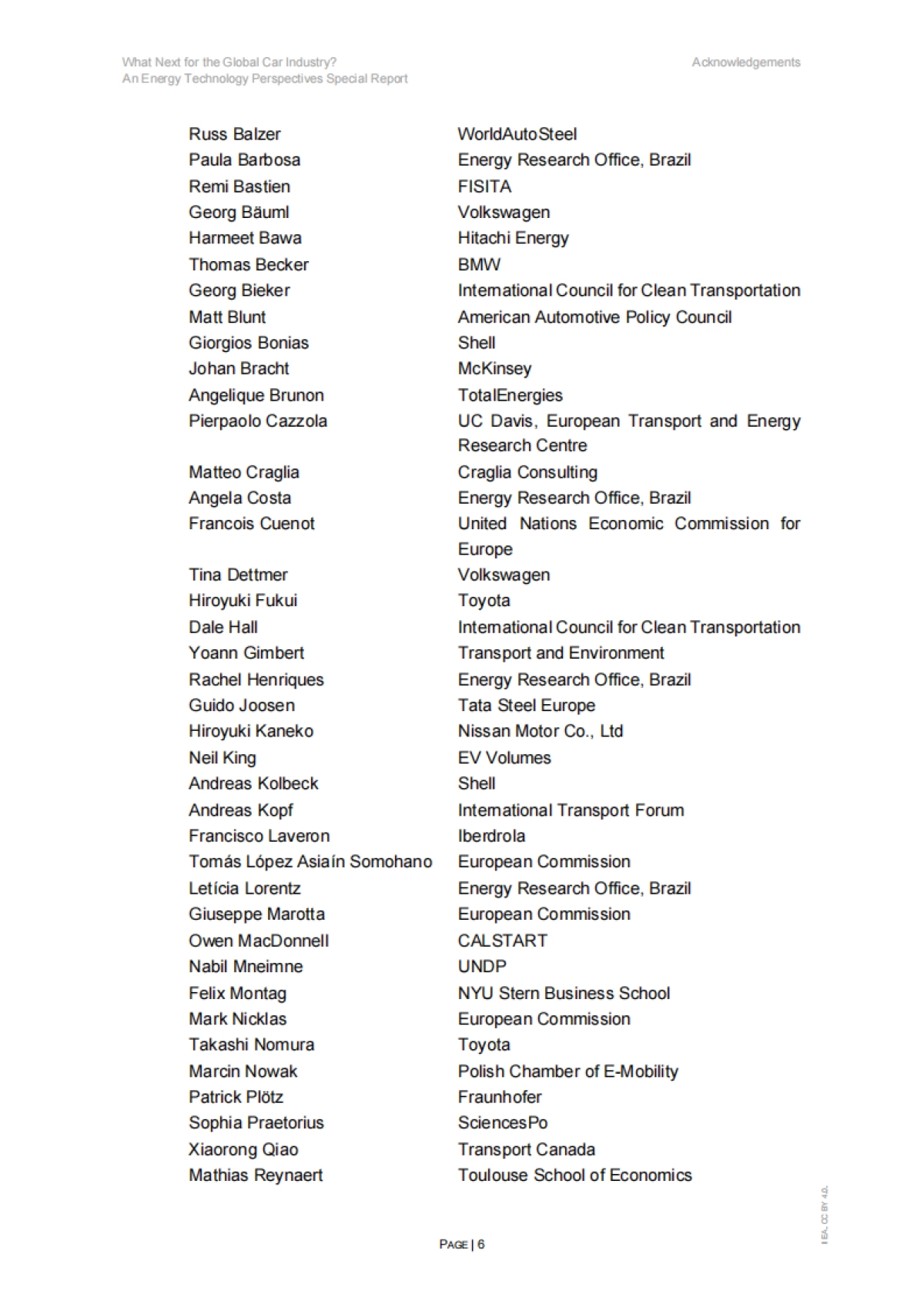
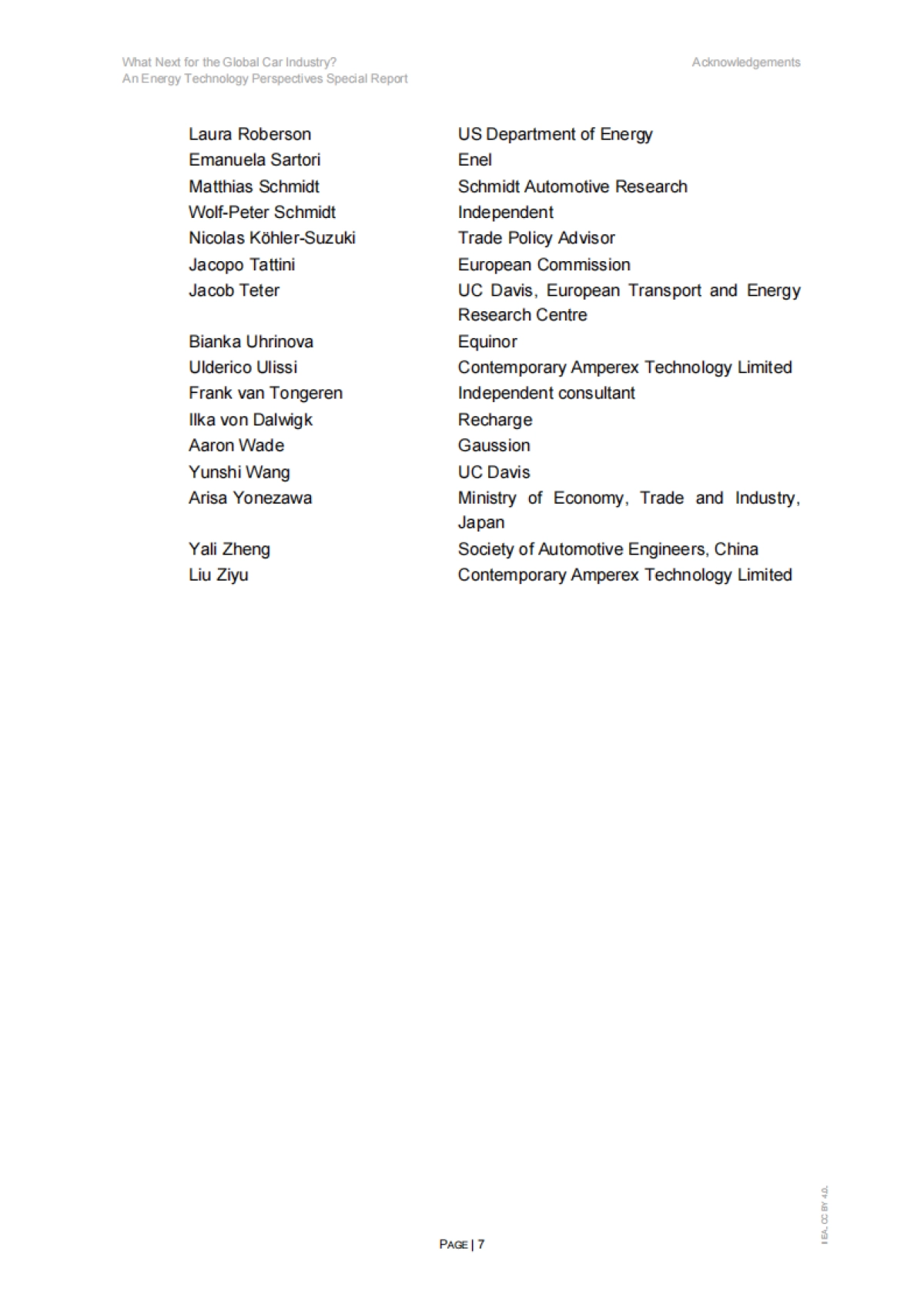
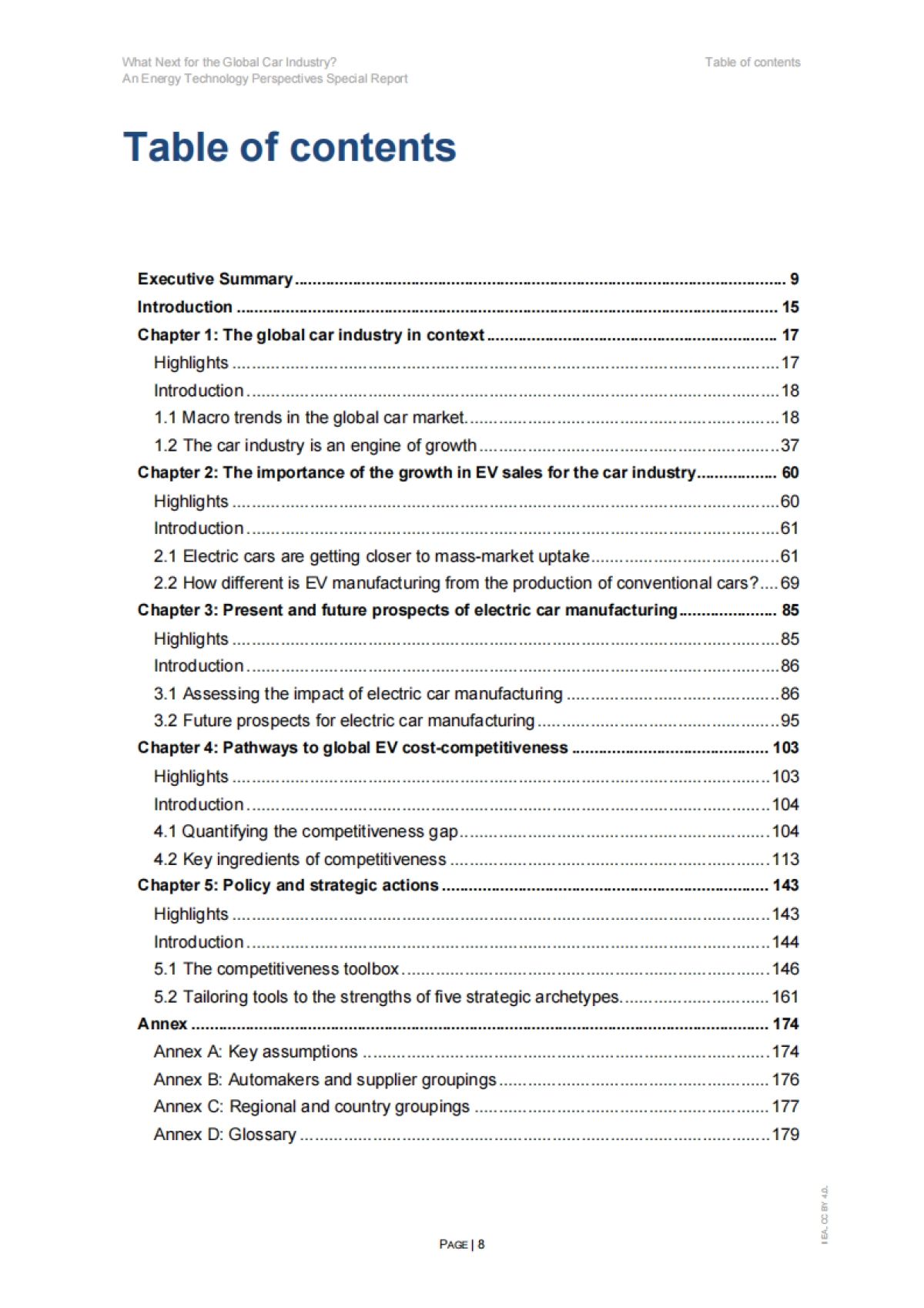
What Next for theGlobal Car Industry?An Energy Technology PerspectivesSpecial ReportINTERNATIONAL ENERGYAGENCYThe IEA examines the fullIEA MemberIEA Associationspectrumcountries:countries:of energy issuesincluding oil,gas andAustraliaArgentinacoal supply andAustriaBrazildemand,renewableChinaenergy technologiesBelgiumelectricity markets,CanadaEgyptenergy efficiency,Czech RepublicIndiaaccess to energy.DenmarkIndonesiademand sideEstoniaKenyamanagement and muchFinlandMoroccomore.Through its work,FranceSenegalthe IEA advocatesGermanySingaporepolicies that will enhanceGreeceSouth Africathe reliability,HungaryThailandaffordability andUkrainesustainability of energyin itsItaly32 Member countries.Japan13 Association countriesKoreaand beyond.LatviaLithuaniaLuxembourgMexicoNetherlandsNew ZealandNorwayPolandPortugalSlovak RepublicSpainSwedenSwitzerlandRepublic of TurkiyeUnited KingdomUnited StatesThis publication and any mapincluded herein are withoutThe EuropeanCommission alsoboundaries and to the nameparticipates in thework of the IEASouroe:IEA.leaWebsite:www.iea.orgWhat Next for the Global Car Industry?ForewordAn Energy Technology Perspectives Special ReportForewordIn modern history,few innovations have been more consequential than the carToday,cars are central to the lives of millions of people around the world.Themarket for cars is one of the largest for a single product,and this productrepresents the single largest source of oil demand,a key trend that theIntemational Energy Agency (IEA)has tracked closely for decades.What's more,car manufacturing is a pillar of the economy in many countries today,directlyemploying over 10 million people across the world-while supporting millions ofadditional jobs elsewhere in the supply chain,from steel and aluminium productionto component manufacturing.Yet as we look at the data,we can see that the car industry is undergoing majorchanges,which merit close attention for their implications for energy andeconomies.Three fundamental shifts are underway-in terms of the geographyof car production,in temms of the regions that are driving sales growth,and in termsof the technologies being chosen by consumers.This is posing challenges formany internationally renowned carmakers,which have honed their craft overdecades of manufacturing focused on internal combustion engine carsThe geographic shift in global car production has been led by China,which morethan doubled its output between 2010 and 2024 to account for 40%of global carmanufacturing capacity today.In 2024,China overtook the European Union tobecome the world's largest car exporter,propelled by significant investments inthe manufacturing of electric cars and their batteries.At the same time,as a result of rising incomes and government policies,carownership in emerging economies is growing quickly while demand in advancedeconomies has levelled off.The share of emerging and developing economies intotal car sales worldwide grew from 20%in 2000 to 50%today.In terms of technologies,the share of electric cars on the road is increasing rapidlyworldwide.Electric cars accounted for more than a fifth of all cars sold globally in2024,while sales of cars that exclusively run on internal combustion engines weresignificantly below their 2017 peak.This year,one in four cars sold worldwide isexpected to be electric.These changes have raised major questions about the future of the global carindustry.The decisions facing incumbent carmakers today will shape their futurePAGE 3What Next for the Global Car Industry?ForewordAn Energy Technology Perspectives Special Reportcompetitiveness for decades to come,as well as the futures of companies acrossthe broader car supply chain.They will also have implications for the wider energysector,including oil,electricity and beyond.Against this backdrop,I commissioned this report to provide a strong empiricalbasis to inform decision-making by governments and industry,highlighting themajor opportunities and challenges ahead.It includes first-of-its-kind analysisbased on a review of market data,costs and consultations with industry players.The focus is on understanding the implications of the major changes outlinedabove for economies and the energy sector.We fully recognise that consumerswill choose their cars based on their own preferences and that carmakers maypursue strategies encompassing a wide range of technologies.I would like to commend the talented and hardworking IEA colleagues who led thisanalysis-with special thanks to lead authors Leonardo Paoli and ElizabethConnelly,overseen by Araceli Fernandez Pales,the Head of the IEA's TechnologyInnovation Unit,and IEA Chief Energy Technology Officer Timur Gul.Their workacross a broad range of energy technologies provides valuable insights to informdiscussions worldwide about the car industry and the energy sector.Dr Fatih BirolExecutive DirectorInternational Energy AgencyPAGE 4What Next for the Global Car Industry?An Energy Technology Perspectives Special ReportAcknowledgementsThe Special Report What Next for The Global Car Industry?was prepared by theEnergy Technology Policy (ETP)Division of the Directorate of Sustainability,Technology and Outlooks(STO)of the International Energy Agency (IEA).Theproject was designed and directed by Timur Gul,Chief Energy Technology Officer.Araceli Fernandez Pales,Head of the Technology Innovation Unit,providedstrategic guidance throughout the development of the project.Elizabeth Connellyand Leonardo Paoli co-ordinated the analysis and production of the reportThe principal IEA authors were (in alphabetical order):Simon Bennett,HeribBlanco,Leonardo Collina,Mathilde Huismans,Jack Jaensch,Teo Lombardo,Michael McGovern,Jules Sery and Agrata Verma.Ivo Walinga,Qi Wang andBiqing Yang contributed to the research on Chinese carmaker strategiesYoshihisa Tsukamoto contributed to the research on camaker strategies.Konstantina Kalogianni and Jules Parfouru contributed to research on patents andinnovation.Giovanni Andrean,Afonso Barroco,Hannes Gauch,Peter Levi andShane McDonagh provided targeted support to the project.Valuable insights and feedback were provided by senior management and othercolleagues within the IEA,in particular Keisuke Sadamori,Laura Cozzi,AmosBromhead,Dan Dorner,Tim Gould,Paolo Frankl,Brian Motherway,AlessandroBlasi,Thomas Spencer,Apostolos Petropoulos and Shobhan Dhir.CharlotteBracke and Per Anders Widell provided essential support throughout the process.Lizzie Sayer edited the manuscript.Thanks go to the IEA's Communications and Digital Office;particularly to JethroMullen,Lee Bailey,Isabella Batten,Poeli Bojorquez,Curtis Brainard,GaelleBruneau,Jon Custer,Astrid Dumond,Merve Erdil,Grace Gordon,Julia Horowitz,Andrea Pronzati,Pau Requena Rubau,Lucile Wall,Wonjik Yang.This report has benefited from consultation meetings with industry andgovernment stakeholders.Peer reviewers provided essential feedback to improve the quality of the report.They include:Sam AdhamCRUKoichiro AikawaHondaAxel AndorffVolkswagenHiroki AokiMinistry of Economy,Trade and Industry,JapanPAGE 5What Next for the Global Car Industry?AcknowledgementsAn Energy Technology Perspectives Special ReportRuss BalzerWorldAuto SteelPaula BarbosaEnergy Research Office,BrazilRemi BastienFISITAGeorg BaumlVolkswagenHarmeet BawaHitachi EnergyThomas BeckerBMWGeorg BiekerIntemational Council for Clean TransportationMatt BluntAmerican Automotive Policy CouncilGiorgios BoniasShellJohan BrachtMcKinseyAngelique BrunonTotalEnergiesPierpaolo CazzolaUC Davis,European Transport and EnergyResearch CentreMatteo CragliaCraglia ConsultingAngela CostaEnergy Research Office,BrazilFrancois CuenotUnited Nations Economic Commission forEuropeTina DettmerVolkswagenHiroyuki FukuiToyotaDale HallIntemational Council for Clean TransportationYoann GimbertTransport and EnvironmentRachel HenriquesEnergy Research Office,BrazilGuido JoosenTata Steel EuropeHiroyuki KanekoNissan Motor Co.,LtdNeil KingEV VolumesAndreas KolbeckShellAndreas KopfIntemational Transport ForumFrancisco LaveronTomas Lopez Asiain SomohanoEuropean CommissionLeticia LorentzEnergy Research Office,BrazilGiuseppe MarottaEuropean CommissionOwen MacDonnellCALSTARTNabil MneimneUNDPFelix MontagNYU Stern Business SchoolMark NicklasEuropean CommissionTakashi NomuraToyotaMarcin NowakPolish Chamber of E-MobilityPatrick PlotzFraunhoferSophia PraetoriusSciencesPoXiaorong QiaoTransport CanadaMathias ReynaertToulouse School of EconomicsPAGE 6What Next for the Global Car Industry?An Energy Technology Perspectives Special ReportLaura RobersonUS Department of EnergyEmanuela SartoriEnelMatthias SchmidtSchmidt Automotive ResearchWolf-Peter SchmidtIndependentNicolas Kohler-SuzukiTrade Policy AdvisorJacopo TattiniEuropean CommissionJacob TeterUC Davis,European Transport and EnergyResearch CentreBianka UhrinovaEquinorUlderico UlissiContemporary Amperex Technology LimitedFrank van TongerenIndependent consultantllka von DalwigkRechargeAaron WadeGaussionYunshi WangUC DavisArisa YonezawaMinistry of Economy,Trade and IndustryJapanYali ZhengSociety of Automotive Engineers,ChinaLiu ZiyuContemporary Amperex Technology LimitedPAGE 7What Next for the Global Car Industry?Table of contentsAn Energy Technology Perspectives Special ReportTable of contentsExecutive Summary…Introduction…15Chapter 1:The global car industry in context.17Highlights.TIntroduction.....1.1 Macro trends in the global car market................1.2 The car industry is an engine of growth..37Chapter 2:The importance of the growth in EV sales for the car industry....60Introduction......612.1 Electric cars are getting closer to mass-market uptake.612.2 How different is EV manufacturing from the production of conventional cars?....69Chapter 3:Present and future prospects of electric car manufacturing......853.1 Assessing the impact of electric car manufacturing........863.2 Future prospects for electric car manufacturing..9Chapter 4:Pathways to global EV cost-competitiveness.103Highlights..103.1044.1 Quantifying the competitiveness gap.........1044.2 Key ingredients of competitiveness.......113Chapter 5:Policy and strategic actions.....Highlights....143Introduction.....1445.1 The competitiveness toolbox....1465.2 Tailoring tools to the strengths of five strategic archetypes.174Annex A:Key assumptions......174Annex B:Automakers and supplier groupings......................176Annex C:Regional and country groupings.177Annex D:Glossary.PAGE 8What Next for the Global Car Industry?Executive SummaryAn Energy Technology Perspectives Special ReportExecutive SummaryFundamental shifts are reshaping global car marketsThe car industry is undergoing profound changes as electric car salescontinue to rise and the geography of global car sales shifts.Global car salesapproached 80 million in 2024 and have largely bounced back from theirpandemic-related slump.Recent growth has been exclusively driven by sales ofelectric and hybrid cars,which made up around 45%of total car sales in 2024,while global sales of pure internal combustion engine (ICE)cars peaked in 2017and have since fallen by 30%.By contrast,electric car sales grew more than 14-fold over the same period,reaching over one-fifth of cars sold globally in 2024.The geography of car markets is also on the move:China and other emergingeconomies now account for over half of global car sales,up from just 20%in 2000.China's car production more than doubled between 2010 and 2024,whenChina overtook the European Union to become the world's largest exporter.Global car production today is lower than at its 2017 high,and its centres haveshifted.China now accounts for 40%of total manufacturing capacity and Europeand North America for 15%each.India's car output has also grown and is now25%above 2017 levels.By contrast,production in advanced economies hasstalled or declined in the past decade,despite the European Union and Japan stillrelying heavily on export markets,which account for 40%or more of production.How the incumbent car industry responds to these shifts will be critical forits future and that of industries across the supply chain-and for the energysector as a whole.Passenger cars are the single largest source of global oildemand today,covering around one-quarter of total consumption,while electriccars are a small but growing driver of electricity demand.The use of alternativefuels,notably biofuels,represents 5%of energy use from cars today and is set togrow in support of policy priorities such as fuel diversification and emissionsreductions.The extent and pace by which cars electrify,however,is what willaffect future car manufacturing as well as the energy sector the most,and explainsthe focus of this report.ICE sales will not fade quickly-car manufacturers mustnavigate transitions that move at different speedsEven as ICE car sales are set to continue declining in China and advancedeconomies in aggregate over the coming years,they are likely to rise inother regions.Different regional technology mixes pose challenges for the globalindustry.Today,Japanese carmakers supply two-thirds of cars sold in SoutheastWhat Next for the Global Car Industry?Executive SummaryAn Energy Technology Perspectives Special ReportAsia and over half of those sold in the Middle East and India;European carmakershave a nearly 50%market share in Central and South America.Industryincumbents dominate ICE car sales in these regions,and the lack of recharginginfrastructure is a bottleneck for electric car sales growth.But their market uptakecars is increasing in these regions nonetheless,challenging the market share ofincumbents;imports from China make up 90%of electric car sales in emergingmarkets today.New market-entrants are capturing an increasingly large share of the electriccar market.Growth in electric car sales in recent years has especially benefitednew pure-play electric car makers from China and US-based Tesla;some 45%ofglobal electric car sales in 2024 were from such pure-play electric car makers.Chinese electric cars are cost-competitive domestically and increasingly abroad.Around 70%of electric cars sold worldwide are manufactured in China,thanks inpart to government industrial policies,such as low-cost loans,that have supportedmanufacturing scale-up,strong supply chains and the development of advancedbattery technologies.Two-thirds of battery electric cars sold in China in 2024 werecheaper than equivalently sized ICE cars.Existing electric car manufacturing capacity is more than sufficient tosupply global demand today,but some retooling or repurposing of capacitywill be needed moving forward for countries to meet demand domestically.In China,electric car manufacturing capacity is currently about twice as high asdomestic production.This means there is ample opportunity to cater to growinginternational markets,although this surplus capacity and fierce domesticcompetition has been hurting profit margins and made consolidation of the industryan important government priority.In Europe and North America,electric carmanufacturing capacity is roughly sufficient to meet domestic demand today,although future growth in sales will require additional manufacturing lines.Thisdoes not,however,mean that new factories need to be built;past evidencesuggests that repurposing ICE factories is possible without halting conventionalcar production,and retooling can be achieved within 1 year.The car industry is a key contributor to many economiesThe car manufacturing industry and supporting sectors account for 2-6%ofGDP in major car-producing countries.The world's largest car manufacturersChina,the European Union,Japan,Korea and the United States -togetheraccount for around 80%of the direct value added in global car manufacturing.Many other sectors also contribute to the manufacturing of a car,from steel andaluminium production to the suppliers of vehicle parts and components.In majorcar-producing economies,for every dollar of output from the car industry,aboutUSD 0.7 of value added is generated in the economy to support production.入0What Next for the Global Car Industry?Executive SummaryAn Energy Technology Perspectives Special ReportCar manufacturing directly employs over 10 million people globally today,nearly half of whom are in China and the European Union.Indirectemployment in related industries also adds to the significance of the car industryas an engine of jobs.For example,in Japan,the automotive industry directlysupports around 900 000 jobs,but this grows to 1.4 million jobs when includingthose in upstream industries,such as materials and equipment supply.Jobs inmanufacturing of vehicle components,which are tradeable and more labourintensive than vehicle assembly,tend to be concentrated in countries thatneighbour centres of vehicle assembly and have lower labour costs,such asMexico,Poland and Thailand.The car industry is rooted in regional production centres,so itsevolution directly impacts its suppliersThe car industry tends to operate in clusters where vehicle assembly,automotive supplier and materials plants benefit from proximity.This isbecause the required volumes are very large-with the car industry accountingfor 6%of steel and 17%of aluminium demand globally,with even higher sharesin the European Union,Japan,Korea and the United States.Automotive industrialclusters today closely reflect regional vehicle priorities:Detroit in the United Statesand Nagoya in Japan each have 1 battery factory,whereas Shanghai in China has26,with a production capacity of about 200 gigawatt hours.That is over 5%of theglobal total and more than current capacity in all of Europe.The automotive supplier market is worth about USD 1.3 trillion today,equivalent to 40%of the global market for cars.Over two-thirds of the marketis related to components other than the powertrain,while around 20%are ICE-specific.The market for electric vehicle-specific components represents just 10%of the overall market,but the share has grown nearly sevenfold since 2019.Theglobal market for ICE-specific and non-powertrain components is dominated bysuppliers headquartered in Europe,Japan,Korea and North America.In contrast,for battery related-components,Chinese companies command around 80%ofglobal manufacturing capacity.Exports of other automotive components fromChina are also growing.Batteries are key to regional differences in manufacturing costsand to the value created in regional economiesThe direct cost of manufacturing a battery electric car is higher thanproducing an ICE car,mostly due to battery costs.Powertrain componentsand the battery also account for the main difference in economic value created bymanufacturing.In the European Union,for example,over 90%of engines andparts for ICE cars are produced domestically,compared to just over 40%ofbatteries and parts for battery electric cars.This difference is less pronounced in11What Next for the Global Car Industry?Executive SummaryAn Energy Technology Perspectives Special Reportthe United States,where a higher share of both engines and batteries areimported,albeit from different regions.Japan and China have domestic supplychains for both ICE and battery electric car manufacturing,meaning there is hardlyany difference in levels of domestic value creation.The ability to produce batteriescompetitively is the main determinant of regional EV manufacturing costsAs battery manufacturing scales up in different regions,policy support willneed to strike the right balance between competitiveness and domesticvalue creation.Full domestic self-sufficiency is rare in the car industry,andimporting components may provide a short-term boost to the competitiveness bysignificantly cutting production costs.The powertrain represents around one-thirdof the estimated retail price of a battery electric car,and the battery about one-quarter.As such,even in regions where all battery components are imported,mostof the economic value associated with car manufacturing is retained throughvehicle design,assembly and non-powertrain component manufacturing.Still,there are strategic benefits from developing a domestic battery industry over time,as its value extends beyond the car industry.China's recent announcement ofexport controls on batteries,components and machinery is a reminder of thepotential risks that stem from a concentrated supply chain.China's car industry has a significant cost advantage,but thereare opportunities to close the gapProducing cars in China is cheaper than in advanced economies,especiallyfor electric cars.Producing a small SUV in China is over 30%cheaper than inadvanced economies for both ICE and battery electric powertrains.Large-scalemanufacturing operations and vertical integration are the key reasons behindChina's cost competitiveness;lower energy prices and labour costs alsocontribute,but to a lesser degree.Lower powertrain costs explain nearly 40%of the manufacturing costdifference for electric cars in China compared with advanced economies.Average battery cell prices in China are over 30%lower than in Europe and over20%lower than in the United States.China achieved this cost advantage througheconomies of scale,experience,access to supply chains for critical minerals,andsuccessful innovation in lithium iron phosphate(LFP)battery chemistries,a lower-cost battery alternative.Prior to 2018,China and the United States hadcumulatively produced similar quantities of EV batteries and offered similar batterypack prices,but by 2024 China had produced over six times as many,with batterypacks priced more than 20%lower than in the United States.The gap in battery production costs can be bridged with sufficient time andinvestments.The cost of an equivalent battery cell fully produced in Europe wouldbe 70%higher than one produced in China today.Access to low-cost componentsWhat Next for the Global Car Industry?Executive SummaryAn Energy Technology Perspectives Special Reportand critical minerals account for 30%of the cost difference,but another half is dueto manufacturing efficiency and automation.Comparable rates of batteryproduction efficiency can be reached outside of China if factories ramp upproduction and gain experience.Recent investments in cheaper LFP chemistriesacross advanced economies may shrink the cost gap further,but the recent exportcontrols risk slowing the deployment of advanced LFP chemistries outside Chinaif enacted.Additional direct manufacturing costs do not fully explain the higher pricesof electric cars outside China.The cost gap between electric and ICE cars existsin all markets,but the gap between respective retail prices and directmanufacturing costs varies due to differing pricing strategies,competitivepressures and indirect costs(such as overhead and R&D).For example,in China,the difference between the retail price of the electric and ICE version of a smallSUV is similar to the difference in direct manufacturing costs;in Germany,theretail price difference is more than double the manufacturing cost difference.Strategic priorities for boosting competitiveness in electric carmanufacturingThere are no easy responses for incumbent manufacturers to the challengesposed by the major shifts in global car markets.Many are currently working tobalance their portfolios in a way that leverages their strengths in producing ICEand hybrid cars,while also improving competitiveness in EVs.The latter can relyon five strategic priorities for public and private sector actions:Achieve economies of scale and foster learning-by-doing.In countries withlarge ICE manufacturing operations,policy measures to create dependable,mass-market demand,such as sales targets for EVs,can drive investment andhelp to build experience as manufacturing ramps up.Scale up domestic battery manufacturing and develop related skills.Sharingscale-up risks through partnerships,prioritising workforce skills and fostering adomestic ecosystem to supply and maintain equipment can support nascentbattery manufacturing capacity through the difficult start-up phase.Prioritise the most competitive battery chemistries.Attracting investment inmanufacturing today's cost-competitive battery chemistries close to car assemblycentres is a near-term priority,but remaining at the technological frontier willrequire continued R&D on innovative battery designs.Secure dependable supply chains for critical minerals.In the near term,thefocus must be avoiding shortages,but diversified supply chains will be key tofuture competitiveness.Co-operation with mineral-producing and processingcountries can support this aim while providing partners with economicopportunities,as can technological and regulatory developments to increase localminerals supplies,reduce demand and increase recycling.13What Next for the Global Car Industry?Executive SummaryAn Energy Technology Perspectives Special ReportMinimise energy costs where they matter most.Energy costs can influencedecisions about where to locate new manufacturing plants,especially in upstreamsupply steps such as material production and battery component manufacturing.Electricity market design and power purchase agreements can help reduce costsand price volatility.运动What Next for the Global Car Industry?IntroductionAn Energy Technology Perspectives Special ReportIntroductionThe global car industry has operated under relatively stable conditions for manyyears,with the world's largest car manufacturers originating from theEuropean Union,Korea,Japan and the United States,and,more recently,thePeople's Republic of China (hereafter 'China').Their outsize role builds ondecades at the forefront of technological innovation around the intemalcombustion engine(ICE),as well as highly integrated and optimised supply chainsthat allow for vehicles and their components to be produced at low cost.Over thepast 15 years,however,this business model has increasingly been challenged bythe roll-out of electric cars,1 which have steadily become more prominent ingovernment plans to address key policy goals,including improving air quality,reducing emissions and bolstering energy security.While other technologyapproaches to address these goals exist or are otherwise possible,such asbiofuels or synthetic fuels that could be used in ICE vehicles,the global market forelectric cars has developed rapidly in recent years.In 2024,more than one in fivecars sold globally had an electric powertrain,up from just 4%only 5 years earlier.The vast majority were sold in the world's largest car markets-China,Europeand the United States;in China,one in ten cars on the road is now electricThe technology required to master electric vehicle(EV)production is sufficientlydifferent to that needed for ICE vehicles to enable new manufacturers to enter themarket.For example,the Chinese company BYD,today the world's largest electriccar manufacturer,was originally a battery manufacturer.The technological shiftthat comes with electric cars has the potential to transform the industry in a waythat is unparalleled in recent history.This IEA Special Report,released as part of the IEA's Energy TechnologyPerspectives (ETP)series,aims to provide technology and market insights toassist decision makers in government and industry who are seeking to identifymechanisms for producing electric cars competitively.The first chapter introducesthe car industry today,summarising major market trends in terms of sales,production and trade,and presenting the role of the car industry for jobs andeconomic growth.The second chapter focuses on the implications of a shift toelectric cars and the structural differences between electric and conventional ICEcar manufacturing,as well as providing an overview of the policy landscape anddiffering corporate strategies for electrification.In the third chapter,the analysis ofby a battery (i.e.battery electric vehicle or BEV)or by a combination of a rechargeable battery and an internal combustionengine (i.e.plug-in hybrid electric vehicle,PHEV).

请如实的对该文档进行评分-
-
-
-
-
0 分