BOGBOSTONCONSULTINGGROUPgigaIndonesia case studyGiga in collaboration with Boston Consulting Group(BCGunicef@September2021
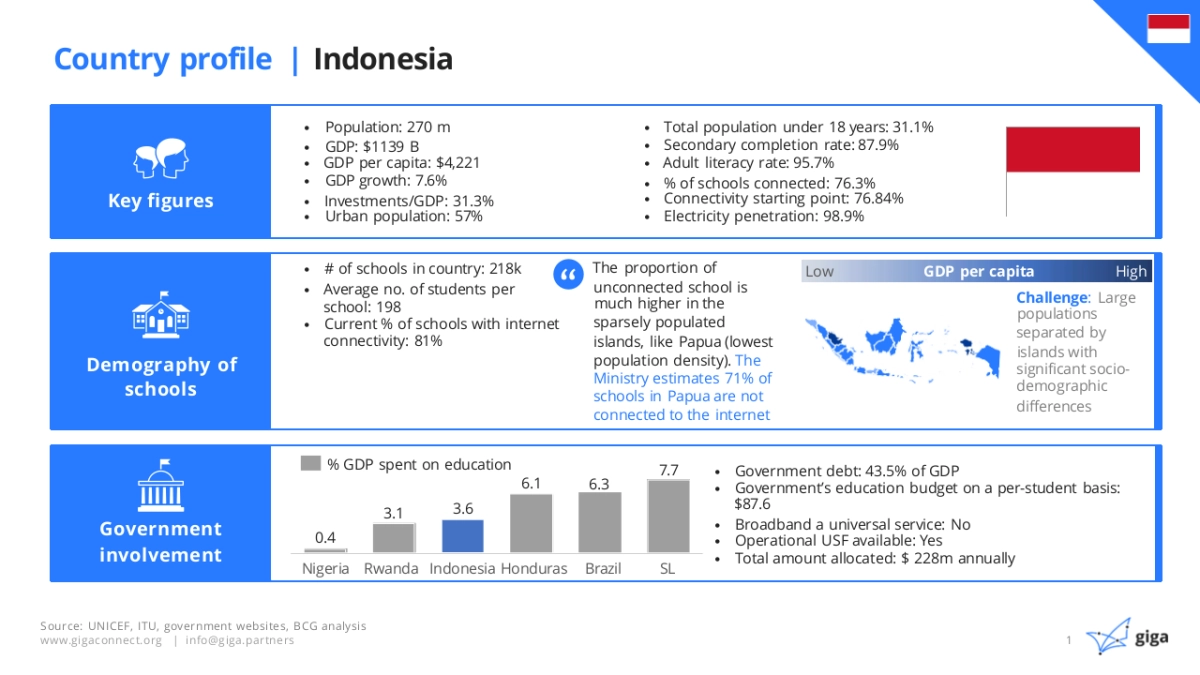
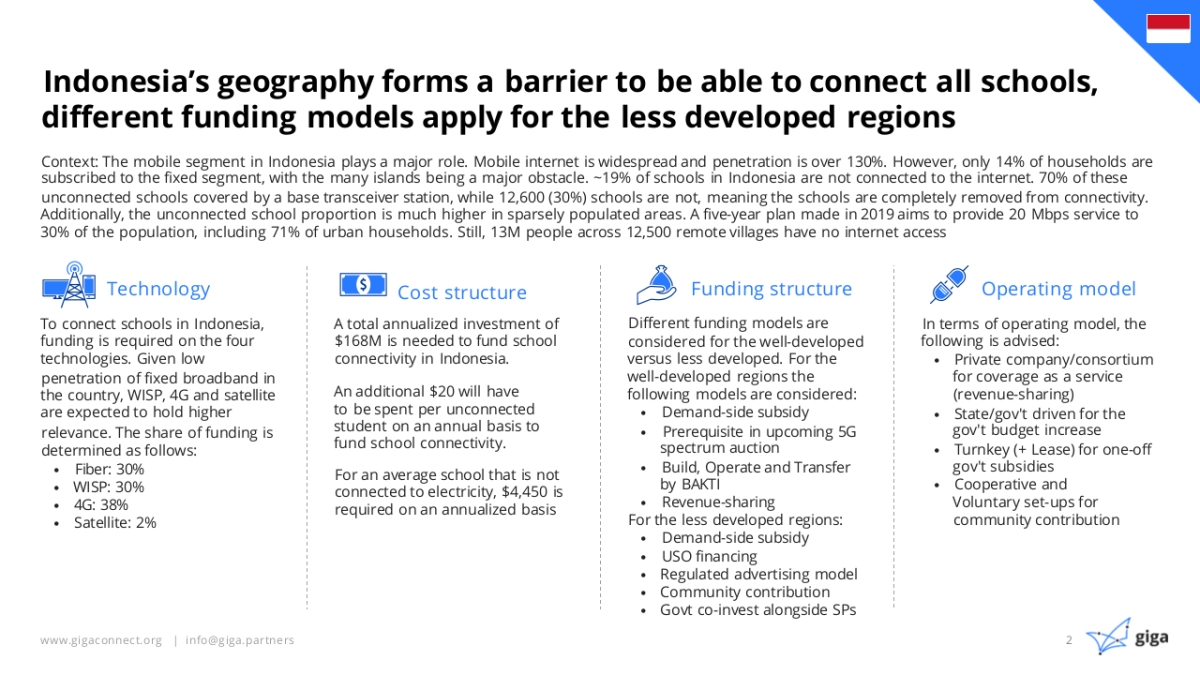
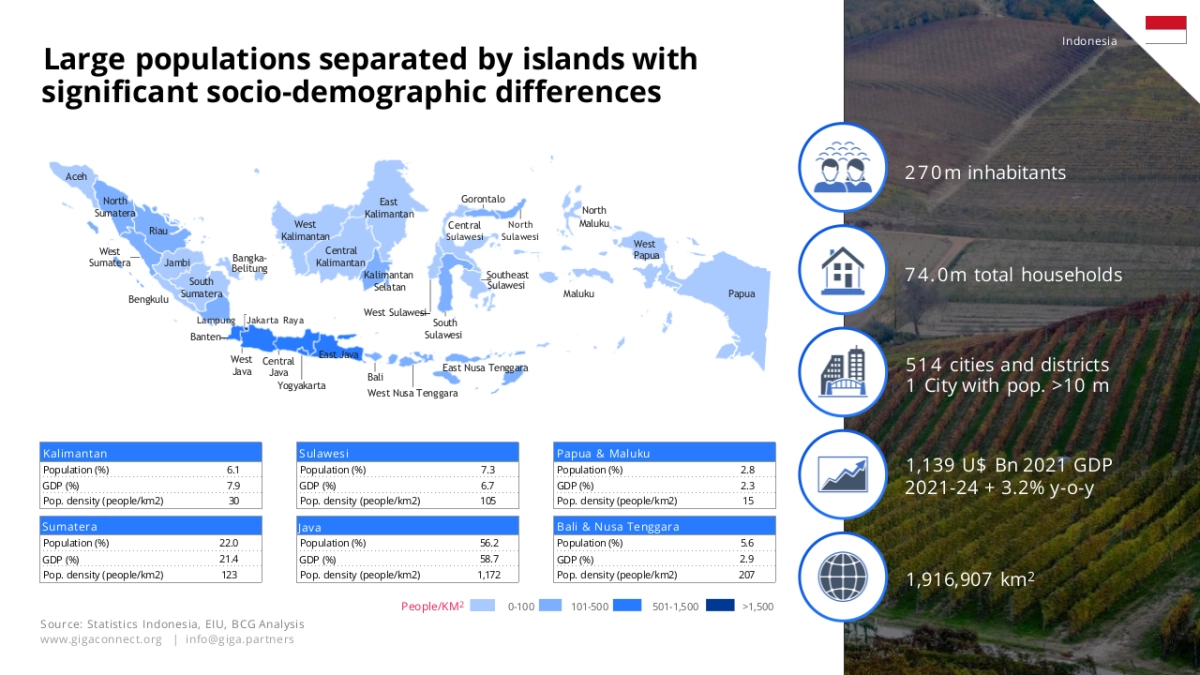
Country profile|IndonesiaPopulation:270mTotal population under 18vears:31.1%Secondary completion rate:87.96GDPper capita:$4,221Adult literacy rate:95.7%GDPgrowth:7.6%Key figuresInvestments/GDP:31.3%Connectity starting point: 76.8496Urbanpopulation:57%Electricitypenetration:98.9%The proportion ofLowGDP percapitaHighAverageno.ofstudentsperunconnectedschoolismuch higher in theChallenge:Largeschool:198populationssparsely populatedconnectivity:81%islands, like Papua(lowestseparated byislands withDemography ofpopulation density). Thesignificant socio-Ministry estimates71%ofdemographicschoolsdifferencesconnected to the internet%GDPspenton educationGovernmentdebt:43.5%ofGDP7.76.3, Governments education budget on a perstudent basis6.13.6$87.63.1GovernmentBroadband auniversalservice:No0.4Operational USF available: YesinvolvementTotal amountallocatedt:$ 228m anulyNigeria Rwanda Indonesia Honduras BrazlilSource:UNICEF, ITIU, government websites, BCG analyslswww.gigaconnect.orgI info @giga.partnersgiga
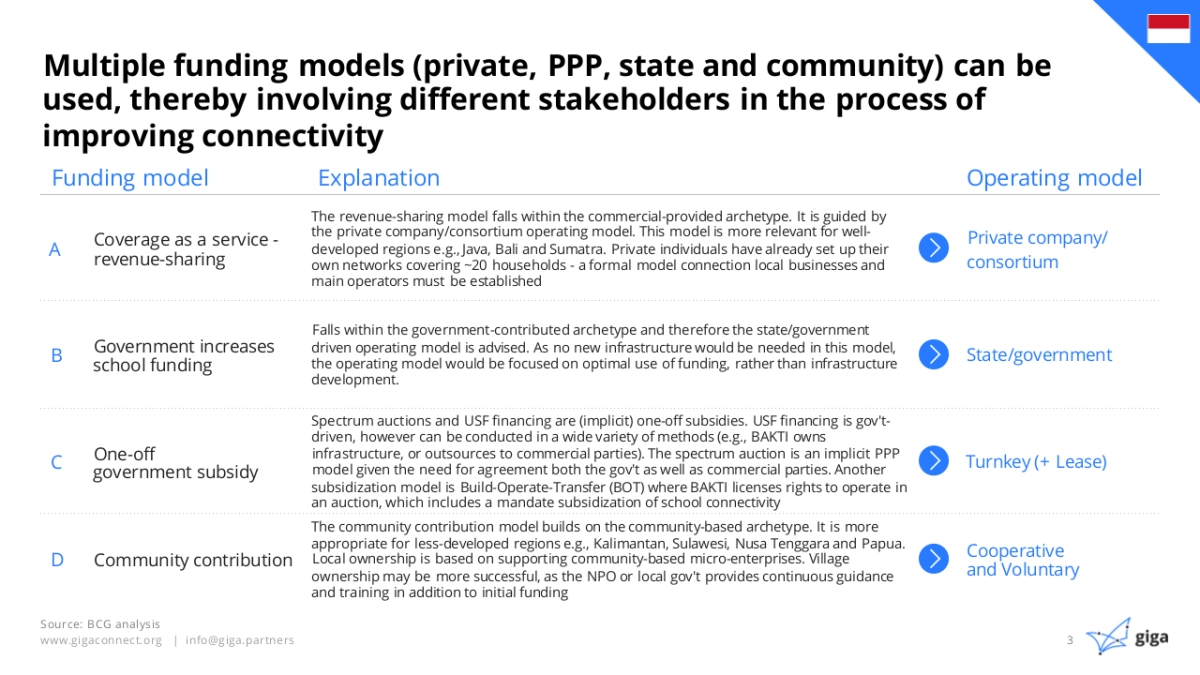
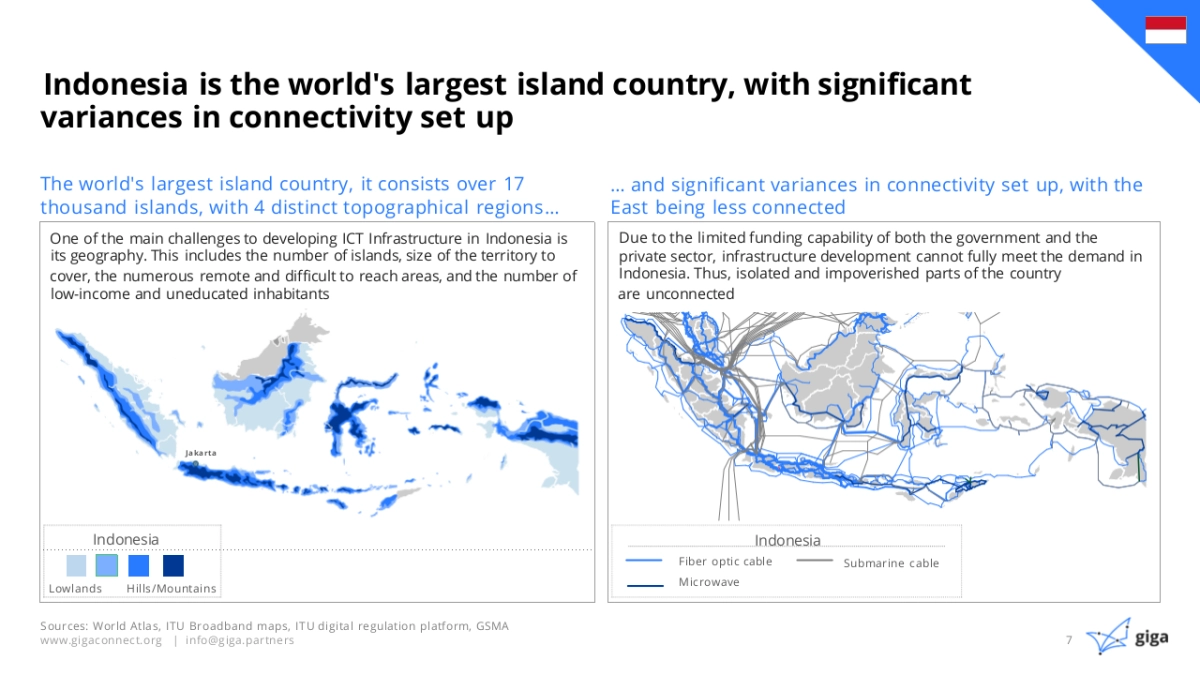
Indonesia's geography forms a barrier to be able to connect all schoolsdifferent funding models apply for the less developed regionsContext The mobile segment in Indonesia plays a major role. Mobile internet is widespread and penetration is over 130%. However, only 14% of households aresubscribed to the fixed segment, with the many islands being a major obstacle, -19% of schools in Indonesla are not connected to the internet. 70% of theseunconnected schools covered by a base transceiver station, while 12,600(30%) schools are not, meaning the schools are completely removed from connectvityAdditionally, the unconnected school proportion is much higher in sparsely populated areas. A five-year plan made in 2019 aims to provide 20 Mlppsservice toTechnologyFundingstructureOperatingmodelCost structureTo connect schools in Indonesia,Atotal annualizedinvestmentofDifferent funding models areIn terms of operating model, thefunding is required on the fourconsideredforthewelldevelopedfollowingisadvised:$168M is needed to fund schooconnectivity in Indonesia.Private company/consortiumpenetration offixed broadband inwell-developed regions theAnadditional$20will havefollowingmodels are considered:to be spent per unconnectedDemand-side subsidyState/gov'tdrivenfor therelevance.The share offunding isstudent on an annual basis toPrerequisite inupcoming5Ggov't budget increase fund school connectivity.determined asfollows:Turnkey(+ Lease)for one-offFiber:30%Build, OperateandTransferWISP:30%connectedto electricity, $54,450 isbyBAKTiCooperative and。4G:38%required onan annualized basisRevenue-sharingVoluntary set-upsforSatellite:2%Forthe lessdeveloped regions:community contribution,Demand-sidesubsidyUSOfinancingRegulated advertising modelCommunity contributionGovt co-invest alongside SPsgigawww.gigaconnect.org| info@giga.partners
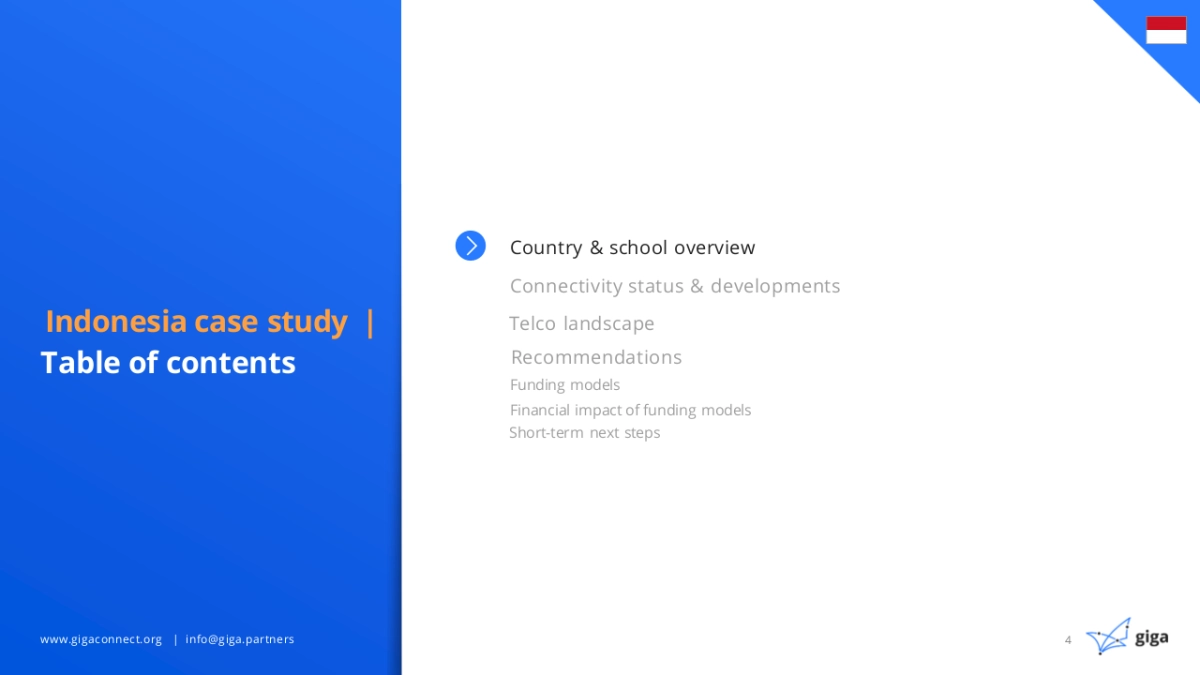
Multiple funding models (private, PPP, state and community) can beused, thereby involving dif...