www.research.hsbc.comDisclosures & Disclaimer: This report must be read with the disclosures and the analyst certifications inthe Disclosure appendix, and with the Disclaimer, which forms part of it.EquitiesGlobal BeveragesJanuary 2020By: Carlos Laboy, Anthony Bucalo, Alexis Cooper and Alessia Maria ApostolatosGlobal BeveragesBeyond PlasticPlastic waste awareness is growing rapidly around the world and has strong momentum into the new decade Consumers are speaking out and governments around the world are listening and actingPackaging regulation could join sugar taxes and stricter labeling as another serious ESG challenge for the global soft drink industryS P O T L I G H T
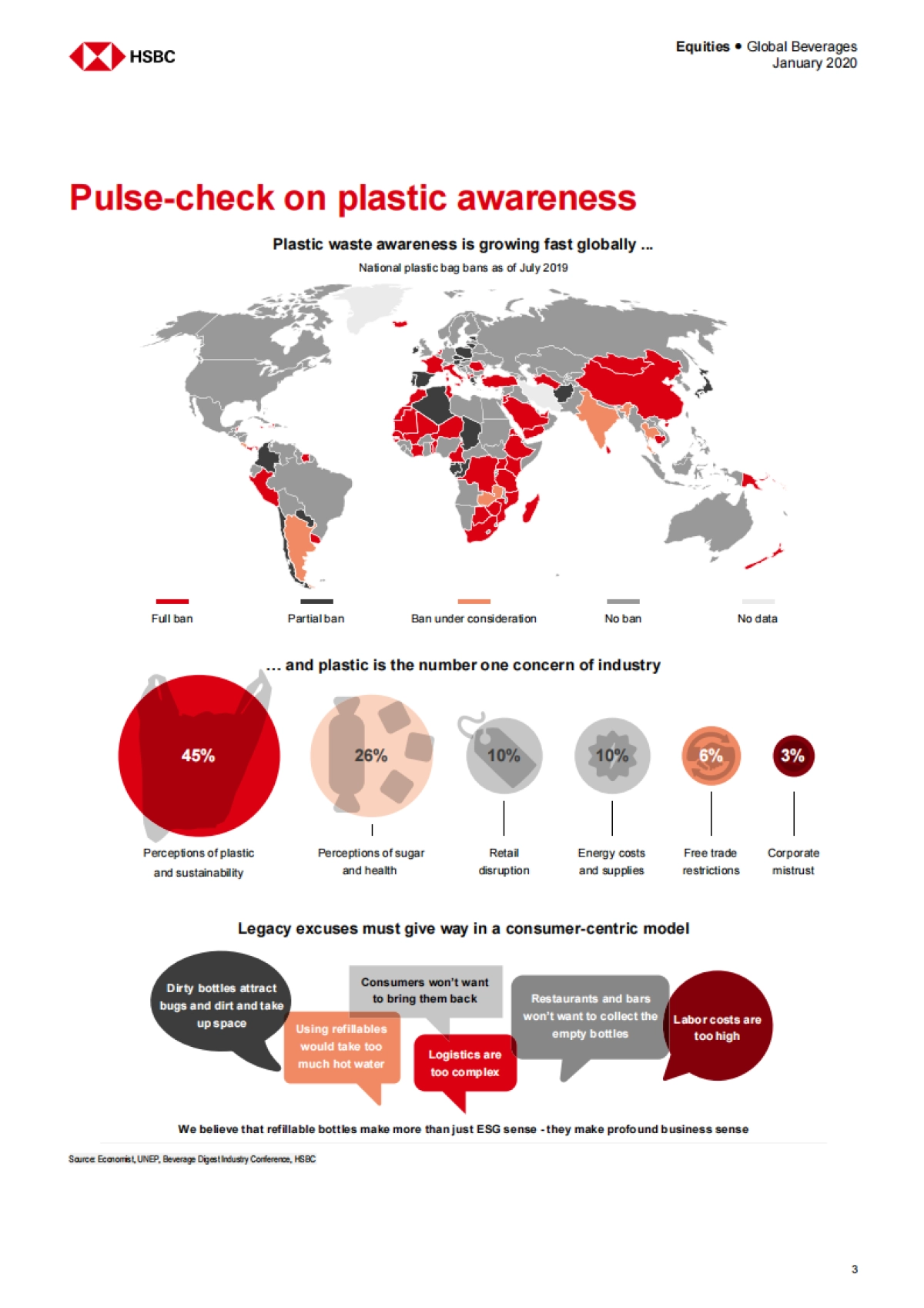
1Equities ● Global BeveragesJanuary 2020Plastic awareness is skyrocketing…Non-governmental organizations (NGOs) have gone straight to the global consumer to raise awareness about the risks of plastic waste. The message has been short, powerful and effective: we need to save the oceans. Consumers are responding by seeking a reduction in theimproperly recycled plastics which are ending up in the ocean, hurting sea life. Already, governments around the world are taking action and legislation is accelerating. Food and beverage packaging is particularly in focus because of its prevalence in modern life and consumers’ direct experience of the volume of use and waste.…and the rules of the game are changingRecycling was once positioned as a “magic wand” solution but is no longer sustainable. Although aluminum and glass are 100% recyclable, PET is not and can’t ever be. China’s restrictions on the types of waste it would import effectively made recycling less profitable than before by reducing demand for plastic waste. Countries like Vietnam and Malaysia have tried to pick up the slack but are reaching capacity and considering their own waste import bans. With recycling no longer the be-all, end-all solution, what are the alternatives?Global food and beverage companies need to take actionAs both developed and emerging markets begin to take action against plastics, beverage companies are concerned. With the added cost of plastic taxes and deposit schemes in many key markets, many companies – soft drink bottlers especially – could struggle to cover their cost of capital. The uptick in plastic legislation and consumer awareness compels beverage companies to adapt to these changes and adapt quickly. Failure to do so could, we think, threaten the economic viability of many key players. Instead of recycle, re-useIn this report, we explore three case studies of different markets’ responses to the problem of plastic pollution: 1) Bottle deposit schemes and alternative packaging in Western Europe; 2) using a communal packaging type to simplify used bottle collection by brewers in Oregon, USA; and 3) the case for refillable bottles based on their track record in Latin America. We ...