热门文档
- 2025-04-21 11:02:12 2025年中国宠物行业白皮书
- 2024-11-17 13:23:03 Mckinsey:2024中国消费趋势调研
- 2025-06-17 17:31:50 2024中国医疗器械行业发展报告
- 2024-07-31 22:30:59 城市飞行营地总体规划及主题体验区概念设计规划案
- 2025-10-14 11:53:22 中国微短剧精品化发展研究报告(2025)-新京智库
- 2025-03-07 11:57:25 【剧星传媒】《哪吒2》资源推荐0205
- 2024-12-23 13:57:51 哩哔哩《灵笼2》招商方案
- 2025-01-16 15:13:48 2025年全新品牌屋框架模型
- 2024-10-13 08:47:52 联合国:2024世界投资报告
- 2024-05-19 21:59:54 2024小红书餐饮行业方法论
- 2025-05-13 10:34:19 中国茶叶品牌发展报告(2024)会
- 2025-06-10 15:18:07 2025年秋冬淘宝服饰白皮书-篆商业智库

1、本文档共计 0 页,下载后文档不带水印,支持完整阅读内容或进行编辑。
2、当您付费下载文档后,您只拥有了使用权限,并不意味着购买了版权,文档只能用于自身使用,不得用于其他商业用途(如 [转卖]进行直接盈利或[编辑后售卖]进行间接盈利)。
3、本站所有内容均由合作方或网友上传,本站不对文档的完整性、权威性及其观点立场正确性做任何保证或承诺!文档内容仅供研究参考,付费前请自行鉴别。
4、如文档内容存在违规,或者侵犯商业秘密、侵犯著作权等,请点击“违规举报”。
2、当您付费下载文档后,您只拥有了使用权限,并不意味着购买了版权,文档只能用于自身使用,不得用于其他商业用途(如 [转卖]进行直接盈利或[编辑后售卖]进行间接盈利)。
3、本站所有内容均由合作方或网友上传,本站不对文档的完整性、权威性及其观点立场正确性做任何保证或承诺!文档内容仅供研究参考,付费前请自行鉴别。
4、如文档内容存在违规,或者侵犯商业秘密、侵犯著作权等,请点击“违规举报”。
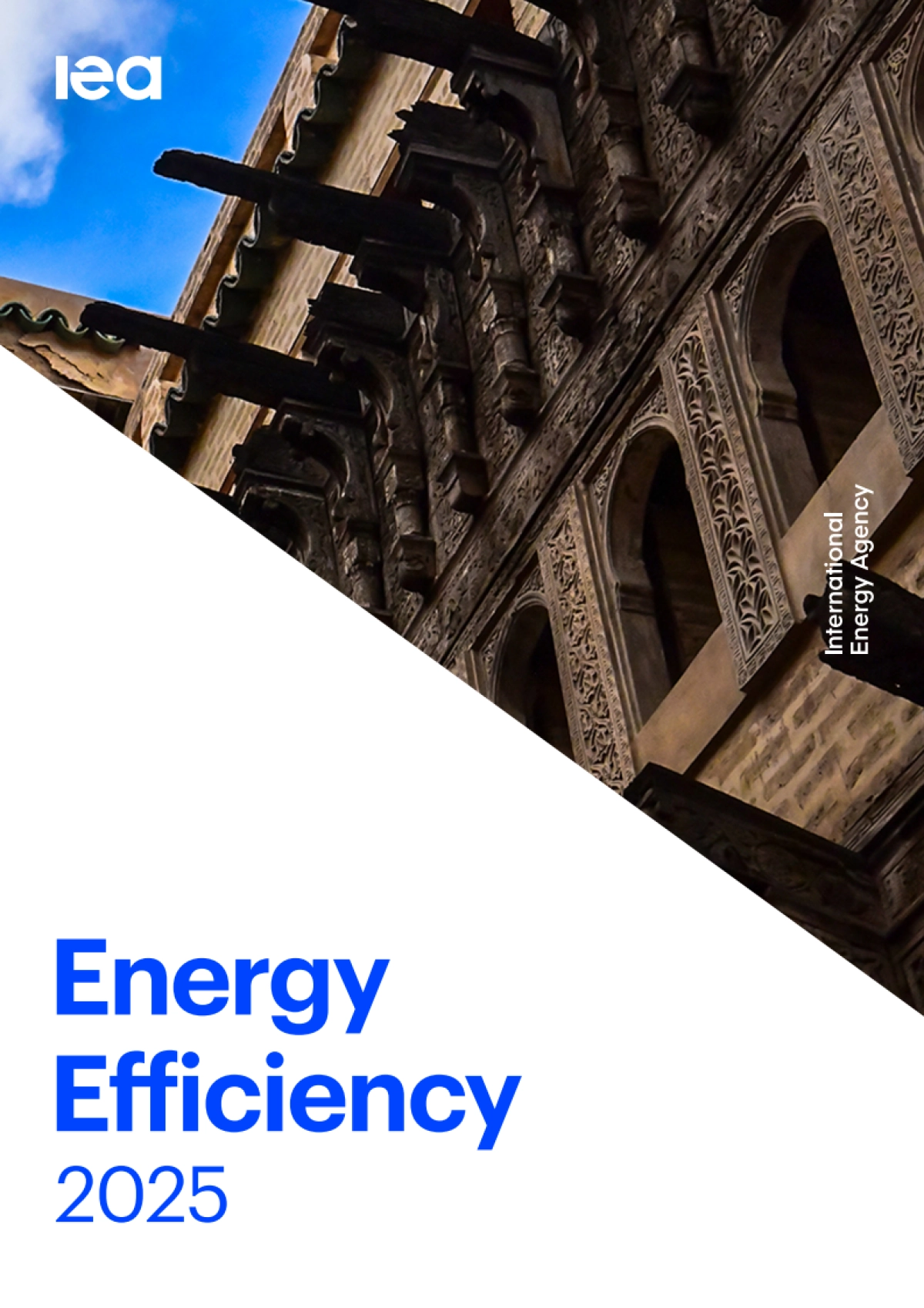
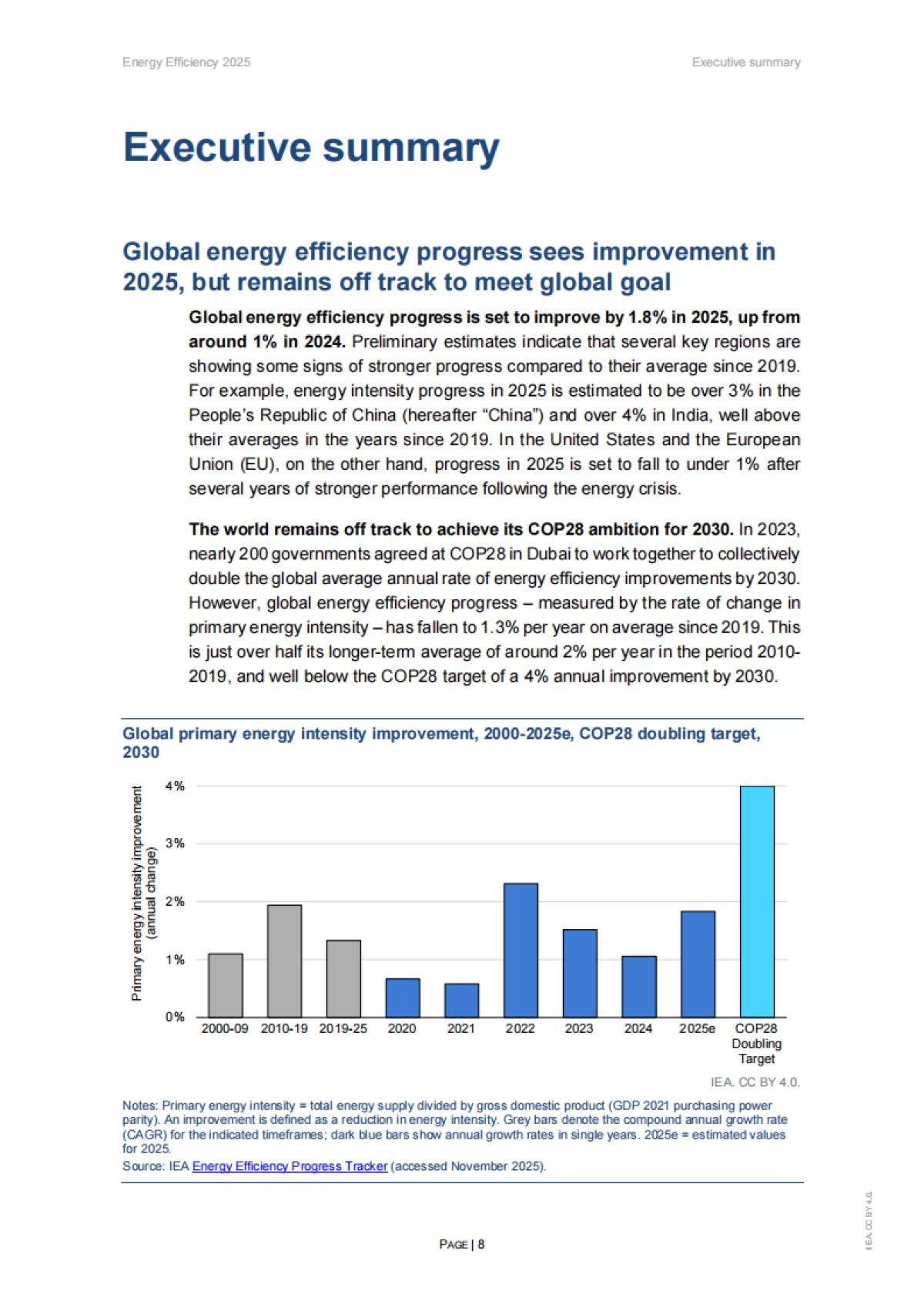
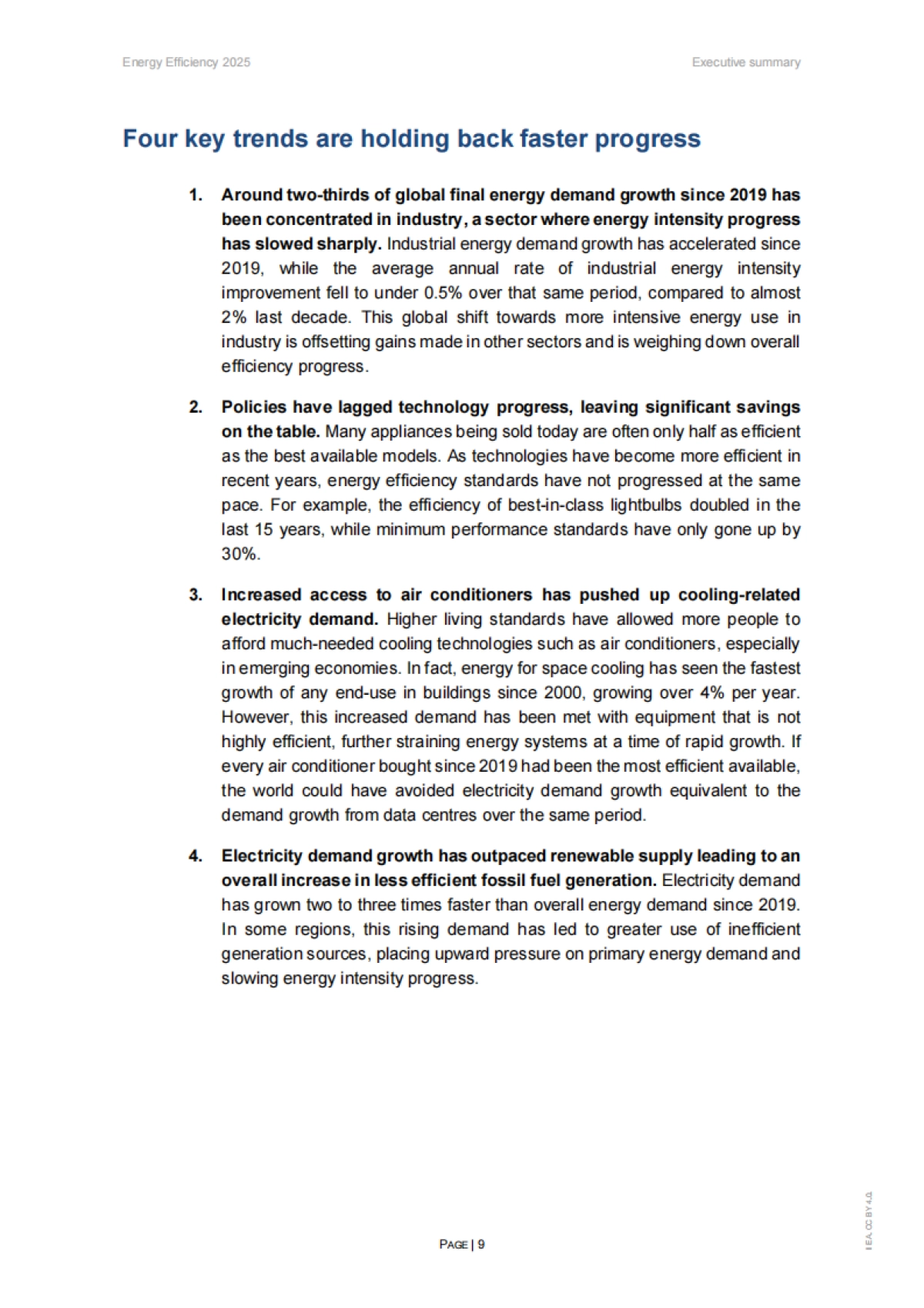
leaEnergyEfficiency2025INTERNATIONAL ENERGYAGENCYThe IEA examines the fullIEA MemberIEA Associationspectrumcountries:countries:of energy issuesincluding oil,gas andAustraliaArgentinacoal supply andAustriaBrazildemand,renewableChinaenergy technologiesBelgiumelectricity markets,CanadaEgyptenergy efficiency,Czech RepublicIndiaaccess to energy.DenmarkIndonesiademand sideEstoniaKenyamanagement and muchFinlandMoroccomore.Through its work,FranceSenegalthe IEA advocatesGermanySingaporepolicies that will enhanceGreeceSouth Africathe reliability,HungaryThailandaffordability andUkrainesustainability of energyin itsItaly32 Member countries.Japan13 Association countriesKoreaand beyond.LatviaLithuaniaLuxembourgMexicoNetherlandsNew ZealandNorwayPolandPortugalSlovak RepublicSpainSwedenSwitzerlandRepublic of TurkiyeUnited KingdomUnited StatesThis publication and any mapincluded herein are withoutThe EuropeanCommission alsoboundaries and to the nameparticipates in thework of the IEASouroe:IEA.leaWebsite:www.iea.orgEnergy Efficiency 2025AbstractAbstractEnergy Efficiency 2025 is the IEA's primary annual analysis on global energyefficiency developments,showing recent trends in energy intensity and demand,investment,employment and policy.The report provides sector-specific analysison industry,buildings,appliances and transport and explores system-wide themessuch as emissions reductions,energy security,affordability and competitiveness.This report is launched in parallel with an update to the IEA Energy EfficiencyProgress Tracker,which can be accessed through the IEA websitePAGE|3Energy Efficiency 2025AcknowledgementsEnergy Efficiency 2025 was prepared by the Energy Efficiency and InclusiveTransitions Office(EEIT)in the Directorate of Energy Markets and Security(EMS)The report was designed and directed by Lucas Boehle,together with FedericoCallioni,who co-ordinated the analysis.Susan Copeland edited the report.The report draws on data from the updated Energy Efficiency Progress Tracker.This was led by Nicholas Howarth and published in parallel with this report.Specialthanks go to Joel Couse,Marc Casanovas,Ramiz Farishta,Eren Cam andAlexander Bressers.Web development for the Tracker was led by Jon Custer.The report benefitted from analysis and drafting from many colleagues in EEIT,including Juliette Denis-Senez,Elspeth Hathaway,Mine Isik,Chris Matthew,Shane McDonagh,Emma Mooney,Jacopo Pasqualotto,Vida Rozite,DorianeSenat and Fabian Voswinkel.Other contributors in EEIT were Sophie Attali,Corine Nsangwe Businge,Giulia D'Agniolini,Gina Desombre,Lisa Marie Grenier,Alina Ho,Lucien Hua,Orestis Karampinis,Namhyuk Kim,Alexandre Langlois-Meurinne,Ana Lepure,Alberto Maggi,Patrick McMaster,Linus Mehl,Jack Miller,Sungjin Oh,Ksenia Petrichenko,Audrey Poupon,Matthieu Prin,Petra Pusztai,Brendan Reidenbach,Naomi Rossetti,Renee Stephens,Arda Topalakci,andNives Della Valle.Jonathan Sinton,Kristina Klimovich and Caroline Fedrine fromthe Energy Efficiency Hub also provided valuable guidance and support.Externalconsultants that contributed to the analysis and drafting include lan Hamilton,Simrat Kaur and Evi Wahyuningsih.Brian Motherway,Head of EEIT,and Jerome Bilodeau,Senior ProgrammeManager,provided strategic guidance to the report.Jane Cohen and MelanieSlade gave expert advice and management support.Keisuke Sadamori,Directorof Energy Markets and Security,provided expert guidance.Valuable commentsand guidance were provided by other senior management within the IEA,inparticular,Toril Bosoni,Laura Cozzi,Dan Domer,Paolo Frankl,Tim Gould,TimurGul,Dennis Hesseling,Pablo Hevia-Koch,Nick Johnstone and Sue-Ern Tan.Other IEA colleagues that contributed valuable data and analysis to the report andthe Tracker are Stephanie Bouckaert,Tanguy de Bienassis,Elizabeth Connelly,Chiara Delmastro,Araceli Fernandez Pales,Roland Gladushenko,MathildeHuismans,Natalie Kauf,Haneul Kim,Martin Kueppers,Michael McGovern,Apostolos Petropoulos,Arthur Roge,Rebecca Ruff,Richard Simon,OrsSumeghy,Cecilia Tam,Anthony Vautrin,and Daniel Wetzel.PAGE 4Energy Efficiency 2025AcknowledgementsData and analysis from the IEA Energy Data Centre was also instrumental to thereport and the Tracker,particularly from Roberta Quadrelli,Alexandre Bizeul,Thomas Elghozi,Agnieszka Koscielniak,Suzy Leprince,Arnau Risquez Martin,Aloys Nghiem,Anna Sagues Molla and Alessia Scoz.The report would not have been possible without the support of Jethro Mullen,Head of the Communications and Digital Office(CDO),and his team who wereresponsible for production and launch support,especially Poeli Bojorquez,CurtisBrainard,Astrid Dumond,Merve Erdil,Liv Gaunt,Grace Gordon,Julia Horowitz,Oliver Joy,Isabelle Nonain-Semelin,Sam Tarling,Lucile Wall,and Wonjik Yang.Mitsidi Projetos and Premise provided analytical support of different parts of theanalysis.The UNEP Copenhagen Climate Centre supported on the distribution ofthe Global ESCO Survey.Belen Munoz Zurita also provided analytical support.This report was made possible by assistance from the Ministry of Economy,Tradeand Industry,Japan.The Italian Ministry of Environment and Energy Security isalso acknowledged for their support through their contributions to the IEA's DigitalDemand Driven Electricity Networks (3DEN)initiative.The IEA gratefullyacknowledges support for the Tracker from the Clean Energy TransitionsProgramme(CETP).Peer reviewersMany senior government officials and international experts provided input andreviewed preliminary drafts of the report.Their suggestions were of great value.They include:African Energy CommissionNickson Bukachi OngeriAlfa LavalAnna HallAmerican Council for an Energy EfficiencySteve NadelEconomyApplied Energy LtdNick MeetenAsian Development BankDavid MorgadoAustralian Energy Efficiency CouncilJeremy SungCanada,Natural Resources CanadaMatt JonesCentre for Energy Policy University of StrathclydeAntonios KatrisClimate StrategyPeter SweatmanColombia InteligenteJuan David Molina CastroDanfossJens TovgaardDepartment of Climate Change,Energy,Leonie Wilsonthe Environment and WaterE3GLisa Fisher,Pedro GuertlerEnergia,Tecnologia y Educacion,S.C.Odon Demofilo De BuenEnergy Efficiency in Industrial ProcessesRod JanssenPAGE 5Energy Efficiency 2025AcknowledgementsEnergy Efficiency MovementMike UmikerENGIEFlorence DufourEuroheat PowerEloi PielEuropean Commission,DG ENEREdyta NowakFinland,Ministry of Economic Affairs andTimo RitonummiEmploymentFrance,Ministry of the Ecological TransitionAngelique LequaiTransition and Territorial CohesionGlobal ESCO NetworkAlexander AblazaAlison PridmoreJapan,Institute of Energy EconomicsNaoko DoiMexico,Ministry of EnergyAdrian Ruiz CarvajalNational Energy Administration ChinaJun YangOctopus EnergyFran BensonOracle Opower UtilitiesMary SprayregenOrganisation for Economic Co-operation andCornelia SchenkDevelopmentPeking University,Institute of EnergyYang LeiPrayas Energy GroupAditya ChunekarRegulatory Assistance ProjectSamuel ThomasRepublic of Turkiye,Ministry of Energy andBilal Duzgun,Natural ResourcesBora Sekip GurayRocky Mountain InstituteWill Atkinson,Amory Lovins,Laurens Speelman,Chiara GulliRoyal Melbourne Institute of TechnologyAlan PearsSchneider Electric Sustainability ResearchVincent MinierInstituteSignifyPaolo CeccheriniSolar Impulse FoundationNathalie HemeleersSpain,Permanent Representation to the OECDDiego Vazquez TeijeiraSwedish Energy AgencyCarlos LopesTrinomicsJesse GlickerUniversity Politecnico di MilanoLorenzo PaglianoUsers TCPSamuel ThomasWorld Resources InstituteSumedha MalaviyaWorld Wide Fund for NatureRichard Scotney8PAGE 6Energy Efficiency 2025Table of contentsTable of contentsExecutive summary.....Chapter 1:Global trends....1.1 Current progress.........131.2 Recent trends..…181.3 Accelerating progress.....241.4 Policies.......311.5 Investment.............381.6 Employment.....45Chapter 2:End-use sectors.....2.1 Industry.….522.2 Buildings.2.3 Appliances.662.4 Transp0t….732.5 Power systems............79Chapter 3:Efficiency and global energy policy priorities.843.1 Emissions reductions.............853.2 Energy security.3.3 Affordability3.4 Competitiveness................96PAGE 7Energy Efficiency 2025Executive summaryExecutive summaryGlobal energy efficiency progress sees improvement in2025,but remains off track to meet global goalGlobal energy efficiency progress is set to improve by 1.8%in 2025,up fromaround 1%in 2024.Preliminary estimates indicate that several key regions areshowing some signs of stronger progress compared to their average since 2019.For example,energy intensity progress in 2025 is estimated to be over 3%in thePeople's Republic of China (hereafter "China")and over 4%in India,well abovetheir averages in the years since 2019.In the United States and the EuropeanUnion (EU),on the other hand,progress in 2025 is set to fall to under 1%afterseveral years of stronger performance following the energy crisis.The world remains off track to achieve its COP28 ambition for 2030.In 2023,nearly 200 governments agreed at COP28 in Dubai to work together to collectivelydouble the global average annual rate of energy efficiency improvements by 2030.However,global energy efficiency progress-measured by the rate of change inprimary energy intensity-has fallen to 1.3%per year on average since 2019.Thisis just over half its longer-tem average of around 2%per year in the period 2010-2019,and well below the COP28 target of a 4%annual improvement by 2030.Global primary energy intensity improvement,2000-2025e,COP28 doubling target,20304%3%2%1%0%2000-092010-192019-25202020212022202320242025eCOP28DoublingTargetIEA.CC BY 4.0.Notes:Primary energy intensity total energy supply divided by gross domestic product(GDP 2021 purchasing powerparity).An improvement is defined as a reduction in energy intensity.Grey bars denote the compound annual growth rate(CAGR)for the indicated timeframes;dark blue bars show annual growth rates in single years.2025e estimated valuesfor2025.Source:IEA Energy Efficiency Progress Tracker (accessed November 2025).PAGE 8Energy Efficiency 2025Four key trends are holding back faster progress1.Around two-thirds of global final energy demand growth since 2019 hasbeen concentrated in industry,a sector where energy intensity progresshas slowed sharply.Industrial energy demand growth has accelerated since2019,while the average annual rate of industrial energy intensityimprovement fell to under 0.5%over that same period,compared to almost2%last decade.This global shift towards more intensive energy use inindustry is offsetting gains made in other sectors and is weighing down overallefficiency progress.2.Policies have lagged technology progress,leaving significant savingson the table.Many appliances being sold today are often only half as efficientas the best available models.As technologies have become more efficient inrecent years,energy efficiency standards have not progressed at the samepace.For example,the efficiency of best-in-class lightbulbs doubled in thelast 15 years,while minimum performance standards have only gone up by30%.Increased access to air conditioners has pushed up cooling-relatedelectricity demand.Higher living standards have allowed more people toafford much-needed cooling technologies such as air conditioners,especiallyin emerging economies.In fact,energy for space cooling has seen the fastestgrowth of any end-use in buildings since 2000,growing over 4%per year.However,this increased demand has been met with equipment that is nothighly efficient,further straining energy systems at a time of rapid growth.Ifevery air conditioner bought since 2019 had been the most efficient available,the world could have avoided electricity demand growth equivalent to thedemand growth from data centres over the same period.4.Electricity demand growth has outpaced renewable supply leading to anoverall increase in less efficient fossil fuel generation.Electricity demandhas grown two to three times faster than overall energy demand since 2019.In some regions,this rising demand has led to greater use of inefficientgeneration sources,placing upward pressure on primary energy demand andslowing energy intensity progress.Energy Efficiency 2025Executive summaryEfficiency investment and employment have grown,buthigher costs and labour shortages remain as challengesGlobal energy efficiency-related investment is set to reach almost USD 800billion in 2025,growing by 6%compared to last year and over 70%comparedto 2015.However,in some countries,public support schemes have decreasedamid budgetary constraints,while material costs have risen too.For instance,construction prices in the European Union have increased over 20%since 2021.Geographic disparities in investments remain too,with two-thirds of end useinvestment taking place in China,the United States and the European Union,whilethe fastest growth in the last 10 years happened in India and Southeast Asia.Nearly 18 million people were employed in energy efficiency in 2024 aroundthe world,but the sector continues to face labour and skills shortages.Overall efficiency-related employment increased over 6%from 2023 to 2024.Mostefficiency workers are in China,the European Union and the United States,butemerging markets like India have seen a rapid increase in recent years.Meanwhile,new IEA surveys in 2025 highlight persistent labour shortages and theneed to increase efforts to attract and train workers.2025 sees a renewed focus on energy efficiency toaddress global economic and energy policy prioritiesNew IEA analysis shows the impact energy efficiency policies have had onglobal energy policy priorities.Notably,without efficiency gains since 2010,today's greenhouse gas emissions would be 20%higher,and energy efficiencyremains one of the key drivers to lower emissions in the future.Efficiency actions since 2000 have reduced household energy bills inadvanced economies by up to 20%.In 2025,several major economies put inplace efficiency policies specifically linked to enhancing energy affordability.Efficiency has also improved competitiveness,with industries today producing20%more value per unit of energy consumed than in 2000.Efficiency gains have also avoided the need for 20%more fossil fuel importsin IEA countries over the same period.New data shows that efficiency actionsaccounted for two-thirds of the gas demand savings in European householdsduring the energy crisis,enhancing its security and strategic independence.This role of energy efficiency in wider energy policy goals was alsorecognised at the 10th Annual IEA Global Conference on Energy Efficiencyin June.Participating governments reaffirmed their commitment to strongerenergy efficiency action and particularly highlighted its role as a key tool to addressenergy affordability,quality of life and industrial competitiveness.Energy Efficiency 2025Executive summaryTo accelerate efficiency progress,governments mustraise ambition and close policy gapsGovernments implemented over 250 new or updated efficiency-relatedpolicies in countries all around the world in 2025.These countries representover 85%of global energy demand,compared to countries accounting for 70%oftotal energy demand taking efficiency-related policy actions in 2024.Ahead ofCOP30,over 50 countries have also set updated targets for energy efficiency intheir Nationally Determined Contributions.These policies form the basis for fasterprogress,and countries can accelerate efficiency improvements in two waysFirst,govemments can move quickly to raise the ambition of existingpolicies.As technology improves,many policies have not been kept up to date,and policy ambition varies widely among countries.In some countries,forinstance,a building that meets the local efficiency standard may in fact be usingthree times as much energy as one in another country with a similar climate.Thereis significant room to raise the bar and accelerate progress using existing and well-proven policy tools.When policy frameworks are already in place,this representsthe fastest and easiest way to accelerate efficiency progress.Second,there remain important policy gaps to be filled.There are still manyareas where policies are either absent or limited.For example,around half ofcountries globally still do not have efficiency standards for new buildings,includingin regions experiencing rapid growth.Similarly,there are still no mandatory energyperformance standards for industrial motors in two-thirds of all countries globally.Identifying and closing specific policy gaps,prioritising where energy use andsavings potential are the highest,can help countries accelerate progress.PAGE 11Energy Efficiency 2025Chapter 1:Global trendsChapter 1:Global trendsThe world remains off track to meet the COP28 target of doubling energyefficiency improvements by 2030.Global energy intensity progress since 2019is around 1.3%per year on average,well below the 2010-2019 average of 2%peryear.Four key trends help explain why global energy intensity progress thisdecade is stuck in low gear:strong demand growth and weak efficiency progressin industry;policies lagging technology progress;rising cooling-related electricitydemand;and inefficiencies in power generation.Global energy intensity is set to improve by 1.8%in 2025,up from just over1%in 2024.Key regions that have shaped global progress this decade areshowing signs of potential recovery in 2025.Compared to the previous decade,both China and India have seen average progress this decade slow down to below2%.Preliminary estimates for 2025,however,suggest a possible recovery,withIndia set to reach a progress rate just above 4%this year and China around 3.5%.Governments implemented over 250 new or updated policies related toenergy efficiency in countries all around the world in 2025.These countriesrepresent over 85%of global energy demand,compared to countries representingaround 70%of total energy demand introducing efficiency-related policy actionsin 2024.For COP30,over 110 countries also updated their Nationally DeterminedContributions,with over 50 of them setting efficiency-related targets.End use investment is set to reach almost USD 800 billion globally in 2025,growing by 6%compared to 2024.However,rising costs,such as recent spikesin interest rates and higher material costs,may hide lower levels of activity.Geographic disparities in end use investments remain as well,with about two-thirds of total efficiency-related investment occurring in China,the United Statesand the European Union.Nearly 18 million people around the world were employed in energyefficiency in 2024,marking an increase of 6%from 2023.Most efficiencyworkers are in China,the United States and the European Union,but emergingmarkets like India have seen a rapid increase in recent years.The efficiency sectorcontinues to face labour and skills shortages,which could worsen in coming yearsif not addressed through improved training and education.Key policy actions can help governments accelerate progress.In particular,policy makers can raise the ambition of existing policies and closeremaining policy gaps.PAGE 12Energy Efficiency 2025Chapter 1:Global trends1.1 Current progressGlobal energy intensity progress sees improvement in2025 but remains off track to achieve COP28 ambitionEnergy intensity is the amount of primary energy required per unit of economicoutput(GDP).When energy use grows more slowly than GDP,global energyintensity declines,indicating an improvement.Global primary energy intensity,themain indicator used to track the energy efficiency of the economy,is expected toimprove by 1.8%in 2025,an uptick from around 1%in 2024.This year'simprovement reflects slowing energy demand growth,from just over 2%in 2024to 1.3%in 2025,amidst resilient but still relatively subdued economic growth,continuing at just over 3%.In 2023,at COP28 in Dubai,nearly 200 governments agreed to work together tocollectively double the global average annual rate of energy efficiencyimprovements and triple renewable energy capacity globally by 2030,as part of ajust,orderly and equitable transition away from fossil fuels in energy systems.While progress on renewable energy capacity is expected to reach 2.6 times its2022 level by 2030,overall primary energy intensity progress has fallen to 1.3%per year on average since 2019,just over half its longer-term average(2010-19)of around 2%,instead of accelerating towards 4%per year.As a result,the worldis not on track yet to reach its 2030 ambition.Primary energy intensity improvement,2000-2025e,COP28 doubling target,world,20304%3%2%1%0%2000-092010-192019-25202020212022202320242025eC0P28DoublingTargetIEA.CC BY 4.0Notes:Primary energy intensity total energy supply divided by gross domestic product(GDP 2021 purchasing powerparity).An improvement is defined as a reduction in energy intensity.Grey bars denote the compound annual growth rate(CAGR)for the indicated timeframes;dark blue bars show annual growth rates in single years.2025e estimated valuesfor2025.Source:IEA(2025),Energy Efficiency Progress Tracker (accessed November 2025).Energy Efficiency 2025Chapter 1:Global trendsResilient energy demand growth coupled with slowingGDP has pushed down intensity progress this decadeOver the first 20 years of this century,global energy intensity progress followed asteady progression,accelerating from an average of around 1%per year from2000 to 2010 to about 2%per year from 2010 to 2019.This was driven by slowergrowth in total energy supply in the period 2010-19 than in 2000-10,whileeconomic growth was relatively similar.This rise in global efficiency progress in2010-19 saw the amount of primary energy growth needed to fuel each extra 1%of growth in gross domestic product (GDP)fall from 0.7%to 0.4%,a positive trend.This progress led to multiple benefits,such as strengthened energy security andreduced CO2 emissions.However,since the Covid-19 pandemic,rather than doubling towards 4%.average global efficiency progress has fallen to 1.3%per year in the period2019-25.This is the result of the fact that,over this period,the average rate ofglobal economic growth slowed to about 2.8%per year,which is below the 3.4%average annual growth between 2010 and 2019.At the same time,total energysupply continued to grow at 1.4%per year on average in 2019-25,similar to therate seen in 2010-19.Slower economic growth with resilient total energy supplyhas put upwards pressure on fossil fuel demand,weakening the efficiencymomentum of the previous decade.Preliminary estimates show slightly highereconomic growth in 2025 compared to the average since 2019,leading to theuptick of intensity progress to around 1.8%.Global annual change in total energy supply,GDP and energy intensity improvement,2000-2025e4%3%2%1%0%2000-102010-192019-252025eGross domestic productTotal energy supplyoEnergy intensity improvementIEA.CC BY 4.0.Notes:GDP gross domestic product 2021 USD purchasing power parity;TES total energy supply.2025e estimatedvalues for 2025.Source:IEA (2025)Energy Efficiency Progress Tracker(accessed November 2025)PAGE 14Energy Efficiency 2025Chapter 1:Global trendsKey regions that shaped global progress this decadeshow signs of a possible recovery in 2025The slowdown in global energy intensity progress since 2019 was shaped bymarked changes in key regions,particularly in Asia.Progress in China pushed upthe global average in 2010-2019,averaging an improvement of nearly 4%peryear,but progress has slowed to below 2%since 2019.Similar trends can be seen(to a lesser extent)in India and Southeast Asia.Meanwhile,in the United States,average intensity progress has remained at a similar level since 2019 comparedto 2010-2019,and progress has slightly increased in the European Union.Estimates for 2025 suggest a possible recovery in progress in China,India andSoutheast Asia compared to the average since 2019,although a single year'sfigures are not sufficient yet to confirm a shift in trends.Based on preliminary data,India is set to see progress of just over 4%in 2025,while progress in China isexpected to be 3.5%this year.In the United States and the European Union,onthe other hand,early indicators suggest progress in 2025 is expected to dropbelow 1%,a shift from longer-term trends.The potential recovery in energyintensity progress in Asia in 2025 is being driven by easing pressures on energydemand growth.In both China and India,preliminary estimates show primaryenergy demand growing in 2025 at around half the pace of their respectiveaverages in 2010-2019.In the IEA Energy_Efficiency Progress Tracker,which isupdated in parallel with this report,there is more data and analysis available onregional trends.Improvement in primary energy intensity,selected countries and regions,2010-2025e5%4%32%1%0%WorldChinaIndiaSoutheast MiddleLatinAfricaUnitedEuropeanAsiaEastAmericaStatesUnion02010-19020192502024-25eIEA.CC BY 4.0.Note:2025e estimated values for 2025.Source:IEA(2025),Energy Efficiency Progress Tracker (accessed November 2025)PAGE 15

请如实的对该文档进行评分-
-
-
-
-
0 分