FOURTH EDITION | JUNE 2026BCG AI AT WORKStrategy Matters More Than Tools
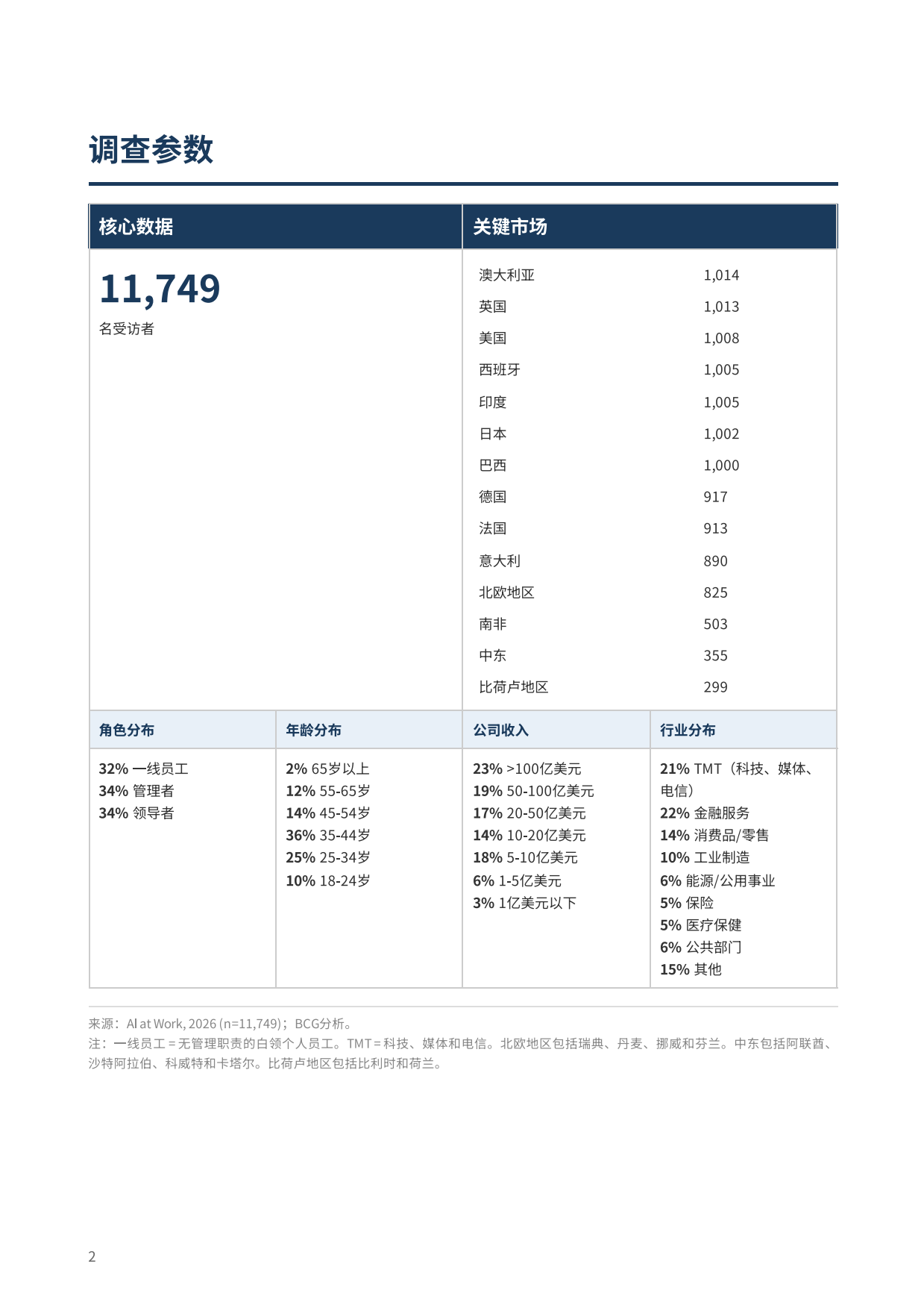
Survey parametersSources: AI at Work, 2026 (n=11,749); BCG analysis.Notes: Frontline employees = individual white-collar employees with no managerial responsibilities. TMT = technology, media, and telecommunications. Nordics include Sweden, Denmark, Norway, and Finland. Middle East includes UAE, Saudi Arabia, Kuwait, and Qatar. Benelux includes Belgium and the Netherlands.11,749respondentsManagersFrontline employeesLeadersKey Markets917913890825503355299AustraliaUKUSSpainIndiaJapanBrazilGermanyFranceItalyNordicsSouth AfricaMiddle EastBenelux1,0141,0131,0081,0051,0051,0021,00034%34%32%Roles25–3455–6565+45–5435–4418–24Age24%36%22%12%2%4%$500M–$1B$5B–$10B>$10B$2B–$5B$1B–$2B$100M–$500MCompany revenue23%18%6%14%14%25%TMTFinancial servicesConsumer/retailHealth care/medicalIndustrial goodsInsurancePublic sectorOthers3%Energy/utilities15%6%5%6%10%17%19%21%Industry
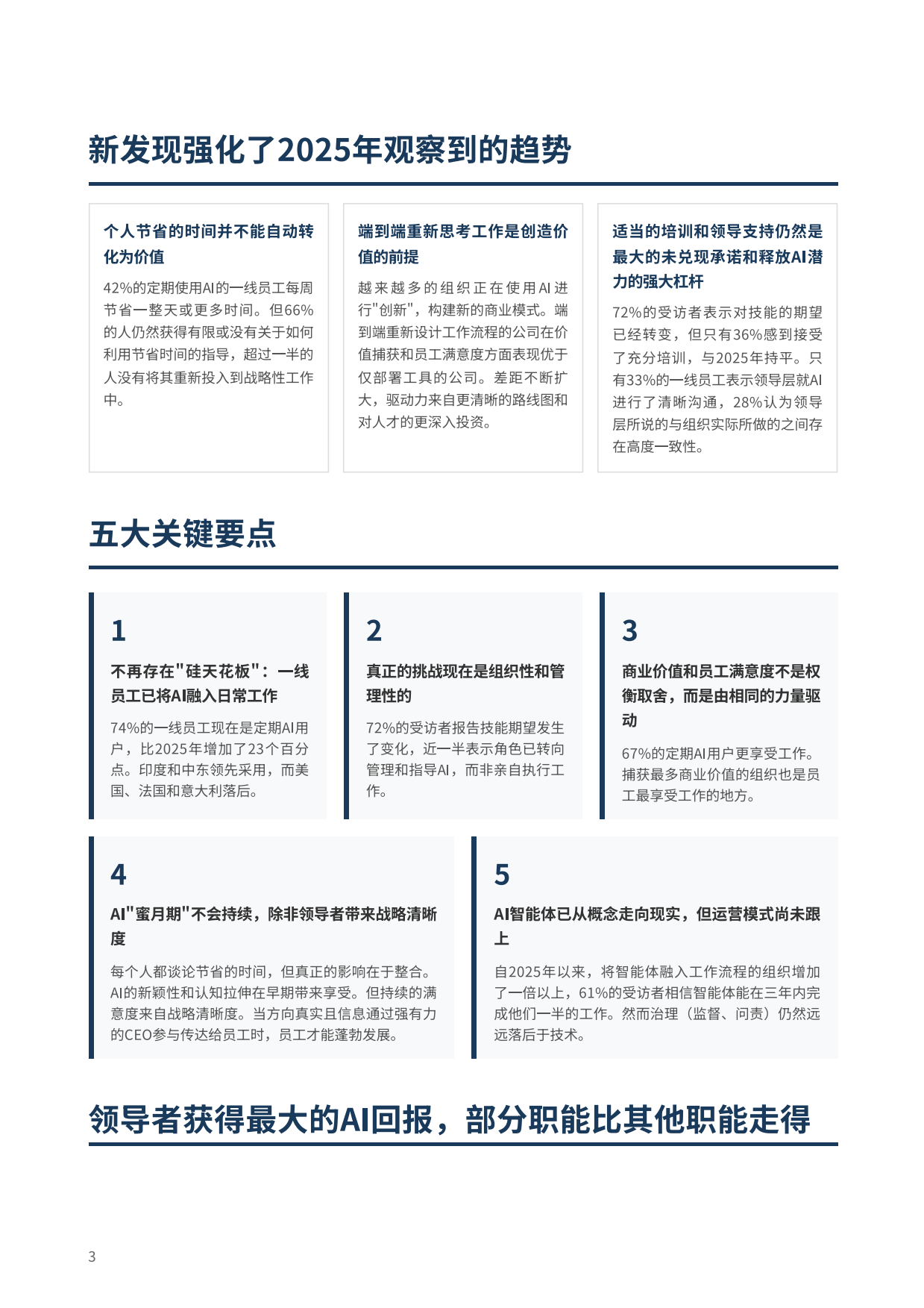
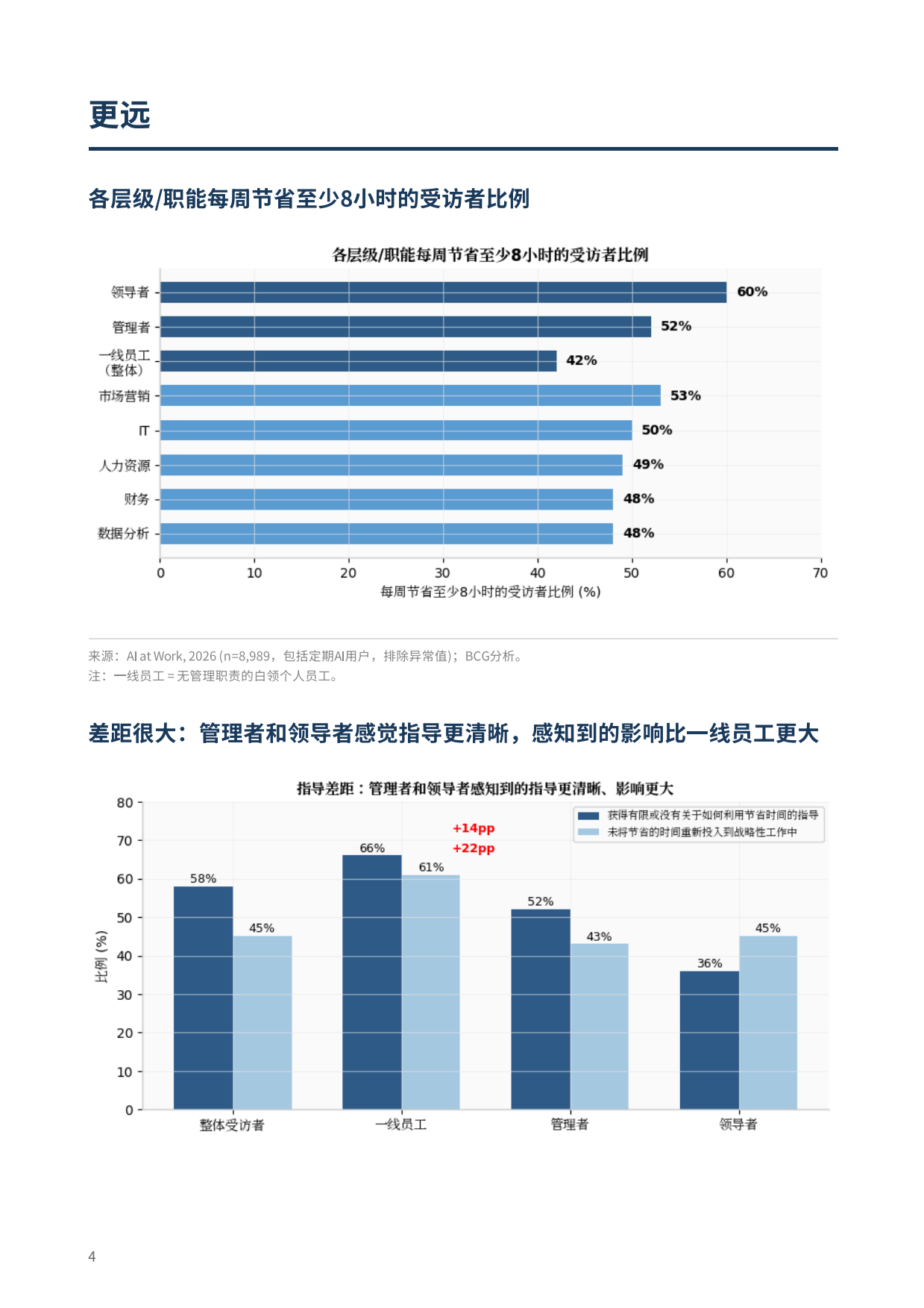
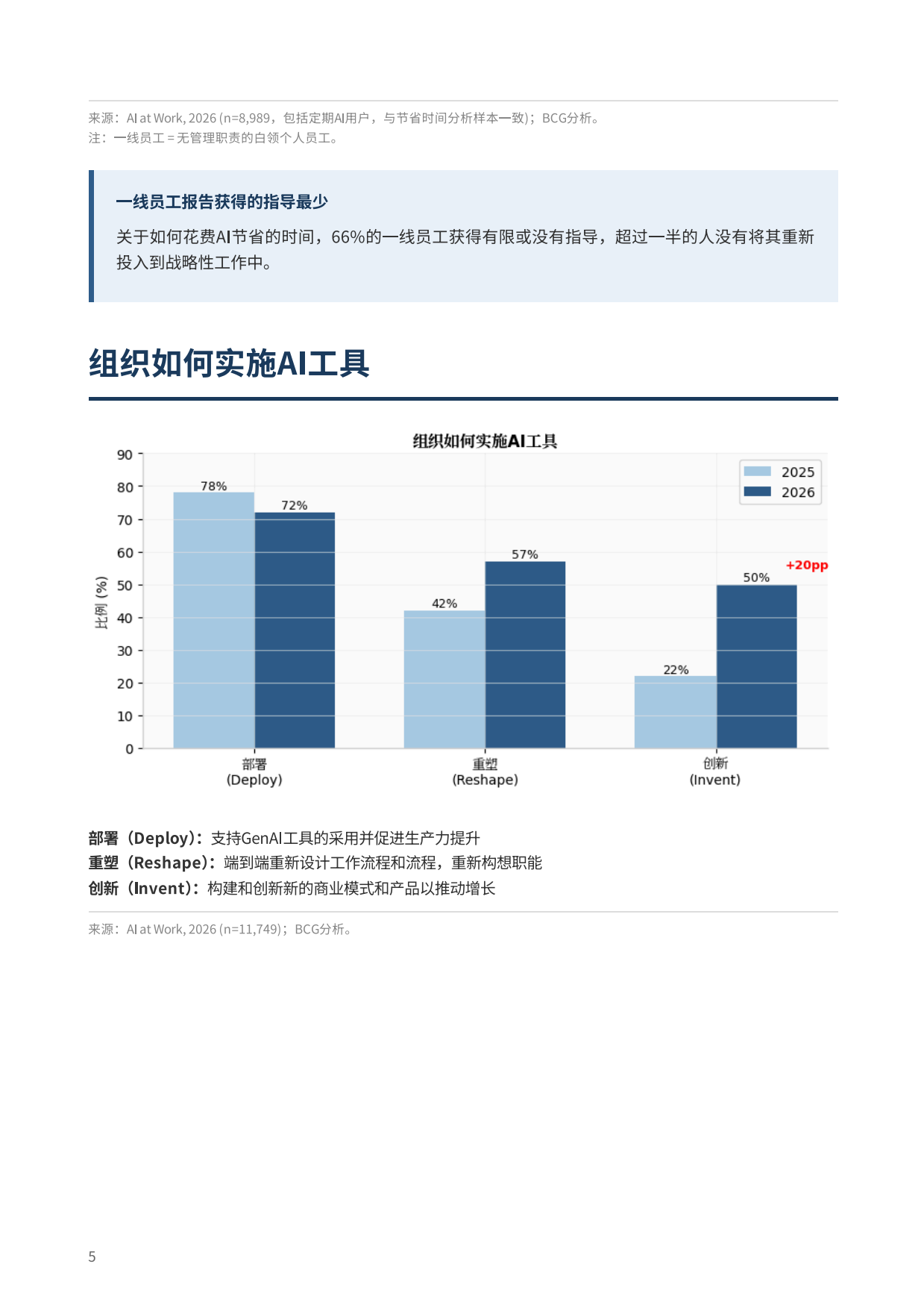
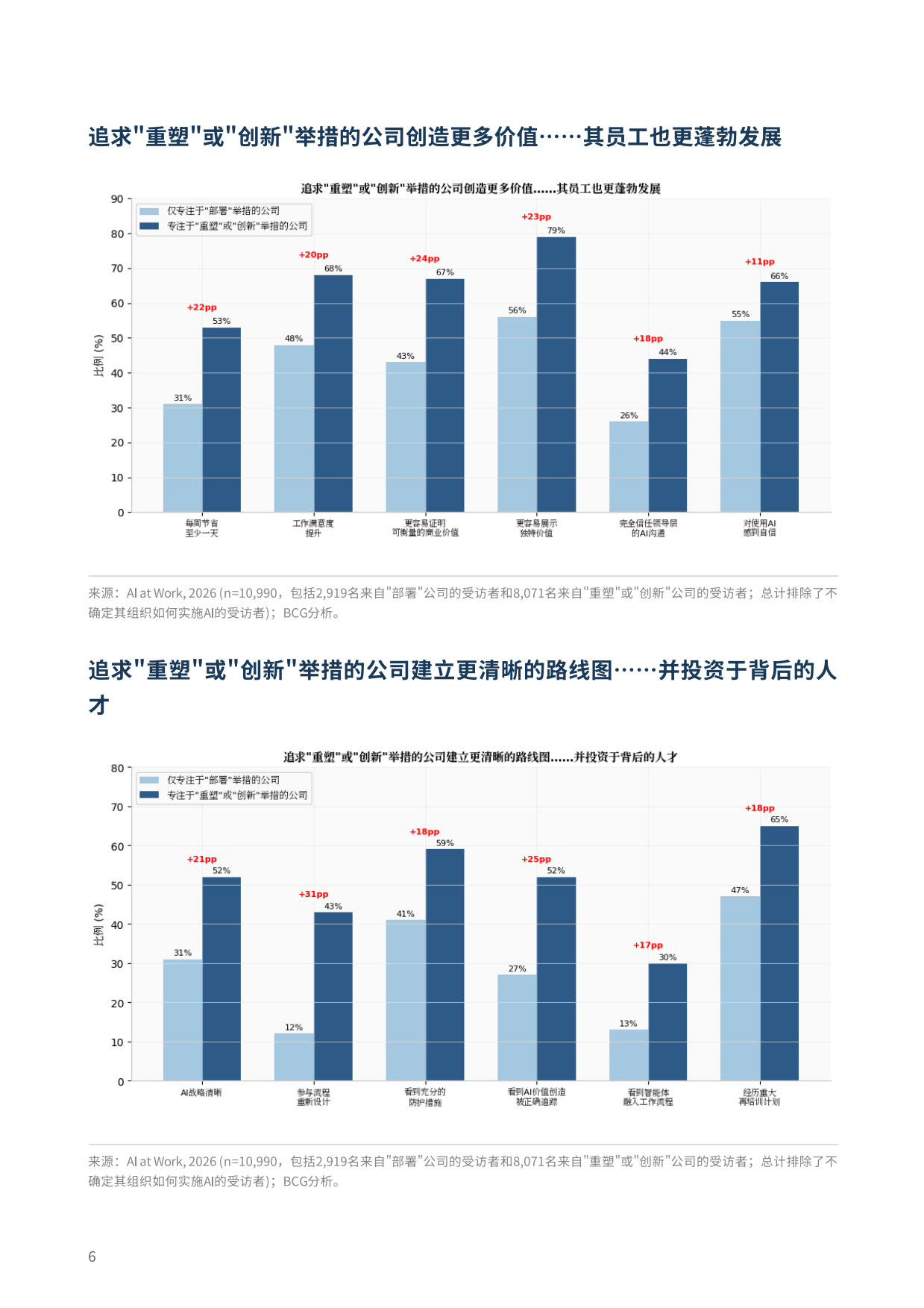
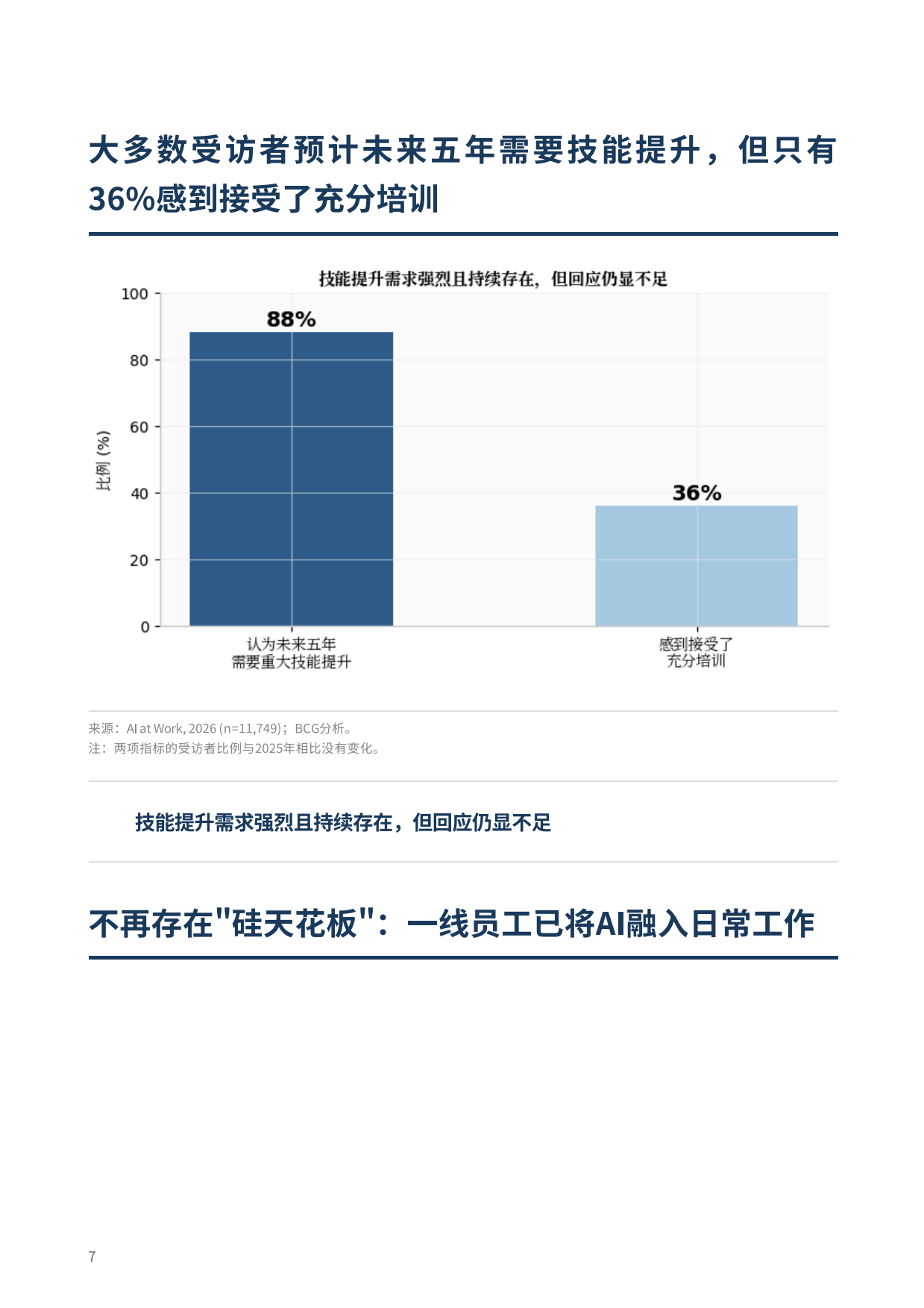
New findings reinforce trends observed in 2025The time individuals save doesn’t automatically translate into value42% of frontline employees who are regular AI users save a full day or more per week. But 66% still receive limited or no guidance on what to do with time they save, and more than half don’t redirect it to strategic work. Rethinking work end-to-end is a prerequisite for creating valueMore organizations are using AI to “invent,” building new business models. Companies that redesign workflows end-to-end outperform those that only deploy tools on value captured and employee joy. The gap keeps widening, driven by a clearer roadmap and deeper investment in people.Proper training and leadership support remain the biggest unmet promises and strong levers to unlock AI’s potential72% of respondents say expectations about skills have shifted, yet only 36% feel they received sufficient training, stable vs 2025. Only 33% of frontline employees say leadership communicates clearly about AI, and 28% see strong alignment between what leaders say and what the organization actually does.
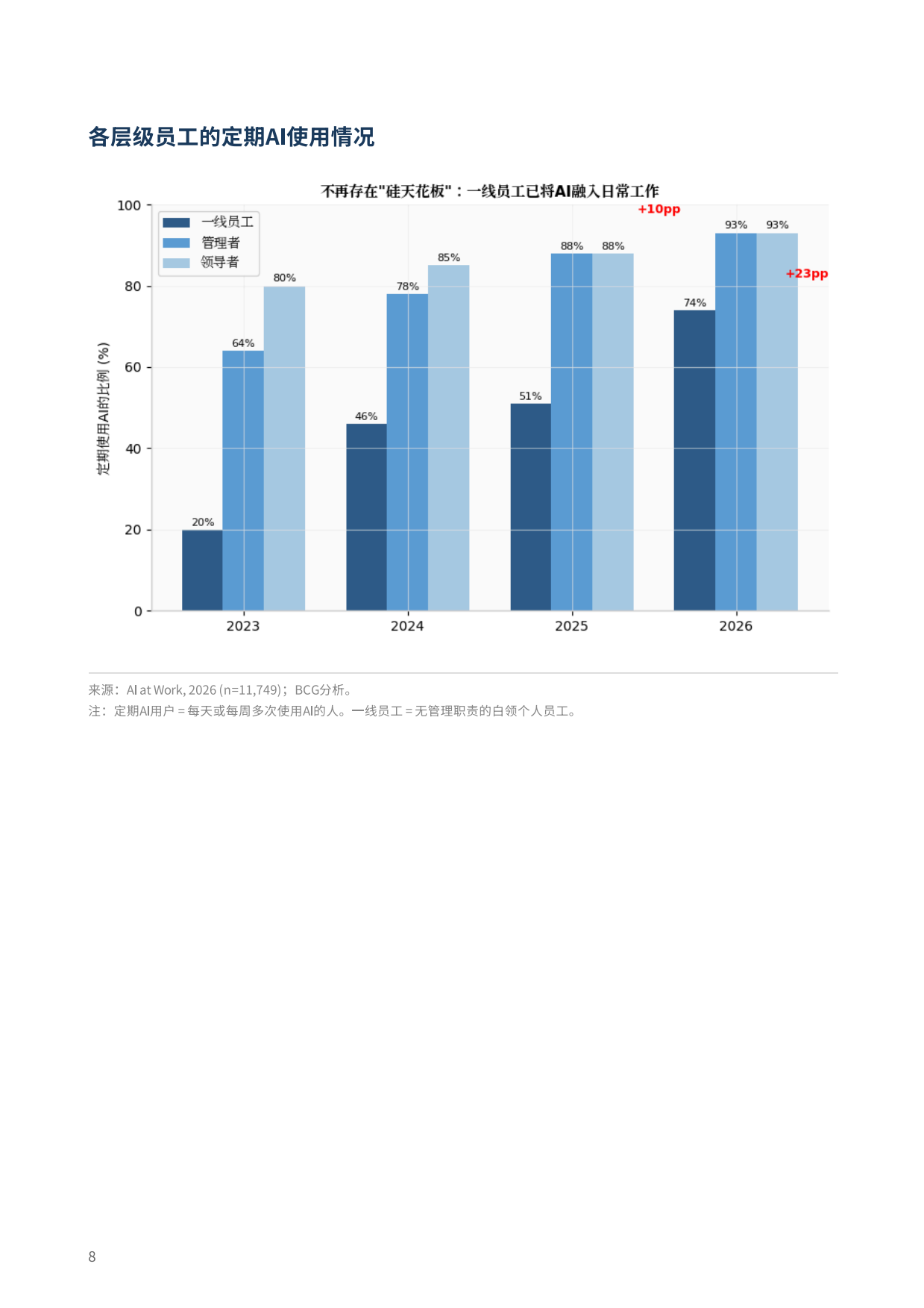
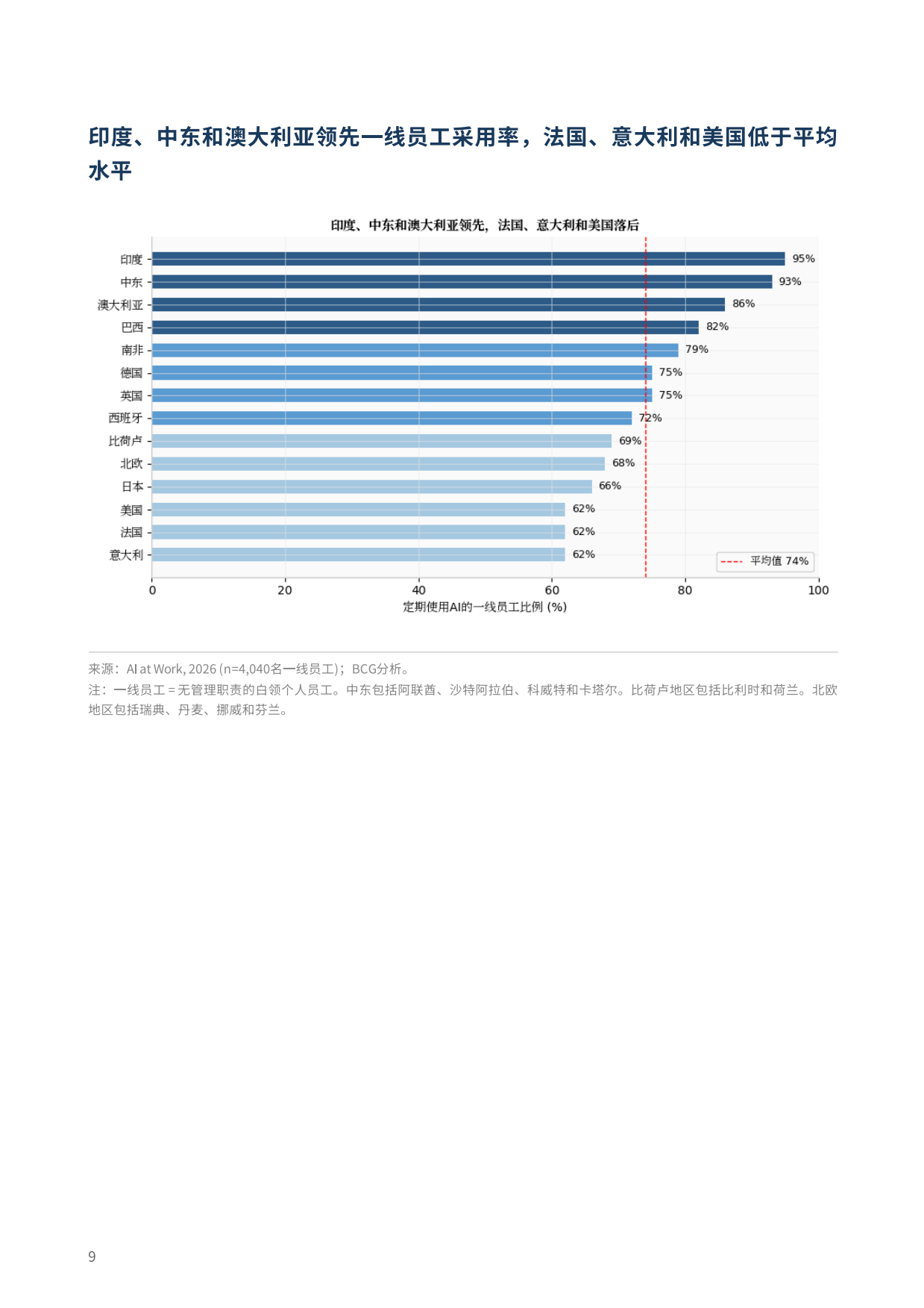
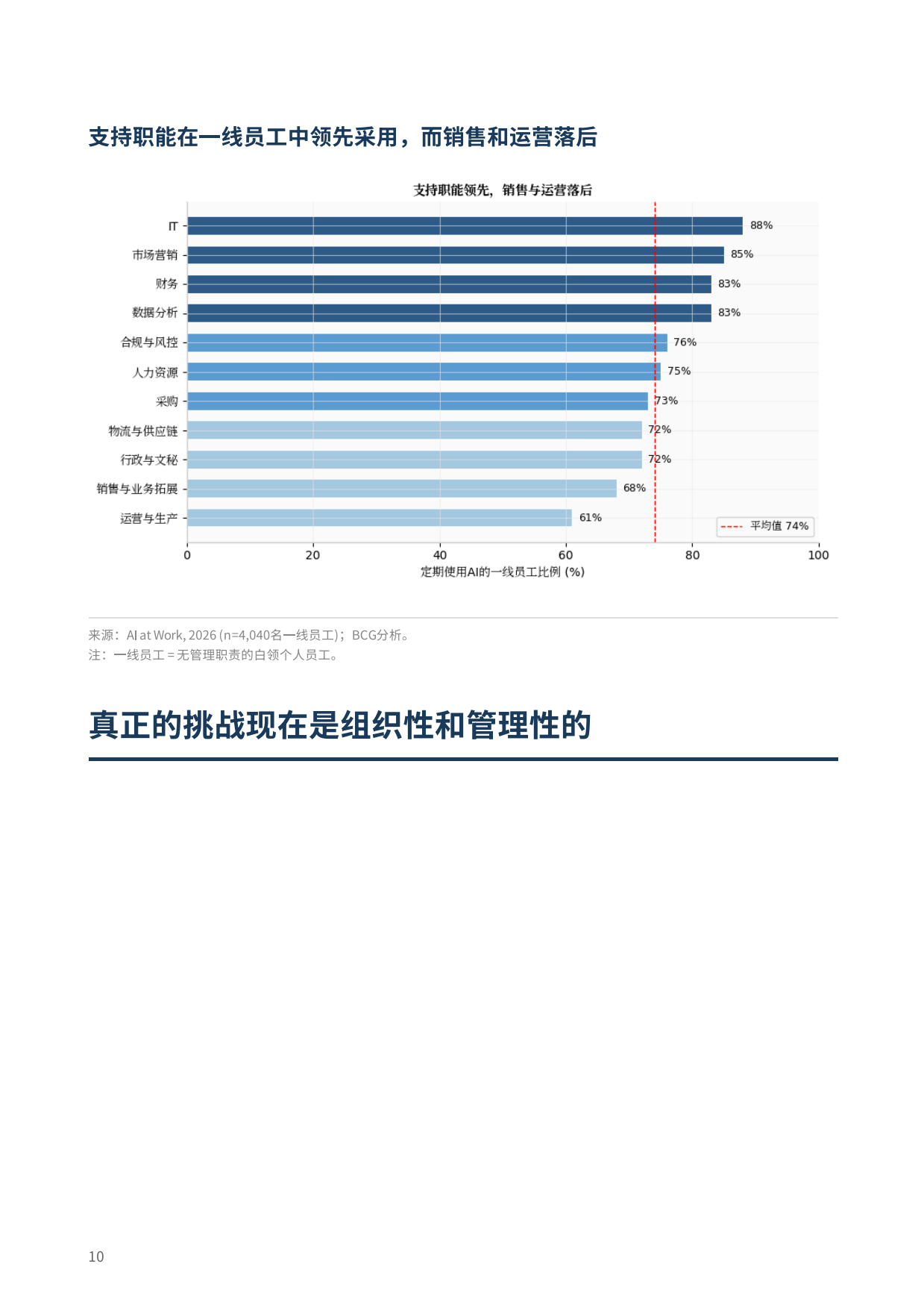
The real challenge is now organizational and managerialEveryone talks about time saved, but the real shift is deeper and structural. 72% of respondents report skill expectations have changed, and nearly half say their roles have shifted toward managing and directing AI instead of doing the work itself.123No more “silicon ceiling”: frontline employees have integrated AI into their daily work74% of frontline employees are now regular AI users, an increase of 23 percentage points from 2025. India and the Middle East lead adoption, while the US, France, and Italy trail behind. Five key takeawaysBusiness value and employee joy aren’t tradeoffs, they’re driven by the same forces67% of regular AI users enjoy work more. The organizations that capture the most business value are also the places where employees enjoy working the most.4The AI “honeymoon” won’t last unless leaders bring strate...